Earlier this summer, State Sen. Kiana Sears (D-LD9) attempted to scam a restaurant out of more than $1,500 worth of fried chicken.
Now, Sears is part of the inaugural “Black Leaders for Katie” coalition, launched by Gov. Katie Hobbs on Monday as part of her reelection campaign. Sears was named second in a list of 35.
Members of the media referred to the ordeal as “Chickengate,” so dubbed by the Arizona Agenda who retrieved the emails involving the restaurant, lawmakers, senate staff, and lobbyists that shed light on Sears’s conduct.
The ordeal began after a Republican lawmaker and bipartisan lobbyist group organized an event celebrating the 100th anniversary of Route 66. That event included more than $1,500 worth of catering from the Gus’s World Famous Hot & Spicy Fried Chicken location in downtown Phoenix. The order included chicken, mac and cheese, coleslaw, sweet tea, and lemonade.
Following the event, Sears contacted the caterer purporting to be one of the individuals in charge. Sears did not coordinate or pay for the event. According to an email from the restaurant’s general manager, Sears claimed in a call that the chicken was “overcooked, dry, and not enjoyed by most” — directly contradicting positive feedback the restaurant had received from event coordinators.
The general manager also revealed that Sears demanded the $1,500 catering order be remade on Saturday, June 27 at 5:30 p.m. Those who coordinated the event urged the restaurant to ignore Sears’s request.
Sears later dismissed questions from the media about the scam attempt as a “distraction” from her work as a lawmaker, and refused to answer other questions regarding where the catering order would have gone if the restaurant had fulfilled it.
As part of Hobbs’ launch of Black Leaders for Katie, the governor hosted a roundtable pledging her commitment to minority-owned businesses.
Gus’s World Famous Hot & Spicy Fried Chicken began with a little operation founded by a Black family, originally called Maggie’s Short Orders by Napoleon “Na” and Maggie Vanderbilt when they first opened in Tennessee in 1973, and then renamed to the current branding after their son, Vernon “Gus” Bonner, who took over the business in the 1980s. The Bonner family has since sold the franchising rights to these restaurants.
There are four Gus’s locations in Arizona, and 38 locations across 13 states.
Other Black Leaders for Katie members are:
Corey Woods, Tempe Mayor
Quantá Crews, State Representative
Kesha Hodge Washington, Phoenix Vice-Mayor
Kevin Robinson, Phoenix Councilmember
Henry Wade, Maricopa Councilmember
Max White, Avondale Councilmember
Khara House, Flagstaff City Councilmember
Coral Evans, former Flagstaff Mayor
Cloves Campbell Jr., former State Representative
Berdetta Hodge, former Tempe Councilmember
Rev. Sheriolyn Curry Hodge, Community & Business Leader
Rev. Andre Miller, Faith and Community Leader
Pastor David Wade, Mt. Calvary Baptist church
Rev. Brian Wright, The Citadel of Praise, Overseer
Connie DeLarge, Arizona Democratic African American Caucus, Chair
Briona Parkinson, Maricopa Area Labor Federation, Chair
Carla Gentles, Gentles Agency, Partner
Karl Gentles, Gentles Agency, Partner
Rosiland Moore, Business Leader
Kent O’Jon, Business Leader
Sasha Simmons, Business Leader
Shannon Tolbert, Business Leader
Ashley Anderson, Community Leader
Dr. Edmon Baker, MD
Dr. George Barnes, Education Leader
Carla Boatner, Community Leader
Dr. Joanne Curry
Dr. Karen Hardin, Ed.D Faculty Emeritus
Jackie Johnson, Community Leader
Dr. Kenja Kassan
Dr. Gail Knight, Community and Education Leader
Dr. Matthew C. Whitaker, Community Leader
Donna Williams, Attorney and Community Leader
Rohn Ragland, Student Leader
[Photo courtesy of Gage Skidmore via Creative Commons]
AZ Free News is your #1 source for Arizona news and politics. You can send us news tips using this link.
The monsoon season rains are anticipated to wind down in Arizona, but the political attack ads are picking up.
Arizona residents have likely received campaign mailers at this point in the election season. Some of those mailers have a disclosure that they were paid for by the Arizona Democratic Party, thanks to funds by Arizona Public Service (APS) and Elevance Health (operating as Wellpoint, formerly Amerigroup).
These mailers appear to be targeting voters in swing districts throughout the state.
One mailer reflected opposition to Republican state legislative candidates seeking to represent Legislative District 13: Julie Willoughby for State Senate, and Kevin Hartke and Janet Weninger for State House. This mailer claimed Willoughby, Hartke, and Weninger would cost taxpayers more through school choice funds.
Another mailer reflected support for Willoughby’s Democratic primary opponent, Kristie O’Brien. This mailer claimed O’Brien would lower costs for the community.
Both mailers stress affordability, but they were financed by the same companies which have sought or imposed double-digit rate increases for Arizonans’ utilities and healthcare.
According to state campaign finance records, Elevance Health donated $25,000 to the Arizona Democratic Party last May. They have never donated prior to that time. As reported previously, Elevance Health was one of the top single donors last year to the heavily indebted Arizona Democratic Party.
APS donated $40,000 to the Arizona Democratic Party in three installments: June 2025, September 2025, and June 2026. The earliest APS donations on record to Arizona Democrats occurred in 2024, totaling $80,000.
As reported previously, Pinnacle West Capital Corp., the owner of APS, was one of the top donors for Gov. Katie Hobbs’ secretive inaugural and litigation funds.
As far as state campaign finance records go online (back to 2002), neither Elevance Health nor APS has ever donated to the Arizona Republican Party.
Both organizations have made headlines over the past year for raising their rates by double digits.
Elevance Health recently raised its premium rates by 24% across its Affordable Care Act and Medicare plans. It also requested an additional 17% increase in rate hikes for 2027, according to the Wall Street Journal. The company is also looking to cut down on the offerings within its affordable healthcare portfolio. It has signaled that it will exit underperforming Medicaid programs in multiple states by the end of 2027, following its recent departures from Louisiana and the Washington, D.C., markets.
Similarly, APS has requested to increase its rates by 14% to 16% for residential customers and more than 45% for large load users like data centers and manufacturing companies. APS is also petitioning to implement a new formula that would allow for automatic rate adjustments annually.
This financial support from Elevance Health and APS has boosted Democrats’ ongoing efforts to flip key seats in the Arizona legislature, which would result in Republicans losing their slim majority.
The Democratic Legislative Campaign Committee is targeting 17 races throughout the state, including in Legislative Districts 2, 4, 13, and 17 in the Senate and Legislative Districts 2, 4, 13, 16, 17, and 23 in the House.
AZ Free News is your #1 source for Arizona news and politics. You can send us news tips using this link.
A national survey of Democratic voters found that 59% would react positively to a hypothetical military takeover removing President Donald Trump from power, while 31% would react positively to news of his assassination, according to published results from the Center for Strategic Politics.
The survey, commissioned by Liberal Currents, examined Democratic voters’ presidential preferences, policy positions, and reactions to five hypothetical scenarios involving Trump leaving office. The publication released its analysis Sept. 21.
The military takeover scenario described military leaders removing Trump and assuming control of the United States under a stated rationale of safeguarding the Constitution. Respondents were asked how they would feel upon seeing such a news headline.
The accompanying graphic showed 43% responding very positively and 16% somewhat positively. Another 13% were neutral, while 10% responded somewhat negatively and 18% very negatively.
We polled five routes for Trump to leave office before the end of his term. A plurality of Dems support four of them, including a military coup and death by natural causes. The only one underwater, an assassination, is still supported by 29%. pic.twitter.com/C3qb2H0R8j
For the assassination scenario, the published crosstabs reported 23% very positive and 8% somewhat positive responses. Negative reactions totaled 43%, with 25% neutral. The hypothetical headline described Trump being assassinated while speaking at a rally.
The center’s social media caption cited 29%, while its published crosstabs reported 31%.
Positive reactions also totaled 56% for Trump dying in his sleep, 86% for impeachment and removal, and 84% for the scenario invoking the 25th Amendment.
The questions measured respondents’ anticipated emotional reactions to hypothetical headlines. They did not directly ask whether respondents would participate in or authorize violence.
The same survey also found majority support for a future Democratic administration pursuing criminal prosecutions of Trump administration officials, with one question extending to officials who served under former President Joe Biden.
Criminal prosecutions of Trump officials are generally favored by Dems, with clear majorities indicating support in all cases. Voters also support prosecution of officials from both the Trump and Biden admins over US support for Israel's genocide in Gaza. pic.twitter.com/OF6tRVasF8
Seventy-seven percent favored pursuing prosecutions of Trump administration members over actions taken by Immigration and Customs Enforcement and Customs and Border Protection. A separate question naming Stephen Miller drew support from 73%.
On military actions, 72% favored prosecuting administration members over lethal strikes on boats in South America, while 66% favored prosecutions over actions taken during the war in Iran.
Another 69% favored prosecuting Pete Hegseth in response to a question that described him as directing the military “to violate national and international law.” That characterization appeared in the question itself.
The question encompassing both administrations drew 57% support for pursuing prosecutions over actions related to what the questionnaire called “Israel’s genocide in Gaza.” Twenty-two percent opposed pursuing those prosecutions, and 22% were unsure.
Although the graphic’s headline described Democrats as wanting officials jailed, the questions asked whether the next Democratic administration should pursue criminal prosecution. They did not ask respondents to determine guilt or select a punishment.
In his analysis accompanying the poll, Liberal Currents writer Chance Phillips noted that assassination was the only one of the five scenarios in which negative reactions exceeded positive reactions.
“Thankfully, on net Democrats are not pro political violence,” Phillips wrote, referring to the assassination responses.
That conclusion did not account for the majority’s positive response to a military seizure of government. The scenario explicitly described military leaders removing Trump from power and assuming control of the United States, with 59% responding positively and 28% negatively.
The Center for Strategic Politics describes itself as part of the progressive community and says its work is funded through grassroots contributions.
The English-language survey included 683 Democratic voters nationwide, contacted Sept. 3 and Sept. 8–10 through SMS-to-web and online panels. Researchers weighted responses by age, ethnicity, and gender and reported a margin of error of plus or minus 3.75 percentage points.
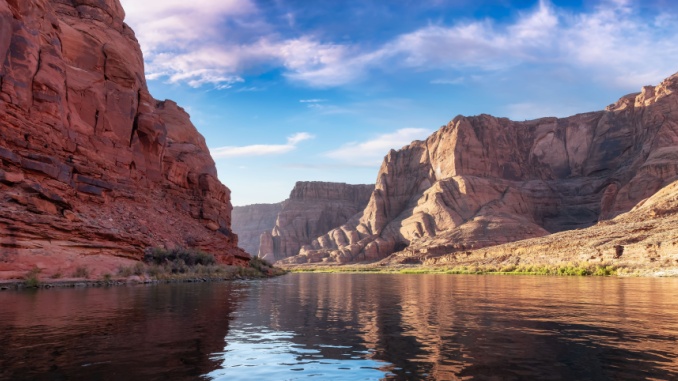
Arizona Republican legislative leaders are backing Congressman Andy Biggs’ proposed $19 billion plan to expand water supplies and accelerate infrastructure projects throughout the Colorado River Basin.
The Colorado River Basin Water Security and Infrastructure Act, introduced by Biggs (R-AZ-05) last week, would authorize funding for water augmentation, desalination, storage, treatment, recharge, and conveyance projects across the seven Basin states.
The goal of the legislation I introduced this week is simple: add new water, strengthen the Basin, and protect the farms, communities, and military installations that depend on the Colorado River.
My bill offers a path forward by investing in new water, modernizing critical…
Senate President Warren Petersen (R-LD14), House Speaker Steve Montenegro (R-LD29), and several Republican committee leaders have announced their support for the proposal, arguing that Arizona needs to focus on developing additional water supplies as uncertainty continues over the Colorado River.
“Arizona can’t make it rain or snow, but we can take action to secure our water future,” said Petersen.
Petersen said state lawmakers worked with Biggs to ensure Arizona priorities were incorporated into the federal proposal.
“Arizona has known for years that shortages could put the Central Arizona Project at risk, Petersen said. “Valuable time to develop alternative supplies has already been lost, and we cannot afford to lose any more. That’s why we worked with Congressman Biggs to make sure Arizona’s priorities helped shape this federal plan.”
One of the bill’s central provisions would establish a $5 billion Colorado River Basin Water Augmentation Program for projects that increase, store, treat, or transport water.
States, tribes, municipalities, utilities, nonprofit organizations, and private entities could seek funding under the program.
The federal government would provide $2 for every $1 in non-federal funding, with priority given to projects that increase available water supplies, benefit multiple states, address municipal water needs, or reduce dependence on the Colorado River.
Montenegro said the proposal represents a shift from negotiations over how existing Colorado River supplies should be divided toward projects intended to increase available water.
“Congressman Biggs has put forward a serious proposal that addresses the problem Arizona should have started preparing for years ago: we need more water,” Montenegro said. “For too long, the discussion has centered on how to divide a declining supply. This legislation takes a better approach by removing unnecessary federal delays and putting real resources behind projects that can increase supply. Long-term water augmentation is the path forward.”
✅Arizona Republicans Applaud Federal Legislation to Expand Colorado River Water Supplies Biggs’ plan would speed new water projects, direct $19 billion in supply and infrastructure, and restore the Yuma Desalting Plant
The proposal would also change the federal permitting process for qualifying water projects. Agencies would have 30 days to determine whether an application is complete and 180 days to make a final decision, with a limited 90-day extension.
Certain qualifying projects would also be exempt from review under the National Environmental Policy Act while remaining subject to other applicable federal requirements.
Senate President Pro Tempore T.J. Shope (R-LD16), who chairs the Senate Natural Resource Committee, said increasing the Basin’s overall supply should be part of the long-term response to Colorado River shortages.
“Our job is to make sure Arizona families and businesses have reliable water without driving up costs,” said Shope. “We cannot solve a water shortage by arguing over smaller and smaller shares of the river. We need to make the pie bigger, and this bill gives Arizona and the other Basin states practical ways to bring more water into the system.”
Another major component of the legislation involves the Yuma Desalting Plant.
The bill would direct the U.S. Department of the Interior to restore the plant to operational status within 180 days and authorize $1 billion for restoration, operation, modernization, and expansion.
According to a press release from the Legislature, treating agricultural drainage water at the facility could help meet U.S. treaty obligations to Mexico while preserving an equivalent amount of Colorado River water in the system.
An additional $1 billion would be authorized to support seawater desalination facilities that could be used toward U.S. treaty obligations, potentially reducing the amount of Colorado River water delivered from the United States.
House Speaker Pro Tempore Neal Carter (R-LD15) said the provisions are intended to focus on developing additional sources rather than relying solely on managing existing supplies.
“We need to stop trading paper around and start bringing new, real wet water into the state. Congressman Biggs’ plan prioritizes just that,” Carter said. “Instead of focusing on scarcity, as Governor Hobbs has done by instituting water-use moratoriums and vetoing bills designed to authorize access to new water, Biggs’ bill plans for prosperity and abundance through the development of new water sources.”
The proposal would additionally authorize $12 billion for federal water infrastructure projects throughout the Basin, including potential water capture projects in California, augmentation and storage projects serving Arizona and Nevada, and infrastructure and forest restoration projects in the Upper Basin.
According to the legislation and the Arizona Legislature’s summary, the proposal would preserve existing Colorado River entitlements and state water priorities and would not modify state water rights, interstate compacts, or the Arizona v. California decree.
House Natural Resources, Energy and Water Committee Chairwoman Gail Griffin (R-LD19) called expanding the water supply a priority that should receive support across party lines.
“Expanding water supply should be a bipartisan priority,” Griffin said. “We need a long-term solution that protects the Colorado River system and works for everyone who depends on it. House and Senate Republicans support Congressman Biggs’ legislation and will continue working on state policies that protect existing residents, increase supply, and support rural economies.”
Biggs introduced the legislation to confront long-term questions over Colorado River operations and water availability. His office has characterized the proposal as an effort to supplement conservation and allocation negotiations with projects designed to add or preserve water supplies throughout the system.
Ethan Faverino is a reporter for AZ Free News. You can send him news tips using this link.
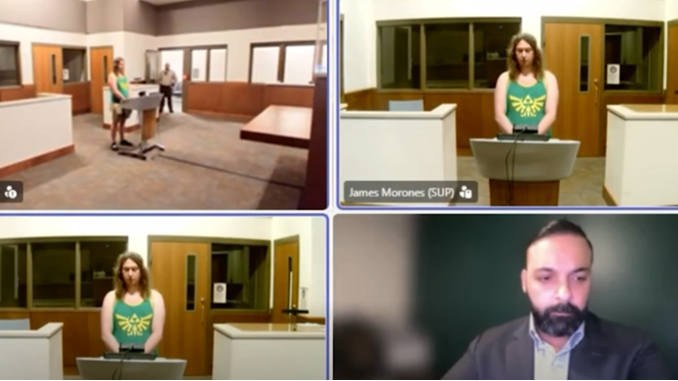
Glendale resident Joshua James Lozano, 42, fainted in court after learning that he may spend life in prison for the charges against him.
Lozano faces 10 felony counts of sexual exploitation of a minor in the Maricopa County Superior Court (case number: CR2026-135393-001).
Lozano was charged with 10 counts of distributing, transporting, exhibiting, receiving, selling, purchasing, electronically transmitting, possessing, or exchanging any visual depiction in which a minor is engaged in exploitative exhibition or other sexual conduct.
The judge found that probable cause was present for all 10 counts.
Maricopa County deputy county attorney Ashley Stetson appeared on behalf of the state of Arizona. Stetson said the state recommended sentencing of 10 years on each count, and requested the sentences be served consecutively — or, 100 years.
“He is, in effect, looking at a life sentence,” said Stetson. “The state has concern for the community, specifically minors in the community. It does appear based on the state’s reading of the form that he may have been talking online with underaged minors.”
Moments after Stetson proposed that punishment, Lozano collapsed. His fall temporarily caused court proceedings to halt and required emergency medical assistance, though moments after his fall, Lozano returned to a seated position with minimal assistance.
Court documents reflect that authorities arrested Lozano after receiving tips from the National Center for Missing and Exploited Children (NCMEC). The organization reported receiving multiple CyberTips from Lozano’s internet service provider between April and May that alleged that Lozano had accessed sexual exploitation materials involving minors.
Lozano has resided in Glendale for the past eight years with his wife of six years. Glendale police arrested Lozano last week after investigators traced the illicit online activity to Lozano.
NCMEC operates a CyberTipline which collects tips from the public and electronic service providers regarding suspected online enticement of children for sexual acts, child sexual molestation, child sexual abuse material, child sex tourism, child sex trafficking, and unsolicited obscene materials sent to a child.
In 2025, NCMEC reported receiving more than 21 million reports to its CyberTipline.
Lozano worked as a cleaner for Banner Del Webb Hospital in Sun City. Court records also reflected that Lozano was arrested in the past for driving under the influence and on a suspended license.
Republican lawmakers in Arizona have prioritized securing stricter laws to protect children from online exploitation and harsher punishments for adults who exploit children.
Rep. Andy Biggs (AZ-05), the Republican nominee for governor, has been advocating for bipartisan support of legislation addressing child exploitation occurring online. The new legislation addresses violent online terror networks, or child sextortion cells, which coerce and exploit children into committing torturous or sexually exploitative acts including self-harm, suicide, and animal abuse.
Similar to the proposed sentencing Loranzo faces, the proposed congressional measure would punish violators with up to 10 years in prison, or up to life in prison if the child dies as a result of the coercion or extortion.
AZ Free News is your #1 source for Arizona news and politics. You can send us news tips using this link.
A new study from the Joint Economic Committee (JEC) found that household inflation has been lower this presidential term than the last.
The JEC published a data brief on Thursday that reflected that the average household faced $2,881 less in additional costs from rising prices during the first 20 months of President Donald Trump’s second term — from January 2025 through August 2026 — than the first 20 months of former President Joe Biden’s term — from January 2021 through August 2022.
That cost difference amounts to an average reduction of nearly 41%.
“The comparison does not mean prices declined during President Trump’s second term,” stated the JEC. “Rather, the analysis finds that the cumulative increase in household costs was substantially smaller than during the comparable period under President Biden.”
During the first 20 months of Biden, the average American household experienced $7,081 in additional costs. Arizona was above this average. The average Arizona household experienced $8,427 in additional costs during that same time frame.
During the first 20 months of Trump, the average American household experienced $4,200 in additional costs. Arizona was below this average. The average Arizona household experienced $4,000 in additional costs during that same time frame, a reduction of $4,427 from the prior administration.
In Arizona, that cost difference between administrations amounts to an average reduction of nearly 52%.
In December 2025, the White House released an analysis reflecting that states experienced a difference in year-over-year inflation based on the political affiliations of their leadership. Conservative-leaning states experienced an overall average 2.5% inflation rate, whereas liberal-leaning states experienced an overall average 3% inflation rate.
Conservative states experienced an average 3.4% year-over-year inflation rate for housing, 2.5% for food and beverage, 3.5% for energy, and 0.7% for transportation, compared to liberal states experiences of 3.6% inflation rate for housing, 2.7% for food and beverage, 5.2% for energy, and 2.5% for transportation.
The consistent rates of heightened inflation rates under liberal governance remained true when distinguishing states based on the political affiliations of the governor and legislature, and state control.
States led by conservative governors experienced 2.3% year-over-year inflation rate overall, 3.2% inflation rate for housing, 2.4% inflation rate for food and beverage, 2.9% inflation rate for energy, and 0.6% inflation rate for transportation.
States led by liberal governors experienced a 3% inflation rate overall, 3.7% inflation rate for housing, 2.7% inflation rate for food and beverage, 5.3% inflation rate for energy, and 2.1% inflation rate for transportation.
States with conservative legislatures experienced a 2.4% inflation rate overall, 3.3% inflation rate for housing, 2.4% inflation rate for food and beverage, 2.9% inflation rate for energy, and 0.6% inflation rate for transportation.
States with liberal legislatures experienced a 3% inflation rate overall, 3.6% inflation rate for housing, 2.7% inflation rate for food and beverage, 5.1% inflation rate for energy, and 2.5% inflation rate for transportation.
States in which the legislature had neither a conservative or liberal majority experienced a 3.1% inflation rate overall, 4.5% inflation rate for housing, 2.7% inflation rate for food and beverage, 7.7% inflation rate for energy, and 0.9% inflation rate for transportation.
States defined as under conservative control experienced a 2.3% inflation rate overall, 3.3% inflation rate for housing, 2.4% inflation rate for food and beverage, 2.9% inflation rate for energy, and 0.6% inflation rate for transportation.
States defined as under liberal control experienced a 3% inflation rate overall, 3.6% inflation rate for housing, 2.7% inflation rate for food and beverage, 5.4% inflation rate for energy, and 2.7% inflation rate for transportation.
States defined as under neither conservative nor liberal control experienced a 2.8% inflation rate overall, 3.8% inflation rate for housing, 2.7% inflation rate for food and beverage, 4.7% inflation rate for energy, and 0.7% inflation rate for transportation.
Arizona was defined as having a conservative affiliation. The state experienced a year-over-year inflation rate of 2.6% overall, 1.8% for housing, 2.6% for food and beverage, 2.3% for energy, and 1.4% for transportation.
The city of Phoenix was also included as a major metro area for that analysis, but it was defined based on the state’s assigned affiliation of “conservative.” The city experienced a year-over-year inflation rate of 1.4% overall, -0.1% for housing, 1.1% for food and beverage, 6.7% for energy, and 0.8% for transportation.
AZ Free News is your #1 source for Arizona news and politics. You can send us news tips using this link.