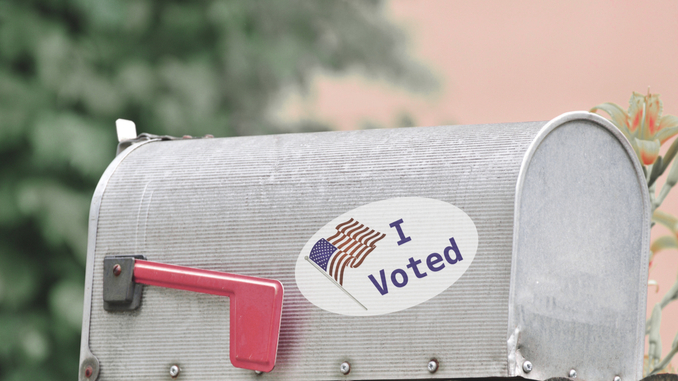
The Maricopa County Recorder’s Office recovered $500,000 in overcharges from the federal postal agency.
County Recorder Justin Heap reported during Wednesday’s board of supervisors meeting that the United States Postal Service (USPS) had overcharged Maricopa County for “several years,” to the tune of $500,000. The recorder advised the supervisors that their office worked with USPS to recoup those lost funds.
“We discovered the United States Postal Services has been overcharging Maricopa County for quite a few years. We have worked with them, we will be receiving a refund of $500,000 from USPS to help defray the costs of everything going forward,” said Heap. “We used to give awards in this county for people who save the county money, now we get subpoenas.”
$500,000 makes up about two percent of the recorder’s budget under the 2026 fiscal year budget. It amounts to a little over one percent of the 2025 fiscal year budget.
The revelation of the recovered $500,000 emerged during a special meeting called by the board of supervisors requiring Heap to testify on the administration of his office and claims of disenfranchisement — a meeting which Heap made clear he opposed.
“This reaches to the level of administrative interference. We’re in the middle of an election, I’ve had to pull certified election officers off of this election to spend time compiling this report and these documents to comply with this demand,” said Heap.
Heap brought the report which he said contained “thousands of pages of documents” providing evidence of his office’s administration. The recorder said the compilation of this report strained his office due to the constrained timeline of less than a week.
As to the disenfranchisement claims that emerged during Maricopa County Superior Court testimony last month, Heap said the recorder’s office has struggled in previous elections to complete provisional ballots under the condensed time frame. In order to solve that problem, Heap asked the board for an Agilis sorting machine. That sorter would cost just under $600,000.
The recorder said relying on Runbeck for provisional processing wouldn’t be advisable considering their company doesn’t connect to the county’s voter database, and the requirement of transporting the ballots to Runbeck would expose the county to chain of custody complications.
Heap said disenfranchisement hasn’t occurred “so far this year” under his administration, and that claims made during court testimony were referencing past administrations. One of the staff members who cited disenfranchisement during their testimony, chief of staff Sam Stone, retained his own counsel.
Supervisor Thomas Galvin asked Heap to explain why the Maricopa County Attorney’s Office (MCAO) said they had not approved universal mail-in ballots during last year’s congressional district 7 special election, when the recorder’s office said they had.
Heap rejected the characterization of those mail ballots. He said his office only made a proposal to send ballots to a selection of 3,000 voters who lacked a polling place, but didn’t act on it.
“This proposal was not even put in our plan to the MCAO, and we never implemented it, I’m not sure why the board has continued to hang up on a proposal that was never actually implemented,” said Heap.
AZ Free News is your #1 source for Arizona news and politics. You can send us news tips using this link.
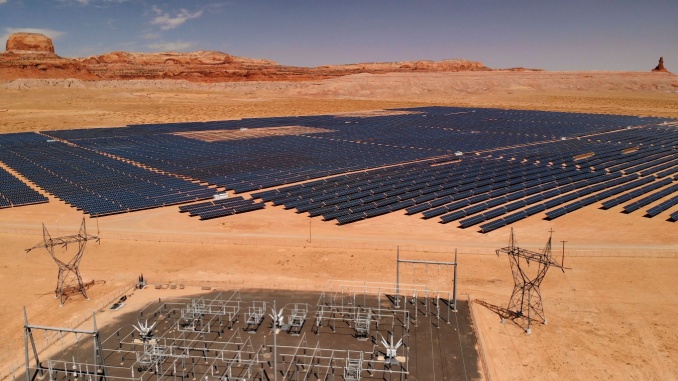
Property tax subsidies for wind and solar projects may be coming to an end in Arizona.
On Wednesday, an Arizona House committee approved HB 2918, legislation to hold renewable energy to the same taxation standards as other forms of energy production. The bill passed the Natural Resources, Energy and Water (NREW) Committee only with support from Republican lawmakers.
According to Joint Legislative Budget Committee estimates, renewable energy companies benefit from about $180 million annually in tax exemptions in the state.
The millions in exemptions come from two “stacked” subsidies: a reduction in the taxable original cost, which reduces a project’s starting valuation base below the actual amount invested through the value of certain federal incentives, and a valuation of 20 percent of depreciated cost, which sets the full cash value of renewable energy and storage equipment at 20 percent of the cost determined following establishment of the taxable original cost.
Republican lawmakers argue this benefit has gone on far enough, given how well-established the renewable energy industry has become. Legislative leaders say these sorts of benefits should be exclusive to emerging industries, like data centers.
Wednesday’s lack of support from Democratic lawmakers indicated the desire to shift resources away from renewable energy is rooted in a partisan desire to shrink the state’s foregone revenues.
NREW Committee chair Gail Griffin (R-LD19) said this legislation would put the merits of renewable energies to the test on the free market while keeping power reliable and affordable. Griffin said the “preferential treatment” of renewable energy lacked justification for further continuance.
“The American public has known from day one that these projects could not stand on their own feet without massive state and federal tax breaks,” said Griffin. “If renewable energy projects like wind and solar are truly the lowest-cost resource, then they should have no problem repealing the massive property tax break for new projects going forward.”
Last month, Gov. Katie Hobbs targeted the benefits given to data centers during her state of the state address.
House Majority Leader Michael Carbone (R-LD25) countered in a press release issued Wednesday that data centers have justification for their tax exemptions — renewable energies, not so much. Data center tax exemptions amount to about $38 million annually, less than one-fourth the amount received by renewable energy.
“The Governor said during her State of the State that, over a decade ago, ‘we made a strategic decision to grow data centers by creating a tax exemption for them,’ but then asked, ‘Should taxpayers continue subsidizing the data center industry?’” said Carbone. “I think the same question should be asked of large, utility-scale renewable energy projects like wind and solar. Years ago, this state gave renewable energy projects a massive tax break, substantially more than data centers, and now it’s appropriate to ask whether it’s fair to have Arizona taxpayers continue subsidizing the renewable energy industry.”
The legislation would impact large, out-of-state corporations. It would not apply to those facilities owned by or engaged in a power purchase agreement with the state’s public utilities — part of a grandfathering provision to ensure tax break eliminations don’t trigger a jump in customer rates.
AZ Free News is your #1 source for Arizona news and politics. You can send us news tips using this link.
Arizona Senate Majority Whip Frank Carroll (R-LD28) advanced legislation Monday aimed at tightening restrictions on foreign adversaries’ ability to acquire or access land and critical infrastructure in the state.
Senate Bill 1683 would lower the statutory “substantial interest” ownership threshold from 30% to 5% and expand prohibitions to prevent the use of shell companies, convertible debt arrangements, options, and other financial structures to obtain property interests in Arizona, according to a press release from Senate leadership.
The measure also restricts access not only to ownership interests, but to leases, development rights, and the installation or operation of certain equipment on Arizona property. The bill applies to equipment, including antennas, communication systems, autonomous technology, surveillance devices, and high-sensitivity sensors.
Under SB 1683, public utilities and operators of critical infrastructure would be required to report suspicious agreements involving covered entities. Violations involving the use of prohibited equipment would be classified as felonies.
“This is about protecting Arizona, plain and simple,” Carroll said in a statement. “We’ve already taken steps to prevent hostile foreign governments from purchasing our land, but we’ve seen how quickly bad actors adapt. If they can’t buy property, they will try to lease it. If they can’t put their names on a deed, they’ll hide behind shell companies or secretly install surveillance equipment. This bill closes those loopholes.”
He added, “Arizona farmland, military-adjacent property, airports, utilities, and critical infrastructure should never become tools for foreign espionage or leverage for hostile regimes. We must not allow adversarial nations or terrorist-linked actors to gain control, either directly or indirectly, over Arizona soil. This legislation draws a clear line: our land, infrastructure, and security are not for sale, lease, or negotiation.”
SB 1683 passed the Senate Federalism Committee on a 5-2 vote, with only Republican support, and now advances to the full Senate for consideration.
Arizona lawmakers enacted a 2025 measure, Senate Bill 1082, adding A.R.S. § 33-443 to state statutes, which restricts land purchases by entities connected to designated foreign adversaries. SB 1683 would amend and expand those existing provisions.
If approved by the Legislature and signed into law, the bill would take immediate effect as an emergency measure with a two-thirds vote of both legislative houses.
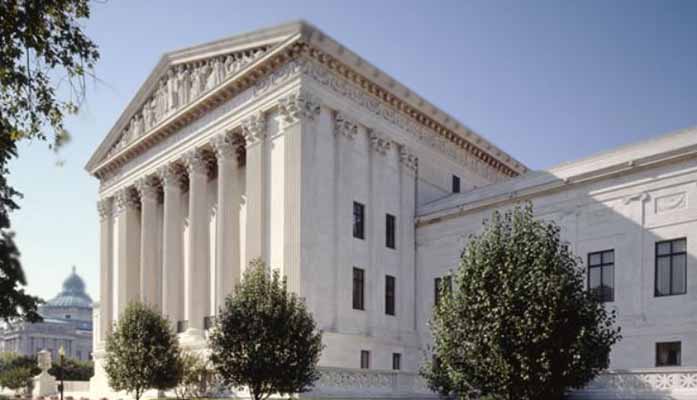
Arizona state lawmakers requested the U.S. Supreme Court to take up an appeal on the state’s proof of citizenship for voter registration.
Last February, the Ninth Circuit Court of Appeals struck down two laws which established proof of citizenship requirements. That court declared Arizona’s laws attempting to add more requirements on voter registrations were preempted by the simpler registration requirements of federal voting rights laws under the National Voter Registration Act (NVRA) and were therefore invalid.
Those laws, passed in 2022 under then-Gov. Doug Ducey, restricted mail-in voting for registrants lacking citizenship verification in addition to requiring recorders to check federal citizenship databases and applicants to provide documentary proof of citizenship and residence. These pieces of legislation emerged following the Supreme Court’s 2013 decision against an Arizona law requiring proof of citizenship when registering to vote in federal elections.
Several years later, in 2018, the state entered into a consent decree requiring county recorders to search Arizona Department of Transportation (ADOT) records for state registration forms lacking proof of citizenship. Those applications without verifiable citizenship proof through ADOT would only be allowed to cast ballots in the federal election, otherwise known as “federal-only voters.”
A number of progressive activist organizations joined in a lawsuit to challenge these laws: Mi Familia Vota, Voto Latino, Living United for Change in Arizona, League of United Latin American Citizens, Arizona Students Association, ADRC Action, Arizona Coalition for Change, Poder Latinx, Chicanos Por La Causa and their affiliated action fund, Democratic National Committee, Arizona Democratic Party, Arizona Asian American Native Hawaiian and Pacific Islander for Equity Coalition, Promise Arizona, and the Southwest Voter Registration Education Project.
The Inter-Tribal Council of Arizona, San Carlos Apache Tribe, Tohono O’odham Nation, and Gila River Indian Community also were among the challengers to proof of citizenship laws, citing concerns with challenges tribal members face to obtain proof of residency. Several tribal members were named independently in the lawsuit: Keanu Stevens, Alanna Siqueiros, and LaDonna Jacket.
The leaders of the Republican-led Arizona legislature filed their petition with the Supreme Court this week.
Sen. President Warren Petersen (R-LD4) issued a press release announcing the Supreme Court petition in which he accused the Ninth Circuit judges of having “rewrote” federal law and ignored Supreme Court precedent.
“For more than two decades, Arizona has required proof of citizenship to register to vote, because only American citizens should decide American elections,” said Petersen. “This case is about whether states still have the power to enforce commonsense safeguards to ensure only eligible voters participate in our elections. Arizona is standing up not just for our state, but for every state’s constitutional authority to secure its own elections.”
The filing argues that the Ninth Circuit ruling against Arizona law stretches federal voting law far beyond its allowable interpretation.
“This case, which comes to the Court on a non-expedited basis and underpinned by a comprehensive evidentiary record, offers an ideal vehicle for clarifying the NVRA’s preemptive scope, affirming that federal consent decrees cannot perpetually paralyze state legislative bodies, and vindicating the presumption of legislative good faith,” read the filing.
AZ Free News is your #1 source for Arizona news and politics. You can send us news tips using this link.
On Wednesday, the Arizona Senate Health and Human Services Committee has advanced SB 1214, the “Arizona Stem Cell Therapy Act.”
The bill, sponsored by Senator Janae Shamp (R-LD29), builds on Arizona’s established status as a “Right to Try” state. SB 1214 introduces comprehensive medical standards and ethical guidelines for stem cell therapies and birth tissue therapies.
The legislation permits physicians to offer certain non-FDA-approved treatments within their scope of practice, provided they adhere to strict requirements on sourcing, transparency, informed consent, and quality control.
“When Arizona patients pursue innovative therapies, they deserve to know treatments are being delivered safely and responsibly,” stated Senator Shamp in a press relase announcing the advancement of the bill. “This legislation puts medical guardrails in place, strengthens transparency, and helps ensure bad actors cannot take advantage of vulnerable people searching for hope. We are promoting access to therapies while making sure patients know they are receiving care that meets recognized medical standards.”
Key provisions of SB 1214 include:
An explicit prohibition on the use of cells or tissues derived from aborted fetuses or embryos in any stem cell or birth tissue therapy, with willful violations classified as a Class 5 felony and subject to professional discipline.
Mandates that stem cells and birth tissues come from facilities registered with the FDA or accredited by recognized organizations, such as the American Association of Tissue Banks, the Association for the Advancement of Blood and Biotherapies, the National Marrow Donor Program, or the World Marrow Donor Association.
Requirements for post-thaw viability reports for live stem cells, certificates of analysis for birth tissues (confirming negative tests for communicable diseases and presence of growth factors), and compliance with federal good manufacturing practices.
Strong informed consent rules, requiring physicians to disclose that treatments are not FDA-approved, outline risks, benefits, alternatives, and encourage consultation with a primary care provider.
Mandatory advertising disclosures in prominent type: “This notice is required by Arizona law. This physician offers one or more stem cell therapies or birth tissue therapies that are not approved by the United States Food and Drug Administration. You are encouraged to consult with your primary care provider before undergoing any stem cell therapy or birth tissue therapy.”
Civil remedies allowing patients harmed by violations to seek $10,000 in statutory damages per violation, plus attorney fees.
Supporters, including medical experts who testified before the committee, stressed that the bill establishes a medical standard of care rather than a political one. They highlighted the clinical use of ethically sourced afterbirth tissues—such as placental or amniotic materials collected during planned C-sections from healthy mothers and deliveries—as a safe, effective approach for regenerative applications.
Healthcare policy expert Brigham Buhler emphasized the sourcing process: “The standard of care is to have a preplanned C-section so that you can get the most out of that tissue. So, healthy birth, healthy mother, pre-planned C-section is how they collect this discarded afterbirth tissue to avoid any cross contaminants. Those tissues, when applied appropriately into the right patient under the right standards of care, can be life changing. I’ve seen it impact soldiers who come back from war. I have seen it impact patients with Alzheimer’s, dementia. We’ve helped orthopedic injuries, knees, shoulders, elbows, soft tissue. The beauty of these products is they’re healing you from within.”
Dr. Pradeep Albert reinforced the medical rationale for excluding aborted tissue: “We don’t use aborted tissue, not from a political point of view, but from a medical point of view. Placenta tissue contains DNA from both the mother and the father, which helps regenerate soft tissue. There is no country on the planet that uses aborted tissue for regenerative stem cell therapies, like injections into joints, because it can cause tumors and other serious problems.”
The bill now advances to the Senate floor for further consideration.
Ethan Faverino is a reporter for AZ Free News. You can send him news tips using this link.
The National Republican Congressional Committee (NRCC) released a new installment of its “Inside the Majority” video series spotlighting Juan Ciscomani (R-AZ06) on Wednesday. Ciscomani’s Southern Arizona district is rated a “Toss-Up” by the Cook Political Report ahead of the 2026 election.
The NRCC describes the series as highlighting Republican members viewed as critical to maintaining GOP control of the U.S. House of Representatives.
The episode featuring Ciscomani is available on YouTube and on X:
WATCH: Arizona Republican @JuanCiscomani's incredible story epitomizes the American Dream
Now as a dad serving his community in Congress, Juan's fighting to give every Arizona family the opportunity to "pursue their own version of the American Dream"
Arizona’s 6th Congressional District is considered one of the most competitive House races in the country. The Cook Political Report currently rates the district as a “Toss-Up,” reflecting its narrow partisan split.
Ciscomani first won the seat in 2022 by approximately 1.5 percentage points after the district flipped from Democratic to Republican control. He was reelected in 2024 by roughly 2.5 percentage points, increasing his margin and adding more than 5,000 votes to his prior total.
An incredible day as my family joins me for my swearing-in ceremony to begin my second term in Congress!
I’m deeply honored and humbled by your trust in me and I’m ready to keep fighting for AZ06 and protect the American Dream. Ready to get to work! 🌵🇺🇸 pic.twitter.com/rUX8jOqcNB
— Congressman Juan Ciscomani (@RepCiscomani) January 3, 2025
Ciscomani is currently the only declared Republican candidate in the race and was endorsed by President Donald Trump in an April 2025 post to Truth Social. The President wrote, “Congressman Juan Ciscomani is a Tremendous Champion for Arizona’s 6th Congressional District! As a Member of the POWERFUL Appropriations Committee, Juan is fighting hard to Secure the Border, Stop Migrant Crime, Strengthen our Military/Vets, Support our Great Law Enforcement, and Protect our always under siege Second Amendment. Juan Ciscomani has my Complete and Total Endorsement for Re-Election — HE WILL NOT LET YOU DOWN!”
In the video, Ciscomani discusses his immigration background and legislative priorities.
“My name is Juan Ciscomani and I was born in Mexico,” Ciscomani says in the segment. “I immigrated with my family when I was 11 years old, and then, after a long process, became a U.S. citizen along with my family back in 2006. Sixteen years after becoming a U.S. citizen, I became a member of the United States Congress.”
Ciscomani references his first bill to pass the House, which focused on expediting veterans’ disability claims and expanding workforce opportunities for transitioning service members.
He also highlights the Working Families Tax Cuts Act, which he says is intended to prevent scheduled tax increases and expand tax relief provisions.
“The Working Families Tax Cuts Act is having an immediate and enormous impact in the district,” Ciscomani says in the video. “Not only does it avoid the cliff of a lot of taxes going up by the thousands in my district, but it also introduces great ways to have people keep their hard earned money. These are all quick and immediate ways that people will be able to see the benefits of this act.”
According to NRCC materials, the legislation includes provisions related to the Child Tax Credit, the standard deduction, Social Security taxation, tipped wages, overtime pay, and savings accounts.
NRCC spokesman Ben Petersen said Ciscomani’s district is central to the party’s majority strategy.
“Juan Ciscomani embodies what it means to be an effective representative—he shows up, listens and delivers results on the issues that matter most to Arizona families,” Petersen said. “From securing the border to ensuring water reliability and supporting our veterans, Juan has proven he’s a fighter for Arizona.”
Speaking to his motivations for serving in Congress, Ciscomani observed, “When I look at my kids in the future that I want for them, which is for them to find their path and have a shot at the American dream. What motivates me is my family and all those families out there that I want them to have a real opportunity in this country to go pursue their own version of the American dream. That’s what motivates me, so that we can do what we do here. To have families out there at home can go do what they were called to do.”
When first elected to Congress in 2022, Ciscomani became the first naturalized U.S. citizen born in Mexico elected to represent Arizona in the U.S. House of Representatives. He serves on the House Appropriations Committee and has advocated for federal funding for infrastructure, border security, water projects, and veterans’ services within the district.