by Matthew Holloway | Mar 20, 2026 | News
By Matthew Holloway |
Pima County Sheriff Chris Nanos is facing a recall effort that could trigger a countywide election if supporters gather enough signatures in the coming months.
The recall effort was launched on March 12 and has been confirmed by the Pima County Elections Department. Organizers will have 120 days to collect more than 120,000 valid signatures to qualify the recall for the ballot.
If the required number of signatures is verified, a recall election would be held in which any qualified candidate could run, with the top vote-getter winning the office.
Nanos acknowledged the effort, stating, “We’re aware of the recall, and it’s the right of the people. We’ll always honor the will of the people, and that’s what makes democracy.”
The recall effort is being led by Daniel Butierez, a Republican candidate who ran for Congress against Rep. Adelita Grijalva (D-AZ07) in 2025.
In a post to X on March 12, Butierez called on Nanos to resign, writing, “He has lost the trust of the people. If he does not by the end of Friday, I will begin to organize the effort to recall Nanos.”
He subsequently launched the recall effort with a follow-up post on March 17.
The effort comes amid a series of controversies surrounding the sheriff. Nanos recently addressed discrepancies in his work history following reports of what his office called “clerical errors,” which were “administrative in nature.” A county inmate has also filed a $1.3 million lawsuit against him and his department.
Nanos has also faced national scrutiny over his department’s handling of the investigation into the disappearance of Nancy Guthrie, the 84-year-old mother of television host Savannah Guthrie. In addition, the sheriff has been at odds with the Pima County Board of Supervisors over budget issues, according to KOLD.
Arizona law allows voters to recall local elected officials, but such efforts are relatively uncommon and infrequently successful. Notable exceptions, include the 2011 recall of former state Senate President Russell Pearce and the 2025 recall of Mesa Councilwoman Julie Spilsbury.
Matthew Holloway is a senior reporter for AZ Free News. Follow him on X for his latest stories, or email tips to Matthew@azfreenews.com.
by Staff Reporter | Mar 20, 2026 | News
By Staff Reporter |
The Arizona House passed new regulations addressing nicotine products that allegedly target children.
HB 4001 passed out of the House on Monday, 32-19.
The bill passed with majority support from Republican members. Five Democratic members and three Republican members voted against the bill.
Arizona law prohibits individuals under the age of 21 from purchasing or possessing tobacco or vapor products.
HB 4001, as passed by the House, would prohibit marketing, advertising, or selling alternative nicotine products in containers depicting any cartoon character mimicking a character primarily aimed at entertaining, mimicking a trademark or a symbol aimed at minors, including the image or name of a celebrity, or meaning to disguise the appearance of an alternative nicotine product.
The bill would also expand the powers and requirements for the Department of Liquor Licenses and Control (DLLC) to enforce laws against the sale or possession of alternative nicotine products to those under 21. Come 2028, the legislation would also require individuals to obtain licenses for the sale and manufacture of alternative nicotine products. Those licenses would need renewal every two years.
State Rep. Jeff Weninger (R-LD13) said in a statement that the legislation strengthens state oversight of the nicotine market.
“Arizona should not tolerate a market where nicotine products are packaged to look like toys and sold with weak oversight,” said Weninger. “This bill puts guardrails in place, holds bad actors accountable, and makes clear that if you are in this business, you are going to follow the law.”
State Rep. Cesar Aguilar (D-LD26) said the “fine print” of the bill would prevent Attorney General Kris Mayes from taking action against vaping companies. Aguilar accused Weninger of pushing a bill backed by Big Tobacco and vape retailers. Aguilar took particular issue with the $10,000 fine for individuals who distribute, manufacture, or sell alternative nicotine products without a license, arguing it was too low.
“They don’t care about our children, they care about their pockets. If we really wanted to protect youth of Arizona, we would empower the attorney general to go after these predatory companies, not take away [her] power to enforce,” said Aguilar.
State Rep. Alexander Kolodin (R-LD3) argued against the bill for different reasons. Kolodin said the legislature shouldn’t be focused on expanding regulatory oversight. Instead, Kolodin advocated for the legislature to take a hands-off approach so parents could address the issue.
“Let the parents of Arizona decide how they’re going to monitor and discipline their kids to make sure their kids are not accessing anything they’re not supposed to be accessing,” said Kolodin. “50 years ago that concept in this country was common sense, and I have no idea why this body has chosen so often to depart from it, but I choose not to.”
Weninger defended his bill from the bipartisan naysayers. He emphasized the legislation’s focus was necessary to hold manufacturers, distributors, and retailers responsible for enticing children with nicotine products.
“The status quo is, kids are in the high school bathrooms vaping and smoking because it’s being sold to minors. This would severely penalize those people,” said Weninger.
Weninger indicated the Senate may have more amendments for his bill, but he didn’t specify what those would entail.
AZ Free News is your #1 source for Arizona news and politics. You can send us news tips using this link.
by Staff Reporter | Mar 20, 2026 | News
By Staff Reporter |
Congressman Abe Hamadeh (R-AZ-08) successfully convinced the FDA to reverse its decision to remove desiccated thyroid medications from the market.
The congressman issued a press release last week detailing this latest development in the ongoing battle between patient autonomy and federal oversight. Hamadeh explained that the FDA won’t take action to pull DTE medications from the market while companies work toward formal FDA approval.
The usage of DTE in medications predated the creation of the FDA; they were grandfathered in due to their safety and efficacy. Conservative government estimates placed DTE users at 1.5 million in 2024.
Hamadeh clarified that DTE patients will be able to continue getting their prescriptions without interruption, but that the FDA course reversal doesn’t constitute a permanent approval. The FDA noted in an update last week that it changed course to a “risk-based enforcement approach” rather than a blanket removal, and pledged to issue formal draft guidance on compliance priorities by this August.
“As I have said before, it was clear to me based on the feedback that I have received from countless constituents that the FDA’s action against these medications was likely not science-based,” stated Hamadeh. “So, I did not hesitate to question the FDA’s action that many of my constituents believe would negatively impact their quality of life.”
Certain hypothyroid patients rely on these natural thyroid medications, or desiccated thyroid extract (DTE), due to inefficacy or adverse reactions to the synthetic, FDA-approved alternative. DTE medications are made from dried, ground animal thyroid glands (usually porcine).
Most medical practitioners default to the prescription of the synthetic thyroid drug levothyroxine, approved by the FDA in 2000. These and several other synthetic thyroid drugs approved by the FDA provide only one of the two main hormones produced by the thyroid gland, T3 and T4. Unlike their synthetic counterparts, DTE medications provide both T3 and T4.
Last August, the FDA announced it would make DTE medications unavailable within a year at the direction of Center for Drug Evaluation and Research (CDER) Director George Tidmarsh. Tidmarsh had assumed leadership of CDER just one month before the enforcement action — his very first on the job.
Three months later, in November, Tidmarsh resigned following allegations in a lawsuit that he used his CDER power to harm a former associate, Kevin Tang, by taking enforcement actions against certain drugs — including several DTE medications.
According to the lawsuit, Tidmarsh was accused of attempting to extort American Laboratories, in which Tang was board chair, shortly after the FDA announced its enforcement action.
American Laboratories manufactures Armour Thyroid and NP Thyroid, two of the top brand names for DTE medications. The two drugs constitute their core product line.
Over a month later, Tidmarsh turned his attention to a different drug manufactured by another company chaired by Kevin Tang, Aurinia Pharmaceuticals. In a since-deleted LinkedIn post, Tidmarsh made various accusations against the company’s nephritis drug, voclosporin, which the company alleged were false and defamatory.
LinkedIn appears to be a means by which Tidmarsh would put his former associates on notice. In the months leading up to his appointment as CDER director last July, Tidmarsh warned in another LinkedIn post that his first course of action would be to ban DTE medications.
“The new FDA needs to remove harmful, useless drugs from the market. Let’s start with desiccated thyroid extract,” said Tidmarsh. “An unapproved, crude pig tissue extract that is proven worse than synthetic thyroid hormone and harmful. Working with the new FDA to remove it permanently from the market.”
Following public reporting on Tidmarsh’s resignation and the accusations against him, Hamadeh urged FDA Commissioner Makary to withdraw or indefinitely suspend enforcement actions against DTE medications.
Despite Tidmarsh’s exit, the FDA maintains its claim that its concerns with DTE medications originate not with the personal vendettas of its former director, but with patient complaints and reports of adverse events. The FDA didn’t provide further detail on these alleged complaints or reports.
The FDA Adverse Event Reporting System (FAERS) reflected DTE medications having over 3,000 cases from 1970 to 2026. Less than 400 complaints were of the drugs being ineffective and less than 60 reports were of death as a reaction. AZ Free News included all available top name-brand and generic naming of DTE medications in our search: Armour Thyroid, NP Thyroid, Thyroid, Nature-Throid, and porcine thyroid.
Conversely, levothyroxine and its name-brand counterpart, Synthroid, alone accumulated over 46,000 cases of suspected adverse events since 2000, of which nearly 4,000 complaints were of the drugs being ineffective. The synthetic drugs have over 1,000 reports of death as a reaction.
AZ Free News is your #1 source for Arizona news and politics. You can send us news tips using this link.
by Staff Reporter | Mar 19, 2026 | Education, News
By Staff Reporter |
The honor colleges at all three of the state’s universities are mandating courses educating students on Diversity, Equity, and Inclusion (DEI).
The Goldwater Institute detailed two of the three colleges in a newly released investigatory report, “Desert Brain Drain.”
The three honors colleges in Arizona are Barrett Honors College at Arizona State University (ASU), which has about 7,500 students enrolled; the Honors College at Northern Arizona University (NAU), which has about 1,500 students enrolled; and the W.A. Franke Honors College at University of Arizona (U of A), which has about 4,500 students enrolled.
The Goldwater Institute found through public records that one of ASU Barrett Honors College’s required courses, The Human Event, hid a majority (85 percent) of its syllabi from the online catalog. ASU waited nearly a year to respond to Goldwater’s records requests on the hidden spring 2025 syllabi, and in its response, it redacted the names of the professors associated with the courses with the hidden syllabi.
Those records did reveal that 70 percent of the hidden syllabi from the spring 2025 catalog contained DEI content focusing on the alleged systemic oppression of certain identities related to race, gender, and sexual orientation.
Among the topics advanced by these hidden syllabi were the critical race theory concept of anti-racism, land acknowledgements, explorations of sexuality, decolonization, secularization, globalization, and transgenderism — with some content being graphic.
The W.A. Franke Honors College at U of A requires students to choose among the courses offered within its Honors Seminar, many which focus on DEI subjects similar to those presented by ASU Barrett Honors College required courses. Several courses focused on deconstruction of personal identity within the context of social justice, breaking down the idea of the self through the recognition of personal identities — race, gender, religion, class, and “social violence” — and recontextualizing the fractured and rebuilt self on political activism.
Although NAU Honors College was not included within the Goldwater Institute’s report, their primary required course (HON 190: Honors Colloquium) contained similar explorations of identity-based systemic oppression.
The spring 2026 semester came with two class options for the mandatory course, taught by professors Perry Davidson and Dina Yordy.
Davidson’s class requires students to read three novels challenging religion and embracing secularism: the classic work, “The Great Gatsby,” “Oranges Are Not the Only Fruit,” in which a lesbian leaves the Pentecostal community she grew up in, and “So Far From God,” in which characters serve to display criticisms of Catholicism and patriarchal structures while exploring decolonization and political activism.
Yordy’s class requires students to read three works as well: “The Piano Lesson,” a play about a Black family’s history with slavery and systemic racism, “We Have Always Lived in the Castle,” a novel about the persecution of a family by the intolerant religious townspeople, and “Home,” a novel advocating for the social justice understanding of homes through discussions of homelessness and immigration.
Timothy Minella, Goldwater Institute’s Director of Higher Education, argued in a press release that DEI shouldn’t be a requirement for Honors degrees at public universities.
“This isn’t just an Arizona problem,” he said. “Taxpayers and lawmakers across the country should pay attention to what’s happening in their universities and not sit idly by while activist professors indoctrinate our next generation of leaders on the public dime.”
Although the Arizona legislature has not been successful in its attempts to ban DEI in higher education, President Donald Trump did issue a series of executive orders last spring to cut off federal funding for entities advancing DEI. Those orders have been challenged and even struck down in court.
In an effort to circumvent these judicial challenges, the General Services Administration recently announced a proposed rule change blocking federal funding for schools implementing DEI.
Goldwater’s full report can be found here.
AZ Free News is your #1 source for Arizona news and politics. You can send us news tips using this link.
by Matthew Holloway | Mar 19, 2026 | News
By Matthew Holloway |
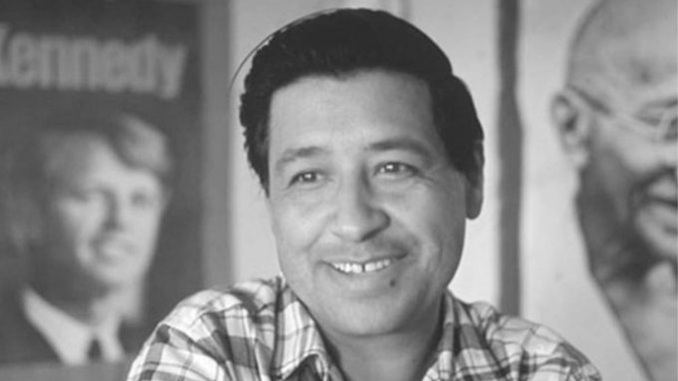
Arizona will not recognize Cesar Chavez Day this year following allegations detailed in a report by The New York Times that labor leader Cesar Chavez sexually abused girls and assaulted women connected to the United Farm Workers movement.
According to a FOX 10 Phoenix report, the state will not observe the March 31 holiday in response to the allegations. Arizona Gov. Katie Hobbs honored Chavez as recently as 2022 in a post on X, writing, “Today, we celebrate and honor the life and legacy of civil rights and labor activist Cesar Chavez.”
In a statement released March 17, the governor’s office said:
“The Governor’s Office is deeply concerned by the troubling allegations against César Chávez. As a social worker who worked with homeless youth and victims of domestic violence, Governor Hobbs takes allegations of inappropriate sexual behavior against women and minors very seriously. The Governor’s Office has decided to not recognize César Chávez Day this year. Our thoughts are with the victims and all those affected.”
The Times reported that two women, Ana Murguia and Debra Rojas, said Chavez sexually abused them for years when they were minors associated with the United Farm Workers’ La Paz compound in California. Murguia said Chavez was 45 and she was 13 when he began summoning her to his office for sexual encounters, which she said continued dozens of times over four years. Rojas said Chavez first touched her inappropriately when she was 12 and later had sexual intercourse with her at age 15 during the union’s 1975 1,000-Mile March—conduct the Times noted constituted rape under California law due to her age.
The investigation also reported that longtime labor activist Dolores Huerta, a co-founder of the United Farm Workers, said Chavez sexually assaulted her. Huerta told the Times that Chavez raped her in 1966 in Delano, California, and described an earlier 1960 encounter in which she said she felt pressured into sex during a work trip.
According to the Times, the findings were based on interviews with more than 60 people, including former aides, relatives, and union members, as well as a review of hundreds of pages of union records, emails, photographs, and audio recordings. The accounts of Murguia and Rojas were corroborated through interviews with individuals they had confided in and through contemporaneous documents and records, the report said.
The fallout was immediate. The United Farm Workers canceled its annual Cesar Chavez Day celebrations after learning of the allegations during the reporting process. In a statement cited by the Times, the organization said the “troubling allegations” were incompatible with its values and that it would take time to ensure support services were available for those affected.
Chavez’s family said it was “not in a position to judge” the claims, according to the Times, adding that the allegations were “deeply painful” and that they support individuals who report sexual misconduct.
The investigation further reported that some relatives and former union leaders had been aware of allegations of sexual misconduct for years, but there was no evidence of efforts to fully investigate or publicly address the claims. Internal communications reviewed by the Times included discussions of Murguia’s allegations dating back more than a decade. The report also cited a social media post by Rojas in a private group years earlier in which she alleged Chavez had molested her.
Additional allegations included an account from Esmeralda Lopez, who told the Times that Chavez made a sexual proposition to her in 1988 while she was working within the movement. Lopez said she refused. Her account was corroborated by her mother, according to the report.
The Times also reported that some individuals who worked closely with Chavez denied the allegations, while others who lived at La Paz said they did not experience misconduct.
Chavez, who died in 1993, remains a prominent figure in American labor and civil rights history, with his name attached to schools, public buildings, and annual observances nationwide. He was posthumously awarded the Presidential Medal of Freedom by former President Bill Clinton in 1994, and a bust of Chavez was displayed in the Oval Office of former President Joe Biden in 2021.
Arizona’s decision not to recognize Cesar Chavez Day this year marks a direct response to the findings outlined in the Times investigation.
Matthew Holloway is a senior reporter for AZ Free News. Follow him on X for his latest stories, or email tips to Matthew@azfreenews.com.
by Ethan Faverino | Mar 19, 2026 | Education, News
By Ethan Faverino |
Congressman Abe Hamadeh (AZ-08) announced earlier this month that high school students around the district are invited to submit original artwork for the 2026 Congressional Art Competition.
The non-partisan competition, also known as the Artistic Discovery Contest, is open to all high school students (grades 8-12) across the country, including those in homeschool, online school, or alternative learning programs.
The theme for the 2026 competition is “Celebrating 250 Years of Freedom in America,” marking the nation’s 250th anniversary of the Declaration of Independence.
Students are encouraged to create original two-dimensional artwork that reflects the enduring spirit of the nation and celebrates 250 years of American freedom, service, unity, and opportunity. Submissions should be patriotic in tone and supportive of the United States.
“I look forward to seeing even more talent from Arizona, as last year’s art submissions were truly incredible. We were proud to display winner Luke Wagner’s artwork at the Capitol and at my district office,” stated Congressman Hamadeh. “With the theme this year being our nation’s 250th birthday, I expect that we will be very inspired by the artwork we receive for consideration.”
Sponsored nationwide by Members of the U.S. House of Representatives and administered by the Congressional Institute since 1982, the Congressional Art Competition has engaged more than 650,000 high school students over the decades. It provides a platform to recognize and encourage artistic talent both nationally and in each congressional district.
Local winners are selected by panels of district artists, with recognition at the district level and an annual awards ceremony in Washington, D.C.
The first-place winner’s artwork for District 8 will be displayed in the U.S. Capitol’s Cannon Tunnel from June 2026 through May 2027. The second-place winner’s piece will be exhibited in Congressman Hamadeh’s congressional office in Washington, D.C., and the third-place winner’s artwork will be displayed at the Congressman’s district office in Surprise, Arizona.
All submitted artwork will be displayed at the district office during the competition week, with an Award Ceremony scheduled for late April 2026, where the first-, second-, and third-place winners will be recognized.
Ethan Faverino is a reporter for AZ Free News. You can send him news tips using this link.