Arizona’s legislative leaders issued a statement of support for a federal action establishing a new level of parental rights to access their children’s medical records.
The Department of Health and Human Services (HHS) announced earlier this month further protections for parental rights in healthcare. HHS Secretary Robert F. Kennedy, Jr., cited an incident in which a Midwestern school allegedly ignored a religious exemption and vaccinated a child without parental consent.
That school remains under investigation by the HHS Office for Civil Rights (OCR) for potential violation of the Vaccines for Children Program (VFC), which requires providers of vaccines received federally to comply with state laws on religious and other exemptions.
In addition to Kennedy’s announcement, the Health Resources and Service Administration (HRSA) issued an advisement to its health center grant recipients of their required compliance with federal and state laws on parental rights. OCR also issued a letter to healthcare providers advising of their duty to provide parental access to children’s medical records.
“If a provider is standing between you and your child, HHS is going to step in,” said Kennedy in an announcement video.
House Majority Whip Julie Willoughby (R-LD13) published a statement expressing gratitude for the HHS action to assist parents in Arizona and nationwide.
“Arizona parents know this problem because they’ve lived it. Families have been locked out of online medical portals and forced to fight for access to records needed to schedule appointments, refill prescriptions, and communicate with doctors,” said Willoughby. “Parents should not need a lawyer or a lawsuit to see their child’s medical records. This problem was identified years ago. It’s time for the state to stand with parents.”
Republican lawmakers attempted to offer a similar remedy last year (House Bill 2183) and this year (House Bill 2126), but Governor Katie Hobbs vetoed both.
Both bills would have required health care entities to provide parents with access to any electronic portal and delivery platform of their child’s medical records, even in cases where the medical treatment given didn’t require parental consent.
Hobbs cited health, safety, and privacy rights as reasons for vetoing the bills.
“The measure as written could put the health and safety of vulnerable Arizonans at risk,” said Hobbs in her House Bill 2183 denial letter.
“Patient privacy is a longstanding tenet of American healthcare and this bill would create legal ambiguity for healthcare providers who have existing obligations to patient privacy,” said Hobbs in her House Bill 2126 denial letter.
The only community member to speak on the latest vetoed bill during its House committee hearing was a representative of the ACLU of Arizona and Planned Parenthood Advocates of Arizona, Marilyn Rodriguez with Creosote Partners.
The two activist organizations argued the existence of a distinct class of children — “mature minors” — which should be exempt from parental oversight in their medical care. Rodriguez claimed the bill would be “impacting mature minors’ confidentiality when accessing critical care.”
There is no statutory language that distinguishes “mature minors.” Rodriguez further argued that medical providers should decide whether a minor qualifies as a “mature minor,” not the legislature.
On behalf of Planned Parenthood Advocates of Arizona specifically, Rodriguez argued that minors should have the ability to access abortions without their parents knowing or consenting.
Again, during the Senate committee hearing on the bill, only a representative of Planned Parenthood was present to speak against the bill. Aven Kelley, a policy analyst with Planned Parenthood Advocates of Arizona, argued that minors should have autonomy and privacy when it comes to obtaining abortions.
AZ Free News is your #1 source for Arizona news and politics. You can send us news tips using this link.
The federal government will no longer subsidize transgender procedures for either adults or children.
On Thursday, Department of Health and Human Services (HHS) Secretary Robert F. Kennedy Jr. issued a declaration prohibiting gender transition procedures as valid treatments for addressing gender dysphoria.
“Sex-rejecting procedures for children and adolescents are neither safe nor effective as a treatment modality for gender dysphoria, gender incongruence, or other related disorders in minors, and therefore, fail to meet professional recognized standards of health care. For the purposes of this declaration, ‘sex-rejecting procedures’ means pharmaceutical or surgical interventions, including puberty blockers, cross-sex hormones, and surgeries such as mastectomies, vaginoplasties, and other procedures, that attempt to align an individual’s physical appearance or body with an asserted identity that differs from the individual’s sex.”
The declaration cited the HHS evidence review on pediatric gender dysphoria care published in May as justification for the cessation of funds. As part of this evidence review, HHS invited peer reviews from other major medical associations. Among those invited, the American Academy of Pediatrics and Endocrine Society declined to participate. However, the American Psychiatric Association and eight other peer reviewers submitted their own reviews, which HHS published along with their own responses last month.
Further justification for the declaration came from evidence reviews and consensus by other European nations: the United Kingdom, Sweden, Finland, Denmark, Norway, Italy, Brazil, and Australia.
Centers for Medicare & Medicaid Services (CMS) will also be proposing new rules barring hospitals which participate in Medicare and Medicaid from performing gender transition procedures, and prohibiting Medicaid from paying for those procedures.
The FDA issued warnings to around a dozen manufacturers of breast binders to cease marketing to children for gender dysphoria. Noncompliance would result in enforcement actions, including product seizures.
HHS will also be reversing the Biden administration’s efforts to make gender dysphoria a protected class within the federal definition of “disability.”
In a press conference on the declaration, Kennedy said medical professionals supportive of transgenderism had “betrayed” their oath and “moral obligation” to do no harm.
“This is not medicine, it is malpractice. We’re done with junk science driven by ideological pursuits, not the well-being of children,” said Kennedy. “Sex-rejecting procedures rob children of their futures.”
One report cited by HHS estimated that 2023 revenue for gender-transitioning drugs and surgeries exceeded $4.4 billion, a figure which is on track to exceed $7 billion by 2030.
CMS Administrator Mehmet Oz said children were sold a “dishonest narrative” about gender transitions as healthcare.
“You know what you get when you mix politics and medicine? Politics. There is no medicine left,” said Oz.
53 percent of children are in Medicaid or CHIP programs.
Oz offered a non-comprehensive list of recurring health problems within gender transition patients: puberty blockers associated with reduced bone density, altered brain development, lifelong disrupted sexual dysfunction; cross-sex hormones associated with infertility, loss of sexual function, cardiovascular issues, and long-term endocrine problems; and gender transition surgeries associated with disfiguration, pain, and mental health troubles.
Oz pointed out the high costs of the gender transition surgeries, offering examples of a vaginoplasty ($60,000) and phalloplasty ($150,000).
HHS estimates these bans will result in $250 million in savings for the taxpayer.
AZ Free News is your #1 source for Arizona news and politics. You can send us news tips using this link.
The federal government has watched over the Maricopa County Sheriff’s Office (MCSO) for well over a decade.
The Maricopa County Board of Supervisors says it’s no longer warranted.
The board filed a motion with the U.S. District Court for the District of Arizona to cease federal oversight of MCSO.
Chairman Thomas Galvin explained in a video announcing the court filing that the MCSO has not had an issue with racial profiling for years — the allegation at the heart of Melendres v. Arpaio which resulted in a federal court ruling against MCSO.
“After 14 years, four sheriffs, and hundreds of millions of spent tax dollars, it is essential to defend taxpayer money if federal oversight is no longer warranted,” said Galvin.
The county has spent over $300 million to comply with federal court orders; over $30 million in fees on a court-appointed monitor. That means every year, the county has spent around $25 million for federal oversight.
The Melendres case was a class action complaint alleging racially motivated detentions under former MCSO Sheriff Joe Arpaio. Under Arpaio, law enforcement would conduct sweeps targeting individuals suspected of being illegal immigrants, often in areas where day laborers abounded. The lead plaintiff in the class action complaint, Ortega Melendres, was detained despite having lawful presence. Other plaintiffs alleged they were stopped and questioned by law enforcement because they were Latino.
Galvin said the MCSO is “100 percent in compliance” with court-ordered policy changes, and has no evidence of ongoing civil rights violations.
The motion cited results from multiple periodic reviews, such as the Traffic Study Annual Reports from the last two years which found “no statistically significant differences between white drivers and [Hispanic drivers].”
The motion argued that MCSO hasn’t been able to devote full energy to public safety and “countless” other priorities due to the significant diversion of resources required to fund federal oversight.
“MCSO’s current practices do not violate federal law. But continued federal oversight diverts resources that could be used to serve the people of Maricopa County,” stated the motion. “It also upsets the democratic process and America’s federalist structure by making local officials accountable to a federal court — based on the conduct of a former Sheriff who has been out of office for eight years.”
Chairman Galvin characterized the county’s petition as a defense of federalism by restoring the power of accountability to voters.
“All that’s left to enforce are matters unrelated to discriminatory policing which should be left to the sheriff who was elected by you: the Maricopa County residents,” said Galvin. “In our federalist system, elected officials are accountable to voters.”
In a separate statement, Galvin said the MCSO was a “completely different agency” than when the Melendres ruling was handed down nearly 15 years ago.
“The voters held the responsible parties accountable and voted them out. Since then, MCSO disbanded immigration-related units, implemented new policies and anti-bias trainings, and is a law enforcement agency we can be proud of. Further federal oversight is unnecessary and only serves to divert taxpayer dollars away from true public safety needs,” said Galvin.
AZ Free News is your #1 source for Arizona news and politics. You can send us news tips using this link.
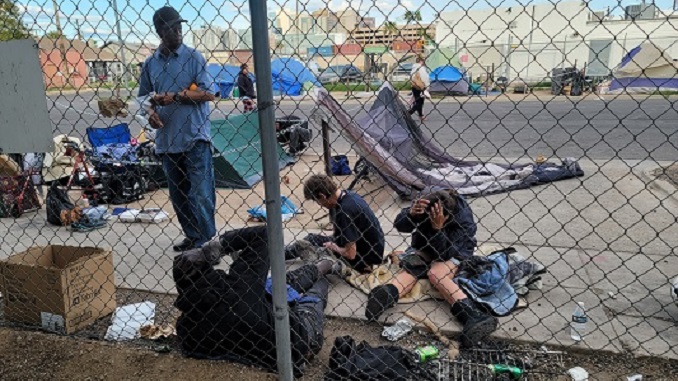
The Phoenix City Council approved several ordinances that will hold the homeless accountable for crimes committed in public parks and spaces.
The council approved ordinances prohibiting certain behaviors most often done by the homeless.
One ordinance puts more restrictions on public parks: no more entering areas closed to the public, drinking liquor, smoking, bathing, or obstructing guests or amenities.
Park rangers or police officers will be allowed to issue a trespass notice lasting one year, and the court may impose community restitution, education, or treatment programs.
Council member Anna Hernandez was the sole “no” vote on the ordinance.
Hernandez said she “needed to take [the council] to church” on the issue. She called the ordinance “shameful, racist, ineffective policy.”
“This is a huge step in aligning our city in Trump’s war on homelessness. We need more beds [and support services], not more criminalization,” said Hernandez.
Parks and Recreation Director Cynthia Aguilar clarified this ordinance was about aligning park code of conduct with city ordinances — not a new effort to criminalize behaviors, or target the homeless specifically.
“The consequences or the penalties that exist already existed prior to this when it comes to the ordinances, but there were clarifications in where that language was placed,” said Aguilar.
The council also approved, unanimously, an ordinance increasing the punishment for remaining on road medians and obstructing traffic. Rather than requiring law enforcement to give a warning for the first violation, law enforcement may issue a civil traffic offense amounting to a class one misdemeanor.
By far the most controversial ordinance passed prohibits the public provision of medical care or treatment, sale or exchange of needles and syringes, and the sale or distribution of harm reduction, or drug usage, kits. First responders, family members, individuals rendering aid during an emergency, and administration or distribution of naloxone are exempt.
Parks and Recreation Director Cynthia Aguilar cited the need for the ordinance to address “safety, potential harm, and [bio]hazard [concerns]” for park users.
Again, Hernandez was the sole “no” vote on the ordinance.
Opponents to the ordinances said they amounted to “criminalization” of poverty and “fascism.” They argued the city had a duty to address the underlying causes of unlawful behaviors by the homeless and provide alternatives, such as more public showers, rather than holding them accountable for their crimes.
Supporters of the ordinances testified to the dangers posed by the transients, especially to the children: bathing publicly in the nude, open-air drug usage, discarding drug paraphernalia, dealing drugs, blocking traffic, and harboring dogs that roam unleashed in public spaces and roadways.
State Senator Lauren Kuby (D-LD8), speaking on behalf of constituents and “mutual aid groups” claimed the behaviors that would be punished were actually constitutionally protected activities. Kuby also argued that it was “basic human behavior” for the homeless to bathe in public.
“Phoenix parks are not just recreational spaces. Under the Constitution, they are traditional public forums — places where people gather, speak, assemble, pray, protest, and exist in public life,” said Kuby.
State Representative Mariana Sandoval (D-LD23) and Senator Analise Ortiz (R-LD24) issued a joint letter criticizing the ordinances as “criminalizing poverty” that would cost taxpayers more without reducing crime or overdoses.
Council member Betty Guardado implied that families in affected neighborhoods should use their “means” to go elsewhere to enjoy public spaces and have their children play.
Council member Jim Waring criticized the opponents of the ordinances as supportive of preserving currently dangerous environments.
“Some of you are clapping. You think you’re on the side of truth and justice. Well, I’ve got some bad news: you’re not. You’re wrecking it for the rest of these people who are also paying taxes. When do we start thinking about them?” asked Waring.
Waring also criticized the hands-off approach to the homeless. He expressed a desire for the homeless to be made to accept services to get off the street and cease drug usage in public.
“We spend a fortune on the homeless — way more than we used to,” said Waring. “You guys think the homeless should just take over the parks and do whatever they want.”
AZ Free News is your #1 source for Arizona news and politics. You can send us news tips using this link.
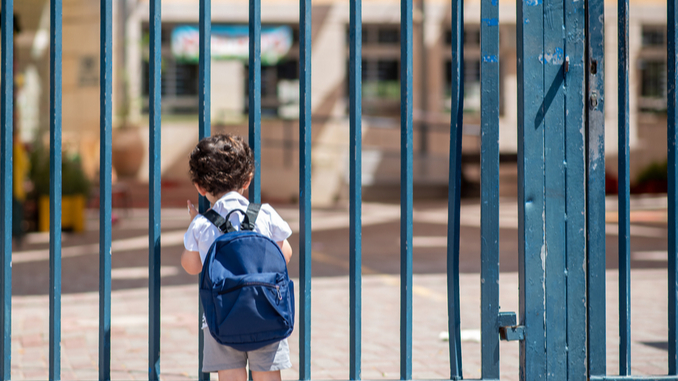
The Kyrene School District (KSD) will be closing six schools over the next two years due to budgetary concerns from declining enrollment.
After months of deliberations, the KSD Governing Board voted unanimously to close four elementary schools and two middle schools.
The four elementary schools closing are Kyrene de la Colina, Kyrene de la Estrella, Kyrene de las Manitas, and Kyrene Traditional Academy. The two middle schools closing are Kyrene Akimel A-al and Kyrene del Pueblo.
Kyrene de la Colina, Kyrene de la Estrella, and Kyrene de las Manitas will close in the 2026-27 school year. Kyrene Traditional Academy, Kyrene del Pueblo, and Kyrene Akimel A-al will close in the 2027-28 school year.
This consolidation will result in the boundary modification of nine schools within the district: Kyrene de la Esperanza, Kyrene de las Lomas, Kyrene del Milenio, Kyrene de la Mirada, Kyrene de la Sierra, Kyrene Altadena, Kyrene Aprende, Kyrene Centennial, and Kyrene Middle School will experience boundary changes.
The governing board projected the six closures would save the district around $5.8 million annually, thereby avoiding most of a projected $6.7 million budget deficit.
Some parents who spoke against the school closures asked the governing board to reduce the number of closures to five instead of six. Overall, most who took to the podium recognized the need for a reduction in the number of schools in the district.
Superintendent Laura Toenjes promised the district would prioritize student needs during the upcoming transition.
“This is about caring for people through change and making sure students and staff are supported every step of the way,” said Toenjes.
KSD will provide families with information on enrollment pathways and school assignments, bell schedule updates, and transportation information in January prior to the enrollment portal opening in February.
Per the Common Sense Institute Arizona, KSD’s enrollment declined by nearly 20 percent over the past six years, but its budget increased by nearly 80 percent.
Kyrene’s enrollment is down 19 percent since 2019. Over the same period of time, their total budget has increased by 79 percent. Total capital expenditures have increased by 44 percent.
A data dashboard on all district enrollment, capacity, and budgets by the Common Sense Institute Arizona shows that over half the school districts in the state have declined in enrollment since 2019.
On average, their research found school districts haven’t grown since 2008. Apart from the declining student-age population, parents are choosing alternatives to traditional public schooling. Charter school enrollment nearly doubled during the pandemic, from 2020 to 2022; a majority of private schools researched had reported enrollment growth; and homeschooling increased from two percent to an 11 percent peak during the pandemic before falling back to a new high average between six and seven percent.
Despite this significant decline in traditional public school enrollment, Common Sense Institute Arizona found, further, that these schools reported a significant increase in spending: 80 percent since 2010.
Since January, at least eight other school districts have announced school closures and consolidations: Cave Creek Unified School District (two schools), Phoenix Elementary School District (two schools), Mesa Unified School District (staff layoffs), Isaac School District (two schools), Edkey, Inc. Sequoia Village School (one school), American Heritage Academy (one school), Roosevelt Elementary School District (five schools), Amphitheater School District (proposed four schools for closure).
AZ Free News is your #1 source for Arizona news and politics. You can send us news tips using this link.