by Staff Reporter | Dec 3, 2025 | News
By Staff Reporter |
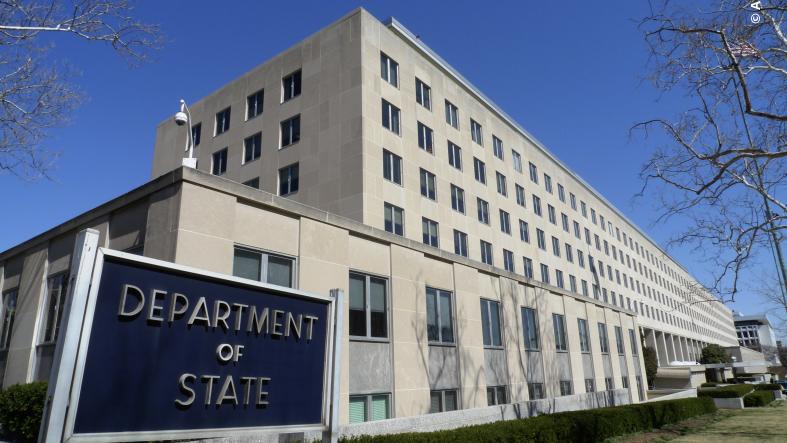
The terroristic attacks and threats by Afghan nationals in recent weeks have renewed concerns about the vetting of those resettled in Arizona.
On the day before Thanksgiving last week, an Afghan national shot two National Guard members in Washington, D.C.; one of the two died, and the other remains in critical condition.
The shooter, Rahmanullah Lakanwal, remains in custody. He entered the country in late 2021 with his wife and five children under Biden’s resettlement program, Operation Allies Welcome, following the botched Afghanistan withdrawal in August 2021.
Volunteers who worked with Lakanwal’s family claimed in interviews with NPR that Lakanwal didn’t show signs of radicalization prior to the terrorist attack. Rather, they claimed Lakanwal showed signs of mental instability and struggles to adjust to life in the U.S.
These volunteers also revealed that Lakanwal would drive away from his Washington state residence for long stretches in the weeks leading up to his attack, traveling to other states without explanation given to those around him — including Arizona.
Similarly, sources told ABC News that Lakanwal’s mental health was in decline leading up to the attack. Lakanwal was allegedly stressed by family finances, since his work permit expired and he was unable to find steady work.
However, sources advised ABC News that Lakanwal was granted asylum in April of this year, which grants automatic work authorization, after applying last year.
Approval of Lakanwal’s asylum petition occurred on the basis of the previous administration’s vetting procedures, which have been in question from the start of the resettlement program.
Another Afghan citizen — Mohammad Dawood Alokozay residing in Fort Worth, Texas — was charged on Tuesday for terroristic threats. Alokozay threatened to commit a suicide bombing as part of a jihad against Americans.
Like Lakanwal, Alokazay passed allegedly thorough vetting procedures under the previous administration.
According to the archived Operation Allies Welcome webpage, the Department of Homeland Security deployed 400 personnel from U.S. Customs and Border Protection, Immigration and Customs Enforcement, Transportation Security Administration, the Coast Guard, and Secret Service to multiple locations abroad to conduct processing, screening, and vetting alongside other federal agencies.
Screening and vetting consisted of biometric and biographic screenings.
About 200,000 Afghans were granted asylum under the initial resettlement program, Operation Allies Welcome, and its successor, Operation Enduring Welcome. A little under 4,000 Afghan refugees have been brought into Arizona as part of the resettlement program since 2022, per the Arizona Department of Economic Security’s Arizona Refugee Resettlement Program.
The Trump administration is reexamining these Afghan asylees following this latest terrorist attack.
Back in 2021, congressional leaders questioned the thoroughness of these procedures.
This resettlement program had red flags from the start.
Officials identified numerous incidents concerning Afghan men arriving at intake centers and claiming female children as their wives. These child brides reported being raped by these men and forced to marry them.
Congressman Andy Biggs asked about these incidents and others in a letter to the Department of Homeland Security. Biggs also addressed the claims of refugee status given to Afghan men with criminal records or past terrorist organization associations.
In January, less than a week after taking office, Vice President J.D. Vance told CBS News that the Biden administration hadn’t properly vetted those awarded refugee status.
“Now that we know we have vetting problems with a lot of these refugee programs, we absolutely cannot unleash thousands of unvetted people into our country,” said Vance.
Last October, two Afghan nationals were arrested for planning an Election Day terrorist attack inspired by ISIS. Abdullah Haji Zada and Nasir Ahmad Tawhedi; the latter individual was brought into the country days after the Biden administration withdrew from Afghanistan.
These individuals were also alleged to have been properly vetted.
President Trump paused migration from third-world countries following the terrorist attack. In the Sunday press gaggle aboard Air Force One, Trump said Americans don’t need or want these foreigners.
“We don’t want those people. Does that make sense?” said Trump. “You know why we don’t want them? Because many have been no good and they shouldn’t be in our country.”
The federal government spent over $14 billion on the Afghan resettlement program.
AZ Free News is your #1 source for Arizona news and politics. You can send us news tips using this link.
by Staff Reporter | Dec 2, 2025 | News
By Staff Reporter |
Congressman Abe Hamadeh warned that Senator Mark Kelly’s advice to military members to refuse “unlawful” orders amounted to blackmail.
Hamadeh added in a statement on X that Kelly had jeopardized military readiness with this vague, alleged threat.
“By suggesting there ‘could’ be severe consequences for carrying out undefined ‘unlawful’ orders, the ‘Seditious Six’ are emotionally blackmailing our active-duty personnel,” said Hamadeh. “They want them to hesitate before protecting the American people. Reprehensible.”
Last month, Kelly and five other Democratic members of Congress with military and intelligence community backgrounds issued a call to action to the military to stand down on “illegal” orders from President Donald Trump.
This group — dubbed the “Seditious Six” by Hamadeh and other Republicans — indicated that some orders from Trump and his administration violated the laws or the Constitution and were therefore illegal.
“We want to speak directly to members of the military and the intelligence community who take risks each day to keep Americans safe. We know you are under enormous stress and pressure right now. Americans trust their military. But that trust is at risk,” said the elected officials. “This administration is pitting our uniformed military and intelligence community professionals against American citizens. Like us, you all swore an oath to protect and defend this Constitution. Right now, the threats to our Constitution aren’t just coming from abroad but from right here at home. Our laws are clear: you can refuse illegal orders. You must refuse illegal orders.”
The others in the “Seditious Six” are Senators Elissa Slotkin (MI) and Representatives Chris Deluzio and Chrissy Houlahan (PA), Maggie Goodlander (NH), and Jason Crow (CO). Slotkin posted the video.
Hamadeh claimed Kelly and the other elected officials were intentionally ambiguous about which orders from Trump were allegedly illegal.
“The reason Democrats refuse to name what they consider to be illegal orders by President Trump is that they want our military and intelligence community to question every order they receive from this administration,” said Hamadeh. “They want to make our active-duty personnel hesitate to execute the agenda voted for by the American people, paralyzing these men and women with the threat of future punishment.”
After the release of the video, Slotkin admitted she couldn’t name any military orders by Trump which were illegal.
“To my knowledge, I’m not aware of things that are illegal but certainly there are some legal gymnastics going on with these Caribbean strikes and everything going on with Venezuela,” said Slotkin in an interview with ABC’s “This Week” segment.
Slotkin clarified later in the interview that the video was primarily meant for addressing the use of the military within American cities.
“So, it was basically a warning to say, like, if you’re asked to do something particularly against American citizens, you have the ability to go to your JAG officer and push back,” said Slotkin.
President Trump said Kelly and the Democratic members within the video had committed “seditious behavior.” He called for the six to be arrested and put on trial, and reposted another user’s commentary (since deleted) that called for hangings.
AZ Free News is your #1 source for Arizona news and politics. You can send us news tips using this link.
by Staff Reporter | Nov 26, 2025 | Education, News
By Staff Reporter |
The nation’s biggest union overseeing educators is prioritizing trainings to advance LGBTQ+ justice and defeat white supremacy as student outcomes continue to decline.
The National Education Association (NEA) plans to train educators on these topics through the 2025-26 Focus Academy schedule. Affiliate staff and member teams attend these academies to develop and implement issue organizing campaigns, per the NEA.
The NEA will kick off the holiday season with a three-day training on “Advancing LGBTQ+ Justice and Transgender Advocacy” the week after Thanksgiving.
The training is exclusive to members and allies of the LGBTQ+ community. It seeks to harmonize the LGBTQ+ ideology and strategize to defeat other ideologies opposed to it:
“With partners from the Center for Racial Justice, members of the LGBTQ+ community, and other experts participants will learn how to: establish common understandings about the identities under the LGBTQ+ community umbrella; develop a shared understanding of the anti LGBTQ+ policy landscape and how to develop counter narratives of inclusion and equity; deepen skills and strategies to confront implicit bias, micro-aggressions and stereotypes in the LGBTQ+ community; [and] develop a toolset of tactics for dismantling systems of privilege and oppression as it relates to LGBTQ+ educators and students.”
Within this academy, educators are trained on defaulting to the pluralization of genders, using pronouns, transitioning genders, and implementing the Gender Unicorn.
Then, to kick off the New Year, the NEA will train educators on “address[ing] white supremacy culture.” The NEA emphasized a need for individuals “highly skilled” in handling “white fragility and interpersonal oppressions.” Leaked materials show a term that seems to have fallen out of the wayside in public commentary: Critical Race Theory (CRT).
“Recently, [Republicans] have paired these attacks with fear-mongering about Critical Race Theory, mobilizing their base with a potent mix of racist and transphobic tropes,” stated the training materials.
This focus academy training will have educators complete a campaign plan that details what racial justice looks like:
“Participants will learn how to help themselves and others: establish a common language for talking explicitly about white supremacy culture in a campaign cycle; deepen skills and strategies to confront implicit bias, microaggressions, and stereotypes; develop a shared understanding of the levels of racism with a focus on a power analysis required to make changes at various levels; [and] develop a toolset for dismantling systems of privilege and oppression.”
Defending Education published leaked materials from these academies. Per these materials, NEA leadership harmonizes and equates the issues facing the advancement of LGBTQ+ ideology and Critical Race Theory.
The materials show that the NEA blamed the lack of public support on transgenderism for minors on the political right having “exploited” general ignorance of LGBTQ+ ideology.
“Over the last ten years, Republicans in state legislatures have increasingly turned to anti-transgender rhetoric and legislation as a powerful complement to their arsenal of racist dog whistles used to whip up fear and consolidate power,” said the materials.
The latest Nation’s Report Card by the National Assessment of Educational Progress yielded additional declines in scores across the board for math, reading, and science.
AZ Free News is your #1 source for Arizona news and politics. You can send us news tips using this link.
by Staff Reporter | Nov 25, 2025 | News
By Staff Reporter |
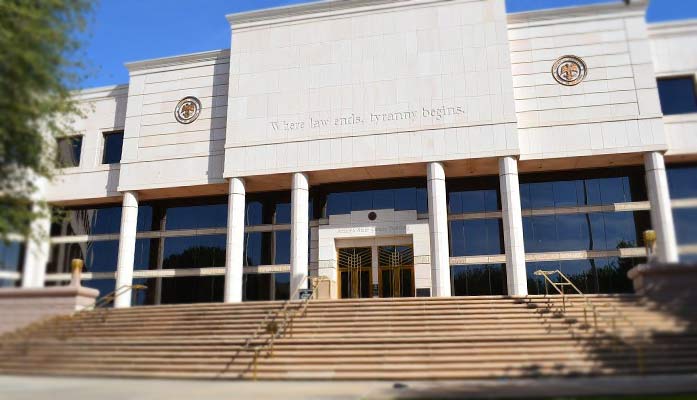
The Arizona Supreme Court held a hearing on Monday to decide whether the city of Phoenix can hide certain public records.
The city is being sued by the Goldwater Institute, a Phoenix-based public policy and litigation organization, over its hiding of records concerning union negotiations.
In Goldwater v. Phoenix, the Goldwater Institute argued the city of Phoenix has a duty to disclose those records in order to allow the public to have an informed decision, and because they serve as the entity negotiating on behalf of the public.
The organization filed their lawsuit in March of 2023 after the Phoenix Law Enforcement Association (PLEA) declined to provide a draft memoranda of understanding (MOU) for public input at the end of 2022. PLEA had provided its MOU drafts in preceding years.
Per the city’s “Meet and Confer” ordinance, unions must submit MOUs by Dec. 1 in the year before the expiration of an operative agreement so that the public may provide input prior to negotiations between the union and city.
Despite not having a draft MOU available for the public to review, the Phoenix City Council moved forward with a meeting to collect public comment on an unsubmitted draft.
The city then began negotiations in January 2023.
The city of Phoenix refused to give PLEA’s draft MOU to the Goldwater Institute upon request, claiming the records were exempt from public records disclosure because public scrutiny would burden negotiations.
The city claimed they were protected under the state’s public records law exemption allowing the withholding of records should they prove detrimental to a government’s best interest.
“Releasing those types of materials would create a chilling effect on the parties’ willingness to candidly engage with each other and it would hinder the negotiations process,” said the city in their denial message.
The city also expressed concerns that public access to MOUs would politicize union negotiations.
Parker Jackson, Goldwater Institute staff attorney, disagreed that these records were covered by the best interests exemption.
“With few exceptions, public records must be made available to the public,” said Jackson in a press release. “When there’s a need to protect things like personal privacy or public safety, the government must be able to show that specific and significant harm is likely to result from public disclosure. It cannot simply withhold information based on self-interested speculation that some minimal inconvenience ‘might’ occur.”
In January, the Arizona Court of Appeals remanded the case to the Arizona Superior Court so that court could privately review unredacted and redacted versions of the contested MOU documents, and determine whether the documents deserved exemption from public disclosure according to the best interests of the state.
The Arizona Supreme Court is considering two issues in this case:
- Did the Court of Appeals err by not requiring the City, after it invoked the “best interests of the state” exception, to establish a probability that specific, material harm will result from disclosure, as Mitchell v. Superior Court requires?
- Did the Court of Appeals err by not applying the Carlson v. Pima County balancing test de novo to independently determine whether the City’s purported interests in nondisclosure outweigh the presumption in favor of disclosure?
The public may watch the archived video of Goldwater v. Phoenix here.
AZ Free News is your #1 source for Arizona news and politics. You can send us news tips using this link.
by Staff Reporter | Nov 23, 2025 | News
By Staff Reporter |
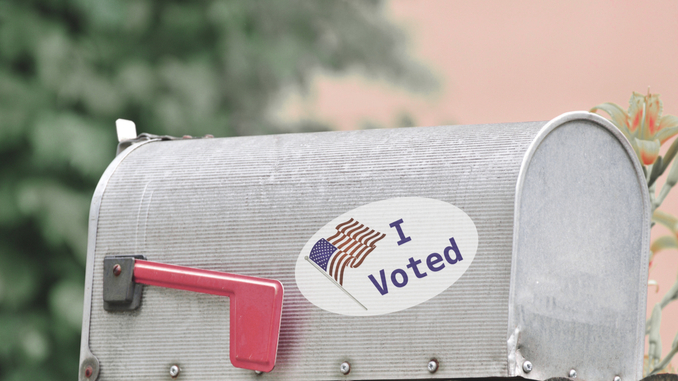
Maricopa County leadership is dissatisfied with the rejection rate of ballot signatures.
Following Wednesday’s canvass of this month’s election, Board of Supervisors Chairman Thomas Galvin said the new signature verification policy was problematic for having yielded a much higher rejection rate compared to years past.
“At this rate, 15,269 ballots would’ve been rejected in ‘24 prez election,” said Galvin. “Only 7,220 were rejected in ‘24.”
About 30,000 ballots were subject to further review, and of those 15,000 went through the curing process. Altogether, about 5,900 ballots were rejected following the curing process out of about 700,000 total cast ballots. An additional 1,000 ballots were rejected for having no signatures and the voter failing to respond to the county’s curing attempts by deadline.
The rejection rate rose to .8 percent this go around. Last year and in 2023, the rejection rate was .3 percent. It was .1 percent in 2022.
The recorder’s office also clarified that this was the first election in decades to send mailed ballots to all voters, which they say also contributed to the higher rejection rate.
Heap responded to Galvin’s criticism by accusing the chairman of deflecting from the county’s election bungles with fabricated, nonexistent issues in his office.
“Instead of holding his own staff accountable for misplacing thousands of Election Day ballots and illegally seizing control of the Recorder’s statutory responsibilities, Chairman Galvin chose to attack the only part of the process that worked flawlessly,” said Heap.
Heap was referencing the misplacement of two sealed transport boxes with nearly 2,300 ballots by election workers this month. The ballots were discovered several days after the election occurred, on the day of the ballot curing deadline. This forced the recorder’s office to complete ballot processing in record time, and attempt to cure ballots in a matter of hours.
Galvin acknowledged the 2022 election was a disaster in private, sources say, but publicly he defended the county’s administration.
The Heap administration implemented certain changes to ease and strengthen signature verification efforts: side-by-side screen viewing of a voter’s on-file signature and their cast ballot signature, rather than having a worker scroll up and down; and requiring three separate levels of review rather than relying on the same person double-checking their work.
During Wednesday’s board of supervisors meeting, Heap repeatedly defended his position that the signature on the cast ballot must match the voter’s historic signatures on file in their record.
“In the end, if we have a signature, and the signature on the envelope does not match the signatures we have on file, and it’s now been reviewed through multiple phases, we cannot accept that signature unless that person calls,” said Heap. “We can make all diligent efforts to reach out but, in the end, the signatures either match or they don’t.”
The supervisors were divided on Heap’s approach — and whether the changes were worth it — although they did agree that the bipartisan review was a good step.
Supervisor Debbie Lesko approved of Heap’s signature verification process.
“I’ll give you credit when credit’s due, and I think if you’ve done it faster and it’s still accurate and you’re able to make it easier for the people, it sounds like a good thing,” said Lesko.
Supervisor Steve Gallardo questioned how time-consuming the process was in comparison to Heap’s predecessor, Stephen Richer. Heap responded that the signature verification has sped up due to the bipartisan team setup, and that they concluded their work the day after the election.
Some familiar voices chimed into the social media chatter over the bristling interactions between select supervisors and Heap.
Maricopa County’s former recorder, Stephen Richer, said Heap’s approach went against the state’s signature verification law.
“That’s not even how statute works,” said Richer.
Richer told KJZZ that election fraud through stolen mail-in ballots in an off-year election was so far-fetched as to be humorous.
“It’s laughable to think 5,000-plus people stole ballot envelopes and forged signatures so they could cast one more vote in a school bond election,” said Richer.
ABC15’s Garrett Archer said Heap’s multiple levels of review was problematic because matching signatures has a certain level of subjectivity that can cause individuals to disagree on what they’re seeing.
“In the old process, private information was on screen that could be used as a second check. This has been stripped to allow observers to be closer to the process,” said Archer. “If they so choose to proceed this way, there will likely be 80,000+ signature elevations in 2026. They need to staff accordingly or this could become a major problem.”
An elections advocate, Merissa Hamilton, countered that signature verification is “ultimately subjective,” and that the elimination of the private information component allows for a more unbiased review of the ballot.
AZ Free News is your #1 source for Arizona news and politics. You can send us news tips using this link.