by Matthew Holloway | Mar 12, 2026 | News
By Matthew Holloway |
The Arizona Corporation Commission (ACC) voted unanimously to repeal the state’s Renewable Energy Standard and Tariff (REST) rules during its March 4 open meeting, ending a regulatory framework that has governed renewable energy requirements for nearly two decades.
The REST rules, first adopted by the commission in 2006, required regulated electric utilities to obtain a specified portion of their retail electricity sales from renewable resources. The standard began at 1.25 percent in 2006 and increased incrementally until reaching 15 percent after 2024, with a portion of the requirement reserved for distributed resources such as rooftop solar.
According to the commission, the repeal finalizes a rulemaking process that began in January 2024 under the commission’s rulemaking docket RE-00000A-24-0026.
ACC Chairman Nick Myers joined the other commissioners in the unanimous 5-0 vote. In a statement following the decision, Myers said the mandates were no longer aligned with current conditions in Arizona’s electricity market.
Commission officials said the REST framework achieved its original goal of expanding renewable energy generation in Arizona. The state’s major regulated utilities, Arizona Public Service (APS), Tucson Electric Power (TEP), and UNS Electric (UNSE), have met or exceeded the renewable energy targets established under the rules.
Myers added, “The reality is that the renewable energy landscape in Arizona has changed dramatically in the past 20 years.”
Since the program began, the utilities have collected more than $2.3 billion in REST surcharges from customers to fund renewable programs and incentives, according to the commission. More than $779 million of that amount was distributed as incentives for renewable energy programs approved by the ACC. According to the commission, that amount does not include “above-market amounts paid out to rooftop solar customers under net metering and the current RCP approach.”
Commissioners also cited long-term power contracts entered into under the mandate as contributing to costs borne by ratepayers. One example highlighted by the commission involves a 30-year solar power agreement between APS and the Solana Generating Station, under which APS customers have paid approximately $274.3 million above market prices for power to date.
“The Solana plant is basically providing energy at 15 cents a kilowatt-hour when the rest of solar these days are around 2 to 2 1/2 cents a kilowatt-hour,” Myers said during the meeting.
Under the REST rules, utilities were required to obtain at least 15 percent of their electricity from renewable sources by 2025, with 30 percent of that renewable requirement coming from distributed sources such as rooftop solar.
Myers said utilities will continue to procure energy resources through competitive procurement processes designed to identify cost-effective and reliable power generation options.
Arizona Attorney General Kris Mayes released a statement in September and sent a letter to the commission opposing the repeal. During her tenure on the commission from 2003-2010, Mayes, then holding office as a Republican, participated in the adoption of the REST Rules and Arizona’s Electric Energy Efficiency Standard Rules (EEES Rules).
The Arizona Corporation Commission regulates the state’s investor-owned utilities and has authority over energy policy decisions such as renewable energy standards and utility rate structures.
Matthew Holloway is a senior reporter for AZ Free News. Follow him on X for his latest stories, or email tips to Matthew@azfreenews.com.
by Matthew Holloway | Mar 11, 2026 | News
By Matthew Holloway |
Arizona Senate President Warren Petersen (R-LD14) warned that “vetting isn’t optional” as lawmakers consider a measure urging federal authorities to review whether the Council on American-Islamic Relations (CAIR) should be designated as a terrorist organization. Petersen cited the role of former Democratic state Rep. Martin Quezada as a government affairs representative for CAIR Arizona.
In a statement released by the Arizona Senate Republican Caucus, Petersen referenced Quezada’s current role representing the organization at the state Capitol while lawmakers debate legislation related to CAIR and similar groups. Petersen warned in the statement that vetting matters, adding that lawmakers should carefully examine organizations and the individuals representing them when considering legislation involving national security concerns.
“This is exactly why the Senate’s vetting process exists,” Petersen said.
“When someone is nominated to run a state agency, the Senate’s job is to ask the tough questions, dig into their history, and make sure they are fit to serve the people of Arizona. In this case, the nominee was rejected – and now he’s working for an organization that promotes radically dangerous ideologies and is being considered for terrorist designation at the federal level. Imagine if we hadn’t done our job. That person could have been running a state agency. Vetting isn’t optional. It’s about protecting our citizens and making sure the wrong people are never put in those powerful positions. The Senate will continue to hold the line.”
CAIR is a U.S.-based Muslim civil rights and advocacy organization founded in 1994. The organization has previously faced scrutiny related to allegations raised during the federal prosecution of the Holy Land Foundation, a charity that was later convicted in 2008 of providing financial support to Hamas. During that case, federal prosecutors listed CAIR as an unindicted co-conspirator. CAIR has denied wrongdoing and has not been charged with a crime in connection with the case.
As of this report, the federal government has not designated CAIR as a terrorist organization. The organization has been so designated by the states of Texas and Florida.
The remarks from Petersen came as the Arizona Senate considers House Concurrent Memorial 2002, a measure introduced by Arizona Rep. John Gillette (R-LD30) that urges the federal government to review whether CAIR meets the criteria for designation as a foreign terrorist organization.
“HCMs are a democratic mechanism for legislative bodies to formally ‘speak’ to federal lawmakers, demonstrating that an issue isn’t isolated complaints but a widespread, organized citizen priority deserving attention and action. We have received 1000s of emails and calls for designation of CAIR, Muslim Brotherhood as terrorists organizations. This is the will of the people,” Gillette said in a statement.
HCM 2002 passed the Arizona House of Representatives in a partisan 31-22 vote on February 26, with Gillette noting in a post to X, “HCM 2001 and 2002 supporting terrorist designation for CAIR and Muslim Brotherhood, All The AZ House Dems voted NO! They continue to support radical Islam.”
In related comments posted to X, Gillette criticized Rep. Lydia Hernandez (D-LD24) and Arizona Senator Analise Ortiz (D-LD24) writing, “She (Hernandez) read verbatim that CAIR and Muslim Brotherhood were linked and funded Hamas…… yet voted No, to declare them a Terrorists organization,” on Jan. 24 and “Don’t forget AZ. Senator Analise Ortiz, she held a CAIR meeting in her office this morning,” on Jan. 28, while the measure was in committee.
In September 2025, he noted support for CAIR amongst Democrat leaders, including Arizona Governor Katie Hobbs, writing, “CAIR is a known front group for the Muslim Brotherhood. Yet Hobbs and House Democrat leaders stand firm in support.”
Concurrent Measures, such as HCM 2002, do not themselves create a designation. Instead, they formally urge Congress or federal agencies to conduct a review under federal law governing terrorist designations.
Federal law places the authority to designate foreign terrorist organizations with the U.S. Secretary of State. The designation process typically requires evidence that an organization is foreign in origin and engaged in terrorist activity or poses a threat to the national security of the United States.
The debate surrounding the Arizona proposal has drawn responses from both supporters and critics of the measure. Supporters argue that Congress and federal agencies should examine whether organizations operating in the United States have connections to extremist groups.
Opponents, including Quezada, have publicly opposed HCM 2002, with the former Democratic legislator calling the measure “nonsense,” according to The State Press, saying the legislation is intended to discourage CAIR supporters from speaking out. “The community in general is feeling targeted, because if they’re willing to go after one organization first, like CAIR, who are they going to go after next?” he added.
Quezada told the outlet in February that the measure succeeded in “trying to make an example out of CAIR.”
Matthew Holloway is a senior reporter for AZ Free News. Follow him on X for his latest stories, or email tips to Matthew@azfreenews.com.
by Matthew Holloway | Mar 10, 2026 | News
By Matthew Holloway |
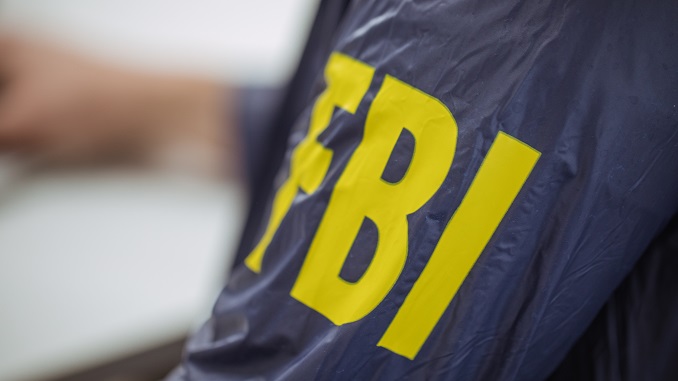
Arizona Senate President Warren Petersen confirmed that the Federal Bureau of Investigation (FBI) has obtained election-related records from Maricopa County as part of an ongoing federal investigation connected to the 2020 presidential election. The confirmation followed independent reporting, which some members of the local press mischaracterized as describing a “raid.”
Petersen confirmed the action after a report from JustTheNews stated that federal investigators recently secured terabytes of election data from Arizona’s most populous county through a federal grand jury subpoena.
The subpoena sought election materials connected to Maricopa County’s administration of the 2020 election, according to the report. Sources familiar with the probe told the outlet that investigators obtained electronic election data as part of a broader criminal inquiry examining potential election-related misconduct.
The reported federal action follows other election-related investigations conducted in recent months involving local election administration across the United States, such as the FBI’s similar seizure of election records in Fulton County, Georgia.
Early responses to reporting from JustTheNews’ John Solomon included ABC15’s Garrett Archer mischaracterizing the report on the seizure under subpoena as describing a ‘raid,’ and as “either a full-throated lie, or something having to do with the recorder’s office.”
Solomon replied to the post, stating, “My story is accurate. When a grand jury subpoena is issued there isn’t usually a raid. The data is obtained usually from a third party. I’d ask your legislature what they know.”
Within minutes, a post from Petersen confirmed the JustTheNews article shared by President Donald Trump on Truth Social. Petersen posted to X, “President Trump is 100% correct. Late last week I received and complied with a federal grand jury subpoena for records relating to the Arizona State Senate’s 2020 audit of Maricopa County. The FBI has the records. Any other report is fake news.”
Congressman Abe Hamadeh’s (R-AZ08) Rapid Response team was quick to point out, “John Solomon’s report never mentions a ‘raid’ at all. The actual term used is ‘subpoena.’ Garrett Archer appears to have invented the raid claim just to knock down an easy ‘straw man’ argument.”
As previously reported by AZ Free News, the contractors’ controversial report from the Senate-mandated audit documented multiple concerns about election administration procedures, while confirming that the overall ballot count remained largely consistent with the certified results.
Hamadeh issued a request for a full investigation into credible allegations that election security protocols in Arizona were breached during the 2024 General Election in June 2025 following reports alleging that large stores of printed blank ballots from several western states were “improperly mixed in a warehouse with returned voted mail ballots that were in the process of being prepared for tabulation” at Runbeck Election Services, a firm contracted by Maricopa County.
He wrote at the time, “This alarming situation raises serious questions about the security and integrity of the election process in Maricopa County and potentially beyond. The commingling of blank ballots with live ballots poses a significant risk to the accuracy and fairness of election results. It is crucial that we have confidence in the integrity of our elections, and any potential mishandling of ballots must be investigated to ensure that the will of the voters is accurately reflected.”
Federal investigators have not publicly detailed the full scope of the current inquiry involving the Maricopa County records. The FBI generally does not comment on ongoing investigations.
Officials with Maricopa County have not publicly released a detailed description of the materials obtained by federal investigators or the timing of the request. Federal authorities have not announced any charges connected to the reported subpoena for Maricopa County election records.
Matthew Holloway is a senior reporter for AZ Free News. Follow him on X for his latest stories, or email tips to Matthew@azfreenews.com.
by Matthew Holloway | Mar 9, 2026 | News
By Matthew Holloway |
The Arizona Corporation Commission (ACC) voted to close a long-running securities enforcement case against Densco Investment Corporation after recovering nearly $19.8 million for investors who lost money in the company’s real estate lending program.
The commission approved a request to close the Maricopa County Superior Court case Arizona Corporation Commission v. Densco Investment Corporation after funds were recovered and distributed through a court-appointed receivership.
The case originated in 2016, when the Arizona Corporation Commission filed a complaint alleging violations of multiple provisions of the Arizona Securities Act and seeking appointment of a receiver to manage the company’s affairs following the sudden death of Densco’s owner and sole operator.
According to a press release from the commission, Densco raised more than $40 million from investors and loaned those funds to real estate ventures. Investors were told loans would not exceed a 70 percent loan-to-value ratio and would be secured by first deeds of trust on the underlying properties. Investigators later determined those representations were inaccurate. Some loans were issued at loan-to-value ratios of 100 percent or higher, and some properties were not secured by deeds of trust.
During the claims process, the court-appointed receiver identified 113 investors who were collectively owed $31,446,001. Through recovery efforts by the receiver and the commission, $19,788,384 was recovered for distribution to investors.
The commission also holds a criminal restitution order totaling $16,946,384 for additional collection and distribution to investors. According to the ACC, investors have recovered more than 63 percent of their losses to date.
Earlier court-approved distributions had already begun returning funds to investors during the receivership. In 2017 and 2018, the Maricopa County Superior Court approved multiple payments up to roughly $7 million to investors as the receiver recovered assets tied to the company’s operations, as reported by the Arizona Daily Independent at the time.
Court records tied to related federal proceedings describe Densco as a private “hard money” lender formed by Denny Chittick in April 2001 that financed short-term real estate loans for investors. Federal filings describe fraudulent lending schemes connected to the company that resulted in losses totaling more than $31 million. Chittick reportedly died by suicide in July 2016, according to a Presentence Investigation Report cited by the court.
Documents related to the civil case are available through the Maricopa County Superior Court online docket under case number CV2016-014142.
Matthew Holloway is a senior reporter for AZ Free News. Follow him on X for his latest stories, or email tips to Matthew@azfreenews.com.
by Matthew Holloway | Mar 8, 2026 | News
By Matthew Holloway |
Mesa police are investigating the fatal shooting of a Mesa mother of seven after identifying an investigator with the Arizona Attorney General’s Office as being involved in the incident.
Authorities say 32-year-old Maria Ernestina Lewis was found with a gunshot wound early on Feb. 28 near Ray Road and Inspirian Parkway in Mesa after officers responded to a welfare check call. Lewis was pronounced dead at the scene.
The Mesa Police Department later identified 47-year-old DuLance Morin, an investigator with the Arizona Attorney General’s Office, as being “involved in the shooting,” though authorities have not publicly detailed the exact circumstances of the incident. Police have not confirmed who fired the weapon, as reported by FOX10 Phoenix.
According to investigators, officers were dispatched to the neighborhood after receiving a welfare check call around 2 a.m. When officers arrived, they located Lewis with a gunshot wound outside a residence. She was found on the doorstep of a neighbor’s home, according to local reporting.
“I can confirm DuLance Morin has been employed by the Attorney General’s Office since February 2016,” a spokesman from the Arizona Attorney General’s Office said in a statement on Monday. “He was placed on administrative leave this weekend pending the Mesa Police Department’s investigation.”
Authorities have not announced any arrests or criminal charges in connection with the case, and the investigation remains active. “The Mesa Police Department emphasizes that this remains an active and ongoing investigation,” the department said in a statement to 12 News.
The department added, “Detectives are working to obtain additional evidence through search warrants, reviewing potential surveillance footage from the surrounding area, and awaiting the results of forensic testing and analysis.”
Investigators have not publicly described any relationship between Lewis and Morin or how the two individuals came into contact before the incident. Mesa Police have also not released information about whether a weapon was recovered at the scene or whether any other individuals were involved.
Officials say additional information will be released once the investigation progresses. However, authorities have not announced whether an outside agency will participate in the investigation as of this report.
As of the latest update from Mesa police, the case remains under active investigation, and authorities have not provided a timeline for additional information.
Lewis is survived by her husband and seven children. According to FOX10 Phoenix, Lewis’ family has called for prosecutors to pursue a murder charge. The outlet also reported that relatives said blood-stained tiles were removed from the scene hours after the shooting.
Anyone with information about the incident is encouraged to contact the Mesa Police Department.
Matthew Holloway is a senior reporter for AZ Free News. Follow him on X for his latest stories, or email tips to Matthew@azfreenews.com.