by AZ Free Enterprise Club | Jun 7, 2021 | Economy, Opinion
By the Free Enterprise Club |
“15 days to slow the spread.” Do you remember that? It was all the rage in the media in the early days of the COVID-19 pandemic. You’d hear it on news broadcasts. You’d see it in commercials. And you’d read it as you scrolled through the various social media platforms.
But it didn’t take long before those calls to “slow the spread,” became calls to “cancel everything.” And too many government leaders across the country bought into it by instituting huge lockdowns and other draconian measures.
Certainly, COVID was an issue that warranted some action, but it never should have included crushing small businesses or trampling on the rights of the people.
And yet, here we are more than a year later. The states with the most severe COVID restrictions are experiencing much slower economic recovery than those that fully reopened.
Blue states are struggling
California still has not reopened, despite being the first state to lockdown back in March 2020. Finally, after months of inconsistencies, confusing decisions, and hypocrisy from leaders like Governor Newsom, the state appears to be poised to fully reopen by mid-June.
But the outlook isn’t bright. Even with such extreme lockdowns and other measures, California still experienced a deadly surge from COVID. And along with that, its economy is in turmoil with one of the nation’s highest unemployment rates at 8.3%.
Not surprisingly, there’s been a mass exodus from the state, causing it to lose a seat in the House of Representatives. And those that have remained are so fed up that they are trying to recall their governor.
But California is not alone. In a recent report, Michigan has been named as the state with the slowest recovery. Even Governor Whitmer couldn’t help but acknowledge that her radical measures, which at one point included prohibiting citizens from visiting family and friends, couldn’t stop COVID.
And then there’s New York, where Governor Cuomo’s COVID failures have been well documented. Just like California, the state also lost a seat in the House of Representatives due to a significant decline in its population. New York City alone lost approximately 900,000 jobs with a current unemployment rate of 11.4%.
But how do these blue states compare to our own?
READ MORE >>>
by B. Hamilton | Jun 5, 2021 | News
By B. Hamilton |
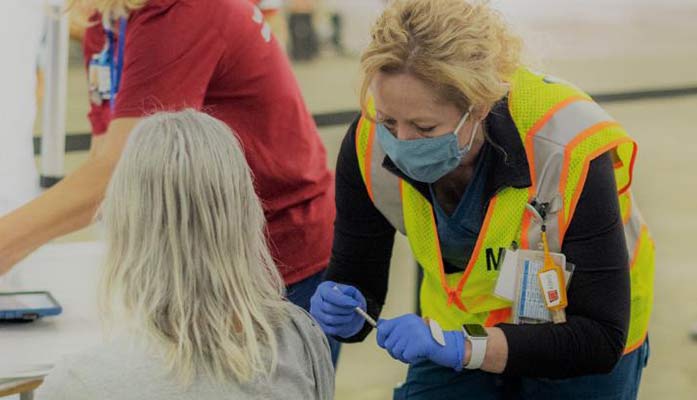
As COVID-19 vaccination rates drop sharply in Arizona, health officials are pivoting away from mass-vaccination sites to more community outreach efforts which include relying on pharmacies, doctors’ offices, community events, and mobile pop-up events.
State-run vaccination sites have already started to phase out with changes to days and times of operations. Saturday, June 5, will be the last day individuals can receive the first dose and have a second dose scheduled at a state-operated vaccine site before the final site at Gila River Arena in Glendale officially closes Monday, June 28.
After June 5, the first doses will still be administered, but patients will be given information on alternate locations to receive second doses of the Pfizer vaccine, which is administered at these sites.
State-run vaccination sites have administered 1.6 million doses of COVID-19 vaccine to nearly 900,000 individuals to date.
To date, 5,927,868 doses of the COVID-19 vaccine have been administered to 3,345,912 individuals, including 2,831,240 who are fully vaccinated. About 47% of Arizona’s total population has received at least one dose of vaccine, and 39% of the population has been fully vaccinated.
However, President Joe Biden insisted that 70% of the population had to be vaccinated for Americans to fully enjoy Independence Day. With Arizonans already acting fairly independently and enjoying the out-of-doors as well as shopping without the benefit of a mask or a vaccine, it is unlikely Arizona will meet Biden’s standard.
Still, Dr. Cara Christ, the Arizona Department of Health Services director, said in a briefing on Friday, “I am fearful with the decreased demand it’s going to be harder to reach that 70%, but I am hopeful Arizona will.”
Christ has promoted vaccinating children and teens even though there is no evidence that they are at serious risk from the disease.
by AZ Free News | Jun 3, 2021 | News
A leading property information provider, today released its home price forecast for April 2021, and the numbers show that baby boomers are keeping prices high. It turns out that in response to rising home prices, baby boomers — who own 54% of the nation’s homes — may wait to sell their homes, creating further inventory pressures for older millennials seeking move up-purchases.
At the state level, Idaho and Arizona continued to have the strongest price growth at 27.2% and 20.4%, respectively. South Dakota also had a 19.3% year-over-year increase as new home buyers seek out more affordable options, space and low property taxes.
Sparse inventory and high demand continues to place upward pressure on home prices, creating challenges across generations as buyer preferences shift, according to the CoreLogic Home Price Index.
Younger millennials continue to enter the market in droves while older millennials look to upgrade and upsize their homes. In a recent CoreLogic consumer survey, the need for more space was noted as the top driver (64%) for demand among these cohorts.
The increased competition among buyers may cause a ripple effect and create affordability challenges for baby boomers interested in downsizing or relocating. Notably, 72% of this cohort list the desire for a new location as the main reason for wanting to purchase a new home.
“As older homeowners become more comfortable with listing their homes, they are faced with the reality that if they sell, they may get a smaller home for the same price as what they already have,” said Frank Martell, president and CEO of CoreLogic. “Rather than decreasing their financial burden and cashing out equity to support their retirement, baby boomers may choose to stay put — which could exacerbate inventory challenges.”
What we know:
-
- Nationally, home prices increased 13% in April 2021, compared with April 2020. On a month-over-month basis, home prices increased by 2.1% compared to March 2021.
- Appreciation of detached properties (14.7%) was more than double that of attached properties (7.2%) in April as prospective buyers continue to seek out more space.
- Home prices are projected to increase 2.8% by April 2022, as affordability and supply challenges drive potential buyers out of the market, causing a slowdown in home price growth.
- In April, home prices rose sharply in the west with Coeur d’Alene, Idaho, experiencing the highest year-over-year increase at 31.4%. Boise City, Idaho, ranked second with a year-over-year increase of 28.6%.
“Baby boomers are staying in their homes longer, slowing the pace with which existing homes come on the for-sale market,” said Dr. Frank Nothaft, chief economist at CoreLogic. “Owner occupants today have been in their homes for a median of 13 years, about 50% longer than the previous generation.”

by Terri Jo Neff | Jun 2, 2021 | News
By Terri Jo Neff |
Some lawmakers say Gov. Doug Ducey had a “a temper tantrum” last week when he vetoed 22 Republican-supported bills over his displeasure with the how long it is taking the legislature to pass budget bills.
But with the House and Senate on recess possibly through June 10, other legislators are focusing on what needs to happen to pass a budget when lawmakers come back.
During interviews with KFYI’s James T. Harris on Tuesday, Sen. Warren Petersen (R-LD12) and Rep. Travis Grantham (R-LD12) agreed there have been problems in how the budget process has been handled so far, but both believe a consensus is possible before the end of the fiscal year on June 30.
Grantham acknowledged to Harris that “some folks” were at fault for how budget negotiations were handled prior to last week’s unexpected recess, but he thinks more lawmakers are seeing it is time to get a budget passed so the legislature can adjourn.
“You know the old saying that ‘nothing good happens if you stay out after midnight?’” Grantham said. “Basically, the Legislature is out after midnight, in fact it’s about 3 a.m. and we shouldn’t be there anymore, and we all need to go home.”
But Grantham says the biggest problem right now is that “too much money” is in play due to last year’s surplus and this year’s surplus. The surplus is there, he noted, because the state is collecting too much money, money he says needs to go back to the people via “a massive tax cut.”
And therein lies the dilemma, Grantham told Harris.
“The issue we’re having is there is so much money in the pot and there is so many people with so many wants and so many needs we’re having trouble staying focused on the finish line,” he said. “We just need to focus on the budget, we need to focus on cutting taxes, and we need to focus on getting out of there.”
Grantham added that lawmakers need to realize the surplus “is the people’s money, it’s not the government’s money” and then move forward with passing a budget that allows for tax cuts.
In his comments, Petersen acknowledged that some legislative leaders “tried to move the budget without the votes” instead of waiting to ensure there were 31 votes in the House and 16 votes in the Senate for passage. Petersen also told Harris he was “surprised” that the budget bills were being pushed without a consensus in place first.
“You can’t ignore people if people say they have issues,” Petersen said. “We had all heard about issues from different members, and if you just keep going I don’t know what other result you could possibly expect.”
Although some legislators are suggesting Ducey call a special session focused solely on the budget, Petersen is not sure that is the answer. Instead, he sees it as a matter of elbow grease and not leaving anyone out of the discussion.
“What we really just need to do is we need to do the work,” the senator said. “You’ve got to get the whole caucus together and you just keep working on the budget from whoever is on the far left of the caucus to whoever is on the far right. We’ve got to get those two to agree.”
Petersen did note another reason the budget is not garnering the support needed is that it includes non-budget bills which previously failed on the floor.
“That’s another bad policy. You don’t put bills that don’t pass into the budget to try to force a vote,” he said.
Meanwhile, Petersen and Grantham told Harris they are hopeful Ducey will work with legislators to ensure the 22 vetoed bills are reconsidered in some way once a budget is passed.
by Justin Olson | May 28, 2021 | Opinion
By Arizona Corporation Commissioner Justin Olson |
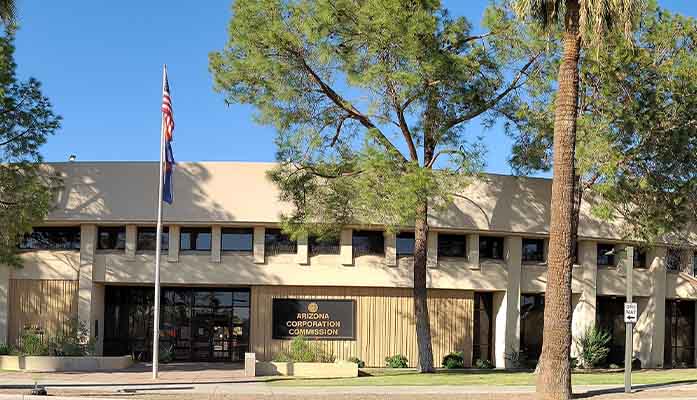
On Wednesday, the Corporation Commission disregarded the clear will of the voters and advanced energy mandates nearly identical to what the voters overwhelmingly rejected just over two years ago. With 68.2% voting no, Arizonans resoundingly defeated Proposition 127 that would have required Arizona’s utilities to obtain 50% of their power from renewable sources. Voters sent a clear message that they do not support arbitrary mandates that will drive up the cost of their energy bills .
While Proposition 127 was a 50% renewable energy mandate by 2030, the draft energy rules adopted by the Commission yesterday include a 50% carbon emissions reduction mandate by 2032. But that’s not all, the Commission’s rule goes far beyond Prop-127’s 50% threshold and requires a 100% ban on carbon emissions by 2070.
Two years ago, California adopted a similar 100% standard and the result has been disastrous. Californians pay 50% more for their power than Arizonans, and, what do they get for this premium—rolling blackouts. In the heat of the summer last year, Californians found themselves with no ability to turn on their air conditioning units, power their appliances or even have a light to read. There was not enough power to go around due to California’s failed policies. Why would Arizona adopt the same mandates that led to these miserable results?
During the Commission’s deliberations, I offered an amendment to the energy rules that would have honored the will of the voters and protected ratepayers. With my amendment, the mandates would only apply if the projects available to meet the carbon reduction thresholds were the lowest-cost method of meeting customers’ energy needs. Unfortunately, the Commission rejected this commonsense amendment and made it clear that these rules are designed to drive up costs to ratepayers.
When I ran for the Commission, I promised to pursue policies that will lead to the lowest rates possible while still maintaining safe and reliable services. I have sought to honor this pledge with each of my votes at the Commission and my vote yesterday was no exception. I proudly voted to respect the will of the voters and to protect the ratepayers from unwanted rate increases. It’s disappointing that a majority of the Commission did not do the same.