by Daniel Stefanski | Jun 12, 2023 | News
By Daniel Stefanski |
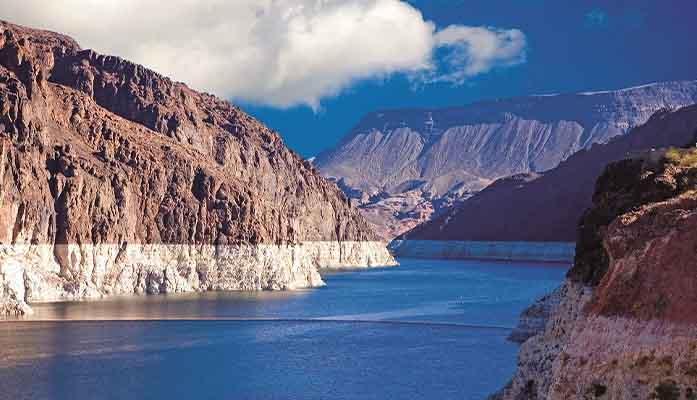
Arizona Republican legislators made sure that water investments received sizable contributions in the recently negotiated budget deal for the state.
In a press release issued last week, Representative Gail Griffin, the Chair of the House Committee on Natural Resources, Energy & Water highlighted a realized commitment to strengthen “Arizona’s water resources by directing over $360 million of state general fund dollars to be allocated to projects and programs that help to promote the conservation, development, and enhancement of water in Arizona.”
Griffin lauded Republicans’ efforts to include this funding for the state’s water security and future, saying, “Never before in our state’s history has water been as important to our state’s economic prosperity and individual liberty as it is today. As Republicans, we will continue to find solutions to Arizona’s most pressing issues, from water security to housing availability. We will continue to make investments in Arizona’s long-term water future.”
The release listed several areas where funds were invested: Water infrastructure projects, Reconstruction of a levee, Design and construction of a recharge basin, Installation of new irrigation systems and xeriscaping, Water project assistance for cities, towns, and irrigation districts in rural counties, Wastewater system improvements, Construction of groundwater delivery infrastructure, Brackish groundwater recovery pilot program, Statewide water resources planning, Water supply and demand assessments, Assured and adequate water supply administration, Stream adjudication support, Rural water studies, Water protection fund for projects that address conservation and watershed improvement, Conservation and drought program, Brackish groundwater study, Water conservation projects, On-farm irrigation efficiency projects, Water quality fee fund, PFAS mitigation, Safe drinking water program, Direct potable reuse of treated wastewater, Water infrastructure and commerce grants, Long-term water augmentation, Rehabilitation and drilling of new water wells.
Earlier this session, Representative Griffin was named as a co-chair of the Joint Legislative Study Committee on Water Security, which was formed by Arizona House Speaker Ben Toma and Senate President Warren Petersen to “convene and solicit information from water users, stakeholders, and the public regarding state solutions to address water security in Arizona.”
When announcing the formation of this committee, Speaker Toma said, “The availability of water for the success of all industries in our state is critical to our economy. Strengthening our existing water resources while we secure our future water supply is a top priority as we work to achieve common-sense solutions for our state. His counterpart in the Senate, Petersen, also stated, “From the 1980s Groundwater Management Act to last year’s historic investment in WIFA, the Legislature has led and will continue to lead the water policy solutions that require legislative action to implement.”
Water policy will most certainly be an issue of contention in a divided government in the years ahead. Republicans in the state legislature and Democrat Governor Katie Hobbs have already proven that they have varying opinions about how to lead the Grand Canyon State forward in this critical area. Democrat Attorney General Kris Mayes has also weighed in with her perspectives on Arizona’s water security, attempting to make sure that her office has a seat at the table for future actions.
Daniel Stefanski is a reporter for AZ Free News. You can send him news tips using this link.
by Daniel Stefanski | Jun 10, 2023 | News
By Daniel Stefanski |
Arizona’s frontline status with the crisis at America’s southern border led to a surprise, influential visitor this week.
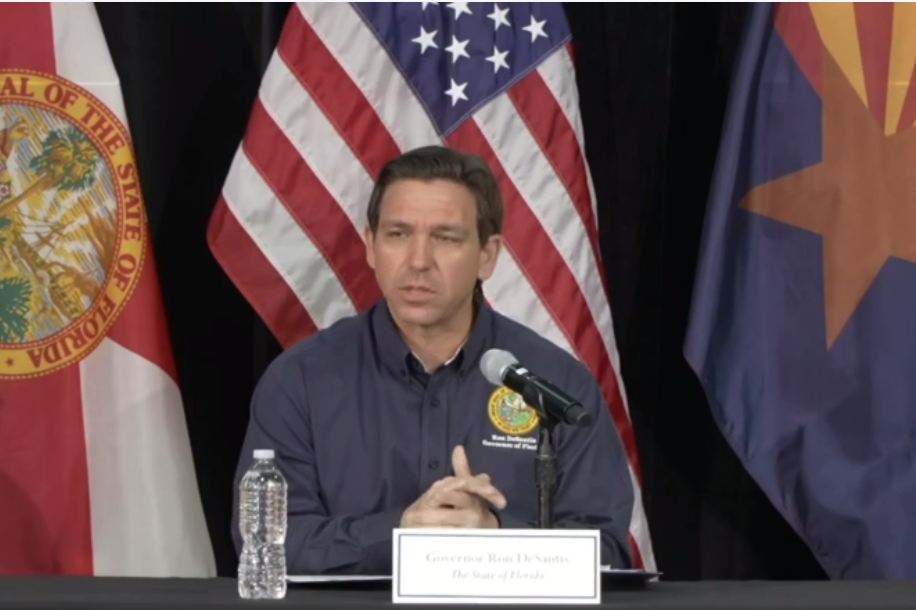
On Wednesday, Florida Governor Ron DeSantis, in his official capacity, traveled to the southern border in Sierra Vista, alongside his Attorney General, Ashley Moody, who has been instrumental in filing many lawsuits against the federal government.
DeSantis convened two roundtables with a number of sheriffs from Arizona, Florida, and other states, listening to their stories and talking about solutions to mitigate the worsening crisis at the border.
After the meetings at Cochise College, Sheriff Mark Dannels, a national leader on border security and local enforcement, escorted his out-of-state guests to the border, where they gained a fresh, first-hand perspective of the deteriorating situation.
In a release sent out by the Florida Governor’s Office, Governor DeSantis used the visit to “highlight Florida’s successful actions to combat illegal immigration within the state and along the southern border.” Those measures include “new methods for combating human smuggling and drug trafficking across state lines and the relocation of illegal aliens who wish to be transported to so-called sanctuary states and cities.” DeSantis also announced that “Florida’s law enforcement agencies are offering trainings for other states that want to follow Florida’s lead on protecting citizens from the impacts of Biden’s Border Crisis.”
The second-term Sunshine State governor issued the following statement in conjunction with his mid-week stop in the Grand Canyon State: “Joe Biden is derelict in the performance of his duties and refuses to uphold the borders of our nation. In Florida, we’re stepping up even as the federal government falls down on the job. We enacted strong legislation to combat illegal immigration, sent law enforcement officers and equipment to the border, and have dedicated resources to divert migrants to sanctuary jurisdictions. Today we’re taking Florida’s no-nonsense approach to border enforcement nationwide.”
Dannels was extremely complimentary of the Florida team that descended on his county, appreciating their efforts to partner with him and other members of law enforcement, saying, “This is not about politics, folks. This is about doing what is right, which everyone in this room that works for government has taken an oath to do. So thank you guys for what you do. We pledge to you both and all our governors, all our sheriffs, all our law enforcement, our prosecutors, our county attorneys, our mayors to work united to fix these borders, secure our borders, and get America back.”
Another Arizona sheriff, P.J. Allred of Graham County, was at the table with the Florida chief executive and gave the following remarks: “When most people come from the south to come to the United States, my little county is probably not their destination, but they come through us and we feel them when they come through us. When we’ve encountered them after a pursuit through the desert, when they see us as law enforcement and the vehicles come to a stop, they run to us as law enforcement to get away from the coyotes that were carrying them. I appreciate all of you for being here, being interested in our country, our freedoms, our rights.”
At least two state legislators appeared to be in attendance for DeSantis’ southern Arizona check-in: House Speaker Ben Toma and Representative Gail Griffin. Toma tweeted a picture with DeSantis, writing, “My pleasure to help welcome Governor Ron DeSantis to Arizona and to share details of our border crisis. Glad to hear we share the same determination to secure the southern border once and for all.”
Daniel Stefanski is a reporter for AZ Free News. You can send him news tips using this link.
by Corinne Murdock | Jun 10, 2023 | News
By Corinne Murdock |
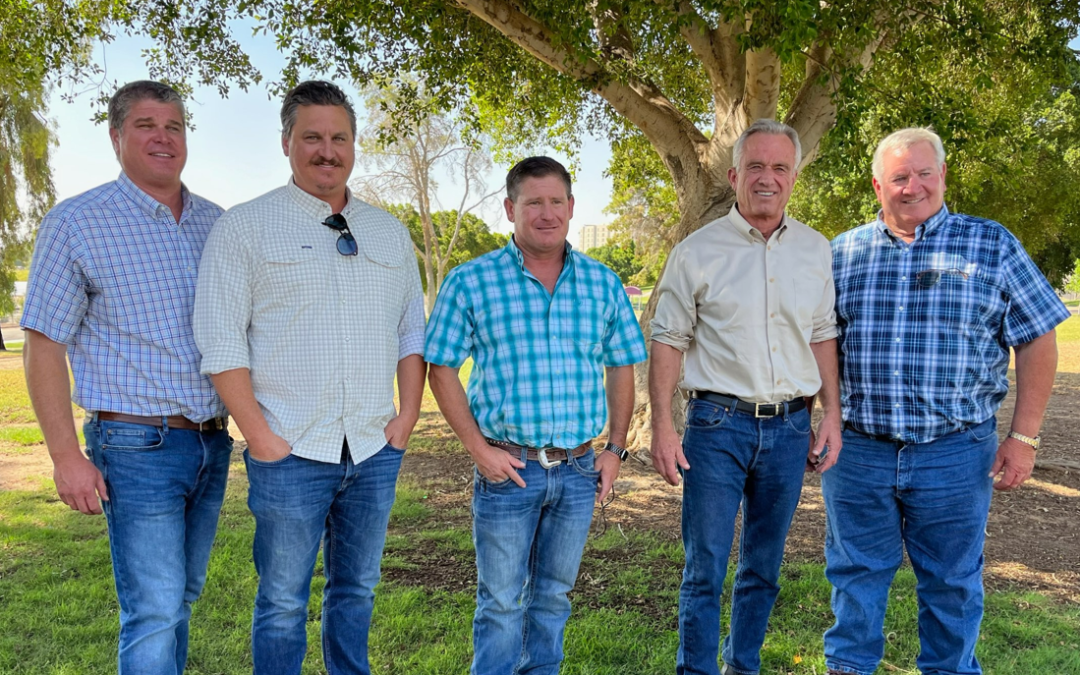
Democratic presidential candidate Robert F. Kennedy, Jr., visited Arizona farmers on Tuesday to discuss the impact of the border crisis on their livelihood.
Kennedy made the trip to Yuma, the area hardest hit by the border crisis. Yuma County provides 90 percent of the nation’s winter produce.
“The tsunami of migrants walking across farm fields and defecating in irrigation canals threatens the safety of that food supply,” stated Kennedy. “Last year, one of their neighbors had to plow under 88 acres of broccoli and personally absorb the $10k per acre cost after migrants tainted irrigation water.”
These past two years of President Joe Biden’s border crisis, illegal immigrants have caused millions of dollars in damages to farmers’ fields, often forcing farmers to eat the loss. Illegal immigrants hide in the fields, trampling produce and leaving mountains of garbage and human waste in their wake.
The filth has forced farmers to go to expensive, massive lengths to salvage their crops. In some cases, food safety laws force farmers to destroy their crops.
Prior to visiting with the farmers, Kennedy went to observe the border personally. He captured a typical scene of the border on video: a steady stream of migrants coming in outside of legal ports of entry.
Yuma County Sheriff Leon Willmot told Kennedy that solutions to the border crisis shouldn’t be partisan.
“This shouldn’t be a partisan issue, it’s a health and public safety issue. It’s a humanitarian crisis,” said Willmot.
Kennedy — the son of U.S. attorney general and senator Robert F. Kennedy, and nephew of former President John F. Kennedy — has had a lengthy career in the political realm, much like the rest of his family. Much of his life’s work has been steeped in environmentalism and health advocacy.
Kennedy arrived at the border on the 55th anniversary of his father’s assassination; just one day prior to the elder Kennedy’s death all those years ago when he won the California and South Dakota primaries for the presidency.
Kennedy, known for his extensive advocacy against major childhood vaccines, further rose to prominence over the course of the pandemic for challenging the safety and efficacy of the COVID-19 vaccines.
Kennedy announced his presidential run in April.
Under Biden, there have been over 5.3 million border encounters and over 1.5 million estimated gotaways. Based on the monthly average of encounters, there may be 9.1 million illegal immigrant encounters by the end of 2024.
Corinne Murdock is a reporter for AZ Free News. Follow her latest on Twitter, or email tips to corinne@azfreenews.com.
by Corinne Murdock | Jun 8, 2023 | News
By Corinne Murdock |
The Arizona Department of Education (ADE) removed a social-emotional learning (SEL) hurdle for low-income schools seeking access to federal funding.
ADE slimmed down the Comprehensive Needs Assessment, which schools must complete and submit in order to receive Title I funding designated for low-income schools. Superintendent Tom Horne directed the assessment to remove questions related to SEL, reducing the assessment questions from 168 to 20.
Horne justified the move in a press release, saying that the SEL questions unnecessarily and disproportionately weighed down the assessment, creating a significant administrative hurdle for schools requiring federal assistance.
“The previous Comprehensive Needs Assessment was weighed down with absurd measurements regarding Social Emotional Learning (SEL), which many teachers have complained is just a series of games that detract from teaching reading and math,” said Horne. “The prior emphasis on SEL issues meant the report grew to an unmanageable 80 pages with 168 questions. Now there are 20 questions on six pages, all devoted to improving core academics.”
In addition to removing the SEL barrier, ADE is updating its annual Kindergarten Entry Assessment (KEA) program. ADE projected that the pilot program will reduce administrative workload by 80 percent time-wise.
Horne represents a 180 from his predecessor, Kathy Hoffman, who was an advocate for SEL.
In other moves signaling a complete turnaround from Hoffman, Horne has also removed the controversial online sexuality-focused chat spaces for minors from the department website, as well as abolished the Diversity, Equity, and Inclusion (DEI) Department.
Horne has also been defending the upkeep of universal school choice, the Empowerment Scholarship Account (ESA) Program. The superintendent defends the program as not only beneficial for parents desiring a more tailored education, but as a cost-saving measure to the state.
This puts the superintendent in conflict with Gov. Katie Hobbs, who claimed universal school choice wasn’t sustainable from a fiscal standpoint.
Horne is also defending state law banning males from female sports — also running counter to the stance held by Hobbs, as well as the Biden administration.
In April, the parents of two boys identifying as girls sued the state over the ban. The lawsuit claimed that transgenderism was a “sex-based trait.”
“There is a medical consensus that a person’s gender identity is not subject to voluntary change and a significant biological foundation,” stated the lawsuit.
The lawsuit also claimed that all individuals have a gender identity — a perception of one’s gender in addition to their biological reality — and that the only proper treatment for those with gender dysphoria was to allow the full exercise of the dysphoric feelings.
“Under the medical standards of care for the treatment of gender dysphoria in adolescents, the only safe and effective treatment for gender dysphoria is to permit transgender adolescents to live consistent with their gender identity in all aspects of their lives,” stated the lawsuit.
Corinne Murdock is a reporter for AZ Free News. Follow her latest on Twitter, or email tips to corinne@azfreenews.com.
by Corinne Murdock | Jun 4, 2023 | News
By Corinne Murdock |
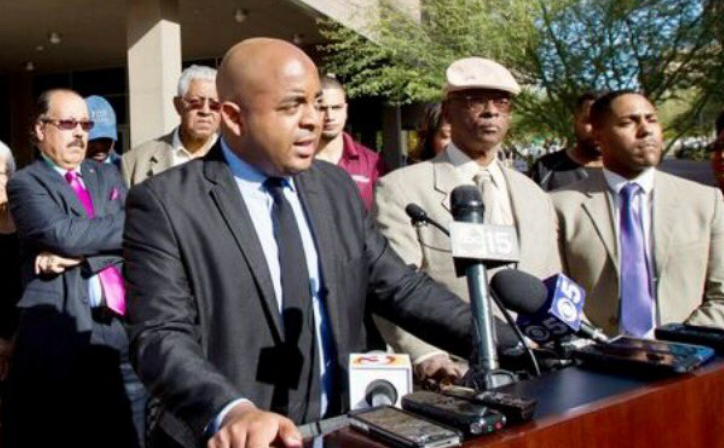
Arizona civil rights activist Jarrett Maupin, Jr., characterized the 2022 attorney general election contest as the “civil rights issue of our time.”
Maupin referenced the allegations of disenfranchisement, which he claimed would bring American society back to a time where Black citizens couldn’t vote under the Democratic Party.
“Without the right to vote and to have every vote counted, we will return to the dark days of the Democrats of the Old South. If you cannot vote, you are a slave,” said Maupin. “Period.”
Maupin has run multiple times for different offices, including Congress and Phoenix mayor.
Republican attorney general candidate Abe Hamadeh is challenging the validity of Kris Mayes as the elected attorney general. The Mohave County Superior Court granted oral arguments earlier this month. As AZ Free News reported, Judge Lee Jantzen expressed interest in the sampling of evidence provided by Hamadeh’s team during the arguments.
Hamadeh’s team focused on evidence of allegedly disenfranchised voters, specifically uncounted votes from undervotes and provisional ballots. Opposition representing Mayes, Secretary of State Adrian Fontes, and Maricopa County argued that too much time has passed since the initial December hearing and swearing-in.
A ruling in the oral arguments is pending but should be made available soon. Jantzen promised a ruling in several weeks’ time; it’s been over two weeks since the hearing.
While the outcome of Hamadeh’s oral arguments remains pending, a nonprofit organization filed a lawsuit against Gov. Katie Hobbs for failing to fulfill a public records request related to the election while in her capacity as secretary of state.
America First Legal (AFL) submitted its public records request 10 days after Election Day last year, on Nov. 18.
AFL requested all emails from Nov. 8-16 sent to and from Hobbs; Hobbs’ former assistant secretary of state and, most recently, former chief of staff Allie Bones; Hobbs’ former communications director as both secretary of state and governor, C. Murphy Hebert; and Hobbs’ former deputy communications director while secretary of state and current deputy communications director, Sophia Solis.
Bones resigned from Hobbs’ office several weeks after AFL filed its lawsuit. Hebert was dismissed in March, just days after Hobbs’ former press secretary, Josselyn Berry, resigned over a tweet indicating a call for gun violence against transphobes. Berry issued the tweet hours after the Covenant School shooting in Nashville, Tennessee, perpetrated by a woman who identified as a transgender male. The Covenant School is a private Christian school; the shooter has an unreleased manifesto corresponding with the murders.
Hebert was hired earlier this month by the current secretary of state, Adrian Fontes.
AFL reported that though Hobbs’ administration never responded to their request, Fontes did. Fontes denied the request on Feb. 1 of this year. His administration claimed that the request covering the emails between four employees over the course of nine days constituted “an unreasonable administrative burden.” The secretary of state’s general counsel, Amy Chan, said the request concerned “many thousands of emails” in her rejection letter.
READ THE LAWSUIT
AFL argued that Fontes’ office failed to fulfill their statutory duty of providing “sufficiently weighty reasons” for denying the request. This includes, according to court precedent cited by AFL — ACLU v. Arizona Department of Child Safety — the resources and time it took to locate and redact the materials, the volume of materials requested, and how much it disrupted the secretary of state’s core functions.
Corinne Murdock is a reporter for AZ Free News. Follow her latest on Twitter, or email tips to corinne@azfreenews.com.