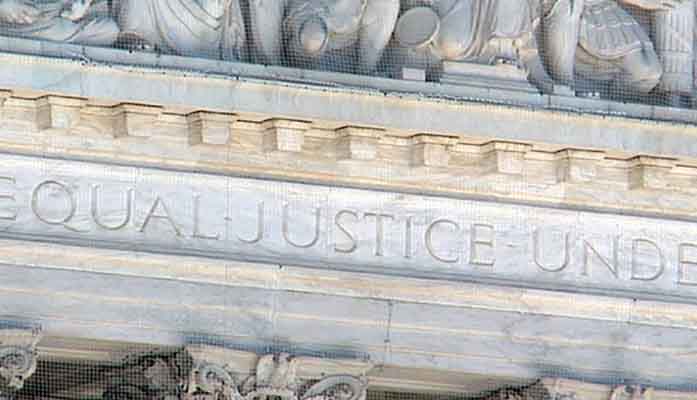
On Thursday, Attorney General Mark Brnovich co-led a 20-state coalition in filing an amicus brief in the Supreme Court case deciding the speech rights of business owners. The coalition filed their amicus brief the day after Pride Month began.
At the heart of the case — 303 Creative v. Elenis — is Colorado businesswoman Lorie Smith, a graphic artist and website designer who refused to design wedding websites for same-sex couples per her religious beliefs. Colorado law C.R.S. 24-34-601 prohibits businesses from discriminating on the basis of sexual orientation, gender identity, and gender expression, even due to religion. The state considers any business that sells to the public or offers services, facilities, privileges, advantages, or accommodations to the public as a “place of public accommodation” and therefore beholden to their anti-discrimination law.
The amicus brief pointed out that Smith provided other services to LGBTQ+ customers, but that her Christian religion prevented her from providing wedding-related services to those customers. It also pointed out that Smith’s hesitation concerned the message she would convey in being forced to do so; in other words, her speech and not the status of a customer.
The Christian Bible dictates that marriage is the union between one man and one woman, and that homosexuality is a sin.
“Colorado interprets its public-accommodation law to forbid Smith from expressing her desired messages about marriage. In its view, graphic artists who create websites celebrating opposite-sex marriages must do the same for same-sex marriages, and refusing to do so subjects those artists to punishment,” read the amicus brief. “By adopting this position, Colorado violates the constitutional rights of its citizens, because the First amendment prohibits States from forcing individuals, including people who create custom speech for a living, to speak in favor of same-sex marriage.”
In a press release, Brnovich asserted that business owners like Smith have a constitutional right to discern speech as part of their business.
“Owners of small companies do not give up their constitutional rights as a cost of doing business,” said Brnovich. “Freedoms of speech, belief, and expression are at the core of who we are as Americans, and our government is out of line to infringe on them.”
“As a Christian artist, I was really excited to step into the wedding industry and use my artistic talents. Except, there’s a Colorado law that prevents me from continuing my work and forces me to violate my beliefs and speak messages I don’t agree with,” stated Smith. “Every American should have the right to control the content of their own speech.”
Nebraska, Alabama, Alaska, Arkansas, Georgia, Idaho, Indiana, Kansas, Kentucky, Louisiana, Mississippi, Missouri, Montana, Ohio, Oklahoma, South Carolina, Tennessee, Utah, and West Virginia joined Arizona in the amicus brief.
Corinne Murdock is a reporter for AZ Free News. Follow her latest on Twitter, or email tips to corinne@azfreenews.com.
A recent poll revealed that 97 percent of Arizona voters were concerned about the price of gas, and 80 percent were concerned with supply shortages.
Phoenix-based OH Predictive Insights released those findings on Wednesday, part of an Arizona Public Opinion Pulse (AZPOP) conducted last month over the course of a week.
9 in 10 Arizonans expect gas prices to be higher next month…again
Those who expressed concern over the gas prices weren’t hopeful about the future costs. 91 percent expected gas prices to increase by next month. That’s more pessimism than expressed in previous polls. In a March AZPOP study, 80 percent of Arizonans anticipated an increase in gas prices.
Although Arizonans share similar perspectives on the state of gas prices, they don’t agree on who’s to blame. 36 percent of Arizonans identified President Joe Biden as the reason for rising gas prices, whereas 26 percent blamed oil companies and the remaining 23 percent blamed the ongoing war between Russia and Ukraine.
“The long-term anticipated impacts from the pandemic are surfacing as it globally disrupts the supply chain, heightening concern for Arizonans as supply shortage continues to burden virtually everyone, “said @MikePNoble
Gas prices present a bipartisan issue, with both Republican and Democratic leadership expressing criticism over Biden’s handling of the rising costs.
Senator Mark Kelly (D-AZ) told KOLD that the Biden administration and Congress have options to curb the crisis, insinuating that they weren’t taking all necessary and available action.
“There are levers we can pull here to lower the cost,” stated Kelly. “I’ve asked the administration to increase production [….] They’ve done some but it’s not happening fast enough.”
Gas has become far too expensive for Arizona families.
Washington needs to move quickly to increase domestic energy production and pass my bill eliminating the federal gas tax for the rest of the year. https://t.co/9HvVfPIuFA
Concerning the supply chain crisis, 52 percent of Arizona voters reported that it impacted them directly. 43 percent said they weren’t affected directly. 86 percent of those concerned made over $100,000 a year; 90 percent were homemakers, and 80 percent were suburban women.
Over half of Arizona registered voters (52%) said they have been directly affected by the supply shortage while 43% say they have not been directly affected.
However, 80% are extremely/ very/ somewhat concerned about supply shortages.
According to the Department of Labor’s Consumer Price Index, Phoenix area prices increased 2.5 percent from February to April — a total increase of 11 percent from one year ago. Food prices increased by nearly two percent those two months, and 8.6 percent over the last year. Energy prices increased nearly 13 percent those two months, and 32.6 percent over the last year.
A Pew Research study released while the latest AZPOP study was underway revealed that the rest of the nation concurred with Arizonans that inflation is the most pressing issue.
Corinne Murdock is a reporter for AZ Free News. Follow her latest on Twitter, or email tips to corinne@azfreenews.com.
If the influence of mothers on last year’s elections served as any indicator for this year’s outcomes, certain Republican state legislators in Arizona may have a tough primary ahead.
Mothers have proven themselves a powerful political force. One significant example would concern the widespread credit they received for the Republican victory in last year’s gubernatorial race in deep-blue Virginia. Among those mothers were women that helped put Joe Biden in office nearly two years ago.
Yet, approval ratings and polls are showing that the Biden administration has alienated suburban female voters — especially mothers. The causes have been widely publicized, like when the Department of Justice (DOJ) pledged last October to investigate parents protesting schools’ controversial COVID-19 policies and curriculum. In Arizona and across the nation, the news caused an uproar among parents and school boards.
More recently, the alienation came from the worsening inflation and baby formula shortage. When Reuters interviewed 20 Phoenix women earlier this month, many expressed that these current issues were influencing their vote come fall.
The pressure of a slipping, once-reliable voter base hasn’t escaped leadership. On Tuesday, over two dozen current and former administrative officials, lawmakers, congressional aides, and other Democrats close to Biden informedNBC News that the president is “rattled” by falling approval ratings as well as a general lack of trust and confidence among voters. In particular, the president lost ground among suburban women — something that frustrated him.
The informants also revealed that Biden’s chief of staff, Ron Klain, will likely leave after the midterms.
Arizona legislators aren’t exempt from the voter troubles plaguing Biden and the Democrats. After the pandemic hit, more Arizona mothers took a closer look at their schools and engaged in the state legislature, just like other mothers across the nation. They picked up on which legislators voted against their interests routinely, and vocalized their observations on social media and in rallies.
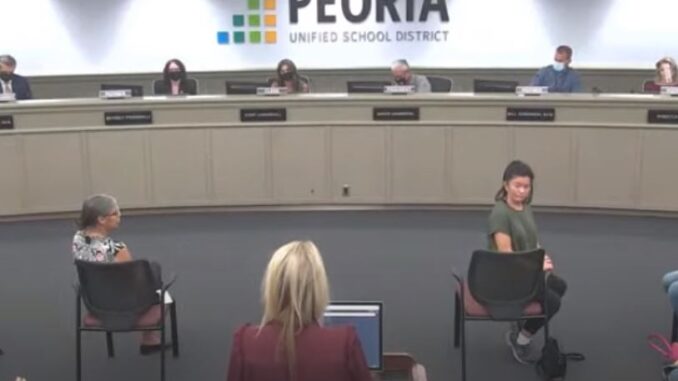
A recent contention between mothers and legislators occurred over curriculum transparency bills.
Mothers called out State Representative Joel John (R-Buckeye) for killing a bill that would’ve required schools to publish curriculum lists on their websites.
Because The District hides the teacher portal from parents & wouldn't give a copy of the websites on the teacher portal for social studies. I wonder why? Joel John won't help parents w/ curriculum transparency @BevPingerelli@AZHouseGOP@GoldwaterInst@iandprior@DefendingEd
Last summer, John joined State Representatives Michell Udall (R-Mesa) and Joanne Osborne (R-Goodyear) to kill a school choice expansion amendment. The vote earned the ire of Arizona parents.
Every day, I see tweets from @DeAngelisCorey about states funding students instead of systems. Today, I read this not only from my own state, but from Republican legislators. Is Michelle Udall pandering to the left to get their votes for SPI? #StudentsAreNotPoliticalPawnshttps://t.co/kAiSBJ2aNN
— Pam Kirby 🇺🇸 Ultra MAGA #LatinoGOP (@PamKirby) June 25, 2021
John, Udall, and Osborne’s voting records caused the Maricopa County Republican Committee to pass a resolution in January pledging to oppose their campaigns, identifying the three legislators as those opposed to parents’ interests.
“Resolved, that the Maricopa County Republican Party calls attention to, and opposes Republicans who campaign as conservatives while voting against school choice and against the best interests of students and parents – specifically Representatives Joanne Osborne, Michelle Udall, and Joel John,” read the resolution.
Every Maricopa County Republican should be asked on the record if they “oppose” Osborn, Udall & John as the MCRC has resolved to do.
A month later, Udall and John killed a bill preventing bank discrimination against vendors or customers whose political affiliations or values rendered them low on a social credit scoring system. John claimed that no “real world examples” existed to justify the bill.
John, Udall, and Osborne aren’t the only ones who’ve stoked controversy. State Senator T.J. Shope (R-Coolidge) has a track record of voting against certain party issues, like the governor’s executive powers. He earned parents’ ire recently with a bill enabling a nonprofit to access their children’s vaccination data without their input.
How do you feel about your or your minor child’s vax status being shared with “business associates” as defined by HIPAA WITHOUT YOUR CONSENT?@TJShopeforAZ bill #SB1167 will do that. It’s mirror bill has already gone through the AZ House. @NancyBarto is the only NO so far ⬇️
Then there was a strike-everything amendment from State Representative Tim Dunn (R-Yuma) granting $30 million to the University of Arizona (UArizona) to study drip irrigation amid the worsening inflation crisis.
Additionally, State Senator Tyler Pace (R-Mesa) challenged parents with his initial opposition of a bill banning transgender surgeries for minors — he later flipped to support the ban, after reading on best practices concerning transgender children. That same week, he supported banning sexuallly explicit material from K-12 classrooms.
Other bills from last year’s legislative session perpetuate controversy.
There was HB2161, which would have established a new small business tax. The legislation would’ve required hotels and other transient lodging businesses to pay up to $5 per room per night to fund tourism promotion. It passed in the House with bipartisan support — John, Osborne, Udall, and Dunn joined State Representatives David Cook (R-Globe), Regina Cobb (R-Kingman), Steve Kaiser (R-Phoenix), John Kavanagh (R-Fountain Hills), Becky Nutt (R-Clifton), Jeff Weninger (R-Chandler), Justin Wilmeth (R-Phoenix), and House Speaker Rusty Bowers (R-Mesa). Few Democrats opposed the bill: State Representatives Melody Hernandez (D-Tempe) and Athena Salman (D-Tempe).
Then last May, there was Cook, Udall, John, and Osborne in the House and State Senator Paul Boyer (R-Glendale) who joined Shope and Pace to approve SCR1044, which put tuition for illegal immigrants on the upcoming ballot.
— Arizona Senate Democrats (@AZSenateDems) May 11, 2021
One parent, Alejandro Sandoval, summarized to AZ Free News parents’ sentiments on the GOP elected officials that they felt undermined their interests.
“I would like to ask these counterfeit conservatives who continue to vote Democrat: how much are they paying you? Because when it comes to school choice and election integrity, their virtues go out the window,” said Sandoval. “And I am delighted that Michelle Udall has finally decided to exit the arena. It was such a bittersweet moment with President Trump because he unearthed all these serpents to show their true colors. Why are they against our ‘freedom of choice,’ because in my eyes they’re communists holding us back and trying to destroy our volition.”
Corinne Murdock is a reporter for AZ Free News. Follow her latest on Twitter, or email tips to corinne@azfreenews.com.
Democratic congressional candidate and former state senator Kirsten Engel declared on Wednesday that there isn’t a border crisis.
Arizona Horizon host Ted Simons asked Engel during an election debate whether she agreed that the current state of the border constituted a crisis. Engel said she didn’t, adding that additional borders security wasn’t the solution.
“No. It does need help at the border. We do — Washington, I would say, has failed us. It’s not just this administration. It’s the past administration. We do need help at our border. We do need to secure our border. We have issues of drug trafficking and human smuggling that need to be addressed, but certainly not walls. I mean walls are a 13th century solution to a 21st century problem.
Engel, who resigned from the state senate last September, insinuated that turning away illegal immigrants was the real crisis.
“I mean, let’s look at what’s going on here. We have people, migrants, coming who want to make a home in our country. You know, these people are like our ancestors coming here. That is — that’s the crisis. That’s a humanitarian crisis,” said Engel. “What we need from Washington is having an orderly asylum process. That’s national law, that’s international law. We need comprehensive immigration reform. We have to help our Dreamers.”
WHOA: Democrat candidate Kirsten Engel, who’s running in a swing border district, denied the border crisis exists in a debate last night.
Simons: “Does Arizona have an immigration crisis?” Engel: “No.”
The debate also featured Engel’s Democratic opponent, State Representative Daniel Hernández Jr. (D-Tucson), who disagreed with Engel. He said that a wall wasn’t enough, pointing out the need for more security technology like drones.
“We are seeing that people don’t feel safe where they’re living, even though we are saying that this is an issue that has gone time after time,” said Hernández. “To say there is no crisis is wrong.”
Engel agreed that a federal presence was necessary at the border, as well as more technology, but emphasized her opposition to a border wall.
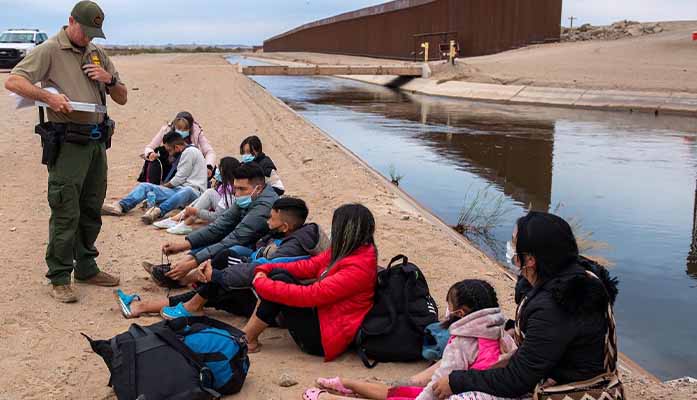
“Walls are not going to do it, and neither are photo ops,” said Engel. “It’s not all drug smugglers. It’s families with little kids.”
Hernández said that his perspective on rescinding Title 42 reflected that of Democratic Senators Mark Kelly and Kyrsten Sinema: the policy should be removed, but there should be a plan ready to fill the void left behind.
“These are people coming here trying to get a better life, so we should treat them humanely with dignity, but make sure we have a plan to actually address [them],” said Hernández.
Engel agreed, calling Title 42 a “stop-gap solution.” She pointed out that about half of the people returned to Mexico under Title 42 ended up reentering the country, citing that as a failure of the policy. Like Hernández, Engel said she wanted to see a plan first before rescinding the policy.
“There’s no adjudication of their claim,” said Engel. “Title 42 is not the answer.”
Corinne Murdock is a reporter for AZ Free News. Follow her latest on Twitter, or email tips to corinne@azfreenews.com.
Shortly after being sworn into office more than seven years ago, Gov. Doug Ducey made it clear to the heads of every state agency that he wanted the needs of residents to be better served and to make Arizona an attractive location for businesses.
The result was the rollout of the Arizona Management System (AMS), a results-driven philosophy which empowers state employees to identify ways to make the government work more efficiently while eliminating waste, all with an emphasis on enhancing customer service. And AMS is paying dividends, according to several agency directors who recently provided updates to Ducey.
Arizona Department of Veterans’ Services
Building upon Arizona’s commitment to veterans, the Arizona Department of Veterans’ Services embraced AMS to identify and work to solve the root causes of veteran suicides. Stakeholders -including the Department, the Governor’s Office, and the Arizona Coalition for Military Families- came together with a different approach to veteran suicide prevention.
The result, according to Col. Wanda Wright, is Arizona’s Be Connected program, which was recognized by the U.S. Department of Veterans Affairs with the 2021 Abraham Lincoln Pillars of Excellence Award.
Arizona Department of Water Resources
Drought response and preparedness plays a vital role in guiding Arizona Department of Water Resources, but there was a time that the state’s water professionals had limited involvement in federal strategic planning related to drought.
Under AMS, ADWR expanded its network of experts in academia, the private sector, and industry groups to lead statewide drought planning efforts. One outcome, according to ADWR Director Tom Buschatzke, is Arizona’s active participation in the Intermountain West Drought Early Warning System.
Arizona Department of Transportation
Prior to integrating the AMS philosophy in Arizona Department of Transportation projects, stakeholders often complained that deadlines were of higher concern than local impacts. But with AMS in place, Director John S. Halikowski says ADOT employees are applying several innovative approaches to keep vehicles -and commerce- moving during construction projects to minimize potentially disruptive restrictions and closures.
Arizona Department of Environmental Quality
Misael Cabrera was named director of the Arizona Department of Environmental Quality shortly after Ducey announced the AMS initiative in 2015. In response, ADEQ has developed the “My Community” dashboard to provide environmental and demographic map data on its website. The timely information is accessible via an easy-to-use, online tool the public can use to understand what ADEQ is doing to address environmental issues in various communities.
Arizona Department of Housing
Another state agency which embraced the AMS philosophy early on is the Arizona Department of Housing. It saw several increases in efficiency by implementing a more visual method of keeping staff updated on deadlines and department goals. And that has continued since Director Tom Simplot took the helm in 2021, with an emphasis on faster inspections and decision-making. More information on how AMS is improving state agencies is available here.