by Terri Jo Neff | Jul 1, 2021 | News
By Terri Jo Neff |
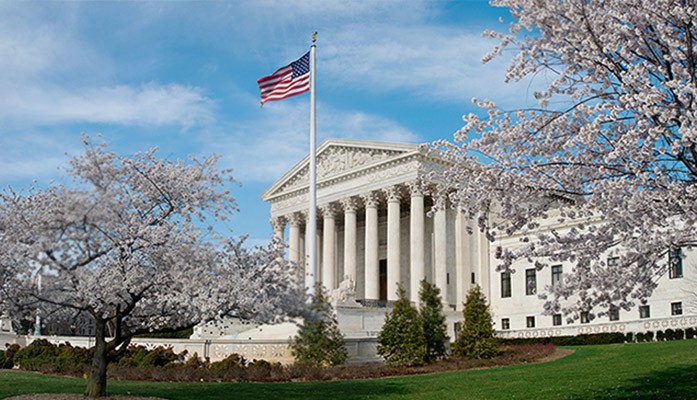
In a 6-3 vote, the U.S. Supreme Court ruled that Arizona election laws were not “enacted with a racially discriminatory purpose.”
The Court also found that “Arizona law generally makes it very easy to vote. Voters may cast their ballots on election day in person at a traditional precinct or a ‘voting center’ in their county of residence.”
Justice Samuel Alito authored the 44-page opinion for the majority on two cases which were ruled on together. Justice Neil Gorsuch, with Justice Clarence Thomas joining, concurred with Alito’s opinion but tagged on a one-paragraph notation about an issue involving the Voting Rights Act of 1965 which was assumed in the majority opinion but had not been decided in the Arizona cases.
Justice Elena Kagan wrote a dissent on behalf of herself and Justices Stephen Breyer and Sonia Sotomayor.
The case involved Arizona’s election laws related to ballot harvesting and to out-of-precinct voting. Specifically, the justices ruled on a law passed by the Legislature in 2016 which makes it illegal for organizations to “harvest” or collect voters’ mail-in ballots and then deliver them to election officials.
The other law requires election officials to invalidate, or not count, ballots that are cast by voters outside their registered precinct.
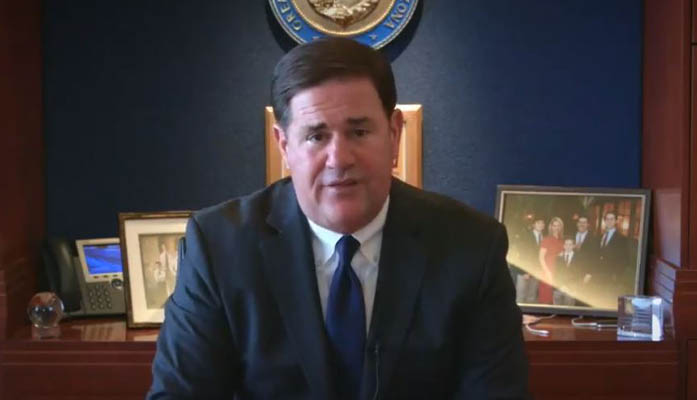
Gov. Doug Ducey called the ruling “big victory for Arizona voters, the rule of law and the integrity of our elections.”
As reported by AFN earlier this month:
Two Yuma County women charged by the Arizona Attorney General’s Office with ballot fraud are scheduled to be back in court next month, two local election integrity watchdogs say the problem in their county runs much deeper, and it has garnered the attention of the FBI.
Gary Garcia Snyder and David Lara revealed in a radio interview with Sergio Arellano that they utilized hidden cameras to record ballot harvesting incidents at two San Luis polling stations on Aug. 4, 2020, which was primary election day. The city of 33,000 is in the far southwest corner of Arizona on the Mexico border.
RELATED ARTICLE: Concerned Citizens Provided FBI With Videos Of Ballot Abuse, Harvesting In Yuma County
The Court on Thursday found:
Arizona law generally makes it very easy to vote. Voters may cast their ballots on election day in person at a traditional precinct or a “voting center” in their county of residence. Ariz. Rev. Stat. §16–411(B)(4). Arizonans also may cast an “early ballot” by mail up to 27 days before an election, §§16–541, 16–542(C), and they also may vote in person at an early voting location in each county, §§16–542(A), (E). These cases involve challenges under §2 of the Voting Rights Act of 1965 (VRA) to aspects of the State’s regulations governing precinct-based election day voting and early mail-in voting. First, Arizonans who vote in person on election day in a county that uses the precinct system must vote in the precinct to which they are assigned based on their address. If a voter votes in the wrong precinct, the vote is not counted.
Second, for Arizonans who vote early by mail, Arizona House Bill 2023 (HB 2023) makes it a crime for any person other than a postal worker, an elections official, or a voter’s caregiver, family member, or household member to knowingly collect an early ballot— either before or after it has been completed. §§16–1005(H)–(I).
[View Court’s Opinion Here]
The Democratic National Committee and certain affiliates filed suit, alleging that both the State’s refusal to count ballots cast in the wrong precinct and its ballot-collection restriction had an adverse and disparate effect on the State’s American Indian, Hispanic, and African-American citizens in violation of §2 of the VRA. Additionally, they alleged that the ballot-collection restriction was “enacted with discriminatory intent” and thus violated both §2 of the VRA and the Fifteenth Amendment. The District Court rejected all of the plaintiffs’ claims. The court found that the out-of-precinct policy had no “meaningfully disparate impact” on minority voters’ opportunities to elect representatives of their choice. Turning to the ballot-collection restriction, the court found that it was unlikely to cause “a meaningful inequality” in minority voters’ electoral opportunities and that it had not been enacted with discriminatory intent. A divided panel of the Ninth Circuit affirmed, but the en banc court reversed. It first concluded that both the out-of-precinct policy and the ballot-collection restriction imposed a disparate burden on minority voters because they were more likely to be adversely affected by those rules. The en banc court also held that the District Court had committed clear error in finding that the ballot-collection law was not enacted with discriminatory intent.
by Terri Jo Neff | Jul 1, 2021 | News
By Terri Jo Neff |
On Wednesday, Gov. Doug Ducey signed what he called “a fiscally conservative, forward-looking budget” for Fiscal Year 2022, cutting taxes for all taxpayers for every Arizona taxpayer no matter what their income.
“While we’re giving money back to taxpayers, this budget makes responsible, targeted and substantial investments in the things that matter,” Ducey said. “Under this budget plan, Arizona is paying off more than $1 billion in debt, we’re helping to protect families with the most sweeping child care package in the nation, and we’re making record investments in K-12 and higher education, infrastructure, public health and public safety.”
Ducey received high marks for the budget from the Washington Post and the Wall Street Journal’s editorial board, particularly the transition of Arizona’s income tax system from a tiered rate to a 2.5 percent flat rate over a three-year period starting Jan. 1, 2022. There are also provisions in the budget for nearly $1 billion in debt payments, as well as another $1 billion to reduce Arizona’s pension liabilities.
Public safety was also a major part of the budget, with $1.5 billion allocated for things like border security and other critical safety investments such as body cameras, increased recruitment funding, and cybersecurity.
K-12 funding was another priority for Ducey, with more than $6 billion allocated, including $47.2 million to develop early literacy programs for children across the state, $30 million for school transportation, and $50 million in student disability aid. One K-12 education bill, HB2898, signed by Ducey makes it easier for families to utilize Empowerment Scholarship Accounts (ESAs) to help fund lower-income students who wish to attend private schools.
“Arizona’s budget puts students first,” Ducey said after signing HB2898. “Under this plan, we will continue to ensure K-12 students, teachers and schools have resources necessary to help Arizona kids excel in and out of the classroom.”
Ducey has several other bills on his desk which were transmitted this week by the Legislature. Many are do-overs of 22 bills which Ducey vetoed at the end of May in an effort to prod lawmakers to get to work on the budget package.
Although passage of the budget bills took longer than anyone expected in the Republican-controlled Legislature, Ducey’s comments Wednesday stayed focused on the final product, including more options for parents in need of childcare.
by Goldwater Institute | Jun 26, 2021 | Economy, Opinion
By Victor Riches of the Goldwater Institute |
The Arizona Legislature just approved the Goldwater Institute’s plan to dramatically reduce income taxes and simplify the state’s tax code, making Arizona one of the lowest-tax states in the country. This historic reform will restore Arizona’s competitive advantage as a low-tax state and provide a boost for small business owners still struggling to recover from the COVID pandemic.
This plan collapses Arizona’s pre-Prop. 208 tax rates into a single, low 2.5% rate, and it caps the maximum tax rate at 4.5%. This means that no one’s taxes will increase because of Prop. 208. In fact, everyone’s income taxes will go down as a result of this victory.
Additionally, the Goldwater Institute has challenged the constitutionality of Prop. 208, and we’re now awaiting a decision from the Arizona Supreme Court. Fortunately, this new tax reform measure will mitigate the negative effects of Prop. 208—which otherwise would have decimated our economy—and help ensure the state’s future economic success.
>> READ MORE >>>
by Doug Ducey | Jun 26, 2021 | Economy, Opinion
By Doug Ducey, Karen Fann & Rusty Bowers |
>>READ MORE >>>
by Terri Jo Neff | Jun 24, 2021 | News
By Terri Jo Neff |
In what could be a major rebalancing of powers between the executive and legislative branches, the State Senate passed legislation earlier this week to rein in a governor’s state of emergency powers.
Lawmakers have tried since January to pass legislation to ensure a governor confers with the legislature in certain instances once a public health emergency has been declared. The intent was to ensure a governor cannot issue unending emergency executive orders which impact business offerings, public health decisions, school functions, and whether families can see loved ones in nursing homes.
Many Arizonans do not realize the state remains under a declared emergency even though Gov. Doug Ducey has lifted many of his COVID-19 executive orders. Sen. Michelle Ugenti-Rita introduced a bill, SB1084, in an attempt to reassert the legislature’s power. Her bill was heard in the House and Senate but stalled in April due to concerns by some within the Republican caucus which holds a majority in both chambers.
Fast forward to the Senate’s marathon consideration of the 11-bill budget package on Tuesday and Wednesday. Ugenti-Rita proposed the text of her bill as a floor amendment to a budget reconciliation bill, SB1819. Her amendment passed on a 16 to 14 party line vote, as did SB1819 itself.
It is now up to House Speaker Rusty Bowers to secure 31 votes in his chamber to get the legislation to Ducey’s desk.
Current state law allows lawmakers to void a public health state of emergency based on a general majority vote in both chambers. However, if the legislature is not in session then two-thirds of lawmakers would have to authorize a special session, or the governor would have to call a special session.
According to the amendment language, a governor’s initial state of emergency
proclamation with respect to a public health emergency will be capped at 30 days beginning Jan. 2, 2023. It allows a governor to extend the public health state of emergency up to 120 days, but any single extension could not be for more than 30 days.
Once the 120 day period is up, the state of emergency will terminate unless extended in whole or in part by a concurrent resolution of the legislature. Lawmakers could vote to extend the state of emergency as many times as necessary in periods of not more than 30 days at a time.
Another key provision of the legislation prohibits a governor from proclaiming a new state of emergency upon termination of a state of emergency based on the same conditions unless there is passage of a concurrent resolution of the legislature consenting to the new state of emergency.
Another amendment which passed with SB1819 makes it clear what emergency powers cities, towns, and counties will have -and won’t have- in the future. It includes a ban on curfews, business closures, and other public health declarations such as mask mandates which run counter to a governor’s orders.