A judge ruled that a ballot measure to curb the influence of Arizona’s labor unions is unconstitutional.
The Maricopa County Superior Court issued its ruling on Friday against HCR 2040 because it included multiple subjects, and the Arizona Constitution requires ballot measures to contain a single subject. This has been the case since 2022, when Arizona voters approved a ballot measure making it a constitutional requirement for ballot measures to be limited to a single subject.
HCR 2040 was a legislatively referred constitutional amendment that would have prohibited school districts from using public funding and public resources to support labor organization operations, and prohibited the state and all its political subdivisions from negotiating with labor organizations.
“A school district employee has a right to negotiate the school district employee’s own terms and conditions of employment, including wages, benefits and working conditions,” stated the ballot measure. “This state or any political subdivision of this state may not negotiate with a labor organization or an exclusive representation agreement, collective bargaining agreement, memorandum of understanding, contract or other agreement regarding the terms and conditions of employment.”
If approved, the ballot measure would have effectively defunded teachers’ unions since they rely on school districts for dues collection. It would have also impacted pay negotiations for police and firefighters.
Democrats were against the ballot measure from the start. House Minority Leader Oscar De Los Santos (LD11) called it a “Republican attack” on first responders, educators, and unions.
🚨 BREAKING: Judge rules that HCR2040 — the Republican attack on public safety, police officers, firefighters, educators, and labor unions — is unconstitutional and kicks it off the November ballot.
Some Republicans, such as Rep. Matt Gress (LD4), agreed.
“At a time when public safety agencies face serious recruitment and retention challenges, our first responders must retain their ability to advocate for the resources they need to keep our communities safe,” said Gress in a statement.
Judge Greg Como ruled in Arizona Education Association v. State of Arizona that the ballot measure included two distinct prohibitions concerning labor unions: one applying to school districts and one applying to the state and its political subdivisions.
“While other provisions of HCR2040 address school districts, those provisions involve the use of public monies and resources to support labor unions,” said Como. “When the topic shifts to contracting with labor unions, the language takes a broader turn and applies to the state and ‘any’ political subdivision. As the provisions deal with separate prohibitions (use of public resources vs. contracting with unions), their context is different.”
Como ordered the secretary of state’s office to not include HCR 2040 on the 2026 General Election ballot.
Republican leadership within the Arizona legislature stated that they wouldn’t appeal the ruling.
HCR 2040 was floated amid negotiations between Republican lawmakers and the Arizona Education Association over the fate of the state’s school choice program, part of a plan by Republican gubernatorial nominee, Rep. Andy Biggs (AZ-05).
“I support a Biggs plan for a one-to-one ballot measure exchange — if the teachers union drops their anti-ESA measure, the Senate will repeal HCR 2040,” said Senate President Warren Petersen (R-LD14) in a statement last month.
I will always fight to protect school choice. To that end, I support the Biggs plan for a one-for-one ballot measure exchange – if the teachers union drops their anti-ESA measure, the Senate will repeal HCR 2040.
Short of this, I see little chance of a special session. I trust…
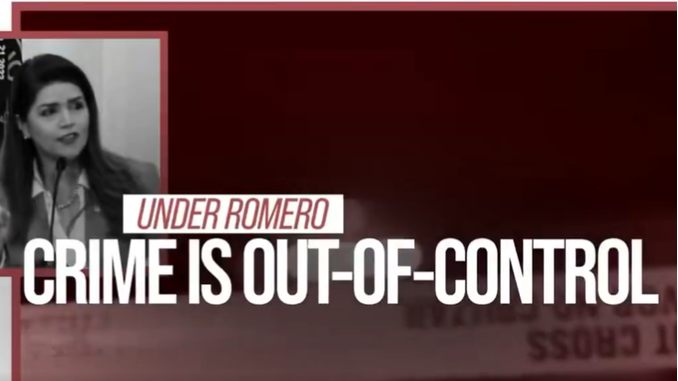
Republican Rep. Juan Ciscomani’s (R-AZ06) reelection campaign released a new advertisement Tuesday targeting Democratic challenger JoAnna Mendoza. The ad links Mendoza to Tucson Mayor Regina Romero and highlights Mendoza’s past comments about reallocating police funding.
The advertisement, titled “Radical Allies,” accuses Mendoza and Romero of sharing an approach to policing, taxation, and homelessness that Ciscomani’s campaign says has harmed Tucson. The spot concludes by warning of “fewer police officers,” “more dangerous streets,” and “the same failed radical policies.”
“JoAnna Mendoza has a clear record of undermining support for and trust in local law enforcement – just listen to her in her own words,” Ciscomani said.
Sharing the advertisement in a post to X, Ciscomani wrote, “JoAnna Mendoza is endorsed by Tucson’s Failed, Unpopular Mayor Regina Romero for AZ06.” He added, “ Under Romero’s failed leadership: Police officers and firefighters stretched thin, Homelessness and crime are rampant, Business owners left to pick up the mess.”
🚨RADICAL POLICIES. RADICAL ALLIES.🚨
JoAnna Mendoza is endorsed by Tucson’s Failed, Unpopular Mayor Regina Romero for AZ06.
Under Romero's failed leadership: ❌Police officers and firefighters stretched thin ❌Homelessness and crime are rampant ❌Business owners left to… pic.twitter.com/FwRy7thZBz
Ciscomani said residents of Arizona’s Sixth Congressional District deserve elected officials who prioritize public safety and provide law enforcement agencies with the personnel and equipment needed to protect their communities.
The advertisement describes Romero as a Mendoza ally and cites her endorsement of the Democrat nominee. Romero publicly endorsed Mendoza in July 2020, when Mendoza was running for the Arizona Senate in Legislative District 11.
“JoAnna has demonstrated her lifelong commitment to serving our country and the people of Arizona,” Romero said during the 2020 campaign.
Mendoza thanked Romero for the endorsement and said she had helped with Romero’s successful 2019 campaign to become Tucson’s first female and Latina mayor.
The Ciscomani campaign’s release did not identify a separate endorsement issued by Romero during the current congressional race. Romero is not listed on Mendoza’s current campaign endorsement page, which includes Democrat Sens. Mark Kelly and Ruben Gallego, Attorney General Kris Mayes, former Rep. Gabby Giffords, and several other elected officials and organizations.
Later Tuesday, Romero explicitly endorsed Mendoza in a post responding to Ciscomani, “@JuanCiscomani has failed Tucsonans. He voted to remove SNAP & Medicare benefits from children & seniors to give his billionaire buddies tax breaks. We need leadership that is more interested in results than theatrics. That is why we must retire Juan & elect @Mendoza4AZ.”
@JuanCiscomani has failed Tucsonans. He voted to remove SNAP & Medicare benefits from children & seniors to give his billionaire buddies tax breaks. We need leadership that is more interested in results than theatrics. That is why we must retire Juan & elect @Mendoza4AZ
Romero referred to Medicare in the post. Congressional Budget Office analyses of the reconciliation law identified Medicaid and SNAP as the principal benefit programs affected by reductions in federal spending.
Romero and Mendoza appeared together in February during a Tucson panel on gun violence with Giffords and Tucson Unified School District Governing Board member Natalie Luna Rose.
The new advertisement also draws from comments Mendoza made during a 2020 town hall hosted by the Arizona Clean Elections Commission and the Arizona Capitol Times amid nationwide protests and disputes over police funding.
“I support the reallocation of funding to programs that would allow people to live their best lives,” Mendoza said when asked whether she supported defunding police, according to a report from Fox News.
Mendoza identified social services, housing, public education, health care, economic stability, and environmental safety among the programs she believed should receive funding.
The Ciscomani campaign also cited Mendoza’s statement that police reform represented “one aspect of the systemic racism” present in the United States. The campaign characterized her support for reallocating funding as an endorsement of the movement to defund police departments.
Mendoza has rejected that characterization. Her campaign told Fox News that she supports providing police with additional resources, including training and body cameras, and said she has repeatedly opposed defunding law enforcement.
“I do not support defunding the police,” Mendoza said during another virtual event in 2020. “Police officers are being asked to do too much.”
Mendoza reiterated that position in an opinion article in the Arizona Daily Star in March 2026 that was republished be her campaign.
“The answer is not to defund law enforcement—it’s to fund law enforcement with intention,” Mendoza wrote.
She called for additional training, body cameras, clear identification, and oversight while expressing support for police officers, Border Patrol personnel, and immigration agents who lawfully perform their duties.
Ciscomani’s campaign also highlighted federal funding the congressman has supported for local public safety agencies. His congressional office said he obtained $4.2 million in Community Project Funding to replace aging Tucson Police Department vehicles.
A January spending package included $809,687 for replacement radios for the Sahuarita Police Department. Ciscomani has also sponsored legislation intended to establish coordination centers where federal, state, local, and tribal law enforcement agencies could conduct joint operations.
Ciscomani and Mendoza advanced to the Nov. 3 general election after running without opposition in their respective July 21 primaries. Ciscomani has represented the district since 2023 and won reelection in 2024 with 50.0 percent of the vote, defeating Democrat Kirsten Engel by 10,822 votes.
Congressman Abe Hamadeh (R-AZ-08) was recognized last week by the Institute for Legislative Analysis (ILA), receiving the organization’s Defender of Limited Government Award for his voting record in Congress.
The award was presented by ILA Chief Executive Officer Ryan McGowan and President Fred McGrath in recognition of Hamadeh’s support for what the organization described as the limited government principles of the U.S. Constitution.
According to the ILA, Hamadeh earned an A+ rating with an overall score of 86%, exceeding the projected district estimate of 81%.
The freshman congressman also received perfect scores in several policy areas including energy, national security, free speech, healthcare, and government accountability.
Congratulations to @RepAbeHamadeh on earning ILA's Defender of Limited Government Award!
His voting record reflects a commitment to constitutional limited government and a more accountable, responsive federal government. By demanding accountability in Washington, he's standing… https://t.co/ImupOKolmD
— Institute for Legislative Analysis (@leganalysis) July 24, 2026
“The Institute for Legislative Analysis is proud to present Congressman Abraham Hamadeh with the Defender of Limited Government Award for a voting record closely aligned with the limited government principles of the U.S. Constitution,” announced Ryan McGowan.
McGowan praised Hamadeh’s work during his first term in Congress, highlighting his focus on national security, public safety, government accountability, and improving access to benefits and support for veterans.
“We especially appreciate his work to improve veterans’ access to the programs and support they have earned, while demanding a federal government that is more responsive, accountable, and focused on results,” added McGowan. “Congressman Hamadeh and the team he has assembled deserve credit for standing with taxpayers, service members, veterans, and Arizona families who expect Washington to do its job and stay within its proper limits.”
Hamadeh said the recognition reflects the principles he pledged to uphold when elected to represent Arizona’s Eighth Congressional District.
“It is an honor to receive the Defender of Limited Government Award,” said Congressman Hamadeh. “The people of Arizona’s Eighth District elected me to defend the Constitution, protect their freedoms, and stand against government overreach. I will continue fighting for policies that preserve individual liberty, strengthen our economy, secure our border, and ensure that our government remains accountable to the people, not the other way around.”
Ethan Faverino is a reporter for AZ Free News. You can send him news tips using this link.
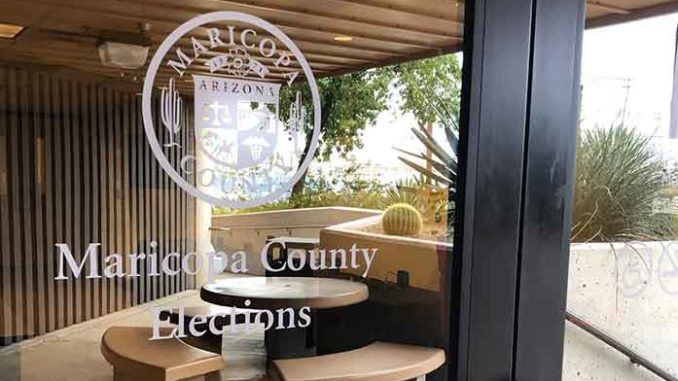
Despite infighting publicized by a court battle that has lasted over a year, Maricopa County reported that its administration of the 2026 primary election was a success.
Primary election results were processed speedily. About a day — 27 hours — after the polls closed, 99% of ballots were tabulated and reported. After that initial 27-hour mark and as of Friday, there were approximately 3,000 ballots remaining: fewer than 900 provisional or action-needed ballots and around 2,000 ballots that required curing by the deadline on Sunday.
The county reported more than 676,000 ballots cast across more than 250 voting locations, representing more than 26% of total registered voters in the county. As of the end of June, Maricopa County reported having more than 22,000 individuals registered to vote who haven’t provided valid proof of citizenship.
More than 77,000 of the ballots returned were early ballots dropped off on Election Day. Out of those, 23,000 voters used the check-in process to verify their identity on site, enabling on-site tabulation.
Supervisor Mark Stewart credited the county’s elections department, recorder’s office, and poll workers in a press release. Per Stewart, voters and poll workers alike reported the early ballot process to be “fast, efficient, and secure,” which Stewart hailed as a “major step” for improving voter confidence and election results processing times.
“This was a tremendous team effort. The Elections Department, the Recorder’s Office, our poll workers, and every employee supporting the operation knocked it out of the park,” said Stewart.
The speedy turnaround may be attributable to staff efforts to process the ballots turned in on Election Day. Maricopa County Recorder Justin Heap reported that his staff came in several hours after midnight the day after Election Day to complete signature verification on all early ballots by early that morning.
“A tremendous thank you to our dedicated elections team, who began work at 2:00 a.m., this morning, and completed the signature verification process in less than 6 hours while upholding the highest standards of accuracy, security, and election integrity,” stated the recorder’s office.
🚨ELECTION UPDATE: Despite receiving the final batch of late-early ballots at 2:40 a.m., my Office completed signature verification on all Election Day early ballots by 8:00 a.m.
A huge thank you to the dedicated staff who came in at 2:00 a.m. to ensure we delivered the fast,… https://t.co/IAEWigKheM
— Maricopa County Recorder Justin Heap (@azjustinheap) July 22, 2026
County Chair Supervisor Kate Brophy McGee credited early ballot voters for taking up the on-site identity verification process, rather than dropping off those ballots for post-election validation.
Gov. Katie Hobbs secured more than 293,000 votes in Maricopa County in her challenge-free primary election. Votes cast represented a 43% turnout.
Rep. Andy Biggs won the Republican gubernatorial primary with more than 252,000 votes. Fellow congressman David Schweikert came in second with more than 58,000 votes, followed by Scott Neely’s more than 22,000 votes, and then Ken Miceli’s more than 16,000 votes. Turnout reached 40%.
One Green candidate is in the running for governor, Risa Lombardo, who secured 243 votes. Teri Ann Hourihan secured the No Labels Party nomination with more than 3,600 votes, while Hugh Lytle came in second with 2,900 votes.
Amish Shah secured the Democratic nomination for the Congressional District 1 race with more than 28,000 votes. Marlene Galan-Woods came in second with more than 25,200 votes, followed by Jonathan Treble’s nearly 13,000 votes and Rick McCartney’s 6,000 votes. Voting turnout reached nearly 56%, with more than 75,000 ballots cast.
Jay Feely secured the Republican nomination for the Congressional District 1 race with more than 43,000 votes. State lawmaker Joseph Chaplik came in second with more than 31,000 votes, followed by John Trobough’s more than 12,000 votes. Turnout reached nearly 48%, and there were more than 92,000 ballots cast.
Jonathan Nez didn’t have any primary challengers for the Congressional District 2 race. He will face incumbent Republican Rep. Eli Crane in November, who also didn’t have any primary challengers.
Rep. Yassamin Ansari, the incumbent Democrat for Congressional District 3, didn’t have any primary challengers. A No Labels Party candidate, Alan Aversa, will face Ansari in November.
Rep. Greg Stanton prevailed in the Democratic primary challenge to his incumbency in Congressional District 4, securing more than 35,000 votes. Kai Newkirk came in second with more than 21,000 votes. Turnout reached 47%, and there were more than 58,000 total ballots cast.
Tisha Benoit won the No Labels Party primary for Congressional District 4 over John Fillmore, 979 votes to 518 votes. Turnout represented 44%, and there were more than 2,000 ballots cast.
Zuhdi Jasser was the sole candidate in the Congressional District 4 Republican primary.
Elizabeth Lee won the Democratic primary for Congressional District 5, securing more than 26,000 votes. Chris James came in second with more than 8,000 votes, followed by Brian Hualde with more than 5,000 votes. Turnout reached 45%, and there were more than 42,000 ballots cast.
Mark Lamb won the Republican primary for Congressional District 5, securing more than 40,000 votes. Daniel Keenan came in second with more than 31,000 votes. Turnout reached nearly 42%, and there were nearly 75,000 ballots cast.
Rep. Juan Ciscomani, the incumbent Republican for Congressional District 6, didn’t have any primary challengers. JoAnna Mendoza was the sole candidate in the Democratic Congessional District 6 primary.
Rep. Adelita Grijalva, the incumbent Democrat for Congressional District 7, didn’t have any primary challengers. Daniel Francis Butierez Sr. was the sole candidate in the Republican Congressional District 7 primary.
Likewise, incumbent Rep. Abe Hamadeh didn’t have any challengers in the Republican primary for Congressional District 8. Hamadeh will face off against Democratic candidate Bernadette Greene-Placentia, who prevailed with more than 31,000 votes over Ray Keeler’s 16,000 votes in the Democratic primary.
Rep. Paul Gosar also didn’t have a challenger in the Republican primary for Congressional District 9. Gosar will face off against the sole Democratic candidate, Dani Sterbinsky.
AZ Free News is your #1 source for Arizona news and politics. You can send us news tips using this link.
The latest National Defense Authorization Act (NDAA) has two key amendments from the Republican nominee for Arizona governor, Rep. Andy Biggs (AZ-05).
The two bipartisan-backed amendments impose budgetary restrictions for poor financial management, and a counter to the Chinese threat of critical mineral mining dominance.
Biggs explained in a statement that the two amendments were critical for public confidence in government accountability and independence concerning nonfuel minerals.
“My amendments address critical issues within America’s massive national defense apparatus, ensuring more transparency and accountability within our government and closing the gap between China and the United States for a critical workforce,” said Biggs.
One of the amendments establishes greater financial oversight of the Department of Defense (DOD). The amendment language was derived from Biggs’ “Audit the Pentagon Act,” one of the first bills introduced by Biggs in 2017.
The amendment requires the DOD, and certain military departments and defense agencies, to submit a financial statement for the previous year and receive an audit opinion. Without a financial statement and audit opinion, the discretionary budget authority will be reduced by 0.5%, except for accounts handling military, reserve, and National Guard personnel and the Defense Health Program.
The DOD has presented “unauditable financial statements” for decades and to date has been the only major federal agency to have never passed an audit, according to a May report by the General Accounting Office (GAO). Since 2018, the Pentagon has failed eight consecutive agency-wide annual audits.
The DOD spends more than $1 trillion annually on foreign and domestic defense — nearly half of the federal government’s discretionary spending. It also retains approximately 82% of the federal government’s total physical assets and its financial management problems account for 17% of the federal government’s costs.
The DOD’s prolonged financial weaknesses contributed to the U.S. insolvency announced by the Treasury Department earlier this year. The U.S. has about $6 trillion in assets against nearly $48 trillion in liabilities.
The GAO reported that the DOD had more than $16 billion worth of previously untracked assets and inventory.
Last month, the GAO reported that the DOD weapons programs have continued wasting billions of dollars and decades of time from exceeding cost estimates and delivery schedules.
The other amendment boosted federal support for accredited mining engineering programs. Chinese mining engineering graduates outnumber American mining engineering graduates annually by anywhere from 15 to 1, to 50 to 1. China reports graduating 3,000 to 10,000 mining-related engineers across dozens of programs, while America reports graduating about 200.
Mining engineering program graduates peaked in 1980, declining from then until 2004, when program resurgence occurred until 2015, according to data from the Society for Mining, Metallurgy, and Exploration. Even at its most high peak in 1980 and most recent high peak in 2015, graduates numbered between 600 and 700 a year.
The University of Arizona has a mining program.
President Donald Trump issued a memorandum in May directing the Office of Personnel Management to impose critical position pay for up to 400 positions oriented toward expanding U.S. critical mineral capacity, along with advanced materials and other essential components for the supply chain.
AZ Free News is your #1 source for Arizona news and politics. You can send us news tips using this link.
Nebraska Attorney General Mike Hilgers endorsed Arizona Senate President Warren Petersen for attorney general Tuesday. The endorsement adds another Republican state attorney general to the growing coalition supporting Petersen’s challenge to Democrat Attorney General Kris Mayes.
Petersen secured the Republican nomination after defeating attorney Rodney Glassman in Arizona’s primary. He will face Mayes in the Nov. 3 general election.
“Arizona needs an Attorney General who is committed to the rule of law and standing with law enforcement,” Hilgers said in a statement released by Petersen’s campaign. “Unfortunately, Arizona’s liberal Attorney General has sold out to radical special interests.”
Hilgers cited Petersen’s record as Senate president, including his work on legislation affecting families, women’s sports, public safety, and the cost of living.
“I’m supporting Warren Petersen because he is a proven, experienced leader who has fought to protect families and women’s sports as Arizona’s Senate President, lower the cost of living, and keep our neighborhoods safe,” Hilgers said. “He’s the right person with the best temperament for the job. Please join me in supporting Warren Petersen for Arizona Attorney General.”
Hilgers became Nebraska’s 33rd attorney general in 2022 after spending six years in the Nebraska Legislature, including two years as speaker. He previously practiced law for more than 15 years and founded a litigation firm.
Petersen thanked Hilgers for the endorsement and said he expected to work alongside him if elected.
“I’m grateful for the trust and support of Attorney General Hilgers,” Petersen said. “He knows that Arizona cannot afford another four years of the radical leadership and politics imported to the Attorney General’s Office by Kris Mayes.”
Petersen accused Mayes of using the office to target law enforcement and political opponents.
“Under her direction, Arizona has succumbed to the California and New York-style tactics of attacking law enforcement and persecuting political opponents,” Petersen said. “Arizonans deserve better; the hard-working men and women of this state want an Attorney General who fights for their interests, not special interests. I look forward to joining General Hilgers come January.”
Petersen has served in the Arizona Legislature since 2012 and represents Legislative District 14, which covers Gilbert and portions of Queen Creek. His legislative roles have included House majority leader, chairman of the Senate Commerce and Judiciary committees and president of the Senate.
Hilgers joins Utah Attorney General Derek Brown, Idaho Attorney General Raúl Labrador, West Virginia Attorney General J.B. McCuskey, and Indiana Attorney General Todd Rokita among the Republican attorneys general supporting Petersen.
Petersen has also received endorsements from the Arizona Fraternal Order of Police, Arizona Police Association, Arizona State Troopers Association, Combined Law Enforcement Associations of Arizona, and Phoenix Police Sergeants and Lieutenants Association.
The Arizona Fraternal Order of Police represents more than 9,000 law enforcement professionals across the state, while the Arizona Police Association describes itself as a statewide coalition representing law enforcement, corrections, detention, and probation officers.
Other law enforcement endorsements announced by the campaign include Yavapai County Sheriff David Rhodes, Pinal County Sheriff Ross Teeple, Gila County Attorney Brad Beauchamp, Pinal County Attorney Brad Miller, Mohave County Attorney Matt Smith, former Maricopa County Sheriff Joe Arpaio, and retired Border Patrol agent Art Del Cueto.
The campaign said Petersen is the first challenger to a sitting Arizona attorney general to receive endorsements from the state’s five largest police organizations. That claim could not be independently confirmed through publicly available historical endorsement records.
Petersen has made law enforcement support and criticism of Mayes central themes of his campaign. His campaign website lists enforcing existing laws, supporting law enforcement, and restoring trust in the Attorney General’s Office among his stated priorities.