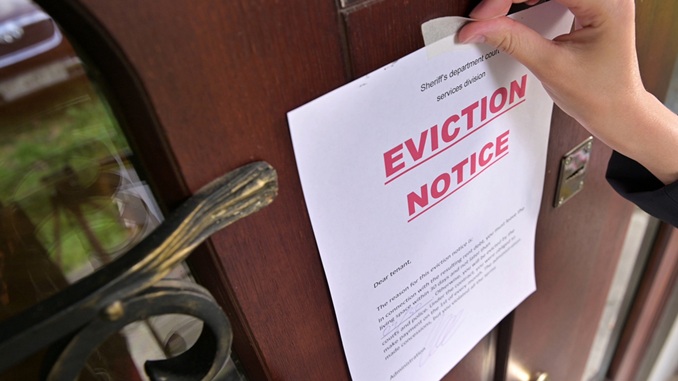
City of Phoenix leaders are looking for a funding pathway to cover the millions it will cost to continue to provide legal and other services to evictees.
The city launched a pilot Eviction Legal Services (ELS) program in January 2025 using $1.2 million out of the interest accrued from American Rescue Plan Act (ARPA) funds. Phoenix received nearly $400 million in ARPA funds as part of an economic stimulus package in response to the COVID-19 pandemic.
The ELS program is scheduled to continue through June 2027.
City leaders and staff discussed the proposal to continue the ELS program, or another iteration of evictee services, during the most recent Community Services and Education Subcommittee meeting last month.
According to city staff, the ELS program handled 766 applications from January 2025 through March 2026. 436 of those applications were eligible for referral to an ELS provider. 292 eligible referrals, or 67%, were for legal representation to respond to an eviction filing.
330 applications were considered ineligible: 260 failed to provide complete documentation and 70 were either not city residents or their cases were not eviction-related.
Staff further reported that 25% of all closed cases ended with a negotiated settlement or agreement in which the landlord and tenant agreed with the outcome jointly. 140 cases with legal representation, or 48%, were classified as having reduced negative impacts of eviction on tenants. Examples of reduced negative impacts were evictees receiving 42 additional days to move out and paying $2,600 less on average for back rent.
City of Phoenix leaders are familiar with repurposing COVID-19 relief funds for housing assistance. Jacqueline Edwards, director of the Human Service Department (HSD), came on the job two years ago having successfully distributed $200 million in COVID-19 relief funds for rental assistance while with the Maricopa County Human Services Department. Edwards joined the city of Phoenix as its HSD director in 2024.
The COVID-19 relief windfall is coming to an end, however. During the Community Services and Education Subcommittee meeting last month, Edwards disclosed that the city doesn’t have a dedicated funding source for continuation of ELS or a similar program.
Vice Mayor Kesha Hodge Washington said subsidized housing was one of her key priorities, and urged Edwards to find funding for ELS.
Edwards made that nonfunding disclosure as she proposed three new programs for additional eviction prevention and response:
Preferred Landlord program: the city would create a “verified landlord” list of city-recognized landlords committed to city-funded mediations rather than evictions.
“Tenants would know up front that these landlords would seek mediation activities rather than simply filing an eviction,” said Edwards.
Landlord Risk Mitigation Fund program: the city would assist households with a history of evictions by providing financial incentives for landlords to accept these higher-risk tenants, such as deposit assistance.
One-Stop Stabilization Appointment program: the city would meet with evictees within three days of their eviction to enroll them in public benefits and resources.
Washington said she approved of all three programs.
“It is less costly and more effective to prevent homelessness than it is to respond to someone who’s already lost their housing,” said Washington.
Beyond legal services for evictees, the city also began distributing $3 million for emergency financial assistance last month.
The new Stability Assistance program gives “vulnerable Phoenix residents” up to $2,500. Noncitizens qualify since they have residency, as well as those who reside in a qualified census tract; have incomes no greater than 200% of the federal poverty line; or receive or have received funding from the Supplemental Nutrition Assistance Program, Temporary Assistance for Needy Families, or Medicaid.
The funds may be used for “utilities, rent, transportation, or other basic expenses [for] other household needs” according to city meeting records, though Edwards revealed that staff don’t have strict requirements for how recipients may spend their thousands. Edwards said funds could be used to pay for other things, like continuing education or work credentials.
“[It’s] not for staff to say, ‘These are the steps that you have to do, but rather let that [decision making] be driven [by fund recipients] because households really do know what’s best for them and we’re there to walk right next to them and help them achieve those goals,” said Edwards.
AZ Free News is your #1 source for Arizona news and politics. You can send us news tips using this link.
Arizona Senate President Warren Petersen (R-LD14) added endorsements from two law enforcement associations last week as he continued building police support in his campaign against Democrat Attorney General Kris Mayes.
The Arizona Conference of Police and Sheriffs (AZCOPS) and the Maricopa County Colleges Police Officers Association (MCCPOA) endorsed Petersen, according to a release from his campaign. Petersen won the Republican nomination in July and will face Mayes in the general election.
With the AZCOPS endorsement, Petersen’s campaign said he now has support from Arizona’s six largest law enforcement organizations. His broader coalition includes county sheriffs, county attorneys, and retired law enforcement officials.
In a post to X prior to the announcement, Petersen wrote, “For the first time in AZ history, a challenger to the sitting AG has the overwhelming support from law enforcement. As your next attorney general, I will fight crime, defend the laws and the Constitution, and root out fraud, waste, and corruption.”
For the first time in AZ history, a challenger to the sitting AG has the overwhelming support from law enforcement. As your next attorney general I will fight crime, defend the laws and the Constitution and root out fraud, waste and corruption. pic.twitter.com/wDXRHpFDom
AZCOPS represents more than 4,500 members across Arizona. The organization says it represents public safety employees in legal, employment, and political matters and advocates for compensation, benefits, and due-process protections.
“Following extensive research and consideration by AZCOPS Legislative Committee and Executive Board, AZCOPS is proud to endorse you for election for Arizona’s Attorney General,” AZCOPS Executive Director David Stone said in the campaign release.
“AZCOPS examines several factors when determining whether to issue endorsements, including a candidate’s record of accomplishments, commitment to public safety, and willingness to work collaboratively with the leadership of our member organizations,” Stone added. “[Warren Petersen’s] unwavering support for law enforcement and public safety is appreciated by our members and the communities they serve.”
Stone is a retired Tucson Police Department officer who later worked as a private investigator and criminal investigator for Pima County.
“I’m grateful for these latest endorsements from AZCOPS and MCCPOA,” Petersen said. “It’s clear that the men and women in law enforcement have made their decision for the state’s next top cop.”
Petersen criticized Mayes’ record and pledged to support law enforcement agencies if elected.
“Since taking office, Kris Mayes has attacked cops and undermined their authority in communities across the state,” Petersen said. “As Attorney General, I’ll support law enforcement as they carry out their duties to protect citizens and restore confidence in the relationship with the men and women who keep our community safe.”
Petersen’s campaign said the latest endorsements make him the first challenger to an incumbent Arizona attorney general to receive support from the state’s six largest police organizations.
Before Friday’s announcement, Petersen had received endorsements from the Arizona Fraternal Order of Police, Arizona Police Association, Arizona State Troopers Association, Combined Law Enforcement Associations of Arizona, and Phoenix Police Sergeants and Lieutenants Association.
Petersen has also received endorsements from five Republican attorneys general. Nebraska Attorney General Mike Hilgers became the latest, joining Utah Attorney General Derek Brown, Idaho Attorney General Raúl Labrador, West Virginia Attorney General J.B. McCuskey, and Indiana Attorney General Todd Rokita.
Former Maricopa County Sheriff Joe Arpaio and retired Border Patrol agent Art Del Cueto have also endorsed Petersen.
Petersen has made law enforcement and public safety central parts of his campaign. His campaign platform calls for enforcing Arizona law, holding criminals accountable, protecting the rights of crime victims, and supporting law enforcement officers.
His campaign said in a press release on Friday, “The support from these officials and organizations reflects confidence that Petersen will restore integrity to the Attorney General’s Office, enforce the law fairly and fearlessly, and stand shoulder to shoulder with those who protect Arizona communities every day.”
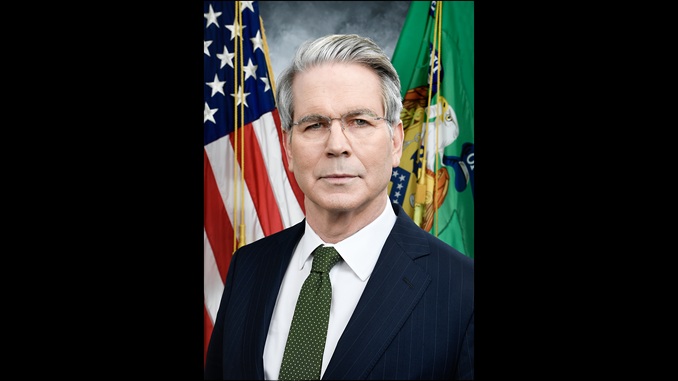
Treasury Secretary Scott Bessent is expected to visit Arizona on Wednesday and Thursday, with stops including a Casa Grande appearance alongside House Speaker Mike Johnson (R-LA) and Rep. Juan Ciscomani (R-AZ-06). The tentative itinerary, provided exclusively to AZ Free News by Treasury Department officials, also includes meetings with manufacturers, business leaders, and community bankers.
Bessent is scheduled to travel to the state on August 5 and 6 to discuss the Trump administration’s economic agenda and efforts to strengthen the integrity of the nation’s financial system, Treasury officials said.
The visit will include a tour of a manufacturing facility in Casa Grande with Johnson and Ciscomani. The three officials are also expected to participate in an economic roundtable with Arizona business leaders.
The Treasury Department had not yet publicly identified the manufacturing facility as of Monday night.
The administration plans to use the event to highlight the effects of the tax and business provisions it refers to as the Working Families Tax Cuts, including incentives for domestic manufacturing and capital investment.
The tax provisions were enacted as part of Public Law 119-21, which President Donald Trump signed on July 4, 2025. The law permanently extended several provisions of the 2017 Tax Cuts and Jobs Act and created temporary federal income-tax deductions for qualified tips and overtime compensation.
The law also allows businesses to immediately deduct qualifying research and development costs and the cost of certain equipment and machinery. It provides accelerated deductions for qualifying investments in new and expanded manufacturing facilities, according to a White House summary.
Arizona Republican lawmakers and Governor Hobbs reached a bipartisan budget agreement in June that eliminated state income taxes on qualified tips and overtime, increased the standard deduction, and added other tax provisions tied to the federal law. Republican legislative leaders described Arizona as the only state to fully adopt the federal tax package at the state level.
🚨FOR IMMEDIATE RELEASE: Arizona Becomes Only State in the Nation to Deliver Historic Trump Tax Cuts As Part of Bipartisan FY 2027 Budget Agreement
The White House, citing a National Association of Manufacturers analysis, said the law’s manufacturing provisions sustained an estimated 119,000 Arizona jobs, $22 billion in state economic output, and $11 billion in wages.
The Congressional Budget Office (CBO) estimated that the law would increase federal deficits by approximately $3.4 trillion from 2025 through 2034, excluding macroeconomic and debt-service effects. The CBO attributed the increase to an estimated $4.5 trillion reduction in revenues, partially offset by a $1.1 trillion reduction in direct spending.
During a separate engagement, Bessent is expected to meet with community bankers from across Arizona alongside Comptroller of the Currency Jonathan Gould.
Bessent and Gould reportedly plan to discuss the administration’s efforts to reduce regulatory burdens on community banks and expand their ability to finance local businesses and economic development.
Reducing regulatory and supervisory burdens on community banks has been one of Gould’s stated priorities. The agency said in May that it had begun tailoring examinations according to a bank’s size, complexity, and risk profile, while giving smaller institutions greater flexibility to use a simplified capital framework.
The Office of the Comptroller of the Currency (OCC) has also revised its model-risk guidance and narrowed the scope of information-technology and cybersecurity examinations for community banks, according to an agency announcement.
“Community banks are anchors of local economies, providing essential banking services and small business lending that helps power job creation,” Gould said in the announcement.
The Arizona meeting is also expected to address the administration’s campaign against fraud, identity theft, money laundering, and other illicit activity involving the financial system.
Trump issued an executive order in May directing Treasury and federal banking regulators to strengthen customer-identification requirements and consider changes to regulations implementing the Bank Secrecy Act.
The order directed Treasury and federal financial regulators to propose stronger risk-based customer due-diligence requirements and consider changes to customer-identification rules. It instructed regulators to examine the use of foreign consular identification documents, invalid or mismatched Social Security and taxpayer-identification numbers, payroll-tax schemes, and accounts associated with workers who lack employment authorization.
It also directed financial regulators to consider whether banks should obtain additional information concerning immigration status and employment authorization when those details are relevant to fraud, identity misrepresentation, sanctions evasion, or another identified financial risk.
The Treasury’s Financial Crimes Enforcement Network (FinCEN ) subsequently issued a June 5 advisory urging banks and other financial institutions to identify and report suspicious activity associated with identity theft, payroll fraud, and the unlawful employment of people without work authorization.
FinCEN said some employers conceal unauthorized workers by using stolen identities, mismatched Social Security numbers, false payroll information, or off-the-books payment arrangements. The agency reported that financial institutions filed suspicious activity reports involving more than $2.5 billion in transactions associated with potential payroll-tax fraud during 2025.
The advisory was issued jointly with the Federal Deposit Insurance Corporation, OCC, and the National Credit Union Administration, and in coordination with the Internal Revenue Service.
The Treasury Department said Bessent and Gould will discuss how Arizona community banks can support the administration’s enforcement efforts while continuing to provide financing and banking services to local businesses.
Additional details regarding the facility, participating business leaders, event times, and press access are expected later on Tuesday.
Arizona House Republicans are calling on Gov. Katie Hobbs to pursue a federal data-sharing agreement intended to help investigators identify Medicaid and other public-benefit fraud by finding connections between government benefit payments and complex business records.
House Majority Leader Michael Carbone (R-LD25) and House Health and Human Services Committee Chairman Selina Bliss (R-LD1) issued the request Monday following the Justice Department’s announcement of new cooperation agreements with several southeastern states.
✅House Republicans Call on Governor Hobbs to Join Federal Anti-Fraud Data-Sharing Partnership Six states have already agreed to help federal investigators uncover fraud
“Arizona families work hard and pay their taxes, and they have every right to expect that not one dollar of… pic.twitter.com/y0L8vKPchx
— Arizona House Republicans (@AZHouseGOP) August 3, 2026
The Justice Department’s National Fraud Enforcement Division announced the agreements July 30 as part of a wider federal-state initiative involving Alabama, Florida, Georgia, Louisiana, Mississippi, North Carolina, and South Carolina.
Secretaries of state from Alabama, Florida, Georgia, Louisiana, Mississippi, and South Carolina entered data-sharing agreements giving the division access to publicly available corporate-registration and public-benefit payment information held by their agencies. State treasurers from Florida, Mississippi, and South Carolina also joined the agreements.
Federal investigators plan to use the data to identify patterns connecting business entities with public-benefit payments and trace financial activity through shell companies, layered business structures, and related entities. The department encouraged other states to pursue similar partnerships.
“Arizona families work hard and pay their taxes, and they have every right to expect that not one dollar of their money ends up in the pocket of a fraudster,” Carbone said. “Six states have already signed up to help catch the criminals stealing from taxpayers and from the people these programs are supposed to serve. There is no good reason Arizona should not be next, and no good reason for Governor Hobbs to wait.”
“Arizona’s most vulnerable families should not pay the price for fraud and inaction,” he added. “Arizona taxpayers have already lost billions of dollars, and the Justice Department has given states a practical way to identify suspicious payments and business connections earlier. Governor Hobbs should begin the process today.”
Carbone proposed that Arizona begin with a two- or three-year memorandum of understanding that would preserve state control over the information and allow officials to evaluate the partnership’s results.
“Every dollar siphoned off by fraudsters is a dollar that does not reach an Arizona family who needs it,” Bliss said. “We have seen billions lost to sober living scams and phantom behavioral health clinics right here in our state, and Arizona has been named one of the riskiest states in the country for this kind of abuse.”
The Republican lawmakers did not specify which Arizona agencies would enter the agreement or which categories of public-benefit information would be shared.
Unlike the participating states, Arizona’s Secretary of State’s Office does not register corporations or limited liability companies. Those records are maintained by the independently elected Arizona Corporation Commission, while public-benefit payment information is held by executive agencies including AHCCCS and the Department of Economic Security.
The request comes as Hobbs remains under investigation over allegations involving Sunshine Residential Homes, a Department of Child Safety (DCS) contractor. Sunshine donated $300,000 to the Arizona Democratic Party and $100,000 to Hobbs’ inaugural fund before DCS approved a 30% rate increase, though no other group homes received rate increases and over a dozen contracts were terminated.
Attorney General Kris Mayes’ office has sought an interview with Hobbs as part of its ongoing criminal investigation, while the Arizona House has retained outside counsel to conduct a separate inquiry. Hobbs has denied wrongdoing and maintained that she did not influence the contracting decision. As of July 30, no date had been set for her interview with investigators. KJZZ reported that Mayes expects to make an announcement regarding the investigation before the November 3 election.
The Justice Department established a West Coast Health Care Fraud Strike Force in April covering Arizona, Nevada, and the Northern District of California. U.S. Attorney Timothy Courchaine said federal investigators and prosecutors had disrupted fraud schemes representing more than $1 billion in Arizona alone.
In announcing the strike force, the Justice Department cited the prosecution of two wound-graft company owners in a $1.2 billion Medicare and Medicaid fraud scheme and the indictment of Farrukh Jarar Ali, a Pakistani national accused of directing an approximately $650 million fraud operation involving at least 41 Arizona substance-abuse treatment clinics.
Federal prosecutors allege Ali’s company helped enroll clinics as providers with AHCCCS before submitting approximately $650 million in fraudulent claims for services that were unnecessary, substandard, or never provided. AHCCCS paid approximately $564 million on the claims, according to the Justice Department.
Hobbs’ administration has separately promoted Arizona’s existing efforts to prevent Medicaid fraud. In May, the governor’s office said the state’s enforcement campaign had targeted as much as $2.5 billion in suspected fraud, produced more than 364 payment suspensions based on credible allegations, and contributed to more than 100 indictments. AHCCCS also began deploying the Alivia 360 analytics platform this summer to identify potential improper claims before payment.
Carbone said the federal agreement could add another investigative tool by allowing authorities to identify suspicious connections between public payments and corporate records earlier.
“Arizona has already paid an enormous price for fraud,” Carbone said. “Governor Hobbs can act now to help prevent the next scandal. If she chooses to leave Arizona on the sidelines, she should explain why.”
Rep. Eli Crane’s reelection campaign has reserved $2.1 million in fall advertising as the Arizona Republican prepares for a rematch with former Navajo Nation President Jonathan Nez in the state’s Second Congressional District.
The advertising will run across broadcast television, cable, satellite, streaming services, social media, and radio beginning in mid-September, according to an announcement from the Crane campaign.
“The same D.C. Democrats who look down on rural Arizonans because we don’t share their woke values want to pretend like they all of the sudden care about AZ-02,” Crane said. “What they really care about is power.”
“The truth is it is just another seat to them, but not to me,” Crane continued. “This is a district made up of some of the finest people you’d ever meet, folks who pray to God, love their neighbors, work hard, and play by the rules. It is an honor to serve them in Congress.”
Crane said he was prepared to defend his record against Democratic attacks during the general election campaign.
“If the D.C. Democrats want a fight, they’ve got one,” Crane said. “I don’t back down and am more prepared than ever to put my record up against their lies.”
The reservation follows the July release of Crane’s first general-election advertisement, titled “Fight.” The digital ad highlighted Crane’s military service and presented the former Navy SEAL as an advocate for rural Arizona willing to challenge members of both political parties in Washington. Crane served 13 years in the Navy and completed five wartime deployments, including three with SEAL Team 3.
Crane’s campaign previously said it planned to invest at least seven figures in paid media during the general election. The new reservation specifies the amount, platforms, and timing of the planned spending.
The congressman enters the fall with a substantial fundraising advantage. Crane’s campaign reported approximately $9.48 million in total receipts and $2.84 million in cash on hand through the end of June.
Nez reported approximately $3.52 million in total receipts and $1.91 million in cash on hand over the same reporting period. His campaign spent approximately $1.67 million through June.
Crane and Nez were unopposed in their respective party primaries. They are expected to face each other in the November 3 general election along with Libertarian Curtis Goodwin.
The contest is a rematch of the 2024 election, when Crane defeated Nez with 221,413 votes, or approximately 54.5 percent, to Nez’s 184,963 votes, or approximately 45.5 percent. Nez carried Apache, Coconino, and Graham counties, as well as the district’s portions of Maricopa and Mohave counties, while Crane prevailed in Gila, Navajo, Pinal, and Yavapai counties.
Arizona’s Second Congressional District includes Prescott, Flagstaff, and much of the Navajo Nation. The Cook Political Report rates the race “Likely Republican” and gives the district a Republican advantage of seven percentage points in its Partisan Voting Index. Cook reported that Nez finished nine points behind Crane in 2024 while outperforming the Democratic presidential ticket within the district.
Crane was first elected to Congress in 2022 and is seeking a third term. Nez served as president of the Navajo Nation from 2019 through 2023 and is making his second bid for the congressional seat.
Arizona’s general election is scheduled for November 3. Early voting begins October 7, and the voter-registration deadline is October 5.
Arizonans can now access records of mutual fund notice filings online.
The Arizona Corporation Commission (ACC) announced that the state began accepting mutual fund notice filings electronically on Monday.
The filings are available on the Electronic Filing Depository (EFD), an application system maintained by the North American Securities Administrators Association (NASAA).
The ACC’s Securities Division oversees mutual fund notice filings. Division Director Mark Dinell said in a statement that enabling EFD usage improved efficiency for investor regulation.
“The Securities Division is committed to providing efficient, modern regulatory services that facilitate lawful capital formation while maintaining Arizona’s strong investor protection standards,” said Dinell. “Arizona’s participation in the NASAA EFD offers issuers and their representatives an additional electronic filing option that streamlines the submission process, improves administrative efficiency, and supports timely access to Arizona’s capital markets without compromising the division’s regulatory oversight responsibilities.”
The EFD also has the capability of maintaining the electronic submissions of other notice filings to include Rule 506 offerings, unit investment trusts, and franchise registrations, though Arizona only allows for several filing types.
Going forward, the EFD will allow both the ACC and authorized filers to reduce paper submissions and administrative processing for mutual fund notice filings.
In addition to the ability to submit those filings electronically, authorized filers may pay applicable Arizona filing fees online, manage filings and renewals through a centralized portal, review filing status and history, and receive electronic confirmation of submitted filings.
The EFD also enables Arizonans to search and view filings submitted using the system, at no cost to the public.
Arizona is one of 22 states and territories that allow electronic filing through EFD for mutual fund notices: Alaska, Delaware, Georgia, Idaho, Kentucky, Louisiana, Massachusetts, Minnesota, Montana, New Jersey, North Dakota, Ohio, Pennsylvania, Puerto Rico, Rhode Island, South Carolina, Tennessee, Vermont, Virginia, West Virginia, and Wisconsin.
Kentucky also joined the EFD for mutual funds filings on Monday.
All other states, as well as the District of Columbia and the Virgin Islands, are in the process of allowing that kind of electronic filing through EFD.
Arizona began accepting EFD submissions of initial and amendment filings for Regulation D, Rule 506 offerings in 2023. The ACC still accepts paper filings for those as well.
Arizona does not allow electronic submissions through the EFD for notices of unit investment trusts or other filings through the universal filing type.
Also on Monday, the ACC issued its annual report for the 2025-26 fiscal year. ACC Chair Nick Myers said highlights of the fiscal year aligned with the commissioners’ commitment to safety, reliability, and affordability when it comes to utilities, entrepreneurship, and investing.
“The commission has continued strengthening Arizona’s grid, championing regulatory stability and efficiency, and eliminating subsidies and cost shifts,” stated Myers.
Highlights included grid stability proven by the lack of rolling blackouts and major power outages, nearly 8,000 megawatts of new electricity generation, electricity prices below the national average marked by a 1.2% decrease compared to a 7% national increase, a new online business filing portal called the Arizona Business Center, and more than $76 million in revenue contributed to the state’s general fund.
AZ Free News is your #1 source for Arizona news and politics. You can send us news tips using this link.