Gov. Katie Hobbs launched a new attack ad accusing Republican challenger Andy Biggs of driving up costs, but one of the ad’s top financial backers is an insurance company that has imposed significant premium increases and is seeking another double-digit rate hike.
The ad, “No Clue,” accuses Biggs of ignoring inflation and planning to raise sales taxes by 23%.
“Biggs does have a plan to raise prices 23% more, a sales tax on everything: gas, groceries, rent,” stated the ad.
The ad disclosed that much of its funding came from Elevance Health (branded as Anthem Blue Cross and Blue Shield), an insurance company which has instituted massive rate hikes in recent years.
Elevance Health was one of the top single donors last year to the heavily indebted Arizona Democratic Party.
Elevance Health has not donated to the Arizona Republican Party.
Although Elevance Health’s headquarters is in Indiana and its political action committee is in Washington, D.C., the company used the address of its corporate office in Cincinnati, Ohio, to disclose donations to various Hobbs-affiliated entities.
Elevance Health raised its premium rates by up to 24% across its Affordable Care Act and Medicare plans, and is requesting another 17% increase for 2027, as reported by the Wall Street Journal.
Elevance Health also recently reported a raise to its annual profit forecast. They recently announced a second-quarter net income of more than $1.4 billion.
The company also reported a 1.5% decline in membership year-over-year, declining to less than 45 million members.
Elevance Health has also put more affordable health care options on the chopping block. The company is taking steps to exit Medicaid markets, starting with Washington, D.C., this summer.
The Navajo County Democratic Committee (NCDC) paid for the governor’s latest attack ad. Other top donors besides Elevance Health were Marcia Grand, former leader in the consumer technology publication industry, and Uber, the rideshare giant.
NCDC funds have been alleged to be unlawfully sourced from the millions derived from a commingled campaign funding scheme by Hobbs. This alleged scheme involved the political action committee Copper State Values, which serves as the largest single funding entity to Hobbs’ reelection campaign “Elect Katie Hobbs” and to which Elevance Health reported donating $40,000 last year.
Hobbs’ campaign reported that Copper State Values has contributed more than $400,000 in non-contribution income. The heavily indebted Arizona Democratic Party served as the single largest donor to Copper State Values, having given more than $1.7 million to the political action committee.
Though not identified as a top donor on this latest attack ad, another major contributor for Hobbs benefiting from rate hikes is Arizona Public Service (APS), the state’s largest electric utility.
APS is requesting to increase its rates by more than 14% for its residential customers and more than 45% for large load users like data centers and manufacturing companies. Its 31-day rate case hearing that concluded earlier this month is one of the Arizona Corporation Commission’s longest and more contentious hearings in recent commission history. Most rate case hearings conclude within two weeks.
Rep. Andy Biggs (AZ-05), Republican gubernatorial candidate, is leading Arizona’s congressmembers in a bipartisan petition to House leadership to include emergency funding for Colorado River Basin infrastructure.
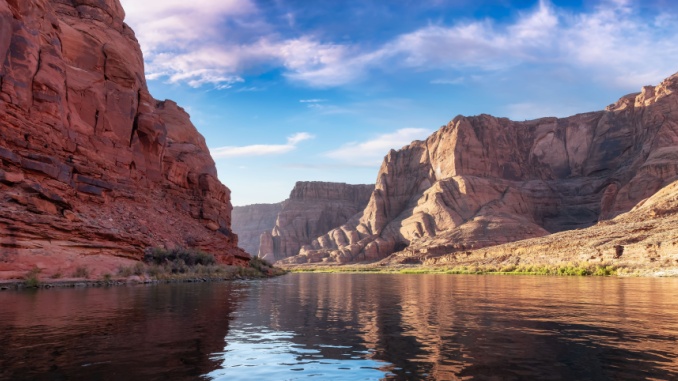
The Colorado River serves as a critical water supply for Arizona and the six other basin states. 36% of the state’s supply comes from the river. Put another way, the river supplies drinking water for one in 10 Americans.
Additionally, around 2.5 million individuals across the Western states rely on the river for power.
The river has reached historically low water levels due to prolonged drought and increasing aridity. These levels haven’t been seen on the river since the late 1950s.
The letter requested emergency funding to provide for infrastructure investments, upgrades, and long-term planning, noting that the present average flow measurements on the river amount to 20% less of what they were in the 20th century.
Democratic Reps. Yassamin Ansari (AZ-03), Adelita Grijalva (AZ-07), and Greg Stanton (AZ-04) joined the letter alongside Republican Reps. Eli Crane (AZ-02), Abe Hamadeh (AZ-08), and Paul Gosar (AZ-09).
The letter argued that the river’s decline represented a national security threat worthy of emergency funding, citing its critical function as more than a water and energy source for individuals but also as a source for the national security industry. California and Arizona are consistently among the top 10 states for defense spending, and Colorado is in the top 20.
“In addition to helping meet basic needs of communities out West by supplying drinking water, serving as a power source, supporting municipal services, and helping put food on the table, the Colorado River and its related parks, forests, and recreation areas also contribute over $26 billion to the outdoor recreation economy each year,” said the letter. “In addition, the River supports critical national security industries that have taken root in the West, including in the advanced manufacturing, aerospace, and defense sectors.”
The letter also documented congressional precedent for the proposed emergency funding. In 2022, Congress issued $4 billion for drought mitigation with priority given to Arizona and the other basin states. According to the congressmembers, this cash infusion did mitigate the water crisis.
By comparison, congressional funding sits currently at less than $100 million for the river.
“We have no doubt that without this vital funding source, the water crisis today facing our communities would be much worse,” stated the letter. “Funding is urgently needed to limit the pain that could be felt by communities across the basin in the near term and may smooth the path forward for post-2026 operating agreements.”
Biggs said in a statement that bipartisanship was a need because the river represents a crisis far bigger than either party.
“For desert dwellers, nothing is more important than protecting and cultivating our water resources,” said Biggs. “The Colorado River situation is not just an issue for Arizona and the West; it’s an issue that affects the entire country because of the national industries that depend on this water source. I hope that House leadership and appropriators will heed our request and include the necessary funding to prevent this crisis from getting worse and needlessly harming vulnerable Americans.”
AZ Free News is your #1 source for Arizona news and politics. You can send us news tips using this link.
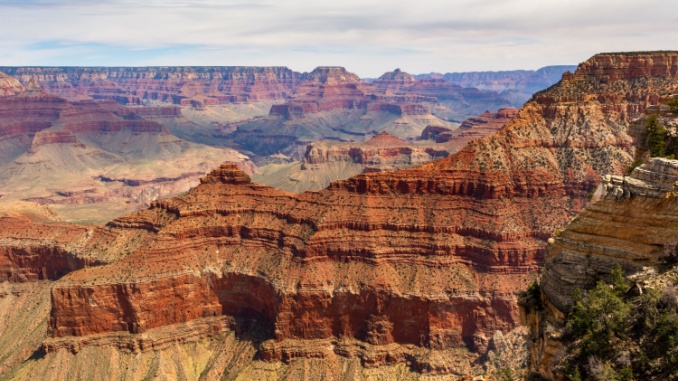
Rep. Eli Crane’s (R-AZ02) legislation to expedite reconstruction at the Grand Canyon’s North Rim received its first Senate hearing last week week as the Department of the Interior endorsed the House-passed measure and requested expanded small-contract authority.
The Senate Energy and Natural Resources Subcommittee on National Parks considered H.R. 5729, the North Rim Restoration Act, during a legislative hearing on Tuesday. Crane introduced the bill last October after the Dragon Bravo Fire damaged the North Rim and destroyed the historic Grand Canyon Lodge.
“Last July, the Dragon Bravo Fire dealt a serious setback to Northern Arizona, inflicting harm on park staff, gateway communities, and local businesses,” Crane said. “In response, I’m grateful to have collaborated with key stakeholders on a federal response that will help rebuild this iconic destination.”
Crane thanked Senate Energy and Natural Resources Committee Chairman Mike Lee (R-Utah) for placing the bill before the panel and said he hoped Congress would complete work on the measure.
In a post to X, Crane wrote, “This marked the first significant Senate action on the bill since it unanimously passed the House in March. I’m hopeful we can get this across the finish line.”
On Tuesday, @EnergyGOP held a legislative hearing on the North Rim Restoration Act of 2025.
This marked the first significant Senate action on the bill since it unanimously passed the House in March.
The legislation would allow the National Park Service to use emergency acquisition procedures without requiring a presidential emergency or disaster declaration. Those procedures include increased micro-purchase thresholds, simplified acquisition thresholds and other contracting flexibilities under federal acquisition regulations.
The authority would cover forest management and restoration, planning and reconstruction of damaged structures, improvements to park grounds and other recovery work within areas of Grand Canyon National Park affected by the Dragon Bravo Fire.
The House-passed version would also permit the Interior Secretary to award limited noncompetitive recovery contracts to the concessioner operating at the North Rim. The secretary would first have to determine in writing that the concessioner is uniquely positioned to perform the work and that noncompetitive procurement is necessary for public safety, resource protection, or continuity of essential services.
Eligible projects would include employee housing, water and wastewater systems, power and communications infrastructure, lodging, food service, retail operations, transportation facilities, and maintenance buildings. The bill states that recovery contracts would remain separate from the concessioner’s existing agreement and would not extend or amend that concession contract.
The emergency authority would expire seven years after enactment or when the Interior Secretary determines that recovery work is complete. The National Park Service would have to report to four congressional committees every 180 days after it begins using the authority.
The reports would identify anticipated and actual costs, overruns, contractors, possible conflicts of interest, detected waste or fraud, projects completed below expected cost, and estimated completion dates.
Charles Cuvelier, associate director for visitor and resource protection at the National Park Service, told senators that the Interior Department supports the bill.
“This authority will enable the agency to move more efficiently on time-sensitive repair and reconstruction activities,” Cuvelier said in his written testimony.
Cuvelier said North Rim recovery requires coordination across damaged utilities, employee housing, and visitor facilities. The department asked the subcommittee to consider temporarily increasing several additional small-dollar procurement thresholds so the Park Service could issue minor construction and service contracts more efficiently.
The House passed H.R. 5729 on March 16 with no member objecting. The bill’s House cosponsors include Arizona Reps. Andy Biggs (R-AZ05), Juan Ciscomani (R-AZ06), Paul Gosar (R-AZ09), and Abe Hamadeh (R-AZ08), along with Reps. Celeste Maloy (R-UT02) and Tom Tiffany (R-WI07).
The Senate panel also considered S. 3785, the North Rim and Kaibab National Forest Restoration Act, introduced in February by Arizona Democratic Sen. Ruben Gallego with Sen. Mark Kelly as an original cosponsor.
That proposal would extend similar emergency contracting authority to both the National Park Service and U.S. Forest Service for areas affected by the Dragon Bravo and White Sage fires. It would cover Grand Canyon National Park and the Kaibab National Forest, require tribal and local participation in recovery planning, and direct federal officials to prioritize tribal and local businesses when practicable. Its authority would last five years or until recovery is complete.
The lightning-caused Dragon Bravo Fire began July 4, 2025, and burned 149,399 acres across the Kaibab Plateau, including 71,129 acres managed by Grand Canyon National Park. The fire destroyed 114 buildings and outbuildings, including the Grand Canyon Lodge, 80 guest cabins, and 24 buildings in the National Park Service headquarters historic district.
The National Park Service reopened the North Rim for the 2026 season in May. All paved park roads and the full North Kaibab Trail reopened, with the trail open to foot traffic, and the North Rim Campground reopened June 1. Overnight lodging remains unavailable on the North Rim while reconstruction continues.
H.R. 5729 remains before the Senate Energy and Natural Resources Committee. The committee would have to advance the legislation before it could receive a vote by the full Senate.
“With this week’s activity in the Senate, we are getting closer to delivering much-needed relief to those impacted by this destructive fire,” Crane said.
Six Phoenix-area hospitals received federal warning notices or requests for corrective action plans over compliance with hospital price transparency requirements, according to a report released by the health care watchdog group Hospital Watch.
The facilities named were Banner Gateway Medical Center, BH Newco Hospital LLC, College Medical Center Phoenix, Phoenix Specialty Hospital, Quail Run Behavioral Health, and Valley Hospital.
BH Newco Hospital operates as Via Linda Behavioral Hospital in Scottsdale. Banner Gateway Medical Center is located in Gilbert, while the remaining facilities serve patients in Phoenix.
The six Arizona facilities were among 519 hospitals nationwide that received letters from the Centers for Medicare and Medicaid Services (CMS) between April and early June, according to a national list obtained by the Associated Press.
The list included hospitals in every state except Alaska. Texas had the most facilities receiving letters with 42, followed by California with 38, and Indiana with 34.
The letters included warning notices and, in cases CMS considered more serious, requests for hospitals to submit formal corrective action plans. Hospitals that fail to address cited deficiencies can face civil monetary penalties that may reach approximately $2 million annually, depending on the size of the facility.
“Patients should not have to guess what a hospital visit is going to cost,” Hospital Watch spokesman Adam Buckalew said. “If hospitals are serious about affordability, they should start by following the basic transparency rules already on the books. Instead, too many major hospital systems are hiding prices, protecting inflated rates, and leaving families to deal with surprise bills they cannot afford.”
TODAY: @HouseCommerce is looking for solutions to increase price transparency across the healthcare industry. Any honest conversation about healthcare affordability must look at the #1 culprit preventing it: corporate hospital systems.
Federal hospital price transparency rules have been enforced since Jan. 1, 2021. Most hospitals are required to publish a comprehensive machine-readable file containing their gross charges, discounted cash prices, rates negotiated with individual insurers, and the highest and lowest negotiated prices for each service.
Hospitals must also provide a consumer-friendly display covering at least 300 services that patients can schedule in advance, or all such services if the hospital offers fewer than 300. The display must include plain-language descriptions and pricing information or be provided through an online cost-estimator tool.
CMS can issue a warning, require a corrective action plan, impose a civil monetary penalty, and publicly identify hospitals that remain out of compliance.
The public list of hospitals receiving letters does not by itself disclose the specific deficiency identified at each Phoenix-area facility or establish whether the issue has since been corrected. Hospitals elsewhere on the list have said their notices involved technical or formatting problems rather than missing price information.
The University of Texas MD Anderson Cancer Center, for example, told the Associated Press that its notice concerned a date-field formatting issue that was corrected. Ascension said letters sent to several of its hospitals involved a minor technical error. CMS later accepted corrected documentation from some facilities.
A 2024 audit by the Department of Health and Human Services Office of Inspector General found that 37 of 100 sampled hospitals failed to meet one or more federal transparency requirements. The office estimated that 46 percent of the 5,879 hospitals covered by the rule were not fully compliant at the time of the audit.
Hospital Watch said inaccessible or incomplete pricing information prevents patients, employers, and families from comparing costs before receiving care. The organization also called for greater federal enforcement and additional scrutiny of hospital consolidation in the Phoenix market.
“The hospital market in the Phoenix area is dominated by a handful of powerful systems,” Buckalew added. “When hospitals buy up competitors and face little real competition, patients lose. Prices go up, premiums rise, and families are left with medical bills they cannot afford.”
A January report from the Arizona Health Care Cost Containment System (AHCCCS) identified Banner Health as the state’s largest hospital system with 18 hospitals, followed by Dignity Health and HonorHealth. AHCCCS listed Abrazo/Tenet among 11 hospital systems operating at least three facilities in Arizona.
Hospital Watch said private insurers and patients frequently pay hospitals approximately three times the rates paid by Medicare.
A nationwide RAND Corporation study found that employers and private insurers paid hospitals an average of 254 percent of Medicare rates for comparable services at the same facilities in 2022. Inpatient facility prices averaged 254 percent of Medicare rates, while outpatient hospital facility prices averaged 279 percent.
Hospital industry representatives have argued that commercial payments help cover costs that Medicare and Medicaid reimbursement rates do not fully address. The American Hospital Association has also said most hospitals comply with federal requirements and has called for clearer, more standardized rules that produce information patients can readily use.
“We need real enforcement of hospital price transparency and stronger scrutiny of hospital consolidation,” Buckalew said. “Sunlight is the first step toward accountability. Patients and employers deserve to know what they are being charged, why prices are so high, and whether hospitals are giving them a fair deal.”
Hospital Watch launched in February as a project of Better Solutions for Healthcare. The group advocates for hospital price transparency, limits on facility fees and markups, and increased oversight of hospital consolidation.
The U.S. House of Representatives passed H.R. 7008, the Stop Insider Trading Act, this week. The legislation is designed to prohibit Members of Congress, their spouses, and dependent children from purchasing individual stocks and certain other financial instruments while serving in office.
Rep. Eli Crane (R-AZ-02), who signed on as a cosponsor shortly after the bill’s introduction, voted in favor of the measure.
Throughout his time in Congress, Crane has advocated for stricter ethics standards and has consistently opposed insider trading by lawmakers, arguing that elected officials should not be able to profit from information obtained through public office.
Crane has also pledged not to trade individual stocks and has previously cosponsored similar legislation aimed at banning the practice.
“Our Founders envisioned a nation where citizen representatives served their constituents, not one where they used their positions to amass personal wealth,” stated Rep. Crane. “This legislation establishes solid guardrails to prevent lawmakers or their families from using insider information to enrich themselves.”
Our Founders envisioned a nation where citizen representatives served their constituents, not one where they used their positions to amass wealth.
The Stop Insider Trading Act prevents lawmakers or their families from using insider information to enrich themselves.
The legislation includes several exceptions, allowing investments in broadly diverted mutual funds and certain U.S.-focused investment funds, interests in qualifying small businesses, and assets held in qualifying blind trusts where lawmakers and their families have no authority over the trustee.
In addition to restricting purchases, the bill establishes new transparency requirements for the sale of covered investments.
Members of Congress would be required to publicly disclose their intent to sell a covert investment between seven and fourteen days before the transaction. The notice would include the anticipated sale date, a description of the transaction, and the number of shares to be sold, with disclosures published online by the Clerk of the House or Secretary of the Senate.
The legislation also outlines enforcement provision for violations. Individuals found to have improperly purchased covert investments would be required to divest those holdings and could face financial penalties of at least $2,000 or 10% of the value of the prohibited transaction, whichever is greater, in addition to forfeiting any net gains realized from the investment.
In certain cases, congressional ethics offices would have authority to refer violations to the Department of Justice.
The bill further prohibits Members of Congress from using official office funds or campaign contributions to pay any penalties assessed under the law.
If enacted, the restrictions would take effect 180 days after the legislation becomes law.
“While I commend my colleagues in the House for passing this bill, it won’t make a difference if our colleagues in the Senate don’t make it a priority,” said Crane. “I’m asking the American people to reach out to their senators and urge them to support this commonsense bill.”
Ethan Faverino is a reporter for AZ Free News. You can send him news tips using this link.
Arizona experienced increases to both unemployment and jobs in the month of June.
The latest monthly update from the Joint Economic Committee (JEC) reflected that Arizona was one of seven states to experience an increase in unemployment and one of 34 states to experience an increase in jobs last month.
Arizona unemployment rose by 0.1% for a total of 4.9%. In other words, employment fell by 22,427 last month and by 91,024 over the past 12 months. That unemployment rate reflects the state’s highest rate since the pandemic.
Labor force participation fell by 0.4% to 60.3% last month, nearing the state’s 10-year low. This decline marked the fifth consecutive month of the downward trend. Over the past 12 months, the state’s labor force participation rate fell by 1.8%. Overall, Arizona ranks 37th in the nation for labor force participation. The state reached its 10-year high in November 2019, at 62.2%, and sank to its 10-year low in April 2020, at 60.2%.
Net payroll jobs grew by 2,400 after a loss of 1,600 net payroll jobs in May. Arizona’s nonfarm payroll employment increased in nine of the past 12 months.
Arizona also ranked 15th in the nation for percentage gain in nonfarm payroll employment over the last 12 months. The state’s private sector added 2,500 net private payroll jobs, reaching a total of 30,300 private payroll jobs over the past 12 months.
An analysis from the Common Sense Institute (CSI) found that Arizona outperformed the nation for job growth in June. CSI found Arizona’s national growth rate to be 0.72%, more than double the national growth rate of 0.32%.
CSI did warn that May’s employment estimates underwent significant revisions, which indicated volatility of monthly labor data. The state initially reported gaining 2,000 jobs for that month. The decline of 1,600 jobs marked one of the largest downward revisions in the nation, per CSI.
JEC reported that Arizona’s best performing sectors for employment from May to June were trade, transportation, utilities, and professional and business services, collectively accounting for the addition of 5,700 jobs. The worst performing sectors were leisure and hospitality and manufacturing, collectively accounting for the loss of 4,200 jobs.
From June 2025 to June 2026, the best performing sectors for employment were private education and health services and professional and business services, collectively accounting for the addition of 30,500 jobs. The worst performing sectors were leisure and hospitality and state and local government, collectively accounting for the loss of 9,900 jobs.
CSI found that Arizona’s mining sector was the fastest-growing industry in the state over the past year. The sector added 1,400 jobs over the past 12 months, a growth of nearly 9%. CSI also found that education and health services also grew at a steady clip of about 3.7%, outpacing national growth.
Nationally, unemployment fell in 30 states, rose in seven states, and remained unchanged in 14 states. The District of Columbia was included in the national analysis and maintained the highest unemployment rate, 6%. South Dakota had the lowest unemployment rate, 2%.
Payroll jobs rose in 34 states and fell in 17 states. Alaska and New Hampshire had the largest payroll job percent increase, and West Virginia had the largest payroll job percent decline.
AZ Free News is your #1 source for Arizona news and politics. You can send us news tips using this link.