A ballot initiative to end the state’s universal school choice program is facing a new challenge to the validity of its signatures.
The Goldwater Institute filed the challenge in court on Monday.
The Arizona Free Enterprise Club (AZFEC) also announced that it joined Goldwater’s legal challenge, with AZFEC Vice President of Policy Greg Blackie serving as a plaintiff in the case. According to AZFEC, it worked alongside Goldwater and other school choice advocates to review petition sheets, identify alleged irregularities, and help ensure Arizona’s ballot qualification laws are enforced.
The Goldwater Institute said “a large amount” of the more than 415,000 signatures submitted appeared to be “fallacious.” The initiative needs about 256,000 signatures to qualify for the November ballot. The complaint raised more than 73,300 objections; the complaint asserted that, with all signatures removed as a result of the objections, the ballot initiative would be left with fewer than 256,000 valid signatures.
The 900-page complaint filed in the Maricopa County Superior Court stated that the signatures weren’t properly registered with the secretary of state’s office as required by law.
Specifically, the complaint raised objections including paid but unregistered circulators, signatures gathered prior to circulator registration, false residential addresses, permanent address contradictions, bad telephone numbers or email addresses, false identities, bad service addresses, and ineligible, missing, or mismatched IDs.
Additionally, the Goldwater Institute claimed that certain circulators were ineligible to collect signatures because they had been convicted of a criminal offense involving fraud, forgery, or identity theft; convicted of another felony offense in which their civil rights haven’t been restored; or adjudicated an incapacitated person.
Individuals named as ineligible circulators were convicted of felonies and other crimes related to drugs, human trafficking, manslaughter, sexual abuse of a minor, assault, kidnapping, weapons misconduct, forgery, false reporting, and credit card forgery.
Finally, the complaint claimed that certain circulators failed to write their full and correct assigned circulator identification number on multiple petition sheets.
Arizona Free Enterprise Club President Scot Mussi said the allegations raised questions about the campaign’s vetting and oversight of paid petition circulators.
“Save Our Schools and the teachers unions have spent years accusing ESA families of fraud and demanding greater scrutiny of parents. Now, their own campaign is facing serious questions about the people they hired to gather signatures,” said Mussi. “Arizona’s election laws must be fully enforced. If this campaign failed to collect enough lawful and valid signatures, it must not qualify for the ballot.”
Goldwater Institute CEO and President Victor Riches criticized the initiative for its heavy sourcing of out-of-state special interest funding.
“This is a shameless attack on Arizona’s parents, funded by an out-of-state union,” said Riches. “They’re trying to game the system by turning in tens of thousands of invalid signatures in an effort to destroy the most successful school choice program in the country. This won’t happen on our watch.”
The Goldwater Institute also stated in a press release that the original title of the initiative was misleading.
If enough signatures are validated and voters approve the measure, the Protect Education Act would impose an income eligibility cap on the Empowerment Scholarship Account (ESA) program.
Doug Ducey, former Arizona governor, was quoted in the Goldwater Institute press release saying the entire effort to dismantle the ESA program proved the true intentions of teachers’ unions. Ducey signed the bill into law that made the ESA program open to all students.
“Once again, we are reminded how little these out of state unions care about Arizona students and their parents,” said Ducey. “This measure would strip tens of thousands of Arizona families of educational choices they have made for their children, forcing students out of the schools that are serving them well and back into schools they chose to leave. That is unacceptable, and we will vigorously challenge this measure at every possible step.”
In response to the submission of the ballot initiative signatures earlier this month, Ducey launched a political action committee to secure school choice accessibility for military families.
Protect Education, Accountability Now (PEAN), the organization behind the ballot initiative, filed a challenge last week to the competing legislature-referred ballot initiative that would negate their proposed ballot initiative.
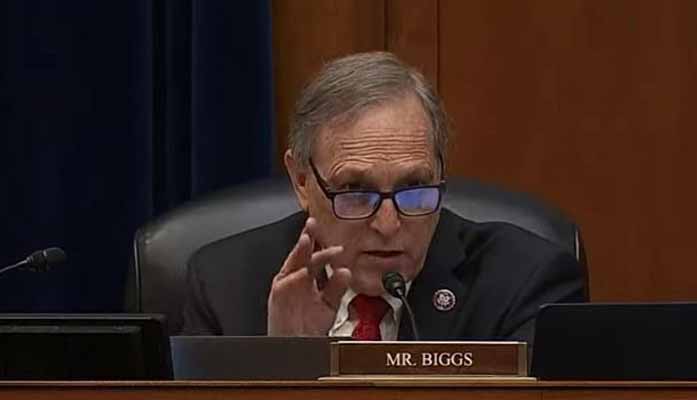
Congressman Andy Biggs is projected to win the Republican nomination for Arizona governor. The Associated Press also called several of the state’s closely watched primary races, including the Republican secretary of state contest for Rep. Alexander Kolodin.
Biggs led Rep. David Schweikert and businessmen Ken Miceli and Scott Neely when the AP called the four-way Republican primary in his favor. He will face Democratic Gov. Katie Hobbs, who ran unopposed for her party’s nomination, in the Nov. 3 general election.
The AP declares a winner when its decision team determines that trailing candidates no longer have a path to victory. The election results remain unofficial, pending the official statewide canvass on August 6.
Biggs has represented Arizona’s Fifth Congressional District since January 2017 and previously served as president of the Arizona Senate. He chaired the House Freedom Caucus from 2019 to 2022 and entered the gubernatorial primary with endorsements from Turning Point USA and President Donald Trump.
Schweikert has represented Arizona in Congress since 2011 and currently holds the First Congressional District seat. He remained in Washington during Tuesday’s election as the House considered a government funding bill.
In the secretary of state race, Republican state Rep. Alexander Kolodin defeated former Arizona Republican Party Chair Gina Swoboda for the GOP nomination. Kolodin will face Democratic Secretary of State Adrian Fontes, who ran unopposed in his party’s primary, in the Nov. 3 general election. The secretary of state serves as Arizona’s chief election officer and oversees statewide election administration, business filings, and state records and archives.
WASHINGTON (AP) — Alexander Kolodin wins Republican nomination for secretary of state in Arizona. #APRaceCall at 11:17 p.m. EDT. https://t.co/TS3eIpQI5W
The AP also called the Republican primary for Schweikert’s open First Congressional District seat for former Arizona Cardinals kicker and sportscaster Thomas “Jay” Feely IV.
Feely defeated former state Rep. Joseph Chaplik and technology and telecommunications executive John Trobough. President Trump endorsed Feely after he moved from the Fifth District race into the contest to succeed Schweikert.
WASHINGTON (AP) — Thomas Feely wins Republican nomination for U.S. House in Arizona's 1st Congressional District. #APRaceCall at 11:13 p.m. EDT. https://t.co/TS3eIpQI5W
The First District includes northeast Phoenix, Scottsdale, Fountain Hills and Paradise Valley. Republicans hold a voter-registration advantage in the district, although the seat has become increasingly competitive in recent elections. Schweikert defeated Democratic nominee Amish Shah with 51.9 percent of the vote in 2024.
Former television journalist Marlene Galán-Woods led the initial Democratic First District results against Shah, publisher Rick McCartney, and entrepreneur Jonathan Treble. The Associated Press had not called the Democratic contest Tuesday night.
The Democratic Congressional Campaign Committee supported Galán-Woods in the primary. Shah won the party’s nomination for the district in 2024 before narrowly losing the general election to Schweikert.
Former Pinal County Sheriff Mark Lamb won the Republican nomination to succeed Biggs in the Fifth Congressional District. Lamb defeated construction company owner Daniel Keenan.
WASHINGTON (AP) — Mark Lamb wins Republican nomination for U.S. House in Arizona's 5th Congressional District. #APRaceCall at 11:11 p.m. EDT. https://t.co/TS3eIpQI5W
President Trump endorsed Lamb, who previously sought the Republican nomination for U.S. Senate in 2024. The Associated Press described the Fifth District as a safely Republican seat.
The Democratic Fifth District primary included Elizabeth Lee, Chris James and Brian Hualde. The Associated Press had not called that contest at the time of publication.
Republican Rep. Juan Ciscomani and Democratic challenger JoAnna Mendoza advanced without primary opposition in the Sixth Congressional District, establishing the general-election matchup in one of Arizona’s most competitive congressional seats.
The results remain unofficial while Arizona counties continue processing ballots and complete their required canvasses. County boards of supervisors face an Aug. 3 deadline to canvass the primary results, followed by the official statewide canvass on Aug. 6.
Several races, including the GOP nominations for Attorney General, Treasurer, Corporation Commission, and Superintendent of Public Instruction, remained too close to call as of 10 PM Tuesday.
The Republican National Committee (RNC) is pursuing lawsuits in Arizona and five other states challenging laws that allow some United States citizens who have never lived in those states to register and vote through a parent’s former or current residency.
The RNC has active cases in Arizona, Nevada, Colorado, New Jersey, Virginia, and Nebraska, according to a report from the Daily Signal. The legal campaign follows a June ruling in North Carolina that invalidated a similar provision under that state’s constitution.
“If you’ve never lived in a state, you shouldn’t be voting in its elections,” RNC Chairman Joe Gruters told the outlet.
🚨 NEW in @DailySignal: “After a victory in the battleground state of North Carolina, the Republican National Committee has pending litigation against six other states to stop U.S. citizens who never lived in those states from voting in their elections.”
— RNC Election Integrity (@RNCVoteProtect) July 19, 2026
“The RNC already put a stop to this unconstitutional loophole in North Carolina, and we’re taking Nebraska, Colorado, Nevada, and New Jersey to court to do the same,” Gruters added. “We’ll keep fighting to ensure elections are only decided by legal residents.”
The lawsuits focus on state laws extending voting eligibility to some citizens born abroad who have never established residency in the state where they vote. The RNC said the cases do not challenge absentee voting protections for military personnel, diplomats, or other overseas citizens who previously lived in the state.
Arizona law permits a United States citizen who has never resided anywhere in the country to register in Arizona if the person’s parent is a United States citizen registered to vote in the state. The voter may use a federal write-in early ballot under Arizona Revised Statutes Section 16-103. The statute governing that ballot authorizes voting for presidential electors, the U.S. Senate, and the U.S. House.
The provision creates an exception to Arizona’s general voter residency requirements. Under A.R.S. Section 16-101, a registrant must ordinarily have lived in Arizona for at least 29 days before an election. State law defines a resident as a person with an actual physical presence in Arizona combined with an intent to remain.
The Arizona Republican Party, the RNC, and then-Arizona GOP Chair Gina Swoboda filed their lawsuit against the state and Secretary of State Adrian Fontes on June 30, 2025, in Maricopa County Superior Court.
The complaint, filed as Republican Party of Arizona v. State of Arizona, asks the court to declare A.R.S. Section 16-103(E) unconstitutional and prohibit the state from accepting voter registrations and ballot requests from people who have never resided in Arizona.
The complaint states, “By permitting such ‘never resident’ registrants, who, upon information and belief, are disproportionately non-Republican in their political party affiliations relative to the Arizona electorate as a whole, to cast votes in Arizona elections, A.R.S. § 16-103(E) illegally structures the competitive environment in which the RPAZ and RNC participate, and also unlawfully dilutes the voting power of constitutionally eligible qualified electors.”
Republicans argue that the statute conflicts with Article VII, Section 2 of the Arizona Constitution, which requires voters to be United States citizens, at least 18 years old, and residents of Arizona for the period established by state law.
The state, represented by attorneys from Attorney General Kris Mayes’ office and Fontes, moved to dismiss the case in July 2025, arguing that the plaintiffs lacked standing and that the law was enacted to provide voting access for overseas citizens under the federal Uniformed and Overseas Citizens Absentee Voting Act. The state noted that the provision was approved without opposition by the Republican-controlled Legislature in 2005 and signed by Democratic Gov. Janet Napolitano.
Maricopa County Superior Court Judge Michael Herrod denied the motion to dismiss in October. Herrod found that all three plaintiffs had standing to pursue the case, although Swoboda could not rely on the complaint’s vote-dilution theory. He also ruled that the complaint stated a legally sufficient claim, writing that Article VII, Section 2(A) “can be argued to refer to time periods, not the definition of residence.” The ruling allowed the constitutional challenge to proceed without deciding whether the statute is unconstitutional. The case remains pending.
Arizona’s current Elections Procedures Manual recognizes the statutory exception and notes the ongoing constitutional challenge.
Republican lawmakers attempted to repeal the exception legislatively in 2025 through Senate Bill 1052. The measure would have removed eligibility for citizens who had never lived in the United States, but Gov. Katie Hobbs vetoed the bill.
In her veto letter, Hobbs wrote that the bill would “prevent U.S. citizens from registering to vote, including the children of Arizona servicemembers born overseas.”
Arizona Secretary of State guidance continues to state that a citizen who has never lived in the United States may register in Arizona when the person’s parent is also a United States citizen registered in the state. The guidance distinguishes those voters from civilian overseas voters who previously established Arizona residency and military personnel or their family members stationed outside the state.
The RNC’s broader effort follows a ruling from Wake County Superior Court Judge Hoyt Tessener, who held that a North Carolina law allowing some overseas citizens who had never lived in the state to vote violated North Carolina’s constitutional residency requirement, according to The News & Observer. The court granted summary judgment to the Republican plaintiffs in June.
The Department of Defense’s Federal Voting Assistance Program lists 38 states that provide some form of absentee-voting eligibility to United States citizens who have never resided in the country. Eligibility commonly depends on the residence or voter registration of a parent or legal guardian. Arizona allows a qualifying citizen to register through a parent registered in the state. Federal guidance says Arizona voters must provide documentary proof of citizenship to receive a full ballot containing state and local races; voters who do not provide that documentation remain eligible for federal contests.
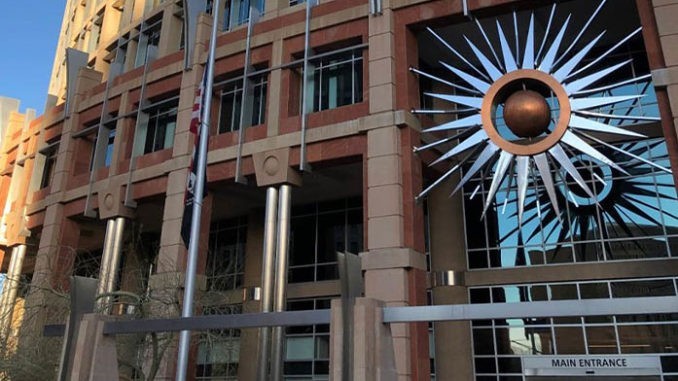
The Arizona Supreme Court ruled that the city of Phoenix must release records of their closed-door labor union negotiations.
The ruling came from a challenge initiated in 2022 by the Goldwater Institute regarding the refusal of the Phoenix Law Enforcement Association’s (PLEA), the police union, to publicize its draft contract proposals for public comment prior to negotiations with the city.
The PLEA proposal concerned its 2023-2024 memorandum of understanding (MOU) which contained expenditure terms for tens of millions of taxpayer dollars as well as the employment terms for law enforcement.
Rather than submitting drafts of the MOU for public review and comment by early December as required by city code, PLEA submitted letters of intent mentioning its aim to negotiate wages and benefits. The Phoenix City Council chose to accept those letters of intent as sufficient for the public to comment on without seeing draft MOUs.
Goldwater Institute requested those draft MOUs. The city refused, claiming these documents were exempt from public records requests under state law allowing exemptions based on the “best interests of the state” because disclosure “could create a chilling effect” on negotiations.
Only after the city and PLEA reached a final agreement did they publicize a draft MOU for public comment in April 2023. The city ratified the MOU about two weeks later, in early May 2023.
That MOU has since expired, having lasted only through June 2024.
The trial court had ruled that the city had sufficiently established “potential material harm” that could occur from disclosing draft MOU materials.
“While significant, the general concerns about transparency, advocacy, and accountability identified by [Goldwater] are different, however, from the particularized interest in preserving the ability to negotiate labor agreements free of political pressure, collusion, and unnecessary delay due to impasse,” said the trial court. “The City provided testimony from individuals directly involved in the collective bargaining process and with experience in labor negotiations with and for the City of Phoenix.”
However, the Arizona Supreme Court in its ruling said that speculative claims of harm were insufficient alone.
The court determined that the city would have to release some or all of the MOU records that it had withheld. In order to determine the nature of such a release, the court ordered the lower court to review the withheld documents.
The court ruled that it was the city’s burden to prove the likelihood of specific, material harm that would occur from the disclosure of contested public records, as well as the causal connection between the disclosure and that harm that could occur.
The Goldwater Institute said in a press release that the high court ruling affirmed citizens’ rights of public disclosure and an ability to provide input.
“City residents and taxpayers deserve to know what the union was demanding and what city leaders were offering during that process. But all of that was kept hidden from the public,” stated the Goldwater Institute. “Citizens have a right to know what their government is up to and should have an opportunity to provide feedback about labor negotiations and other public activities. As today’s decision affirms, that’s the whole point of our public records laws.”
AZ Free News is your #1 source for Arizona news and politics. You can send us news tips using this link.
Rep. Abe Hamadeh (R-AZ08) praised a new $100 billion investment by Taiwan Semiconductor Manufacturing Company (TSMC) that will add four advanced semiconductor fabrication plants at the company’s north Phoenix campus and raise its total planned Arizona investment to $265 billion.
The White House and Department of Commerce announced the expansion Thursday, saying it resulted from a trade and investment agreement reached between the United States and Taiwan earlier this year.
The four additional facilities will bring TSMC’s planned American footprint to 12 advanced semiconductor manufacturing and packaging facilities, all located in Arizona. The Arizona Commerce Authority said the expanded Phoenix campus is now expected to include 10 semiconductor fabrication plants, two advanced packaging facilities, and a research and development center.
Hamadeh, whose Eighth Congressional District includes the TSMC campus, praised President Donald Trump’s manufacturing agenda and said the project would create new employment opportunities for residents of the West Valley.
“These targeted investments in Arizona’s Eighth Congressional District aren’t just welcome — they’re exactly the kind of bold, America-First moves our district needs,” Hamadeh said in a Thursday announcement.
“My constituents are ready to work, ready to build, and hungry for the high-paying jobs these projects will deliver right here in the Grand Canyon State,” he added.
Hamadeh said he believes veterans should receive priority for employment opportunities connected to the expansion. His office has made economic development and workforce growth central parts of what it describes as a “Peace through Prosperity” agenda.
Commerce Secretary Howard Lutnick said the investment would create tens of thousands of American jobs. The Commerce Department said the expansion is expected to generate significant construction and high-technology employment while increasing domestic production of advanced semiconductors.
TSMC Chairman and CEO C.C. Wei said the expansion is intended to meet growing demand from the company’s American customers and strengthen the domestic semiconductor supply chain. The latest commitment follows a $100 billion expansion announced in March 2025, which raised TSMC’s planned Arizona investment from $65 billion to $165 billion. That expansion added three fabrication plants, two advanced packaging facilities, and an R&D center to the company’s original plans.
TSMC initially announced a $12 billion Phoenix facility in 2020. The company expanded the project to $40 billion in 2022 with plans for a second fabrication plant and increased the commitment to more than $65 billion in 2024 by adding a third plant. The two initial facilities were projected to create approximately 4,500 direct TSMC jobs, while the first three were projected to create 6,000 direct manufacturing jobs and more than 20,000 construction jobs.
TSMC currently employs more than 3,500 people in Arizona. The company’s first Arizona fabrication plant began high-volume production using its N4 manufacturing process during the fourth quarter of 2024. Construction of the second plant’s main structure was completed in 2025, with production using N3 technology targeted for the second half of 2027.
Construction of the second plant’s main structure was completed in 2025, with production using N3 technology targeted for the second half of 2027.
The company broke ground on its third plant in April 2025. That facility is scheduled to manufacture semiconductors using TSMC’s N2 and A16 process technologies, with production targeted to begin by the end of the decade. Before the newest expansion, the Commerce Department finalized an award of up to $6.6 billion in direct funding and made up to $5 billion in loans available under the federal CHIPS incentive program to support TSMC’s first three Arizona plants. The facilities are intended to produce some of the world’s most advanced semiconductors and provide American technology companies with access to domestically manufactured chips.
Hamadeh’s office said the expansion would help establish Arizona’s Eighth Congressional District as the “Silicon Desert” and strengthen the country’s position in semiconductor and artificial intelligence manufacturing.
“This major investment is further proof that the Trump Administration is laser-focused on restoring American manufacturing dominance,” Hamadeh said.
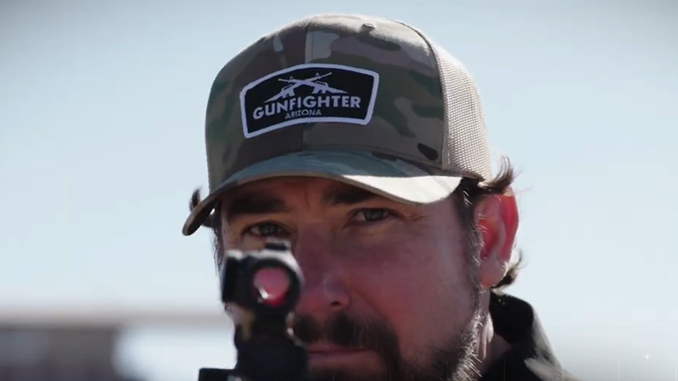
U.S Representative Eli Crane (R-AZ-02) has officially launched his general election campaign with the release of his first television and digital advertisement of the 2026 election cycle. The ad emphasizes Crane’s military background and positions him as a fighter for rural Arizona.
The advertisement titled “Fight,” debuted July 17, 2026. It centers on Crane’s service of five wartime deployments as a U.S. Navy SEAL sniper, focusing on his combat experience and leadership qualities that he says continue to guide his work in Congress.
According to the campaign, the ad will run across digital advertising platforms as Crane prepares to invest seven figures in paid media to defend Arizona’s 2nd Congressional District against Democratic challenger Jonathan Nez.
The campaign rollout follows Crane’s latest Federal Election Commission fundraising report, which shows the congressman has raised $9.4 million during the current election cycle.
The campaign says that total is more than two-and-a-half times the amount raised by Nez’s total receipts.
The filing also reports Crane entered the general election with approximately $2.8 million in cash on hand, compared to roughly $1.4 million at the same point during the 2024 election cycle.
In a statement accompanying the ad release, Crane contrasted his leadership style with what he described as Washington’s political establishment.
“The career politicians in Washington are really good at one thing – ducking a fight,” said Crane. “They retreat at the first hint of political blowback. They may talk tough on TV, but when the battle begins they are AWOL. Their battle cry is surrender. Real warriors know you are never out of the fight.”
Crane also argued that his willingness to challenge entrenched interests has made him a target of political opponents.
“The political establishment cannot control me and that is why they want me gone,” added Crane. “I do not back down. I take on the tough fights, and I deliver results. We don’t have to choose between principle and effectiveness. The real choice is between complacency and courage, between protecting the status quo and defeating it. I will fight for rural Arizona, and I will win. If the D.C. elites are firing back, that tells me I am directly over the target.”
The ad marks the beginning of what is expected to be a competitive general election campaign in Arizona’s 2nd Congressional District, with Crane seeking another term representing the largely rural district against former Navajo Nation President Jonathan Nez.
Ethan Faverino is a reporter for AZ Free News. You can send him news tips using this link.