Arizona Senate President Warren Petersen confirmed that the Federal Bureau of Investigation (FBI) has obtained election-related records from Maricopa County as part of an ongoing federal investigation connected to the 2020 presidential election. The confirmation followed independent reporting, which some members of the local press mischaracterized as describing a “raid.”
Petersen confirmed the action after a report from JustTheNews stated that federal investigators recently secured terabytes of election data from Arizona’s most populous county through a federal grand jury subpoena.
The subpoena sought election materials connected to Maricopa County’s administration of the 2020 election, according to the report. Sources familiar with the probe told the outlet that investigators obtained electronic election data as part of a broader criminal inquiry examining potential election-related misconduct.
The reported federal action follows other election-related investigations conducted in recent months involving local election administration across the United States, such as the FBI’s similar seizure of election records in Fulton County, Georgia.
Early responses to reporting from JustTheNews’ John Solomon included ABC15’s Garrett Archer mischaracterizing the report on the seizure under subpoena as describing a ‘raid,’ and as “either a full-throated lie, or something having to do with the recorder’s office.”
Solomon replied to the post, stating, “My story is accurate. When a grand jury subpoena is issued there isn’t usually a raid. The data is obtained usually from a third party. I’d ask your legislature what they know.”
Within minutes, a post from Petersen confirmed the JustTheNews article shared by President Donald Trump on Truth Social. Petersen posted to X, “President Trump is 100% correct. Late last week I received and complied with a federal grand jury subpoena for records relating to the Arizona State Senate’s 2020 audit of Maricopa County. The FBI has the records. Any other report is fake news.”
President Trump is 100% correct.
Late last week I received and complied with a federal grand jury subpoena for records relating to the Arizona State Senate’s 2020 audit of Maricopa County. The FBI has the records. Any other report is fake news.@realDonaldTrumppic.twitter.com/C2T202VgZP
Congressman Abe Hamadeh’s (R-AZ08) Rapid Response team was quick to point out, “John Solomon’s report never mentions a ‘raid’ at all. The actual term used is ‘subpoena.’ Garrett Archer appears to have invented the raid claim just to knock down an easy ‘straw man’ argument.”
John Solomon's report never mentions a 'raid' at all.
As previously reported by AZ Free News, the contractors’ controversial report from the Senate-mandated audit documented multiple concerns about election administration procedures, while confirming that the overall ballot count remained largely consistent with the certified results.
Hamadeh issued a request for a full investigation into credible allegations that election security protocols in Arizona were breached during the 2024 General Election in June 2025 following reports alleging that large stores of printed blank ballots from several western states were “improperly mixed in a warehouse with returned voted mail ballots that were in the process of being prepared for tabulation” at Runbeck Election Services, a firm contracted by Maricopa County.
Blank ballots should never be mixed with live ballots. I’m urging the @DOJ to investigate Runbeck Election Services and Maricopa County’s role in Arizona’s 2024 election.
He wrote at the time, “This alarming situation raises serious questions about the security and integrity of the election process in Maricopa County and potentially beyond. The commingling of blank ballots with live ballots poses a significant risk to the accuracy and fairness of election results. It is crucial that we have confidence in the integrity of our elections, and any potential mishandling of ballots must be investigated to ensure that the will of the voters is accurately reflected.”
Federal investigators have not publicly detailed the full scope of the current inquiry involving the Maricopa County records. The FBI generally does not comment on ongoing investigations.
Officials with Maricopa County have not publicly released a detailed description of the materials obtained by federal investigators or the timing of the request. Federal authorities have not announced any charges connected to the reported subpoena for Maricopa County election records.
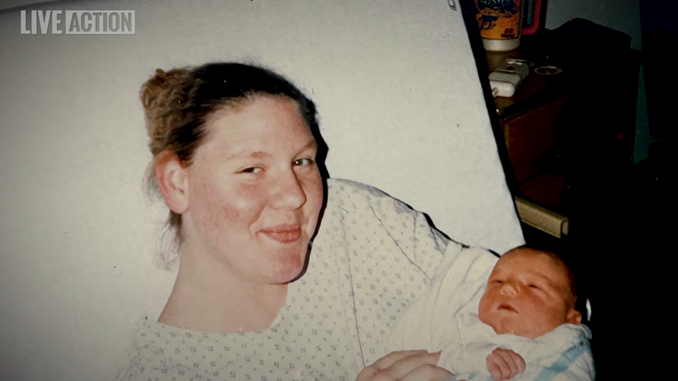
A child sex trafficking victim reunited with the son she gave up for adoption in Arizona nearly 30 years ago.
The moment Phoenix native Jess Levinson and her son, born 1997, were reunited was featured in a short documentary by Live Action, a pro-life organization. Levinson now lives in New York.
Levinson recounted in the mini documentary that she was first sexually abused at nine years old, and was first sex trafficked when she was 12 years old. Levinson gave birth to a son at 14 years old. She was trafficked by her mother in exchange for drugs to her friend’s father, who manufactured drugs.
Levinson’s mother was an exotic dancer addicted to drugs, namely methamphetamine. According to Levinson’s nonprofit page, her mother was also victimized as a child and her father, a cocaine dealer, was not in her life. Levinson was almost the victim of abortion as well.
Levinson said she refused to go to a state-run group home for fear of them aborting her baby. She ran away from home and lived on the run until her child was 24 weeks old in the womb. Levinson said her case worker and staff members at the group home at the time criticized her constantly for not coming to the group home sooner so they could abort her son.
“When your entire body changes to support this life inside of you, it was very instantaneous for me. My job was to protect this life that I was nurturing,” said Levinson. “I just remember thinking, ‘This is not the end of my life having him, it’s the beginning of his. And I might not have everything I need to make a good life for him, but there’s no reason why that needs to terminate his existence before it even starts.’”
Levinson was able to spend three months with her son prior to giving him up for adoption. For years after adopting out her son, Levinson shared that she also struggled with substance abuse and continued to be trafficked prior to receiving help. It wasn’t until years later Levinson would get the help she needed. From there, Levinson met her husband and had other children.
The last time Levinson saw her son was when he was eight years old.
“Watching him grow up into who he is now has also been such a gift, such a blessing,” said Levinson.
Levinson now runs a safe housing project for at-risk mothers, Leah’s Place. Their goal is to provide an expansion of residential services for mothers victimized by trafficking. Levinson explained those types of current or expectant mothers don’t have much in the way of resources in her area, unless those mothers are willing to give up their children. Levinson said she wants to prevent the type of separation that she had to endure.
“Our goal and our aim is to provide that support to moms that they need to give to their little people in order to thrive. I want them to see the possibilities of what life could be like for their children in the future,” said Levinson.
At the end of the mini documentary, Levinson’s son said he was grateful his mother chose life for him.
“It’s been wonderful, it’s been a great life. It’s been more of a life than I can ask for. I’ve seen a really decent amount of this planet. Life is beautiful,” said Kale. “Bravery is choosing a really, really difficult path like that.”
AZ Free News is your #1 source for Arizona news and politics. You can send us news tips using this link.
The U.S. labor market experienced a sharp downturn in February 2026, with nonfarm payroll employment declining by 92,000 jobs, according to the latest Employment Situation report from the Bureau of Labor Statistics, released March 6. This marked a significant reversal of January’s stronger-than-expected performance and fell well short of economists’ consensus forecasts for modest gains.
The Joint Economic Committee highlighted the figures in its Monthly Employment Update, noting that the decline consisted of -86,000 jobs in the private sector and -6,000 in government.
The headline unemployment rate (U-3) rose 0.1% to 4.4% while the broader U-6 measure—which includes underemployed workers—improved slightly, falling 0.2% to 7.9%. The labor force participation rate dipped 0.1% to 62%, and the employment-to-population ratio decreased to 59.3%.
Significant downward revisions to prior months compounded the weaker outlook. December 2025 was revised to show a net loss of 17,000 jobs (from an initial gain of 45,000), and January 2026 was adjusted down by 4,000 to 126,000 jobs. Combined, these revisions reduced reported employment gains for December and January by 69,000 jobs.
Sector performance in February showed mixed results. Gains were led by financial activities (+10,000 jobs) and other services (+8,000 jobs). Losses were concentrated in private education and health services (-34,000 jobs, influenced by strike activity in health care) and leisure and hospitality (-27,000 jobs).
On a year-over-year basis (February 2025 to February 2026), total nonfarm payroll rose by approximately 156,000 jobs, with strong contributions from private education and health services (+658,000) and leisure and hospitality (+126,000). However, notable declines occurred in federal government (-314,000) and trade, transportation, and utilities (-191,000).
Wage growth remained positive amid the slowdown. For all private non-farm employees, average hourly earnings increased 3.84% year-over-year to $37.32, while average weekly earnings rose 4.14% to $1,280.08. Among production and nonsupervisory employees, hourly earnings grew 3.69% to $32.03, and weekly earnings advanced 4.31% to $1,082.61.
The latest Job Openings and Labor Turnover Survey data (for December 2025) indicated cooling demand, with nonfarm job openings falling by 386,000 to 6.54 million. Hires rose by 172,000 to 5.29 million, while separations increased by 107,000 to 5.25 million, including modest gains in quits and larger rises in layoffs and discharges.
The data points to emerging softness in the labor market, influenced by temporary factors including the severe winter weather and significant strike activity in health care, though broader indicators like wage growth and a still-low unemployment rate suggest resilience.
Ethan Faverino is a reporter for AZ Free News. You can send him news tips using this link.
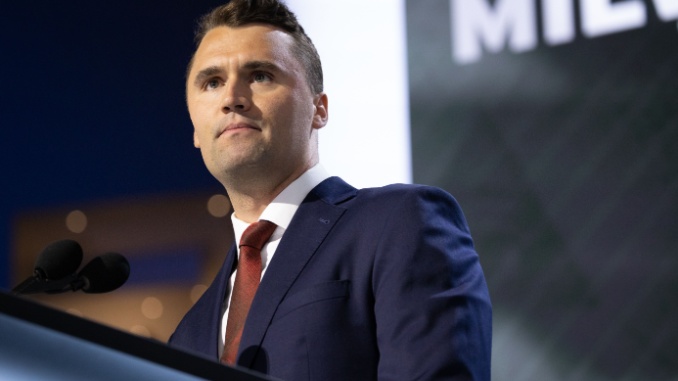
Gov. Katie Hobbs vetoed legislation to establish a memorial license plate honoring the late Turning Point USA (TPUSA) founder, Charlie Kirk.
Kirk was assassinated last September while speaking at Utah Valley University. Kirk’s assassin, Tyler Robinson, was motivated by Kirk’s Christianity and conservatism. Prosecutors are seeking the death penalty in the ongoing case.
Hobbs said license plates should remain nonpartisan, though she said she condemned the political violence that killed Kirk.
Gubernatorial candidate, Congressman Andy Biggs blasted Hobbs’ veto.
“Charlie Kirk was one of America’s most influential voices and leaders. He made his home in Arizona, building a company and raising a family in this state before he was assassinated because of his political beliefs,” said Biggs. “Katie Hobbs had a chance to honor Charlie and she vetoed it. A simple license plate for Arizonans to show they stand with Charlie for freedom and Katie Hobbs vetoed it. We should not forget this petty and callous act.”
“Charlie Kirk’s assassination is tragic and a horrifying act of violence. In America, we resolve our political differences at the ballot box. No matter who it targets, political violence puts us all in harm’s way and damages our sacred democratic institutions,” said Hobbs. “I will continue working toward solutions that bring people together, but this bill falls short of that standard by inserting politics into a function of government that should remain nonpartisan.”
The state does offer at least one other license plate that could be considered partisan: Arizona Life Coalition has a “Choose Life” license plate.
Hobbs has exhibited zero tolerance for advocacy for political violence in her office. Months into office, Hobbs’ press secretary at the time, Josselyn Berry-Barker, resigned after promoting the shooting of those opposed to transgenderism.
Several months after her resignation, Berry posted on Threads that she wasn’t “sorry for sh*t,” and bragged about her immediate hiring by the progressive nonprofit, ProgressNow, which reportedly hired her on with a six-figure salary. According to her social media and LinkedIn posts, Berry no longer lives in Arizona, is no longer employed with that nonprofit, and has been out of work since early 2025.
Sen. Jake Hoffman, the bill sponsor, issued a response calling Hobbs “hypocritical” and partisan for her veto. Hoffman said Hobbs’ reduction of Kirk’s legacy to partisanship was an inappropriate diminishment of his impact on civic education and voter turnout.
“Even in the wake of a global civil rights leader — an Arizona resident and her own constituent — being assassinated in broad daylight for his defense of the First Amendment, Hobbs couldn’t find the human decency to put her far-left extremism aside simply to allow those who wish to honor him to do so,” said Hoffman.
Hoffman cited other cases of the memorialization of individuals that could be said to invoke partisanship, such as the freeway named after Democratic Congressman Ed Pastor.
AZ Free News is your #1 source for Arizona news and politics. You can send us news tips using this link.
The Arizona Corporation Commission (ACC) voted to close a long-running securities enforcement case against Densco Investment Corporation after recovering nearly $19.8 million for investors who lost money in the company’s real estate lending program.
The commission approved a request to close the Maricopa County Superior Court case Arizona Corporation Commission v. Densco Investment Corporation after funds were recovered and distributed through a court-appointed receivership.
The case originated in 2016, when the Arizona Corporation Commission filed a complaint alleging violations of multiple provisions of the Arizona Securities Act and seeking appointment of a receiver to manage the company’s affairs following the sudden death of Densco’s owner and sole operator.
According to a press release from the commission, Densco raised more than $40 million from investors and loaned those funds to real estate ventures. Investors were told loans would not exceed a 70 percent loan-to-value ratio and would be secured by first deeds of trust on the underlying properties. Investigators later determined those representations were inaccurate. Some loans were issued at loan-to-value ratios of 100 percent or higher, and some properties were not secured by deeds of trust.
During the claims process, the court-appointed receiver identified 113 investors who were collectively owed $31,446,001. Through recovery efforts by the receiver and the commission, $19,788,384 was recovered for distribution to investors.
The commission also holds a criminal restitution order totaling $16,946,384 for additional collection and distribution to investors. According to the ACC, investors have recovered more than 63 percent of their losses to date.
Earlier court-approved distributions had already begun returning funds to investors during the receivership. In 2017 and 2018, the Maricopa County Superior Court approved multiple payments up to roughly $7 million to investors as the receiver recovered assets tied to the company’s operations, as reported by the Arizona Daily Independent at the time.
Court records tied to related federal proceedings describe Densco as a private “hard money” lender formed by Denny Chittick in April 2001 that financed short-term real estate loans for investors. Federal filings describe fraudulent lending schemes connected to the company that resulted in losses totaling more than $31 million. Chittick reportedly died by suicide in July 2016, according to a Presentence Investigation Report cited by the court.
Documents related to the civil case are available through the Maricopa County Superior Court online docket under case number CV2016-014142.
Arizona State Senator Jake Hoffman (R-LD15) strongly condemned Governor Katie Hobbs for vetoing SB 1439, a measure he sponsored that would have authorized an optional specialty license plate to honor the late Charlie Kirk and support related efforts.
In her veto letter, Governor Hobbs stated that the legislation “inserts politics into a function of government that should remain nonpartisan.”
Governor Hobbs just vetoed a specialty plate “For Charlie” that was passed by the Arizona Legislature,” tweeted Turning Point Action’s CEO Tyler Bowyer. “They’re very worried about Arizonans wanting to support the cause of Charlie.”
Governor Hobbs just vetoed a specialty plate “For Charlie” that was passed by the Arizona Legislature.
They’re very worried about Arizonans wanting to support the cause of Charlie. pic.twitter.com/plVM4TPOUe
Hoffman, who is closely associated with Turning Point, called this reasoning hypocritical, deeply disappointing, and inconsistent with Arizona’s long-standing tradition of recognizing individuals and causes through state designations, including specialty license plates.
“Katie Hobbs’ grotesque partisanship knows no bounds,” stated Senator Hoffman in a press release condemning the Governor’s decision. “Even in the wake of a global civil rights leader — an Arizona resident and her own constituent — being assassinated in broad daylight for his defense of the First Amendment, Hobbs couldn’t find the human decency to put her far-left extremism aside simply to allow those who wish to honor him to do so. Katie Hobbs will forever be known as a stain on the pages of Arizona’s story.”
Arizona Democrat Katie Hobbs VETOED the Charlie Kirk Memorial License Plate bill today.
My statement on her veto 👇🏼
Katie Hobbs’ grotesque partisanship knows no bounds. Even in the wake of a global civil rights leader — an Arizona resident and her own constituent — being… pic.twitter.com/yLz9tQN3ET
Senator Hoffman highlighted the inconsistency in Hobbs’ position, noting that Arizona has historically honored public figures across the political spectrum without similar objections. “It’s absolutely absurd for Hobbs to suddenly claim that honoring someone through a state recognition is ‘too political.’ Arizona highways, buildings, and memorials have been named after elected officials and public figures for decades,” added Senator Hoffman. Congressman Ed Pastor, a proud Democrat, has a freeway named in his honor. No one suggested that recognition was inappropriate simply because he held political views.”
Arizona currently offers dozens of voluntary specialty license plates supporting various causes and organizations, allowing drivers to opt in and contribute if they choose. SB 1439 would have provided the same opportunity to honor Kirk.
“Charlie Kirk inspired millions of young Americans to engage in their communities, exercise their First Amendment rights, and participate in our democratic system,” continued Hoffman. “Hobbs’ veto sends a chilling message that honoring someone who championed free speech is unacceptable if their views do not align with her political ideology. This was a simple, voluntary way for Arizonans to honor a man whose life’s work centered on civic engagement and the peaceful exchange of ideas. Katie Hobbs chose petty politics instead.”
Ethan Faverino is a reporter for AZ Free News. You can send him news tips using this link.