Democrats may have taken over most of the major statewide offices in Arizona in January 2023, but there’s one newly elected Republican officer who’s re-emerged on the scene and is ready to keep his promises to voters.
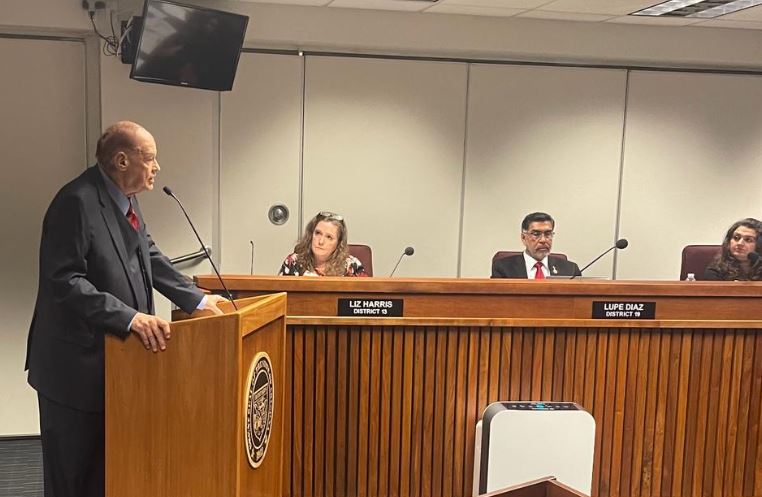
Tom Horne, Arizona’s Superintendent of Public Instruction, previously served in the office from 2003 to 2011, returning this year after defeating incumbent Kathy Hoffman by 9,100 votes. Last week, Horne gave a State of Education speech before the Arizona House Education Committee.
In Superintendent Horne’s presentation of the Strategic Initiatives for the State of Education, which was reviewed by AZ Free News, he laid out the future for his agency and the mission of his office. Superintendent Horne wants to “help and improve failing schools,” reinstate “test to graduate” policies, “teach curriculum bell to bell,” “regain structure in classrooms,” and “empower parents.”
Soon after the address to the committee, the Arizona Department of Education’s Twitter account posted, “Our administration has an ambitious agenda to fix our schools. We’ll prioritize education over distractions, create education improvement teams to support our schools, and bring back discipline to our classrooms so our teachers and students feel comfortable in their classrooms.” The account also thanked the Education Committee for inviting Superintendent Horne to present, stating, “The situation is grim with 2/3 of students below achievement levels. Our schools must teach our kids how to learn and not how to feel.”
Thank you to the House Education Committee for hearing the state of education in Arizona. The situation is grim with 2/3 of students below achievement levels. Our schools must teach our kids how to learn and not how to feel. pic.twitter.com/S1770o1Gbd
— Arizona Department of Education (@azedschools) January 31, 2023
When asked by AZ Free News about his thoughts on the address before the legislative committee, Superintendent Horne replied, “The Legislature appeared receptive to the Department’s mission of service to the schools and supportive of our priority to raise educational outcomes.”
Furthermore, when AZ Free News inquired about how he expects to work with legislators to accomplish his goals for this year – and throughout the duration of his term in office, Superintendent Horne said, “We all want schools where students can excel and feel safe.”
Not everyone was receptive toward Superintendent Horne’s presentation. Rep. Nancy Gutierrez, a member of the House Education Committee, tweeted, “I was quite concerned while listening that Social Emotional Learning was portrayed as CRT, that the focus will be on suspending and expelling students and that we will be relying on biased testing to determine success. This is not the best way to move forward.”
Superintendent Horne’s administration has already achieved significant accomplishments in its first month – especially with the Empowerment Scholarship Account (ESA) Program under the leadership of Christine Accurso, the Executive Director. As of February 1, the Arizona ESA program had 46,545 children enrolled. The program also averages approximately 900 phone calls and 140 new applications per day, per Accurso’s last report to parents. Accurso has moved quickly to bring staffing levels up to the Arizona Legislature’s expectations and to ensure that the program is following the legislators’ intent in every area.
Arizona State University (ASU) Barrett Honors College faculty recruited students to oppose an upcoming event featuring conservative speakers. These educators stand opposed to their colleagues that organized the event, the T.W. Lewis Center for Personal Development.
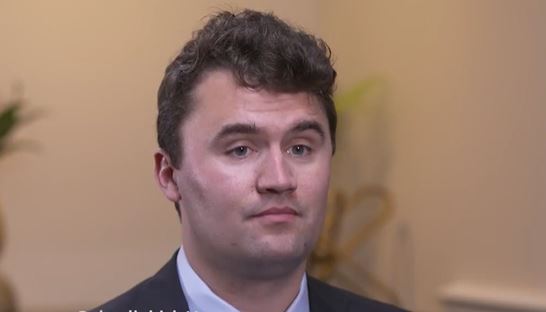
The opposed speakers are Charlie Kirk, founder and president of activist group Turning Point USA; Dennis Prager, radio talk show host and founder of educational group PragerU; and Robert Kiyosaki, bestselling author of the top-selling personal finance book of all time and PragerU presenter. The trio are scheduled to speak Wednesday on “Health, Wealth, and Happiness.”
The T.W. Lewis Center is hosting a discussion of Health, Wealth, and Happiness with speakers Dennis Prager, Robert Kiyosaki, and Dr. Radha Gopalan at ASU Gammage theater on 2/8 at 7:00 pm! Students can attend this event for free! Tickets here: https://t.co/vyglKQjrtNpic.twitter.com/Q31ywkr86q
— Barrett, The Honors College at ASU (@barretthonors) January 26, 2023
In a letter to Barrett Honors College Dean Tara Williams last Wednesday, the faculty members called Prager and Kirk “purveyors of hate,” and accused them of attacking women, “people of color,” LGBTQ+ individuals, and democracy-based institutions. The faculty dismissed Kiyosaki as a debunked sales schemer.
“By platforming and legitimating their extreme anti-intellectual and anti-democratic views, Barrett will not be furthering the cause of democratic exchange at ASU, but undermining it in ways that could further marginalize the most vulnerable members of our community,” read the letter. “Our collective efforts to promote Barrett as a home for inclusive excellence demand we distance ourselves from the hate that these provocateurs hope to legitimate by attaching themselves to Barrett’s name.”
The faculty also accused the trio of advancing an “anti-intellectual agenda” because they have challenged the necessity of a college education, the hypocrisy over the use of the “n-word,” the problematic nature of Black History Month, the acceptance of transgenderism and gender ideology, and the integrity of the 2020 election.
Although ASU hasn’t indicated that it would cancel the event, AZ Free News was informed that on-campus marketing of the event was removed following the Barrett faculty complaints.
39 of 47 Barrett faculty members signed onto the letter: Abby Loebenberg, Abby Wheatley, Adam Rigoni, Alex Young, April Miller, Benjamin Fong, Christiane Fontinha de Alcantara, Dagmar Van Engen, David Agruss, Don Fette, Elizabeth Meloy, Gabriella Soto, Georgette Briggs, Irina Levin, Jacquie Scott, Jennifer Brian, John Lynch, Joseph Foy, Joseph O’Neil, Laura Jakubczak, Laurie Stoff, Lisa Barca, Mathew Sandoval, Matthew Voorhees, Michael Ostling, Mina Suk, Nilanjana Bhattacharjya, Peter Schmidt, Phillip Cortes, Rachel Fedlock, Rebecca Soares, Robert Mack, Sarah Graff, and Taylor Hines.
Levin, a Barrett faculty affiliate, toldThe State Press, ASU’s student-run newspaper, that she was shocked that ASU would allow this event and claimed that the guest speakers weren’t aligned with Barrett principles.
Ostling claimed that their signatures each represented different reasons for opposing Kirk, Prager, and Kiyosaki on campus, and that they weren’t advocating for the cancellation of the event.
“I believe these speakers represent ideas that go against the principles of the ASU charter that stands for inclusivity and not exclusivity,” said Ostling.
Multiple faculty members from the letter liked tweets that accused Prager and Kirk of being “white nationalists.”
On her since-deleted Twitter account, Miller, an Honors Faculty Fellow, accused ASU of “[selling] its soul to the ‘highest’ bidder.”
“When your college sells its soul to the ‘highest’ bidder, this is the result. What an outrageous embarrassment. Money over ethics, donors before students,” tweeted Miller.
Miller also emailed the condemnation letter to her students. Although Miller alleged in the email that she supported free speech in universities, even controversial speech, she said she opposed controversial speakers that donate to the college. Miller further claimed that Prager, Kirk, and Kiyosaki held beliefs that were beyond the scope permitting ideological debate.
“This is not a simple issue of partisan politics; these two speakers are known for, among other things, spreading: exceedingly hateful rhetoric that is harmful to many marginalized communities; anti-public education platforms; and health/medical disinformation— all of which go against the values and purposes of a post-secondary institution like Barrett and ASU,” wrote Miller.
Other Barrett faculty reportedly imposed similar pressure on their students. However, students have been reluctant to produce these documents; AZ Free News received information that students have expressed fear of retaliation from Barrett faculty and their peers if they express dissenting opinions or support for the event.
Young, also an Honors Faculty Fellow, tweeted that only those with a certain level of competence were allowed to engage in discourse — implying that this caveat disqualifies Prager, Kirk, or Kiyosaki. Young then claimed that those who issued public response to the letter had incited threats against their jobs and lives.
In a separate tweet, Young explained that the faculty members behind the condemnation letter were upset they hadn’t been consulted about the speaker selection for the event.
My colleagues and I at Barrett Honors College are embroiled in an escalating controversy involving this event. I'll explain some of it here, but the main point: we are being targeted by violent threats from the far right, & need solidarity from folks at ASU and beyond. 1/ pic.twitter.com/IFojB5WdaW
Additionally, three ASU professors issued a response letter via The Daily Wire to the Barrett Honors condemnation letter. These three professors were Jonathan Barth, associate history professor and associate director of the ASU Center for American Institutions; Donald Critchlow, history professor and director of the ASU Center for American Institutions; and Owen Anderson, philosophy and religious studies professor.
Barth, Critchlow, and Anderson said they didn’t support the suppression of speech advocated by the Barrett faculty members. They noted that ASU President Michael Crow has a long history of supporting intellectual diversity, even amid opposition. The three men said that the Barrett faculty were intentionally intimidating their peers and students, thereby destroying the free and open exchange of ideas.
“Faculty letters like the one condemning Dennis Prager and Charlie Kirk reinforce campus conformity and function as a not-so-subtle way to intimidate and silence would-be dissenters among the faculty and student body,” stated the trio.
Check out the work of @DonCritchlow and Professor Barth in the Daily Wire: Professors Stand Up For Free Speech As Liberal Colleagues Seek Boycott Of Dennis Prager And Charlie Kirk https://t.co/Z5gXVSXft2
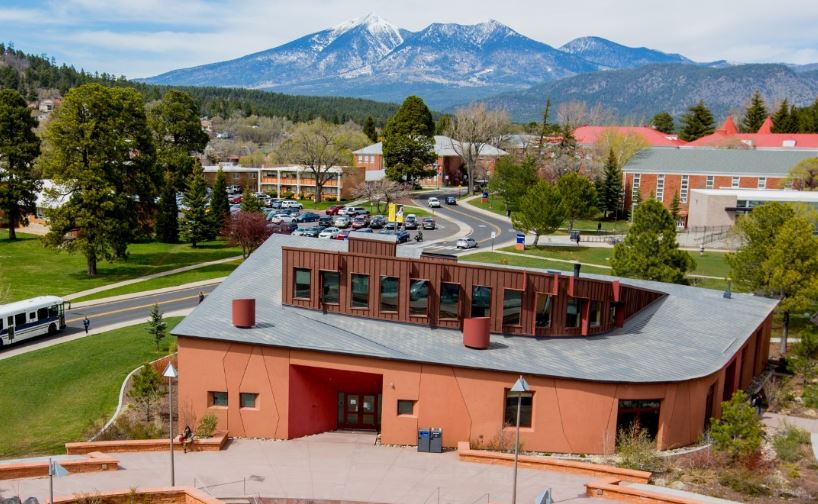
Northern Arizona University (NAU) pledged $10 million to prioritize Indigenous people in their curriculum, or “indigenize” it. The funds will build up the Seven Generations Signature Initiative (7SGI) for the next three years starting this spring.
$5 million of the funding comes from the Mellon Foundation, a New York-based grantmaking nonprofit; the other half came from the NAU Foundation (NAUF). NAU classifies Indigenous peoples as Native Americans/American Indians), Alaskan Natives, Native Hawaiians, Native Pacific Islanders, and other global Indigenous peoples.
The funding will back development of an Indigenous-focused open educational resources initiative; increase recruitment of faculty advancing Indigenous-focused scholarship; establishment of a new center for Indigenous “knowledge holders,” partners, artists, and tribal leaders; and expansion of a Indigenous-focused housing program that serves around 150 students, or .5 percent of the student population.
Through the work of Seven Generations Signature Initiative, NAU will contribute to the advancement of Indigenous knowledges and scholarship, strengthen partnerships & propel Indigenous student success. pic.twitter.com/P5P8NoNv14
According to NAU data, there were just over 900 students (3.2 percent) who identified solely as Indigenous. 841 students (2.9 percent) identified as Native American or Alaskan Native, while 68 students (0.2 percent) identified as Native Hawaiian or Native Pacific Islander.
With multiple races factored, over 1,900 students (6.7 percent) identified as Indigenous. Over 1,500 (5.3 percent) identified as Native American, Alaskan Native, Native Hawaiians, or Native Pacific Islander.
In a press release last month, NAU President José Luis Cruz Rivera expressed hope that the university would become the national leader in service to Indigenous people.
“The breadth of this $10 million Seven Generations Signature Initiative demonstrates how NAU has infused its commitment to Indigenous Peoples into all our work, from leading scholarship and meaningful engagement to student belonging and success,” said Rivera.
Lena Fowler, NAU Indigenous Advisory Board chair, said that this $10 million funding would ensure that the university was a “home-away-from-home” for Indigenous students.
Armando Bengochea Mellon Foundation senior program officer said that indigenizing the curriculum was “bold, inspiring, and necessary.”
NAU derived 7SGI after producing their roadmap for the next several years, “NAU 2025 – Elevating Excellence,” which focuses mainly on advancing diversity, equity, and inclusion (DEI). The roadmap made a specific commitment to expand the focus on Indigenous students, faculty, and staff.
Specifically, the roadmap promised to establish Indigenous-specific pre-college pathways and recruitment, culturally responsive programming and pedagogy, and campus environments to increase Indigenous enrollment and retention. It also promised to implement equitable, not equal, efforts to recruit, retain, and support Indigenous faculty and staff. Equity orchestrates exact equal outcomes, while equality affords equal resources or opportunities.
Under this roadmap so far, NAU also funded thousands for a project expanding “Indigenous Pathways to a PhD in STEM-H.” The university is currently processing further proposals under its $1 million second call for proposals. Awards will be announced in April.
NAU also expanded its initiative affording free tuition to Native Americans from any of Arizona’s 22 federally recognized tribes last November, regardless of household income. However, non-Native American applicants are only eligible for free tuition if they’re first-time undergraduate students with a family income of $65,000 a year or less.
The decision to prioritize Native American Arizonans over non-Native American Arizonans reflects NAU’s commitment to equity over equality.
"Now more than ever, NAU will be affordable and accessible and offer a robust and intentional community of support for Native American and Indigenous students who entrust their educational journey to the university." 📧 Full message from @naupresident: https://t.co/YRl9potMPE. pic.twitter.com/rBVO4w7PAe
On Tuesday, House Democrats attempted to kill a Republican-introduced bill to address the teacher shortage.
The bill, HB2428, would allow private universities and colleges to participate in and receive funding from the Arizona Teachers Academy (ATA). Reimbursements for academy scholarships would be capped at the average in-state tuition and fees determined by the Arizona Board of Regents (ABOR): currently, about $7,100. The four Democratic members of the House Education Committee opposed the bill.
The bill sponsor, State Rep. Matt Gress (R-LD04), said that there are thousands of students seeking an educational degree currently, noting approximately 3,000 qualified students at Grand Canyon University alone. Gress cited data that approximately 80 percent of these types of students go on to teach in public schools, but not necessarily in Arizona. Gress argued that they should be pulled into Arizona ones.
“It represents a state commitment to addressing our teacher workforce shortage,” said Gress.
ATA helps pay for tuition and fees for state university or community college students, with the contingency that these students commit to one year of teaching in an Arizona public school.
Over 3,300 individuals were enrolled in the ATA last year, the largest class since its creation in 2017 under former Gov. Doug Ducey. Enrollment for the past five years totaled nearly 9,300. Scholarships totaled $22.7 million, averaging $7,100 each. Gress’ proposed expansion of the ATA to private institutions may cost an additional $17 million. The ATA funds student-teachers across 16 different graduate and undergraduate programs.
The teacher shortage may soon worsen: over 20,000 teachers qualified for retirement last year, according to the Arizona State Retirement System.
Committee Democrats admitted that the state’s ongoing teacher shortage is urgent. However, they disagreed that public dollars should go into private institutions.
State Rep. Judy Schwiebert (D-LD02) said the state should prioritize public institution students over private ones. She expressed concern that expanding ATA eligibility would disrupt the current waitlist of public university students.
“I feel like our priority needs to be with our public schools that need to be held accountable, and if they’re going to be accountable we need to make sure that we’re providing the funding for them to be able to train as many teachers as they have applications for, and right now they don’t,” said Schwiebert. “We need to make it a priority to further invest in our institutions before we send any money, or if we even should send any money to a private institution that doesn’t require any accountability from the state.”
State Rep. Nancy Gutierrez (D-LD18) concurred, arguing that it wasn’t appropriate to use public funds for private institutions. Gutierrez said the teacher shortage wasn’t due to a lack of accessibility to programs like ATA, it was teachers enduring purportedly low pay and disrespect.
State Rep. Laura Terech (D-LD04) said she didn’t believe this bill was a long-term solution for the shortage.
“I have a fundamental problem with sending public money to private institutions,” said Terech.
Corinne Murdock is a reporter for AZ Free News. Follow her latest on Twitter, or email tips to corinne@azfreenews.com.
The Paradise Valley School (PVUSD) Governing Board President Pro Tem indicated that white Christians shouldn’t determine curriculum.
Newly elected PVUSD member Kerry Baker issued the remark over the weekend in response to Arizona Department of Education (ADE) Superintendent Tom Horne’s recent actions to purge social-emotional learning (SEL), critical race theory (CRT), and other progressive ideologies from classrooms. Baker claimed that CRT isn’t present in schools but that what Horne sought to eradicate was true history; she pinned blame on white Christians for the purportedly misdirected purge.
“We are not a society of white Christians,” tweeted Baker. “It is dangerous to assume we are. It is even more dangerous to believe public schools are only made up of white Christians. Our communities are full of rich and diverse cultures and families. We should ALL be celebrated. Not just a certain population.”
Baker added the claim that Horne’s opposition to CRT made him a “racist.”
“When [Tom Horne] says he’s anti-CRT, he’s just reminding us he’s racist,” stated Baker.
I’m going to say this again real slow. CRT. Is. Not. Taught. In. Our. Schools. It’s called history and diversity, and it is vital to raising productive members of society. We are not a society of white Christians. pic.twitter.com/ULFQt7IAO4
Baker, a former Peoria Unified School District and Dysart Unified School District teacher endorsed by teacher union lobbyist group Save Our Schools Arizona (SOSAZ), stands in opposition to major policy changes defining the Horne administration. Baker ran on a campaign opposing universal school choice, supporting SEL, and resisting public posting of teaching materials.
Baker is a product of the Leading For Change (LFC) fellowship program: a Democrat-run group that trains up Democratic elected officials and activists, founded by a board member of dark money group Arizona Advocacy Network (AAN), who’s also the former executive for Center for Progressive Leadership and Planned Parenthood of Central and Northern Arizona.
Baker explained in her LFC biography that she decided to run for PVUSD governing board because two of her six children had identities that aligned with her activist interests. According to Baker, she has helped one of her children transition genders, and another one of her children has autism.
In an interview with The Arizona Republic last year, Baker said that SEL was important because it enabled K-12 educators to fulfill students’ social and emotional shortcomings caused by school closures throughout the pandemic — much of which were prompted by educators and teachers unions.
During her first school board meeting earlier this month, Baker listed greater inclusivity of special needs children in regular classrooms, expanding LGBTQ+ rights, hiring SEL teachers, and emphasizing diversity among her priorities. Baker quoted Gov. Katie Hobbs in her introductory speech, saying that there wasn’t a shortage of teachers, just a crisis retention.
In addition to her dislike of “white Christians,” Baker appears to have a disdain for any groups composed mainly of white people — even if they’re children. In response to SOSAZ Director Beth Lewis posting a picture of Treasurer Kimberly Yee’s visit to the Brophy College Preparatory Republican Club last fall, Baker scorned the fact that the group looked too white.
“There wasn’t one [GIF] that said ‘so many white boys,’” wrote Baker.
There wasn’t one that said “so many white boys”. 🤷🏼♀️
Baker also supports allowing biological males to join female sports teams and enter female spaces, such as locker rooms and restrooms. Baker derided concerned parents opposed to this permissiveness as “transphobic.”
Throughout her campaign, Baker opposed efforts to ban any books from classrooms. She emphasized this stance as recognizing the importance of multiculturalism. Yet, Baker opposed any aspect of religion from entering the classroom — namely, Christianity. Baker claimed her opposition represented the proper understanding of ensuring a separation of church and state.
Corinne Murdock is a reporter for AZ Free News. Follow her latest on Twitter, or email tips to corinne@azfreenews.com.
Arizona State University (ASU) professor Neal Lester said that cultural appropriation is equivalent to racism and white supremacy, specifically claiming it lacked humanity.
Lester — an English professor at ASU for 26 years and founder of ASU’s social justice-focused initiative, Project Humanities — made these remarks during a September episode of “Dr. Phil.”
“We can say the same thing about racism, sexism, homophobia. Just because you can’t solve it and don’t see it at every corner doesn’t mean you shouldn’t be aware of it and trying to address it,” said Lester. “I put [cultural appropriation] on the same level as white supremacy, because white supremacy is intersectional.”
Lester added that cultural appropriation was not only inhumane, but disrespectful. “Dr. Phil” host, Phil McGraw, pointed out that not everyone who puts on other cultural items was necessarily doing so in a manner intending comedic effect. Lester responded that even those instances would be reductive, performative, and ultimately disrespectful of those from that culture.
“You’re getting some kind of cultural capital by doing it,” said Lester. “It’s not necessarily who’s hurt by it, it’s who is disrespected by it. A whole culture of people whose identities are wrapped in whatever you’re dressing into and can then take off.”
The focus of the “Dr. Phil” episode, “Appropriation Nation: Has it Gone Too Far?”, concerned in part a 2018 controversy after an 18-year-old Utah teenager, Keziah Daum, posted her wearing a qipao dress to prom. A 20-year-old University of Utah student at the time, Jeremy Lam, quote-tweeted the post with the viral comment, “My culture is NOT your goddamn prom dress.”
Lam later told outlets that Daum’s outfit was a sign of racism. His original caption on Daum’s dress inspired months of memes, where social media users would use the phrase in their own captions when reposting others’ outfits.
Though Lam and a select few social media users at the time claimed Daum’s outfit choice was cultural appropriation, Daum revealed in September’s “Dr. Phil” episode that China invited her to its Qipao Festival to be their guest of honor.
“They loved the fact that someone from America was taking in a part of their culture and showing their appreciation for it,” said Daum. “I wasn’t appropriating it. I wore it because it was a beautiful dress and I appreciated it.”
The episode also addressed content created by former Prager University influencer, Will Witt, in which he wore outfits depicting various cultures on college campuses and then in areas dominated by the culture reflective of that outfit. Witt wore outfits representative of Native American, Mexican, and Chinese cultures. Only those on college campuses expressed negative sentiment toward Witt’s outfits, a majority of whom didn’t hail from the areas dominated by the culture while those in the areas reflective of his outfits expressed positive sentiment.
“The only people who are actually offended by cultural appropriation don’t really have anything else of meaning going on in their lives, it seems,” said Witt. “[Cultural appropriation] is a thing created by elitist white people who don’t really ever talk to these people in these cultures.”
Lester likened cultural appropriation to plagiarism. Witt said Lester’s comments proved him to be one of the “anti-white, ivory tower professors” attempting to domineer cultural norms.