by Corinne Murdock | Jul 19, 2023 | Education, News
By Corinne Murdock |
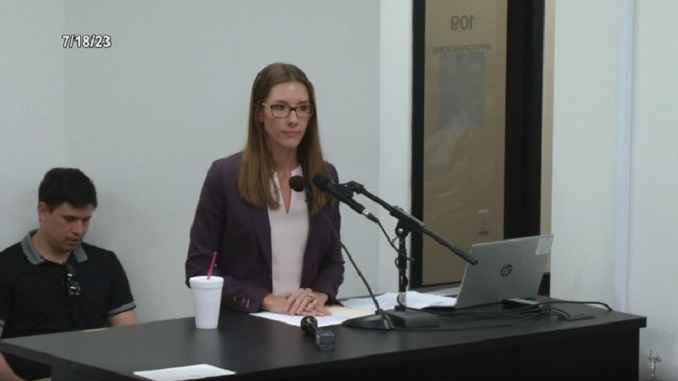
On Tuesday, a joint committee of the Arizona legislature launched an investigation into allegations of censorship at Arizona State University (ASU). Lawmakers issued a 60-day deadline to conduct the investigation.
The directive arose from the Joint Legislative Ad Hoc Committee on Freedom of Expression at Arizona’s Public Universities hearing concerning the T.W. Lewis Center, shuttered this year after the revocation of $400,000 in annual funding from its namesake, Tom Lewis, who cited “left-wing hostility and activism” as his reason for defunding the program.
Lewis’ contention arose from the efforts of 37 Barrett Honors College faculty members, who launched a coordinated campaign to prevent an event featuring prominent conservative speakers Dennis Prager and Charlie Kirk. Prager testified at Tuesday’s hearing; he also published an opinion piece on the event ahead of the hearing.
State Sens. Anthony Kern, co-chair (R-LD27), Frank Carroll (R-LD28), Sally Ann Gonzales (D-LD20), Christine Marsh (D-LD04), and J.D. Mesnard (R-LD13) served on the committee, as did State Reps. Quang Nguyen (R-LD01), Lorena Austin (D-LD09), Analise Ortiz (D-LD24), Beverly Pingerelli (R-LD28), and Austin Smith (R-LD29). Kern and Nguyen served as co-chairs.
“This is to get to the bottom of a state-funded university that is not meeting its obligation to freedom of expression and freedom of speech,” said Kern.
The center relied on an annual budget of around $1 million; ASU representatives explained that the center would live on through the classes taught, though the actual center itself and the executive director at its helm, Ann Atkinson, would be gone.
ASU Vice President of Legal Affairs Kim Demarchi explained that Lewis’ funding provided for career development and education. Demarchi testified that ASU considered what programs it could continue without Lewis’ funding, and declared that they could only sustain the faculty without Lewis’ funding. Demarchi also shared that the Barrett Honors faculty weren’t punished in any way for the letter or allegations of intimidation.
“It is possible it [their letter] has a chilling effect,” said Demarchi.
However, Demarchi clarified that a professor would have to explicitly threaten a student’s grade in order to be in violation of university policy.
Atkinson went public with the closure of the Lewis Center last month. (See the response from ASU). She told AZ Free News that the university turned down alternative funding sources that would make up for the loss of Lewis’ funding necessary to keep the Lewis Center running.
Nguyen opened up the hearing by recounting his survival of Vietnam’s communist regime as a child, and comparing that regime’s hostility to free speech to the actions of Barrett Honors College faculty.
“My understanding is that there is an effort to prevent conservative voices from being heard,” said Nguyen. “I crossed 12,000 miles to look for freedom, to seek freedom.”
Nguyen expressed disappointment that none of the 37 faculty members that signed onto the letter showed up to testify in the hearing. He said if he accused someone, he would show up to testify.
Democratic members of the committee contended that the event occurred and therefore censorship hadn’t taken place. Kern said the occurrence of the event doesn’t resolve whether freedom of speech was truly permitted, citing the closure of the Lewis Center.
ASU Executive Vice Provost Pat Kenney emphasized the importance of freedom of expression as critical to a free nation. Nguyen asked whether Kenney read the Barrett letter, and agreed to it. Kenney said the letter was freedom of expression. He claimed the letter didn’t seek cancellation of the event.
“When faculty speak out on their own like that, they’re covered on the same topic we’re here about, which is free speech,” said Kenney.
ASU representatives claimed near the beginning of the hearing that Lewis and ASU President Michael Crow had discussed the withdrawal of funding. However, toward the end of the hearing Kern announced that he’d received information from a Lewis representative that the pair hadn’t discussed the funding, and accused ASU representatives of lying.
Ortiz called the anonymous complaints from students hypotheticals because no formal complaints were lodged. She also claimed that the hearing was merely an attempt to delegitimize public and higher education. Marsh claimed that lawmakers shouldn’t consider the claims of student fears of retaliation because the students should’ve gone to ASU directly.
Nguyen asked whether ASU would defend guest speakers, such as himself, if ASU faculty were to lodge claims of white nationalism. Kenney said that, in a personal capacity, ASU faculty were free to make their claims, but not if they spoke out on ASU’s behalf.
Atkinson contested with the characterization that the Barrett faculty spoke out in their personal capacity. She pointed out that Barrett faculty signed the letter in their capacity as ASU faculty, emailed her using their ASU emails, and sent communications to students about opposing the event using ASU technology.
Ortiz announced receipt of a letter from the Arizona Board of Regents (ABOR) on the outcome of the requested investigation into the incident, the results of which Kern and the rest of the committee appeared to not have been made aware, determining that no free speech violations took place at ASU.
Marsh speculated that the professors didn’t show up because they faced death threats, citing media attention and conservative speaker Charlie Kirk’s Professor Watchlist. Kern said that would be a “lame excuse.” He also pointed out that the professors launched a national campaign and initialized bringing themselves into a bigger spotlight.
“You’re making excuses where we don’t know that’s the case,” said Kern.
Atkinson said that she could provide “dozens, if not hundreds” of students that could testify to experiencing faculty intimidation. She also claimed that Williams told her to avoid booking speakers that were political.
“We allow the speaker but you have to take the consequences,” said Atkinson, reportedly quoting Williams.
Atkinson testified that TV screen ads were removed and flyers were torn down following the Barrett Honors faculty letter. She also said she shared the information for the person responsible on June 13, yet it appears ASU took no action. ASU said they weren’t aware of any advertising for the event pulled.
Additionally, Atkinson testified that Williams pressured her to postpone the event “indefinitely.” She noted that Williams interpreted ASU’s policy of not promoting political campaigns as not allowing political speech at all.
“We were in an environment telling us that this was ‘hate speech,’” said Atkinson.
Atkinson said she was directed by leadership ahead of the event to issue a preliminary warning that the event contained potentially dangerous speech.
Gonzales told Atkinson that hate speech doesn’t qualify as constitutionally protected speech. However, the rules attorney corrected her that the Supreme Court ruled hate speech as protected.
ASU professor Owen Anderson also testified. He said that he’s previously had to get the free speech rights organization Foundation for Individual Rights and Expression (FIR) involved twice due to faculty attempts to suppress free speech. Anderson also said that faculty have attempted to restrict speech by adding anti-racism and DEI to policy on class content and annual reviews of professors.
“Insults abound, but rational dialogue is rare. What we need are administrators that call these faculty to higher conduct,” said Anderson.
In closing, Kern said he doesn’t trust ASU, the University of Arizona, or ABOR. He argued that ABOR hadn’t issued a real investigation and called their report “typical government fluff [and] garbage.” Kern also called for the firing of Barrett Honors College Dean Tara Williams.
Corinne Murdock is a reporter for AZ Free News. Follow her latest on Twitter, or email tips to corinne@azfreenews.com.
by Corinne Murdock | Jul 18, 2023 | Education, News
By Corinne Murdock |
Three of the Arizona State University (ASU) professors behind a campaign to oppose an event featuring conservative speakers argue that only inclusive persons belong on university campuses.
In an opinion piece published in the Arizona Republic, the three professors argue that those who reject inclusive ideals were the real threat to debate and therefore should be barred from participating in democratic exchange. The trio — Barrett Honors College professors Jenny Brian, Michael Ostling, and Alex Young — noted that they weren’t opposed to all conservative speakers, referencing a 2018 event featuring conservative legal scholar Robert George.
Earlier this year, the three professors signed onto a letter petitioning Barrett Honors College leadership to oppose an event featuring conservative personalities Dennis Prager, Charlie Kirk, and Robert Kiyosaki. The trio insisted that their original letter wasn’t an attempt to cancel the event, but merely a means of expressing consternation. AZ Free News learned that on-campus marketing of the controversial event was removed following the complaint letter. 37 of 47 Barrett faculty members signed onto the letter.
“By platforming and legitimating their extreme anti-intellectual and anti-democratic views, Barrett will not be furthering the cause of democratic exchange at ASU, but undermining it in ways that could further marginalize the most vulnerable members of our community,” read the letter. “Our collective efforts to promote Barrett as a home for inclusive excellence demand we distance ourselves from the hate that these provocateurs hope to legitimate by attaching themselves to Barrett’s name.”
In terms of reported attempts to recruit students to boycott the event, the three professors denied the charges. The trio added that they held an alternative “teach in” event preceding the T.W. Lewis Center event: “Defending the Public University.”
The three professors also denied responsibility for the dissolution of the T.W. Lewis Center and dismissal of its executive director, Ann Atkinson.
“As Barrett faculty, we see a brighter future for public higher education. We will continue to fight for a university ‘measured not by whom it excludes, but by whom it includes,’” stated the trio. “The ‘antagonistic cooperation’ of democratic exchange in Arizona’s public universities deserves to be defended against those who reject the inclusive ideals that make it possible.”
The letter was met with immediate response from a vocal critic of the Barrett Honors faculty opposed to the T.W. Lewis Center event: ASU humanities professor Owen Anderson. He criticized the three professors’ opinion piece as a poor display of logic and reason.
“[W]hat was their argument? They never gave one (not one that got above informal fallacies),” wrote Anderson. “No professor would give a good grade to a paper like this from a student. How can a professor who thinks this way teach others?”
Corinne Murdock is a reporter for AZ Free News. Follow her latest on Twitter, or email tips to corinne@azfreenews.com.
by Daniel Stefanski | Jul 17, 2023 | Education, News
By Daniel Stefanski |
The State’s Republican Superintendent of Public Instruction continues to fight on behalf of an Arizona law.
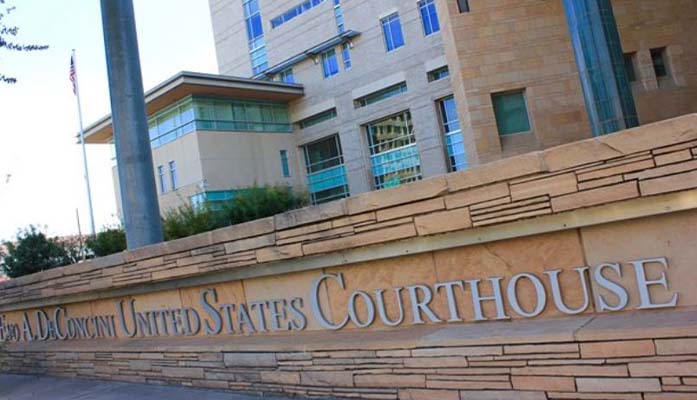
Last week, the Arizona Department of Education sent a media advisory to note that “State schools chief Tom Horne is at U.S. District Court in Tucson to stand up for the state’s law prohibiting biological boys from participating in girls’ sports.” The communication announced that “a federal judge is hearing arguments whether to temporarily block the ban that was signed into law last year.”
That law was SB 1165, which was signed by former Arizona Governor Doug Ducey on March 30, 2022. The law prohibits biological males from competing in women’s and girls’ athletic events at state public schools, colleges, and universities.
The Department later posted a tweet on the issue, which stated, “Superintendent Horne is defending Arizona state law which bans biological boys from competing in girl’s sports. Title IX was created for equal opportunities for female athletes, and allowing males to compete in women’s sports undermines everything these athletes have fought for.”
AZ Free News reached out to Superintendent Horne about his thoughts on the legal hearing and the case in general. Horne replied, “It’s partly about safety but it’s mostly about fairness and the fact that there have been many news articles about girls who focused very strongly on sports, worked really hard, hoped to excel, maybe get a college scholarship or be in the Olympics or whatever, and then all of a sudden have to compete against biological males. They have no chance to compete successfully against them and they’re devastated by it. Now they have found what they believe to be sympathetic plaintiffs because they’re 11-year-olds who are using puberty blockers, so they say they lose the advantage of males. But we have presented numerous peer-reviewed scientific studies to the court showing that even before puberty, males still have an advantage. Our evidence is overwhelming compared to theirs.”
The Arizona Women of Action applauded the latest action from the Department, writing, “We greatly appreciate Tom Horne for upholding the Save Girl’s Sports Act. AZ Women of Action stands with Tom Horne in this endeavor by joining the lawsuit & representing Arizona families who want to save girls’ sports.”
At least some Democrats saw Horne’s defense of the law in a different light. The Yavapai County Democrats tweeted, “Sup. Horne seen here wasting time on a manufactured crisis. Protect public schools. Do something useful for education. Horne is a disgrace.”
Horne isn’t the only Arizona official who has weighed in on this court case. Earlier this year, both Arizona Senate President Warren Petersen and House Speaker Ben Toma filed a Motion to Intervene in the United States District Court for the District of Arizona Tucson Division. The Senate Republican’s press release highlighted that “on April 17, 2023, plaintiffs represented by a radical organization filed a motion for a preliminary injunction to stop the law from being enforced in Arizona,” and “Attorney General Kris Mayes is not defending the constitutionality of the law.”
At the time, Petersen said, “In the absence of the Attorney General defending Arizona’s law, we’re looking forward to fighting for the rights of female athletes across Arizona, as well as for the Court making it clear Arizona’s law protecting women and girls should be enforced.”
Daniel Stefanski is a reporter for AZ Free News. You can send him news tips using this link.
by Corinne Murdock | Jul 16, 2023 | Education, News
By Corinne Murdock |
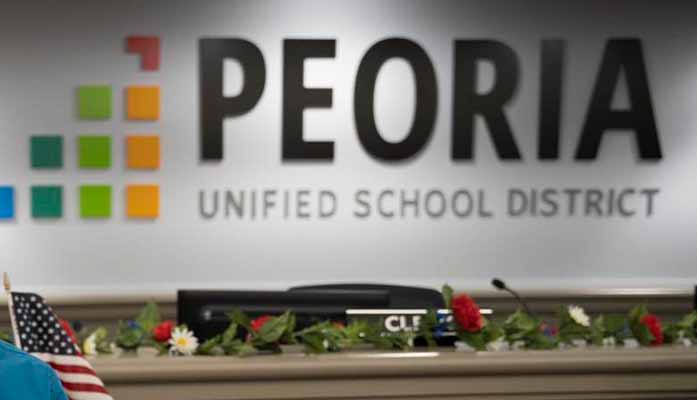
Peoria Unified School District (PUSD) is allowing males into girls’ bathrooms and locker rooms, overlooking evidence of females harmed by policies allowing gender identity to dictate bathroom usage. Legal counsel for the members advised a need to align with the Biden administration’s interpretation of Title IX, based on recent legal rulings in the Ninth Circuit.
Board members Melissa Ewing, David Sandoval, and Bill Sorensen supported allowing students to use the bathrooms or locker rooms based on their gender identity. Board members Heather Rooks and Rebecca Hill opposed it.
The Biden administration announced in 2021 that it intended to expand Title IX sex-based protections to include sexual orientation and gender identity. The Education Department proposed the change to the policy last year; in May, the Biden administration announced that it would publish the final Title IX rule in October.
The rule change received over 390,000 public comments.
The Biden administration’s updated version of Title IX would not only allow gender identity to determine locker room and bathroom access — it would also impact sports team admissions.
In an April meeting, PUSD member Ewing claimed that no problem existed against preventing boys from entering girls’ spaces because no similar crimes have been reported in PUSD schools. Ewing further claimed that national data doesn’t support the belief that female-identifying males present a danger in private female spaces.
“If you look at our incident reports, and the narrative about assaults in the bathroom, it has not come as the result of a transgender-identified student. There is not a single incident that has happened,” said Ewing. “And if you look at the nationwide data, that does not show it as well. As board members, we need to be making sure that we are making data-driven decisions.”
Last month, Ewing shared a legal opinion from an LGBTQ+ advocacy site which argued that the Ninth Circuit’s ruling that discrimination based on sexual orientation violates Title IX protections.
Although Ewing claimed no bathroom assault cases exist due to transgender individuals, there were several high-profile cases over the last few years. Their existence was brought up in a viral video pulled from a recent meeting.
Ben Larrabee, project manager for conservative activist organization Turning Point USA, cited multiple cases in which males identifying as females were alleged to have flashed, sexually assaulted, or raped girls or women after entering female bathrooms or locker rooms.
This included the two teenaged girls sexually assaulted by the same gender-fluid teenage boy at two different schools in Loudoun County, Virginia; the sexual assault of a five-year-old girl by a gender-fluid boy in Decatur, Georgia; and the assault of a teenage girl by a teenage boy identifying as a female.
“Before you say that these are anecdotal evidence, just note that in a survey of trans inmates in federal prisons, half were convicted of sexual assault and 90 percent were convicted of violent crimes: well above the general prison population,” said Larrabee.
Larrabee noted that the perpetrators in the study he cited had all received some form of transgender care or gender identity accommodations.
“You do not affirm that people with anorexia can be healthy in any way, you do not affirm that somebody with schizophrenia is hearing voices, and you do not affirm that somebody in a manic episode is having great ideas,” said Larrabee. “When you leave someone to languish in their false mental state — i.e. men who think they’re women — they will inevitably lash out and harm themselves and those around them. Hurt people hurt other people.”
Board members Rooks and Hill attempted to enact a policy preventing males from entering female bathrooms and locker rooms in April. Ewing, Sandoval, and Sorensen blocked that policy.
Corinne Murdock is a reporter for AZ Free News. Follow her latest on Twitter, or email tips to corinne@azfreenews.com.
by Daniel Stefanski | Jul 14, 2023 | Education, News
By Daniel Stefanski |
Americans’ support for school choice is on the rise.
A recent poll from Real Clear Opinion Research showed that school choice has the support of 71% of the 1,000 registered voters who participated in that survey. This number was a seven-point increase from an April 2020 poll.
In this June 27-30 poll, support for school choice came from 80% of Republican voters, 66% of Democrat voters, and 69% of Independent voters. Though the Republican and Democrat support was up from April 2020, the 9% increase in favor from Independents was the most among the political parties.
The question presented to voters on the survey was as follows: “School choices gives parents the right to use the tax dollars designated for their child’s education to send their child to the public or private school which best serves their needs. Generally speaking, would you say you support or oppose the concept of school choice?”
The CEO of American Federation for Children, Tommy Schultz, lauded the news about the growing support for school choice around the country, saying, “School choice support is here to stay, and politicians who ignore this reality do so at their own peril. Parents are the new interest group in town, and legislators would be wise to keep responding to their needs. The days of the old one-size-fits-all model are numbered, welcome news for the countless students who need something different to learn and thrive. AFC is thrilled to continue standing behind parents as they gain more options for their children’s education.”
Arizona has been at the front lines of the surge in school choice support. Last year, the Republican-led Legislature passed a historic expansion of the state’s Empowerment Scholarship Account (ESA) Program, allowing any child in K-12 to apply. According to a June 30 update from the Executive Director of the ESA Program, Christine Accurso, 62,005 Arizona students have now been enrolled.
That same update also showed that the program, under the direction of Republican Superintendent of Public Instruction Tom Horne, had largely caught up with the backlog and influx of reimbursements to ESA account holders. As of June 30, the ESA Program only had 1,195 Reimbursement Orders in the queue – down from 24,409 on February 8.
When asked about the increasing support for school choice in Arizona and around the nation, Superintendent Horne told AZ Free News, “We have a lot of excellent public schools in Arizona. But no matter how good a public school is, it may not be able to meet the needs of all students. Rich parents have always had the ability to choose the best school to meet the needs of each of their children and people at all economic levels should have the same ability. In addition, competition improves public schools. The United States has been prosperous, and the Soviet Union was poor, because we had competition which drives people to do their best, while they were a government monopoly. As they used to say in Poland, ‘We pretend to work, and they pretend to pay us.’ The same applies in education. Competition causes everyone to do better.”
Daniel Stefanski is a reporter for AZ Free News. You can send him news tips using this link.
by Corinne Murdock | Jul 8, 2023 | Education, News
By Corinne Murdock |
A Scottsdale Unified School District (SUSD) principal serving on the board of a prominent LGBTQ+ activist group has won principal of the year.
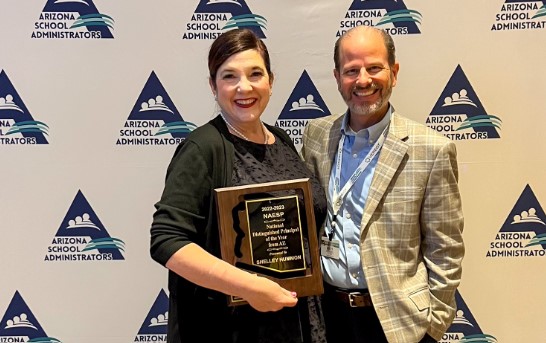
Pueblo Elementary School Principal Shelley Hummon won the 2023 National Distinguished Principal (NDP) from the National Association of Elementary School Principals (NAESP). The Arizona School Administrators’ (ASA) Elementary Division selected her to win. Hummon also serves on the board of one-n-ten, a Phoenix-based LGBTQ+ activist group targeting minors and young adults.
As part of the award, Hummon will be flown to Washington, D.C. in October for formal recognition at an NAESP event.
Like one-n-ten, NAESP supports promoting LGBTQ+ ideologies among children. NAESP expanded its focus on diversity, equity, and inclusion in recent years to include gender identity and sexual orientation.
In June 2021, NAESP featured another elementary school principal, Seth Daub of Orange County Public Schools, to argue that educators should guide children in LGBTQ+ beliefs.
“When addressing the topic of LGBTQ inclusion at the elementary school level, schools need to exhibit much more than mere tolerance,” wrote Daub. “Educators must make the conscious choice to accept, embrace, and celebrate it, and must do so without question and without hesitation.”
NAESP, like one-n-ten, also opposes the exclusion of males identifying as females from female sports and private spaces.
Another significant one-n-ten board member is Tracy Nadzieja, the first transgender judicial officer in Arizona. Nadzieja, a man who identifies as a woman, has served on the Maricopa County Superior Court bench since 2018. Nadzieja also volunteers with the women’s collegiate fraternity, Kappa Kappa Gamma (KKG). (KKG is considered a “women’s fraternity” because it was founded before the creation of the term “sorority.”)
Other one-n-ten board members are:
- Rick McCartney (chair), CEO of InMedia Company and board member for the Children’s Museum of Phoenix and Gov. Katie Hobbs’ Workforce Council;
- Kris Cano (vice chair), WestWorld general manager and former Scottsdale Police Department forensics director;
- Scott Greenwood (treasurer), longtime ACLU general counsel, board member, and executive committee member;
- David Cane (secretary), Wag! executive and former Uber program lead;
- Cory Braddock, partner at Snell & Wilmer law firm;
- Bev Crair, senior vice president for Oracle Corporation;
- Calvin Cole, vice president of AmTrust Bank and board member for Terros Health, Keogh Health Foundation, and Boys and Girls Club of the East Valley;
- Angie Dittrich, American Express senior manager and lead for the company’s PRIDE+ Colleague Network;
- Darryl Embrey, Vanguard senior business technology project manager;
- Valdo Figueroa, Wells Fargo senior technology operations manager and formerly Bank of America senior vice president;
- Lou Goodman, retired Arizona Department of Juvenile Corrections executive and pro tem Maricopa County justice of the peace;
- Floyd Hardin III, Rio Salado College’s executive officer of equity and college relations;
- Manuel (Manny) Soto-Griego, health information management professional and Arizona Health Information Management Association board member;
- Sima Thakkar, Raza Development Fund senior director of health & climate equity, with former roles as regional relationship manager for PetSmart Charities, and manager of the city of San Diego’s Community Development Programs on affordable housing and homelessness;
- Judie Verb, U.S. Bank executive vice president, Arizona Council on Economic Education board member, and Government Relations Council member for Consumer Bankers Association;
- Nate Rhoton (one-n-ten CEO), chair of the city of Phoenix’s Human Relations Commission, vice chair of Leading for Change, member of Maricopa County Community Colleges’ LGBTQ Advisory to the Chancellor, with former roles as a Human Rights Campaign steering committee member, Greater Phoenix Gay & Lesbian Chamber of Commerce board member, and Equality Arizona board of directors co-chair.
Sponsors of one-n-ten include American Airlines, Cox, SRP, Tito’s Vodka, and Estrella Jalisco.
Corinne Murdock is a reporter for AZ Free News. Follow her latest on Twitter, or email tips to corinne@azfreenews.com.