by Staff Reporter | Feb 13, 2026 | News
By Staff Reporter |
Maricopa County’s former recorder, Stephen Richer, says Republican’s concerns over illegal alien voting are “bogus.”
The former elections leader for one of the nation’s biggest counties published that claim earlier this week in an opinion piece for The New York Times.
“Confirmed: non-citizens aren’t voting,” said Richer.
Richer cited state investigations into noncitizen voting in which voter rolls were cross-checked with citizenship status. The recorder said concerns over illegal alien voters were a myth jeopardizing democracy.
“People largely aren’t willing to risk their status in the United States — the land of economic opportunity — for the ability to cast one more vote out of hundreds of thousands or millions in a state and hundreds of millions in the country,” stated Richer. “Playing politics with the idea of fraudulent voters and stolen elections comes at a real cost to American confidence in our elections. It’s an affront to our democracy and to all those who work to deliver free and fair elections. It’s also an ominous sign for where things may be heading this year.”
However, the cross-check referenced by Richer doesn’t address the common practice of identity theft among illegal aliens. Voter rolls can only confirm the citizenship of the individual listed, not of an individual who may be usurping that identity.
According to some federal estimates, 75 percent of illegal aliens are using stolen identities. There’s about 11.5 million illegal aliens in the country per the latest federal estimate, which would mean over 8.6 million illegal aliens use stolen identities under those estimates. Around 7 million of those illegal aliens claim employment per the government.
Of the smaller number of illegal aliens whose employment is recorded on the books, the government’s low estimate for illegal alien identity theft totals over one million.
With that range of estimates, there may be anywhere from 20,000 to 170,000 illegal aliens living under stolen identities in each state, assuming equal population distribution.
A day after The New York Times published Richer’s opinion piece, the Department of Justice announced the case of another illegal alien convicted of voter fraud.
An illegal alien from Columbia voted in the 2024 presidential election under a stolen identity, which she’d been using for over 20 years. Lina Maria Orovio-Hernandez, 59, had obtained a Real ID and received over $400,000 in stolen federal benefits.
Those stolen benefits included over $250,000 in Housing and Urban Development rental assistance. Orovio-Hernandez also obtained eight other state IDs in addition to the Real ID she obtained in Massachusetts.
Since leaving the recorder’s office, Richer has taken up elections-related leadership positions that advance claims similar to the ones he made in his most recent opinion piece, to include senior practice fellow in American democracy with the Harvard Kennedy School and adjunct scholar with the Cato Institute.
Richer pulled away from the Republican Party during the 2024 election when he announced his intent to vote for Democratic candidate Kamala Harris.
Other illegal aliens have voted in elections without the use of identity theft.
Last month, an illegal alien pleaded guilty to voting in the 2020 election.
Last December, two illegal aliens were indicted for voting in the November 2020 general election.
Last November, an illegal alien from Mexico elected to be the local mayor was charged for having voted illegally numerous times over his decades spent in the U.S.
Last August, a Canadian citizen voted in two federal elections, once in 2022 and in 2024.
AZ Free News is your #1 source for Arizona news and politics. You can send us news tips using this link.
by Staff Reporter | Feb 13, 2026 | Education, News
By Staff Reporter |
Arizona Superintendent of Public Instruction Tom Horne believes the new federal guidance on prayer in schools serves as a pathway to further purge K-12 of diversity, equity, and inclusion (DEI).
Horne said the administration’s characterization of speech compulsion made it clear that DEI presented an impermissible threat to religious freedoms.
“The new guidance issued by the U.S. Department of Education states that ‘No public school, teacher, or school official should ever coerce or press a student to engage in speech or affirm a viewpoint that would violate the student’s sincere religious beliefs,’” said Horne. “Numerous DEI precepts violate widespread religious beliefs, such as urging students to change genders, age-inappropriate sexual lessons, and other elements that may demean a student’s religious beliefs.”
Horne clarified that the new guidance doesn’t permit schools to coerce religious expression, either. Both the superintendent and the guidance cited the 2025 Supreme Court decision, Mahmoud v. Taylor, which found that public schools mandating curriculums endorsing homosexuality and transgenderism were violating religious freedom.
“No public school, teacher, or school official should ever coerce or pressure a student to engage in speech or affirm a viewpoint that would violate the student’s sincere religious beliefs,” stated the guidance. “[A] public school cannot require a student group to adopt a particular viewpoint in order to be recognized by the school if the viewpoint violates the student members’ religious beliefs. School officials also cannot express hostility toward religious student groups by demeaning their beliefs.”
The guidance, issued last week, addresses the issue of DEI elements in the context of requirements under federal law to advise on constitutionally protected prayer in public elementary and secondary schools. This updated version replaces the last guidance issued under the Biden administration in 2023.
Horne offered a marked copy of the guidance highlighting key new provisions across the four parts of the nine-page guidance.
In order to receive federal funding, local education agencies (LEAs) must certify in writing to the Arizona Department of Education (AZED) by Oct. 1 every year that none of their policies prevent or otherwise deny participation in constitutionally protected prayer in public K-12 schools.
AZED will establish processes by which the LEAs provide that certification and by which complaints may be filed against noncompliant LEAs. AZED must also send a list of noncompliant LEAs to the Department of Education by Nov. 1.
Presently, AZED requires LEAs to answer on Critical Race Theory and DEI as part of public reporting of school grades to assist with parental choice in schools.
“We will add this question to our list and report answers not only on our website, but also, as required, to the federal government,” said Horne. “Those with unsatisfactory answers to this question will then be deprived of federal funds.”
The guidance further clarified that the Trump administration’s perspective on religious freedom within schools was unlike the “wall of separation” view undertaken by previous administrations. It cited the most recent Supreme Court decision on prayer by school officials, Kennedy v. Bremerton School District, which found that a high school football coach had a right to engage in prayer on the field after games.
“This is not the familiar but legally unsound metaphor of a ‘wall of separation’ between religious faith and public schools,” stated the guidance. “It is rather a stance of neutrality among and accommodation toward all faiths, and hostility toward none, deeply rooted in our nation’s history, traditions, and constitutional law — a stance that upholds our Constitution’s ‘recognition of the important role that religion plays in the lives of many Americans.’”
AZ Free News is your #1 source for Arizona news and politics. You can send us news tips using this link.
by Staff Reporter | Feb 12, 2026 | News
By Staff Reporter |
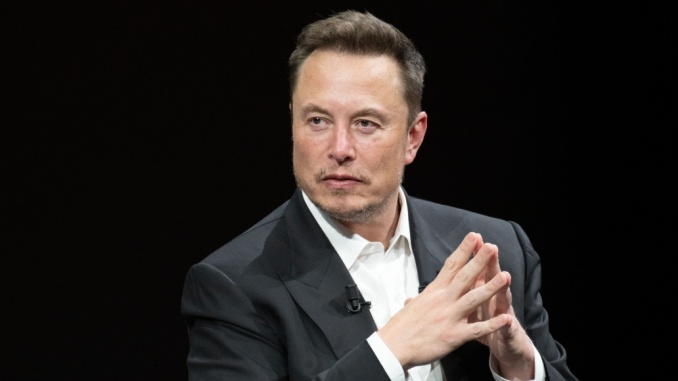
Tesla CEO and former Department of Government Efficiency chief Elon Musk is urging the federal government to ban mail-in voting.
Musk and other top Republican leaders have signaled support for greater federal intervention in state and local elections.
“Voter ID and in-person voting is the only way to save democracy,” said Musk. “Critical to avoid fraud.”
Although X influencers said Musk’s comments were “breaking news,” the SpaceX CTO has advocated for in-person voting, along with ID requirements, for years.
“We should require government ID and in-person voting (unless valid medical/military/etc excuse), like other countries do or like if you want to buy beer,” said Musk in a comment over two years ago.
In the summer of 2024, Musk also advocated against electronic and drop box ballots. Musk said additional voting methods beyond in-person voting created additional variables that made it much more difficult to detect fraud.
“When combined with mail-in ballots, the system is designed to make it impossible to prove fraud,” said Musk. “Mail-in and drop box ballots should not be allowed, as cameras on the in-person voting stations would at least prevent large-scale fraud by counting how many people showed up vs ballots cast.”
Last week, Musk backed the Safeguard American Voter Eligibility (SAVE) Act, legislation to amend a gap in citizenship proof existing in the National Voter Registration Act of 1993. The SAVE Act would require proof of citizenship in order to register to vote in federal elections.
Proof of citizenship would include a REAL ID-compliant ID, a passport, military ID with proof of U.S. birth, government-issued photo ID card with proof of U.S. birth, or a government-issued photo ID along with a certified birth certificate, an extract from a U.S. hospital record of birth, a final adoption decree, a consular report of birth abroad, a naturalization certificate or certificate of citizenship, or an American Indian card.
“It must be done or democracy is dead,” said Musk.
Rep. Andy Biggs, candidate for Arizona governor, said the bill wasn’t controversial as the media portrayed it.
“It’s not controversial to require proof of citizenship and a photo ID to vote — countries around the world require both!” said Biggs.
Reps. Eli Crane and Paul Gosar also support the legislation. The pair signed onto a letter urging the Senate to act on the legislation.
Although Musk departed DOGE over certain policy agreements earlier last year, he does agree with President Donald Trump on mail-in voting.
“No mail-in ballots (except for illness, disability, military, or travel),” posted Trump to Truth Social.
Trump had made his criticism of mail-in ballots during public conversations urging the passage of the SAVE Act, though the legislation doesn’t ban mail-in voting. Instead, the legislation would require mail voters to submit an application to receive their ballot.
The president has also issued another call to action not included in the SAVE Act: federalizing elections.
Last Monday the president said in an interview that the federal government should take over elections from the states. He proposed the takeover during the debut of former FBI director Dan Bongino’s newly resurrected podcast. Bongino will also return to his role as a Fox News contributor.
“We should take over the voting in at least many places. The Republicans ought to nationalize the voting,” said Trump. “We have states that are so crooked and they’re counting votes.”
AZ Free News is your #1 source for Arizona news and politics. You can send us news tips using this link.
by Staff Reporter | Feb 11, 2026 | News
By Staff Reporter |
The state’s elections portal for candidates experienced another outage, prompting leaders of both political parties to cast blame at the other.
The E-Qual system experienced an outage that lasted from Friday through Sunday. This portal allows voters to sign candidate nominating petitions and give qualifying contributions. It also houses some sensitive candidate data.
Secretary of State Adrian Fontes blamed the outage on the accelerated primary election schedule. Gov. Katie Hobbs signed a Republican-led bill into law on Friday that moved the primary election to the second to last Tuesday in July, a bipartisan decision to accommodate military voters.
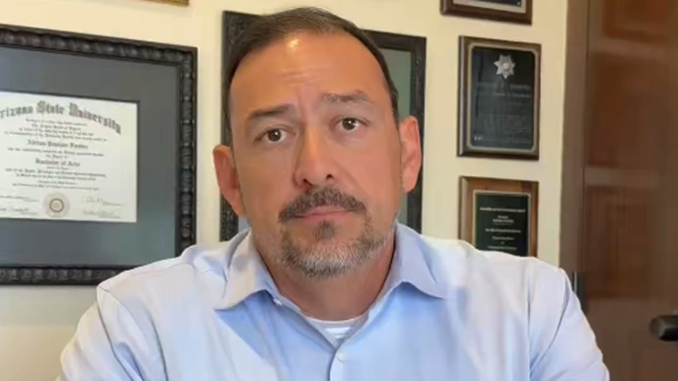
Fontes said a “typo” caused the outage, which he promised was “temporary” on Friday. However, he said his team wasn’t to blame. Fontes said he was dealing with insufficient staffing and outdated systems caused by the GOP-controlled legislature.
The secretary of state put a price on his problems: $17 million to overhaul the election and candidate-facing systems. A one-time funding boost that occurred in 2024 wasn’t enough, Fontes said.
In a premature announcement on Friday that would quickly be proven false, Fontes claimed the system was fixed. Fontes again stressed that the outages his team was experiencing were preventable — the fault that caused the outage had less to do with a “typo” but inadequate funding from the legislature.
“System interruptions are preventable and my office will continue requesting the necessary funding to mitigate issues in the future,” said Fontes.
In a longer video statement from the comfort of his Super Bowl setup on Sunday, Fontes said E-Qual was “fragile,” “old,” and “outdated” due to the legislature’s refusal to provide fiscal support for updates. Fontes further promised that important data relating to tabulation and voter information weren’t impacted.
“Some people wanted to politicize this,” said Fontes. “The failure is the legislature that has been exploiting this longtime issue that I’ve been trying to get fixed for years and they’re not funding it. It’s as if they broke it and they want to blame someone else for breaking it.”
Fontes later disclosed to reporters that one single person was in charge of maintaining the main election management systems for their office. Fontes said he pays a lot to keep that individual on staff as a contractor.
Republican lawmakers rejected Fontes’ attempt to push the blame onto them.
State Rep. Alexander Kolodin (R-LD3), who is campaigning to unseat Fontes this November, said more money couldn’t fix incompetence.
“Even with millions in additional funding, voters are still being disenfranchised by his incompetence,” said Kolodin. “Waste of money!”
In a similar vein, State Rep. David Livingston (R-LD28) questioned how Fontes’ office caused such a major outage over a typo — and how another tens of millions of dollars could have prevented such an error.
“I think the other information, changing July 21, should just be standard operating procedure, and they shouldn’t need any money to do that,” said Livingston. “And if they can’t handle doing that, they probably shouldn’t be running the secretary of state’s office at all.”
Livingston is vice chair of the Joint Legislative Budget Committee, which Fontes called out when identifying those who were to blame.
Some lawmakers had a little less to say on the subject.
The new chairman of the Arizona Republican Party, Sergio Arellano, said Fontes was again proving his inability to own his mistakes.
“Arizonans expect elections to be administered with competence and seriousness, and when preventable failures occur, they demand accountability — not silence, not excuses, and not business as usual,” said Arellano.
Last summer, Iranian hackers breached the E-Qual system under Fontes’ watch.
AZ Free News is your #1 source for Arizona news and politics. You can send us news tips using this link.
by Staff Reporter | Feb 10, 2026 | News
By Staff Reporter |
Another illegal alien who entered the country under President Joe Biden has taken lives.
30-year-old Bekzhan Beishekeev, a Kyrgyzstani national, killed four Amish men when he drove the wrong way into oncoming traffic in Indiana on Tuesday. The victims were identified as Henry Eicher, 50 and his sons Menno, 25, and Paul, 19; and Simon Girod, 23.
The driver of the struck vehicle, 55-year-old Donald Stipp, remains in the hospital. Stipp’s daughter-in-law launched a GoFundMe to cover Stipp’s medical expenses and recovery.
The Department of Homeland Security (DHS) confirmed reports that Beishekeev entered the U.S. illegally in December 2023 at the Nogales port of entry. Beishekeev used the CBP One app, which effectively allowed illegal aliens to enter the country and work for two years without vetting.
As with millions of others before him, the Biden administration exercised their “catch-and-release” policy on Beishekeev, freeing him on parole.
The White House issued a statement calling the deaths a “preventable tragedy” that illustrated the need to continue mass deportations and end sanctuary city policies.
The Trump administration revoked legal status for illegal aliens who relied on the CBP One app to delay their immigration proceedings. Over 900,000 illegal aliens entered the country using the app.
The state of Pennsylvania awarded Beishekeev a non-domiciled CDL last July, with an expiration date of June 2029. Beishekeev’s license reflected a home address in Philadelphia.
Pennsylvania Gov. Josh Shapiro declined to directly address the incident.
A spokesperson for Shapiro said that Beishekeev provided proof of identity and legal presence verified by the federal Systematic Alien Verification for Entitlements database, as per Pennsylvania law. Shapiro’s office said DHS Secretary Kristi Noem was to blame for not catching Beishekeev’s legal status upon assuming the agency.
“The individual in question had legal status in Kristi Noem’s database when the license was issued in July 2025 and still shows as eligible to receive a license as of today,” said Shapiro spokesman Alex Peterson. “Kristi Noem should focus on minding the shop in her own agency, as her incompetence and operational failures seem to be matching the scale of her moral failures as the Secretary of Homeland Security.”
DHS Assistant Secretary Tricia McLaughlin responded that Shapiro’s administration bore responsibility for granting CDLs to CBP One parolees.
“Not only was Bekzhan Beishekeev released into our country by the Biden administration using the CBP One app, but he was also given a commercial driver’s license by Governor Shapiro’s Pennsylvania,” said McLaughlin. “It is incredibly dangerous for illegal aliens, who often don’t know our traffic laws or even English, to be operating semi-trucks on America’s roads. These sanctuary governors must stop giving illegal aliens commercial driver’s licenses before another American gets killed.”
Indiana Gov. Mike Braun said the blame was with Democratic leaders rejecting immigration law.
“Hoosiers should be able to get to work in the morning without fear of needlessly losing their lives because of Democrats’ refusal to enforce the law,” said Braun. “With open and unchecked borders, millions of illegal immigrants flooded our communities, making every state a border state. Complicit democrats have put our safety at risk—and that has come at the price of innocent lives.”
Per reporting from Freight Waves, Beishekeev drove for a “chameleon carrier network” with officers bearing Kyrgyzstani names.
Chameleon carrier networks operate as separate-on-paper using different Department of Transportation (DOT) vehicle identification numbers, yet they rely on the same drivers, equipment, and management so as to continue operations when one or more within their network gets shut down.
AZ Free News is your #1 source for Arizona news and politics. You can send us news tips using this link.