by Staff Reporter | Jan 24, 2026 | Education, News
By Staff Reporter |
Republican state lawmakers want to improve accountability for school superintendents.
Several packages of bills released Thursday would reform superintendent contracts and duties, school board governments, and school district leasing and financial arrangements.
The bill package was a result of the Tolleson Union High School District (TUHSD) scandal that emerged last year. TUHSD entered a controversial $25 million leaseback agreement with a failing school district, which began without an appraisal and in which TUHSD Superintendent Jeremy Calles operated as a consultant for the deal.
The lawmaker behind the proposed reforms, State Representative Matt Gress, said in a press release that some districts have strayed from their intended purpose of educating students.
“Public schools exist to serve students, not administrators or board members who disregard their responsibilities,” said Gress. “This legislative package sets clear rules and ensures education dollars stay focused where they belong — on instruction and students.”
Gress also stated that the events at TUHSD made it clear that additional oversight was needed.
“When school leaders control large public budgets with little oversight, taxpayers and classrooms pay the price,” said Gress. “Arizona families deserve confidence that education dollars are managed responsibly and that those in authority are held to clear, enforceable standards.”
Arizona lawmakers unanimously approved an audit of the district.
TUHSD has delayed sending its financial transaction records despite repeated legislative requests. The district insisted the legislature pay over $26,000 for the records.
During a hearing by the Joint Legislative Audit Committee over the summer, TUHSD Superintendent Calles admitted to using his superintendent office to conduct the business of his private consulting firm. Several district staff or governing board members also work for Calles’ consulting business.
Calles is the highest-paid superintendent in the state.
This conflict between the district and legislature over the leaseback agreement and Calles’ conduct was a major influence on voters. They rejected two key funding measures proposed by TUHSD in this recent election.
The district faces a shortfall of $95 million at minimum, $200 million minimum more likely.
In 2024, TUHSD was busted for arranging “luxury vacations” for school board members and administrators.
The first bill package to reform superintendent contracts and duties contains House Bills 2387, 2386, 2381, 2382, 2377, and 2385. Reforms include limiting secondary employment for school district officials, raising standards for superintendents’ performance based-pay, limiting benefits and other perks given to superintendents like cell phone and vehicle allowances, and reducing the employment term for first-time superintendents to one year.
The second bill package to reform school governance contains House Bills 2318, 2380, and 2379. Reforms include establishing governing board member term limits, requiring convenient public venues for school board meetings, and requiring more training for school board members on governance, finances, policymaking, legal and ethical responsibilities, stakeholder and community engagement, and relevant professional development topics.
The third bill package to reform school district leasing and financial arrangements contains House Bills 2384, 2376, and 2383. Reforms include limiting allowed circumstances of leasing school property; excluding lease-purchase agreements for sites where charter or private schools operate; and limiting leases to 10 years without voter approval or 20 years with voter approval.
AZ Free News is your #1 source for Arizona news and politics. You can send us news tips using this link.
by Staff Reporter | Jan 23, 2026 | News
By Staff Reporter |
The man who set fire to a Tesla dealership last April received the minimum sentence possible.
Ian William Moses of Mesa, 35, received five years in prison and three years of supervised release in a sentence handed down last week.
Maricopa County Attorney Rachel Mitchell said the sentence conveyed nontolerance of political violence and intimidation.
“This sentence sends a clear message: violence and intimidation have no place in our community,” said Mitchell. “Setting fire to a business in retaliation for political or personal grievances is not protest — it is a crime. Our community deserves to feel safe, and this sentence underscores that Maricopa County will not tolerate political violence in any form.”
Similarly, U.S. Attorney Timothy Courchaine said the sentence was appropriate for Moses’ crimes.
“Arson can never be an acceptable part of American politics. Mr. Moses’ actions endangered the public and first responders and could have easily turned deadly,” said Courchaine. “This five-year sentence reflects the gravity of these crimes and makes clear that politically fueled attacks on Arizona’s communities and businesses will be met with full accountability.”
Early one morning last April, a disguised Moses biked to a Tesla dealership in Mesa. Moses used a gas can and fire starter logs to start the fires.
Moses caused one Cybertruck to explode in his attempt to burn down the dealership, and spray painted the word “thief” on a wall, misspelled as “THEIF.” All the while, surveillance cameras and cameras within the Tesla vehicles captured Moses carrying out his crime.
Mesa officers found Moses about an hour after he committed arson, around a quarter of a mile away from the dealership. Moses was wearing the same clothes and riding the same bike. Police found a hand-drawn map of his target, with a “T” to mark the location of the Tesla dealership.
The Department of Justice sought to prosecute Moses to “the fullest extent of the law” on domestic terrorism charges.
“If you engage in domestic terrorism, this Department of Justice will find you, follow the facts, and prosecute you to the fullest extent of the law,” said Attorney General Pamela Bondi. “No negotiating.”
Moses faced five counts of malicious damage to property or vehicle in interstate commerce by means of fire. Each count carried the possibility of five years minimum up to 20 years maximum in prison. He pleaded guilty to all five charges.
It appears the court was persuaded by Moses placing the blame on his recent autism diagnosis.
A defense sentencing memorandum filed earlier this month blamed Moses’ high-functioning autism for his decision to commit arson. The defense revealed he had recently received an autism diagnosis leading up to the crime and had been receiving therapy every other week.
The memorandum described Moses as a “kind, gentle, helpful, compassionate, and deeply caring person who would never deliberately hurt anyone.”
Three months before Moses committed his arson in January 2025, anti-Trump activists began targeting Tesla vehicles with arson, gunfire, and vandalism. The attacks were motivated by Tesla CEO Elon Musk’s senior advisership of President Donald Trump and his appointment to lead the Department of Government Efficiency (DOGE). Musk left DOGE in May.
In March, a month before Moses carried out his attack, the FBI issued a public service announcement advising of these politically motivated targeted attacks.
AZ Free News is your #1 source for Arizona news and politics. You can send us news tips using this link.
by Staff Reporter | Jan 22, 2026 | News
By Staff Reporter |
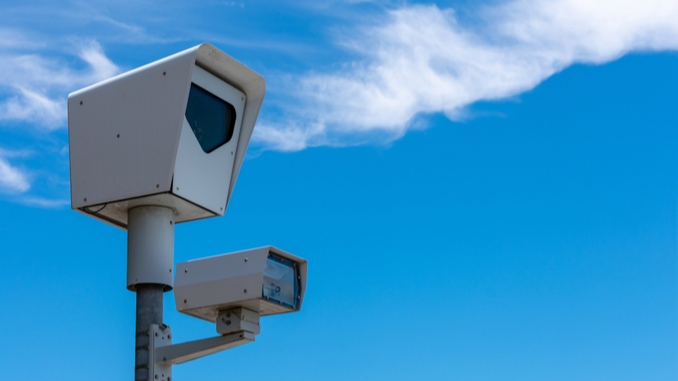
Voters may soon get to decide whether or not photo radar will continue to be used in the state.
A committee in the State Senate approved the bill on Tuesday.
SCR 1004 would ban photo enforcement systems used to identify violators of speed restrictions or traffic control devices from the entire state.
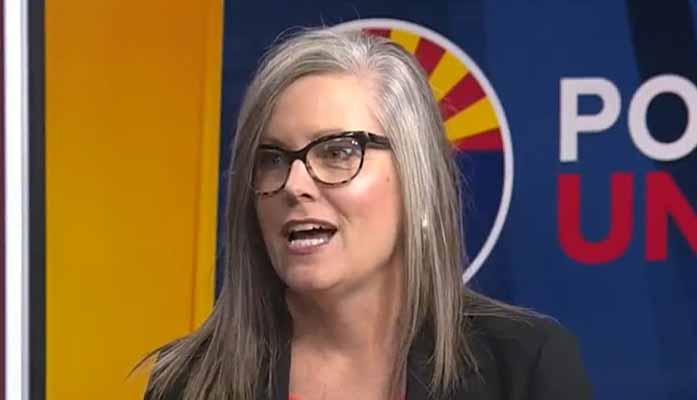
If approved by the state legislature, the measure could appear on the ballot as early as this November. Lawmakers opted for a resolution as a more viable pathway to bypass the requirement for Governor Katie Hobbs’ approval.
The governor didn’t support attempts to ban photo radar in the past.
Last year, the governor vetoed the same legislative language (outlined in a bill rather than a resolution) after its party-line approval in the legislature. No Democrats in either the House or Senate voted for the bill. Hobbs’ veto letter argued that the removal of photo radar would make the roads more dangerous, not safer.
“This bill attempts to remove the ability of local law enforcement to keep our streets safe by eliminating a tool used to enhance roadway safety,” stated Hobbs.
This sentiment was shared by Democratic lawmakers. State Sen. Lauren Kuby argued that certain studies supported the effectiveness of photo enforcement systems to reduce and deter traffic violations.
During voting on the bill last year, some Republicans — Reps. Teresa Martinez, Justin Wilmeth, Alexander Kolodin — did express doubts about the strategy of advancing a bill with SB 1019 rather than a resolution. An identical measure existed in SCR 1002.
Wilmeth said they were “wasting” their time by voting on the bill version of the legislation rather than the resolution.
“I want my Republican caucus members to understand: this bill will pass, and it will get vetoed,” said Wilmeth. “This is what majorities are about, and in this issue we are wasting our opportunity.”
Kolodin said Democrats were defending photo radar under false pretenses of public safety concerns, and that their true intentions had to do with ticket revenues’ ties to clean election campaign funds.
“The photo radar scam is the way that our friends across the aisle fund their war machine. They run candidates in noncompetitive districts and funnel taxpayer money over to competitive districts, all on the backs of hardworking Arizona drivers who are denied due process when they receive their traffic tickets,” said Kolodin. “It’s almost as if we’re more interested in making a show of solving the problem than actually solving the problem.”
State Sen. Wendy Rogers authored both pieces of legislation last year and was the lawmaker to reintroduce it again this year.
Rogers disputed Hobbs’ veto claim in a press release published on Tuesday. The state senator stressed the unreliability of automated enforcement, which is what photo radars operate under. Rogers said it should be law enforcement, not technology, to make the judgment call on violations of traffic law.
“Automated enforcement removes discretion, undermines due process, and turns routine driving into a revenue stream,” said Senator Rogers. “That’s not how law enforcement should work in Arizona. The resolution does not excuse dangerous driving or eliminate traffic enforcement. It ensures that enforcement decisions are made by trained law enforcement officers, not algorithms and contractors.”
AZ Free News is your #1 source for Arizona news and politics. You can send us news tips using this link.
by Staff Reporter | Jan 21, 2026 | Education, News
By Staff Reporter |
Governor Katie Hobbs claimed the state’s school choice program lacks oversight.
The Arizona Department of Education (ADE) and experts dispute Hobbs’ claim.
The governor targeted the Empowerment Scholarship Account (ESA) Program during her state of the state speech last week. Hobbs advocated for the school choice program to be rolled back from universalization to its previous form that only accepted certain families with disability or military backgrounds.
“While other government entitlements have strict requirements and oversight, the ESA program continues to operate unchecked, squandering taxpayer dollars with no accountability,” said Hobbs. “It seems like every day, we learn about new shopping sprees happening at the expense of taxpayers…diamond jewelry, high-end clothing and furniture…who knows what taxpayers will be footing the bill for tomorrow?”
ADE publishes notice of its internal audits and has attempted to refer cases over to the attorney general’s office for prosecution — though Attorney General Kris Mayes has reportedly been unwilling to pursue prosecution of alleged fraud or abuse.
ADE bases its claims on existing requirements within the ESA Program: documenting all purchases made, and freezing accounts that make unauthorized expenditures. Parents must repay the program for unauthorized purchases.
In August, ADE reported it marked over $600,000 for collections “due to possible fraud or misuse.”
That’s less than one-tenth of one percent of total ESA spending, as noted by the Heritage Foundation in a report last August.
Comparatively, the estimated total fraud within average federal government obligations ranges from three to seven percent, according to a 2024 report by the Government Accountability Office.
Other examples of improper payment rates within government programs in Arizona have been issued recently. (The latest data aligns with the 2024 fiscal year in most cases).
The Department of Labor announced an estimated seven percent improper payment rate from July 2021 to July 2024.
For the 2024 fiscal year, the USDA reported that Arizona had a payment error rate of nearly nine percent.
The federal government even factors in improper payment rates to mitigate losses.
The Center for Medicaid projected an improper payment rate of over six percent for Arizona in 2024.
This indicates that fraud is an inevitable occurrence within any government program.
Unlike the reporting efforts of ADE regarding the ESA Program, the Arizona Auditor General presently finds that nearly 30 school districts are noncompliant based on financially related internal control deficiencies.
This slate of presently noncompliant districts represents over $1 billion in state spending. The entire ESA program spent under $900 million in the 2025 fiscal year and costs about $1 billion for the 2026 fiscal year.
Arizona school districts have accumulated nearly $8 billion in cash reserves, per the Heritage Foundation’s assessment of Arizona Superintendent Tom Horne’s annual report covering the 2023-2024 fiscal year.
Horne responded to Hobbs’ state of the state address with criticism over the governor’s open opposition to a program supported by a majority of voters. Arizona voters approved universalization of school choice back in 2022.
“Arizona parents have made it clear they believe in being able to choose the best education for their children, whether districts, charters or Empowerment Scholarship Accounts,” said Horne. “By their loud display today, Democrats proved they want to take that power away from mothers and fathers who know their children’s needs best and return education to a government monopoly that parents do not want.”
AZ Free News is your #1 source for Arizona news and politics. You can send us news tips using this link.
by Staff Reporter | Jan 20, 2026 | News
By Staff Reporter |
Arizona cities reported increased murder rates that outpaced declines, per preliminary crime statistics.
The following cities reported murder rate increases per the Real-Time Crime Index, whose data goes through October: Gilbert (600 percent), Scottsdale (400 percent), Yuma (300 percent), Peoria (300 percent), Chandler (100 percent), Mesa (33 percent), and Tempe (25 percent).
The Real-Time Crime Index, which collects crime data from over 500 law enforcement agencies across the nation, comes from AH Datalytics.
Other cities reported decreases in murders: Buckeye (100 percent), Casa Grande (100 percent), Flagstaff (100 percent), Marana (100 percent), Prescott Valley (100 percent), Avondale (66 percent), Peoria (55 percent), Glendale (43 percent), Phoenix (24 percent), and Tucson (22 percent).
Pima, Pinal, and Yavapai Counties all reported decreases in crime (55, 100, and 100 percent, respectively).
This occurred despite the predictions of 2025 crime to have dropped to the lowest levels since 1960. The cause behind the disparity remains unknown. One theory speculates underreporting by major cities; another speculates actions by the current administration to address rising crime.
AH Datalytics’ cofounder, Jeff Asher, said in an interview with ABC News that even conservative estimates of the preliminary data reflect the largest one-year drop in crime statistic recordkeeping dating back to 1960. Prior to cofounding the company, Asher was a crime analyst for the CIA.
Asher clarified that a major influence on the significant crime drop manifested in major cities notorious for their high levels of violent crime. Some of these cities are anticipated to have crime rates better than those seen over 60 years ago — some by over 80 years, said Asher.
“You’ve got places like Detroit, Philadelphia and Baltimore that are on track to have the fewest murders since the 1960s. New Orleans, in spite of the terrorist attack on January 1, is on pace to have the fewest murders since 1970,” said Asher. “San Francisco is on track to see the fewest number of murders since 1940.”
The preliminary review across the nation reflected a 20 percent decrease in murders, eight percent decrease in aggravated assault, and over 20 percent decrease in car theft.
The findings confirm early analysis published in July by the Council on Criminal Justice. These analyses are only preliminary estimates — the FBI hasn’t yet released its official annual crime report.
Some have attributed the decline to actions taken by President Donald Trump, but crime rates have been dropping since 2022.
2024 reflected a 15 percent decline in murders; 2023 reflected a 13 percent decrease; and 2022 reflected a six percent decrease.
It wasn’t until this past June that Trump began deploying National Guard troops and other federal forces into major cities. Trump first directed troops to Los Angeles, California, followed by Washington, D.C. in August, then Memphis, Tennessee in October.
Those sorts of actions have come to an end, for now. Trump responded this week to a Supreme Court ruling from last week with an announcement that he would no longer deploy the National Guard to major cities. Specifically, he ordered troops pulled back from Chicago, Illinois; Los Angeles, California; and Portland, Oregon.
The president also had his eye on New York, San Francisco and Oakland in California, and Baltimore, Maryland.
AZ Free News is your #1 source for Arizona news and politics. You can send us news tips using this link.