by Matthew Holloway | Feb 18, 2026 | News
By Matthew Holloway |
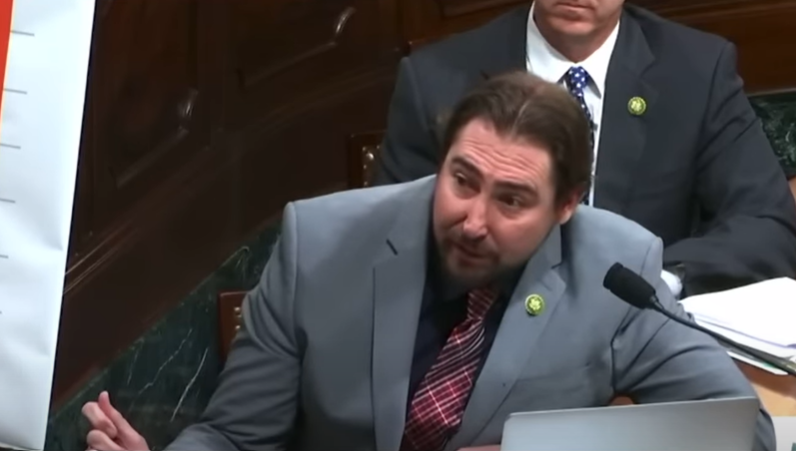
The House Committee on Small Business unanimously advanced a bill on Tuesday to expand federal support for tribal entrepreneurs by codifying the Office of Native American Affairs (ONAA) within the U.S. Small Business Administration (SBA). The move comes as part of a bipartisan effort led in part by Congressman Eli Crane (R-AZ02).
The legislation, titled the Native American Entrepreneurial Opportunity Act (H.R. 7396), was advanced by the committee on February 11.
Rep. Crane is part of a coalition of lawmakers reintroducing the bill in the 119th Congress after its initial passage in the U.S. House during the previous session. Although the earlier version of the bill passed the House with broad bipartisan support, it stalled in the U.S. Senate.
If enacted, the measure would formally codify the Office of Native American Affairs (ONAA) into the Small Business Act, giving the office a permanent statutory role within the SBA. Supporters of the bill say this codification would enhance congressional oversight of the office’s activities and effectiveness going forward.
Under the bill’s provisions, the ONAA would be directed to establish a working relationship with tribal communities and organizations and target SBA programs toward entrepreneurial development, contracting opportunities, and improved access to capital for small business owners on reservations and in tribal nations.
According to Crane’s press release, tribal entrepreneurs face ongoing challenges related to federal tax treatment, property rights, regulatory burdens, and access to lending. The bill’s sponsors say those factors create bureaucratic hurdles unique to businesses operating on reservation lands.
In discussing the bill, Crane encouraged representatives from the Office of Native American Affairs to visit Arizona’s 2nd Congressional District, which includes a significant portion of tribal lands, to engage with small business owners who may be unaware of existing SBA resources and programs.
“While tribal entrepreneurs should have the ability to access SBA’s programs just like anyone else, these communities don’t currently experience adequate outreach,” Crane said in a statement.
“It’s essential that they receive specialized expertise to assist them in navigating the unique complexities of running a business on a reservation. As the representative for more than half of Arizona’s Tribes, I’m honored to co-lead this vital bill, which would serve Tribal citizens of AZ-02 well.”
Crane also acknowledged his co-sponsors on the legislation: Rep. Sharice Davids (D-KS), Rep. Jake Ellzey (R-TX), and Rep. Kelly Morrison (D-MN). The bipartisan group’s involvement reflects support from both parties for expanding federal engagement with tribal entrepreneurship.
The Native American Entrepreneurial Opportunity Act will now move to the House floor for consideration as it continues through the legislative process.
Matthew Holloway is a senior reporter for AZ Free News. Follow him on X for his latest stories, or email tips to Matthew@azfreenews.com.
by Matthew Holloway | Feb 17, 2026 | News
By Matthew Holloway |
Arizona Senate Majority Whip Sen. Frank Carroll (R-LD28) is advancing legislation to restrict unauthorized individuals from operating commercial vehicles in the state, giving law enforcement officials the authority to demand proof of lawful presence and to impound trucks when drivers cannot demonstrate legal status. The move responds to high-profile, deadly crashes involving commercial drivers who were illegally in the U.S.
The bill received a “Do Pass” recommendation from the Military Affairs & Border Security (MABS) Committee on February 9 by a 4–3 vote, with only Republican support, moving the proposal forward in the legislative process.
Senate Bill 1511, sponsored by Carroll, would require anyone operating a commercial vehicle in Arizona to provide evidence of lawful presence in the United States. Under the proposal, licenses issued by other states or foreign countries would not qualify as proof of lawful presence for commercial operation in Arizona.
SB 1511 would empower law enforcement officers to impound commercial vehicles when a driver cannot provide the required proof of authorization to be in the country. Vehicle owners, not the state, would be responsible for all costs associated with impoundment under the bill’s provisions.
According to Carroll, the legislation is intended to mitigate the risk of deadly crashes involving drivers who are not legally present in the U.S. The Senate press release cited recent incidents, including a February crash in Indiana involving a driver who was an unauthorized immigrant and holder of a commercial driver’s license issued in Pennsylvania that resulted in the deaths of four people, as well as a case involving Rajinder Kumar, who was issued a CDL in California and later killed two newlyweds returning from their honeymoon.
In a statement issued last week, Carroll said: “Arizona cannot afford to wait for another preventable tragedy. This bill is about saving lives and holding everyone on our roads accountable. Americans are dying because illegal drivers are being licensed to operate massive commercial trucks. Rajinder Kumar, an Indian national who illegally entered the US from Mexico, was issued a CDL license in California and later killed two newlyweds returning from their honeymoon. This could happen here if we don’t act. With this bill, Arizona will not allow unqualified or illegal drivers on the road. Law enforcement will have the tools to act immediately, families will be safer, and our roads will be protected. This legislation turns tragedy into action. Arizona is drawing a line: the safety of our citizens comes first, and we will not wait for another senseless death to take action.”
Carroll’s press release stated the goal is to “prevent tragedies before they happen and to protect Arizonans on our roads.”
Matthew Holloway is a senior reporter for AZ Free News. Follow him on X for his latest stories, or email tips to Matthew@azfreenews.com.
by Matthew Holloway | Feb 16, 2026 | News
By Matthew Holloway |
The Arizona Senate is advancing two measures to strengthen protections for property owners and close gaps in the state’s deed recording process. Senate Bill 1479 advanced through the Senate Regulatory Affairs and Government Efficiency Committee with a 5-2 “Do Pass” recommendation on Wednesday. Senate Bill 1254 advanced from the Senate Finance Committee in late January.
Senate Bill 1479, sponsored by Senate Majority Whip Sen. Frank Carroll (R-LD28), would establish new identification and documentation requirements intended to deter fraudulent property transfers. According to the official bill text, the legislation would require individuals who submit deeds in person to present valid government-issued photo identification to the county recorder, though the recorder would be prohibited from retaining or copying that identification.
The bill would also require county assessors to establish a voluntary notification system alerting property owners to changes in ownership or mailing address associated with their parcel. Additional provisions strengthen affidavit requirements for certain real estate filings and mandate that notaries obtain thumbprints in their journals for specified real property documents.
“Property ownership is the cornerstone of financial security for families, seniors, and small businesses in Arizona,” Sen. Carroll said in a statement. “When criminals are able to forge documents, record false claims, or quietly transfer property without the rightful owner’s knowledge, it erodes trust in our entire system. These bills deliver a strong message: Arizona will not tolerate deed fraud. We are enhancing identity verification, increasing penalties for offenders, improving notification systems, and ensuring that no property changes hands without proper approval. This initiative aims to protect homeowners, restore confidence in our public records, and ensure that the law firmly supports legitimate property owners.”
SB 1479 would increase the criminal penalty for knowingly recording a forged instrument affecting real property, reclassifying the offense as a Class 4 felony.
A separate measure, SB 1254, sponsored by Sen. J.D. Mesnard (R-LD13), addresses deed acceptance requirements. Under current Arizona law, a deed must be signed by the grantor, acknowledged before a notary, and recorded to transfer real property. The bill would amend A.R.S. § 33-401 to require documented acceptance by the grantee before a deed may be recorded.
SB 1254 would allow acceptance to be demonstrated either through the grantee’s signature on the deed or by attaching a certificate or resolution of acceptance. The measure advanced from the Senate Finance Committee with bipartisan support.
The legislation comes amid ongoing concerns about deed and title fraud in Arizona. In 2022, then-Arizona Attorney General Mark Brnovich warned Arizonans of an increase in deed fraud reports, noting that his office had received 65 homeowner complaints from Jan. 2021 to August 2022. In December 2025, the Phoenix Business Journal reported that vacant land parcels were the primary targets in 2024 real estate fraud schemes that cost Arizonans nearly $50 million.
Sindy Ready of the Arizona Realtor Association told AZ Family in December, “In Arizona, many times. it’s out-of-state owners that have these properties that think it’s down the road they’re going to build a second home on the property.” Speaking to the outlet, Jeff Cayton, a Valley realtor with a decade in Arizona property sales, said, “The fraud is running rampant right now. The land fraud is very big, and I’ve experienced this multiple times, as well as my team members and people in my company.”
Matthew Holloway is a senior reporter for AZ Free News. Follow him on X for his latest stories, or email tips to Matthew@azfreenews.com.
by Matthew Holloway | Feb 16, 2026 | News
By Matthew Holloway |
Arizona lawmakers approved a Republican-sponsored bill granting full property tax exemptions to veterans with a 100% service-connected disability, advancing the measure with bipartisan support before it was signed into law last week.
The bill, HB 2792, was approved unanimously by the Arizona House and moved through the Senate as SB 1268 with near-unanimous support before reaching the governor’s desk. The House measure was sponsored by Majority Leader Carbone (R-LD25). Senator David Gowan (R-LD19) sponsored the corresponding legislation in the Senate.
According to Senate records, the sole dissenting vote was cast by Democratic Senator Sally Ann Gonzales, who represents Legislative District 20.
Under the legislation, a veteran determined by the U.S. Department of Veterans Affairs to have a 100% service-connected disability will qualify for a full property tax exemption on their primary home. The exemption also extends to surviving spouses, provided they remain in the residence and do not remarry.
“This bill keeps a simple promise,” Carbone said in a statement. “If a veteran sacrifices their health in service to America, the government should not tax them out of their home. We worked directly with county assessors to ensure the law is clear and properly implemented. Preserving homeownership for those who earned it is central to the House Republican Majority Plan and to preserving the American Dream. This law delivers direct relief, limits government reach, and stands up for veterans and their families.”
The change codifies and expands existing law that previously provided partial exemptions based on disability percentage and income limits. State personal exemption programs already allow a reduction in assessed value for certain disabled veterans, widows, and widowers, and can result in full relief in some cases.
In a post to X, Senate GOP leaders wrote, “Arizona Republicans are fighting to eliminate property taxes for veterans with 100% service-connected disabilities. SB 1268 and HB 2792 deliver full property tax relief on their primary residence. These men and women gave everything for our country. The least we can do is make sure they can stay in their homes.”
County assessors across the state have begun notifying eligible residents of the change and encouraging veterans and surviving spouses to file applications for the exemption through their local assessor’s offices. For example, the Santa Cruz County Assessor’s Office states that the new law is effective for the 2026 tax year and details documentation requirements, including VA disability certification and proof of property ownership.
Applications for individual exemption programs generally must be filed with county assessor offices by the February 28 deadline, according to the Maricopa County Assessor’s Office. This deadline may be extended to September 1 with an approved Exemption Deadline Waiver.
Speaking to reporters on Thursday, Carbone said, “This is about fairness. It’s about honoring service, and it’s about ensuring the most vulnerable among us can remain in their homes with dignity and integrity.”
The legislation brings Arizona in line with property tax relief policies in several other states that offer full or partial exemptions for disabled veterans on their primary residences.
Matthew Holloway is a senior reporter for AZ Free News. Follow him on X for his latest stories, or email tips to Matthew@azfreenews.com.
by Matthew Holloway | Feb 15, 2026 | News
By Matthew Holloway |
Arizona State Representative Nick Kupper (R-LD25) has introduced a constitutional measure that would ask Arizona voters to decide whether the right to refuse medical mandates should be enshrined in the state Constitution.
Last week, Kupper filed House Concurrent Resolution 2056 (HCR 2056), which, if approved by the Legislature and later by voters, would place a proposed constitutional amendment on the ballot for the next general election.
The resolution would prohibit government entities from “mandating, requiring, coercing, or compelling an individual to accept or receive a medical product or treatment” as a condition of employment, education, access to public facilities, participation in services, or the exercise of any right or benefit.
The proposal defines coercion or compulsion to include penalties, denial of benefits, or other adverse consequences tied to refusing a medical mandate. It also includes exceptions preserving existing authorities, such as court-ordered treatment when a person poses a danger to themselves or others; parental rights in making medical decisions for minors; emergency medical care when consent cannot be obtained; lawful criminal investigations; compliance with federal law; and existing state requirements for diagnostic tests and procedures.
The text of the resolution states directly: “The right to refuse medical mandates is hereby recognized and protected as a fundamental and inherent right of every individual.”
In a statement included with the release, Kupper said the resolution is intended to give voters the opportunity to decide whether medical mandates should remain within the government’s authority. He also stated that the resolution would not prevent the state from “promoting vaccines, offering treatment, responding to emergencies, or providing care,” but said it would “draw a firm line against force and punishment.”
“Across multiple administrations and on both sides of the political divide, we have seen government officials assert sweeping authority over individual medical choices through threats to livelihoods, careers, and basic freedoms,” Kupper explained. “I nearly lost my career and Air Force retirement for refusing an unapproved medical mandate. No elected official or bureaucrat should ever have the authority to force a medical procedure on a free citizen. This resolution gives the people of Arizona the opportunity to decide for themselves whether that power should exist.”
He added, “This is about freedom and informed consent. Adults should be able to make decisions about their own bodies, and parents should have the final say for their children. That principle should not change based on who is in power or what crisis is being used to justify control.”
In a post to X, Kupper wrote, “Arizonans deserve the opportunity to decide for themselves if they want the government to continue controlling their medical decisions or if they want to reclaim their bodily autonomy.”
If HCR 2056 is approved by the Arizona Legislature, the measure would be placed on the ballot for a statewide vote at the next general election.
Matthew Holloway is a senior reporter for AZ Free News. Follow him on X for his latest stories, or email tips to Matthew@azfreenews.com.