by Ethan Faverino | May 24, 2026 | News
By Ethan Faverino |
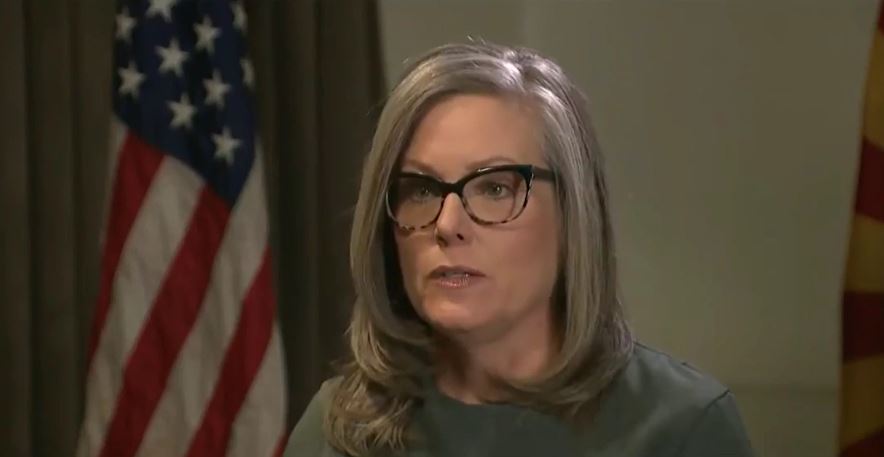
As Arizona Governor Katie Hobbs adopts a firmer rhetorical stance toward the People’s Republic of China, The Center Square states national security experts are closely monitoring whether she will sign a package of bipartisan bills designed to protect the state’s critical infrastructure, land, universities, procurement processes, and consumers from foreign adversary influence.
In previous years, Governor Hobbs vetoed several China-related measures, citing concerns over economic growth, investment portfolios, and impacts on the healthcare system. However, she now has the opportunity to act on up to seven new bills addressing these national security priorities.
In the past three years (2024-2026), Hobbs vetoed measures including:
- HB 2504 and HB 2584: Genetic sequencing restrictions involving foreign adversary technology
- SB 1340: Prohibiting state investments in foreign adversaries
- HB 2542: Banning state contracts with companies domiciled in China for goods or services
- SB 1109: Restrictions on foreign adversary land purchases near military bases and critical infrastructure
Her veto messages previously emphasized potential economic harm and described one bill as “weak and spineless.” This year, despite vetoing another genetic sequencing bill over healthcare system concerns, her office has signaled a tougher approach toward China.
The current package includes targeted protections:
- Arizona Critical Infrastructure Protection Act (HB 2134): Prohibits Chinese companies from providing software for critical infrastructure and bars contracts granting them access. It requires annual certifications, establishes a prohibited equipment list (including Wi-Fi routers, modems, school bus cameras, smart meters, solar inverters, and IoT modules), and creates a score communications channel for emergencies. Exceptions exist for cases with no reasonable alternatives and pre-approval.
- Land Protection Bill (SB 1683): Bars foreign adversary nations and agents from purchasing, leasing, or acquiring substantial interests (+15%) in Arizona real property. It prohibits installing surveillance or communications equipment and includes strong enforcement mechanisms, including divestiture, forfeiture, and reporting to federal authorities. Limited exceptions apply for inheritance or debt collection with prompt divestiture.
- Higher Education Protections (SB 1327): Requires the Arizona Board of Regents to review and approve gifts, contracts, or partnerships with foreign adversary nations. Universities must adopt comprehensive research security policies and annually report significant foreign funding.
- Procurement Safeguards (SB 2170): Prevents companies domiciled in and controlled by the Chinese government, military, or ruling party from bidding on state electronic and information technology contracts. Requires certification letters, with severe penalties for false statements.
- Lobbyist Registration (SB 1100): Mandates foreign adversary principals to register lobbyists, disclose activities, and pay fees. Creates a public database and penalties for nondisclosures.
- Consumer Fraud Enforcement (SB 1308): Establishes a Foreign Adversary Fraud Office in the Attorney General’s office to pursue violations involving foreign adversary technology. Creates dedicated funds for enforcement and technology replacement in critical infrastructure.
Josh Hodges, former senior director at the National Security Council under President Trump, current member of the U.S.-China Economic and Security Review Commission, and national security advisor to House Speaker Mike Johnson, described these bills as “massively impactful.”
Hodges told The Center Square, “It is important these bills are passed collectively to ‘really address the full scope’ of the Chinese threat.” He noted that Hobbs has vetoed almost every piece of legislation related to China for “specious reason” often based on claims that bills were too vague or broad, despite federal agencies identifying ongoing subnational Chinese Communist Party efforts to embed operations in key U.S. assets.
He expressed hope that Hobbs’ recent shift in rhetoric will translate into action: “Arizonans will find out quickly whether their interests are being chosen over politics.” According to Hodges, vetoing these measures without strong justification could indicate undue influence or undisclosed lobbying.
These bills represent a significant opportunity for Arizona to align with growing nationwide efforts to protect critical assets from foreign adversary risks while maintaining necessary flexibility for public safety and economic needs.
Ethan Faverino is a reporter for AZ Free News. You can send him news tips using this link.
by AZ Free Enterprise Club | May 22, 2026 | Opinion
By the Arizona Free Enterprise Club |
A recent op-ed in the Arizona Republic by the Arizona Center for Economic Progress argued that the legislature’s budget “doesn’t add up” and that Arizona needs a “reality check.” We agree a reality check is in order, but definitely not the kind being offered.
The argument, which has become the standard refrain from the Left on tax policy, is that Arizonans have enjoyed too many tax cuts over the years (the fault of Republican lawmakers), and that this has left the state anemic in revenues and starved of the ability to provide essential government services.
But the average middle-class, tax-paying resident would probably scratch their head at this. They still have roads to drive on. The police still come when they call (except maybe if they live in Tucson). There are still bureaucrats employed to receive their tax filings and permit fees.
No matter how much the Left likes the story that government is running on fumes, people don’t believe it – and their intuition is right, because none of the actual data supports it. The reality is the very opposite. Arizona’s state budget has been ballooning for years. Our welfare programs have never been more riddled with fraud. And governments of every size in the state just keep sizing up. But most concerning about the myth that state government is poor and taxpayers are too rich is that it belies a philosophy that every Arizonan should find alarming…
>>> CONTINUE READING >>>
by Ethan Faverino | May 18, 2026 | News
By Ethan Faverino |
Budget negotiations between Arizona Senate Republicans and Governor Katie Hobbs’ administration are continuing at the Capitol after the Governor vetoed the Senate Republican budget proposal on May 5th.
The Republican plan included one of the largest tax cuts in Arizona history while fully funding education and public safety priorities.
Hobbs described the budget as “unbalanced and reckless.”
In her veto letter she stated, “This budget is unbalanced and reckless. With it, Arizona would default on our debt obligations, endanger vulnerable children, slash critical public safety funding, and pay for tax breaks to billionaires, data centers and special interests by kicking Arizonans off their healthcare and taking food off their tables. Arizonans cannot afford chaotic and dysfunctional Washington-style budgeting in our state government. I have made it clear that I will engage in good-faith negotiation. But I will not sign a budget that brings Washington-style chaos and dysfunction to Arizona’s budget. Let’s get back to the negotiating table and get serious about delivering for Arizonans. I am ready when you are.”
Despite the Governor’s public criticism, her team returned to negotiations almost immediately. On Thursday, May 14th, Governor Hobbs lifted the month-long bill signing moratorium she had imposed on April 13th.
The moratorium had been conditioned on Republicans publicly releasing a budget proposal and engaging in what she described as “good-faith” negotiations. It has severely limited the Senate’s ability to conduct normal floor business for weeks, stalling progress on unrelated legislation and disrupting the regular legislative process.
Senate Republicans noted that work never stopped despite the moratorium and recent media reports. Members have continued meeting with stakeholders, addressing constituent issues, reviewing legislation, and participating in budget discussions nearly every day.
This last week, the Senate Committee on Director Nominations convened to consider Governor Hobbs’ nominee, Brig. Gen. John Conley, to lead the Department of Emergency and Military Affairs.
The Republican budget proposal, unveiled on April 27, fully conformed Arizona’s tax code with federal changes made through President Trump’s “One Big Beautiful Bill.” It funded the tax relief through targeted fund sweeps and reductions to most state agencies outside of core priorities.
Senate Republicans remain focused on completing a responsible budget that controls spending, protects core priorities such as education and public safety, and delivers historic tax relief for Arizona families facing affordability challenges.
The Senate returned last week for additional floor work, committee activity, and ongoing budget negotiations. With the moratorium now lifted, Senate leaders expressed optimism that both the budget process and the broader work of the Legislature can move forward without further delays.
Ethan Faverino is a reporter for AZ Free News. You can send him news tips using this link.
by Ethan Faverino | May 15, 2026 | News
By Ethan Faverino |
On behalf of the Pima County Republican Party and Chairwoman Kathleen Winn, the Oversight Project, filed suit over the 2025 Arizona Elections Procedures Manual (EPM) that grants election officials broad, vague authority to remove voters and involve law enforcement.
Arizona Secretary of State Adrian Fontes, with the approval of Attorney General Kris Mayes and Governor Katie Hobbs, issued the 2025 EPM through 2027. The document carries the force of law, with violations punishable by up to four months in prison.
The challenged provisions allow election officials to remove voters or summon law enforcement for actions such as wearing clothing, uniforms or official-looking apparel “intended to deter, intimidate, or harass voters”; “aggressive behavior”; “raising repeated frivolous voter challenges”; and electioneering that is “audible” inside a voting location.
Critics argue these standards lack clarity and invite arbitrary or discriminatory enforcement under the pretext of preserving order at polling places.
“The Arizona EPM encourages arbitrary enforcement that results in politically motivated disenfranchisement, stated Oversight Project Director of State Litigation Neal Cornett. “The Oversight Project is always ready to help conservative leaders like Chairwoman Winn challenge government weaponization, especially when it involves such fundamental rights as freedom of speech and voting. The Secretary of State and Attorney General should disavow the challenged provisions and work with Arizona leaders to draft a fair manual that follows Arizona law.”
This is not the first time Arizona officials have faced legal pushback. The Secretary of State and Attorney General were previously enjoined from enforcing similar provisions in the 2023 Manual.
Pima County Republican Party Chairwoman Kathleen Winn emphasized the importance of clear rules for all voters: “Every Arizona voter deserves clear, consistent rules at the polling place that protect their right to vote free from arbitrary enforcement. Vague standards invite abuse, and when election workers are given unchecked discretion to remove voters or call law enforcement based on unclear or unspecified conduct, no voter or vote is truly safe. This lawsuit is about ensuring that the rules governing our elections are written plainly, applied fairly, and consistent with Arizona law, regardless of party.”
The lawsuit contends that the EPM’s vague language unconstitutionally threatens voting rights and free speech by empowering subjective decision-making that could disenfranchise eligible voters.
Ethan Faverino is a reporter for AZ Free News. You can send him news tips using this link.
by Matthew Holloway | May 9, 2026 | News
By Matthew Holloway |
Arizona State Senator David Farnsworth (R-LD10) is pushing back against Democratic criticism of the Republican-backed state budget vetoed this week by Gov. Katie Hobbs. Farnsworth argues that the plan maintains core government services while reducing spending and providing tax relief.
In a statement released Wednesday, Farnsworth said claims that the Republican proposal would harm public safety, wildfire suppression, child welfare, and water protection efforts were “completely false.”
The Republican budget proposal would spend approximately $800 million less than Hobbs’ proposed budget while maintaining funding for K-12 education and public safety. Senate Republicans also said the proposal includes approximately $1.45 billion in tax relief over four years without raising taxes or defaulting on state financial obligations.
Arizona Senate Republicans said the proposal preserves funding for wildfire mitigation efforts and Colorado River protection programs, exempts the Department of Child Safety from a proposed 5% operating reduction, and supports law enforcement while focusing on reducing unnecessary spending and prioritizing relief for working families, seniors, and small businesses.
“The Republican budget proposal, which Hobbs vetoed on Tuesday, reflects a balanced approach,” Farnsworth said. “It protects essential services, supports public safety, and shows respect for taxpayers by focusing on responsible spending.”
The statement follows Hobbs’ veto of the Republican-backed budget proposal. Hobbs criticized the proposal as “unbalanced and reckless,” arguing it would jeopardize healthcare access, public safety funding, and services for vulnerable residents while prioritizing tax cuts.
Republican lawmakers have defended the proposal as a fiscally conservative alternative to the governor’s spending plan. Legislative leaders previously said the budget would reduce overall spending compared to Hobbs’ January proposal while implementing tax conformity measures tied to recent federal tax changes.
Farnsworth also said he had invited lawmakers from both parties and both legislative chambers to participate in budget discussions throughout the session and said that invitation remains open.
“While there may be disagreements about priorities, it is crucial that our discussions are based on facts rather than fear,” Farnsworth said. “Although the governor walked away from budget discussions, we look forward to renewing good-faith negotiations to ensure that Arizona families, communities, and critical services are supported both now and in the future with a responsible state budget.”
Budget negotiations between the Republican-controlled Legislature and the governor’s office remain ongoing as lawmakers work toward passage of a final spending plan before the end of the legislative session.
Matthew Holloway is a senior reporter for AZ Free News. Follow him on X for his latest stories, or email tips to Matthew@azfreenews.com.