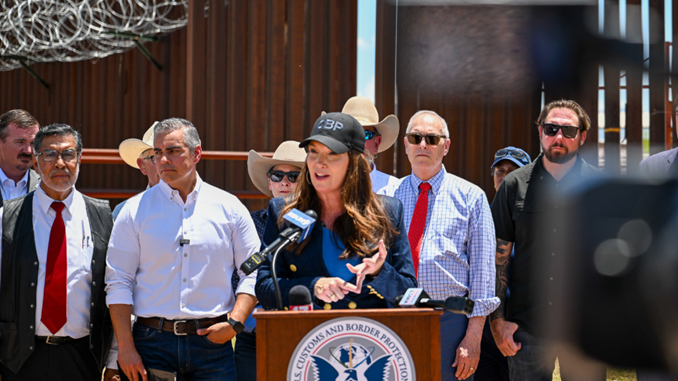
The National Border Patrol Council (NBPC) has officially endorsed Republican Congressman Juan Ciscomani for re-election in Arizona’s Sixth Congressional District. The organization cited Ciscomani’s continued support for Border Patrol agents, commitment to border security, and record for delivering resources and legislative action to strengthen enforcement efforts.
The endorsement highlights Ciscomani’s work advocating for border security and comes as Arizona’s Sixth Congressional District remains one of the nation’s most closely watched House races, with immigration and border security continuing to be major issues for voters across Southern Arizona.
“We’ve had the pleasure of working with Congressman Ciscomani for years, dating back to his work with Governor Doug Ducey on southern Arizona border operations, long before he ever ran for Congress,” stated President of the National Border Patrol Council, Hector Andujo. “Over the years, Juan has proven that he’ll show up, listen, and deliver results.”
“During the government shutdown, he even withheld his own pay to stand with Border Patrol agents who weren’t getting paid through no fault of their own,” added Andujo. “That’s why we know we can count on Juan to stand with us when it matters most. We’re proud to endorse him for re-election to a third term.”
Honored to once again earn the endorsement of the National Border Patrol Council @BPUnion.
Today's event felt more like being surrounded by longtime friends than a campaign event. I've had the privilege of working with many of these agents for years, long before I came to… pic.twitter.com/qZJJyOxjbQ
Ciscomani, who immigrated to Tucson from Mexico at the age of five and later became the first naturalized U.S. citizen from Mexico elected to Congress from Arizona, has built his congressional record around working directly with law enforcement officials and border communities to address challenges facing the southern border.
As Vice Chair of the Homeland Security Appropriations Subcommittee and the only member of Arizona’s congressional delegation from either party or chamber serving on the Appropriations Committee, Ciscomani has played an important role in securing federal resources for Border Patrol agents operating throughout Arizona’s Sixth District.
During his time is Congress, Ciscomani led passage of the Pay Our Homeland Defenders Act, legislation designed to ensure Border Patrol agents and Department of Homeland Security employees continue receiving pay during government funding lapses.
He also helped secure additional resources for agents, retention bonuses, and equipment funding through the Working Families Tax Cuts Act.
Ciscomani has also introduced the FLASH Act, legislation aimed at improving public safety on federal lands along the southern border. It establishes Joint Operations Centers to improve coordination among federal, state, local, and tribal law enforcement agencies, and supported efforts to combat fentanyl trafficking and strengthen border interdiction operations.
“Maintaining a secure border is one of my highest responsibilities as the representative of a border district, and it’s something I work on every single day I’m in Congress,” said Congressman Juan Ciscomani. “I’m honored to once again earn the trust and support of the National Border Patrol Council. This is the third campaign they’ve had my back, and I don’t take that lightly.”
Ciscomani said his continued visits with Border Patrol agents in the field have shaped his approach to border policy and reinforced the need to provide agents with what they need to carry out their mission.
“I’ve spent countless hours with Border Patrol agents in the field, from the middle of the night to the hottest part of the day, listening to what they face and what they need to succeed,” added Ciscomani. “Every visit leaves me with an even greater appreciation for their service. I’ll continue fighting to ensure they have the resources, tools, and support they need to protect our communities and keep our nation secure.”
The National Border Patrol Council’s endorsement becomes the sixth organization to endorse Congressman Ciscomani for re-election and adds to the growing list of support from law enforcement, local leaders, and community advocates as he seeks a third term representing Arizona’s Sixth Congressional District.
Ethan Faverino is a reporter for AZ Free News. You can send him news tips using this link.
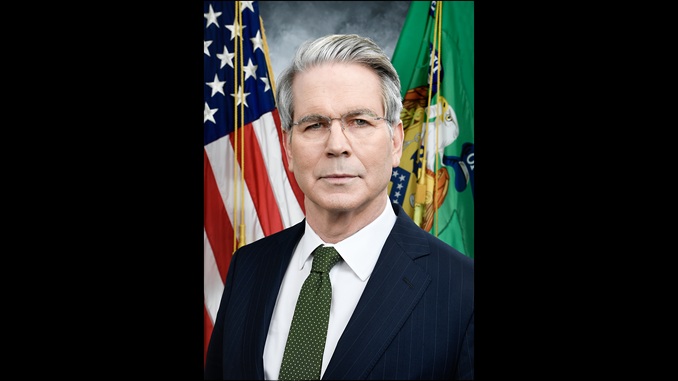
Treasury Secretary Scott Bessent is expected to visit Arizona on Wednesday and Thursday, with stops including a Casa Grande appearance alongside House Speaker Mike Johnson (R-LA) and Rep. Juan Ciscomani (R-AZ-06). The tentative itinerary, provided exclusively to AZ Free News by Treasury Department officials, also includes meetings with manufacturers, business leaders, and community bankers.
Bessent is scheduled to travel to the state on August 5 and 6 to discuss the Trump administration’s economic agenda and efforts to strengthen the integrity of the nation’s financial system, Treasury officials said.
The visit will include a tour of a manufacturing facility in Casa Grande with Johnson and Ciscomani. The three officials are also expected to participate in an economic roundtable with Arizona business leaders.
The Treasury Department had not yet publicly identified the manufacturing facility as of Monday night.
The administration plans to use the event to highlight the effects of the tax and business provisions it refers to as the Working Families Tax Cuts, including incentives for domestic manufacturing and capital investment.
The tax provisions were enacted as part of Public Law 119-21, which President Donald Trump signed on July 4, 2025. The law permanently extended several provisions of the 2017 Tax Cuts and Jobs Act and created temporary federal income-tax deductions for qualified tips and overtime compensation.
The law also allows businesses to immediately deduct qualifying research and development costs and the cost of certain equipment and machinery. It provides accelerated deductions for qualifying investments in new and expanded manufacturing facilities, according to a White House summary.
Arizona Republican lawmakers and Governor Hobbs reached a bipartisan budget agreement in June that eliminated state income taxes on qualified tips and overtime, increased the standard deduction, and added other tax provisions tied to the federal law. Republican legislative leaders described Arizona as the only state to fully adopt the federal tax package at the state level.
🚨FOR IMMEDIATE RELEASE: Arizona Becomes Only State in the Nation to Deliver Historic Trump Tax Cuts As Part of Bipartisan FY 2027 Budget Agreement
The White House, citing a National Association of Manufacturers analysis, said the law’s manufacturing provisions sustained an estimated 119,000 Arizona jobs, $22 billion in state economic output, and $11 billion in wages.
The Congressional Budget Office (CBO) estimated that the law would increase federal deficits by approximately $3.4 trillion from 2025 through 2034, excluding macroeconomic and debt-service effects. The CBO attributed the increase to an estimated $4.5 trillion reduction in revenues, partially offset by a $1.1 trillion reduction in direct spending.
During a separate engagement, Bessent is expected to meet with community bankers from across Arizona alongside Comptroller of the Currency Jonathan Gould.
Bessent and Gould reportedly plan to discuss the administration’s efforts to reduce regulatory burdens on community banks and expand their ability to finance local businesses and economic development.
Reducing regulatory and supervisory burdens on community banks has been one of Gould’s stated priorities. The agency said in May that it had begun tailoring examinations according to a bank’s size, complexity, and risk profile, while giving smaller institutions greater flexibility to use a simplified capital framework.
The Office of the Comptroller of the Currency (OCC) has also revised its model-risk guidance and narrowed the scope of information-technology and cybersecurity examinations for community banks, according to an agency announcement.
“Community banks are anchors of local economies, providing essential banking services and small business lending that helps power job creation,” Gould said in the announcement.
The Arizona meeting is also expected to address the administration’s campaign against fraud, identity theft, money laundering, and other illicit activity involving the financial system.
Trump issued an executive order in May directing Treasury and federal banking regulators to strengthen customer-identification requirements and consider changes to regulations implementing the Bank Secrecy Act.
The order directed Treasury and federal financial regulators to propose stronger risk-based customer due-diligence requirements and consider changes to customer-identification rules. It instructed regulators to examine the use of foreign consular identification documents, invalid or mismatched Social Security and taxpayer-identification numbers, payroll-tax schemes, and accounts associated with workers who lack employment authorization.
It also directed financial regulators to consider whether banks should obtain additional information concerning immigration status and employment authorization when those details are relevant to fraud, identity misrepresentation, sanctions evasion, or another identified financial risk.
The Treasury’s Financial Crimes Enforcement Network (FinCEN ) subsequently issued a June 5 advisory urging banks and other financial institutions to identify and report suspicious activity associated with identity theft, payroll fraud, and the unlawful employment of people without work authorization.
FinCEN said some employers conceal unauthorized workers by using stolen identities, mismatched Social Security numbers, false payroll information, or off-the-books payment arrangements. The agency reported that financial institutions filed suspicious activity reports involving more than $2.5 billion in transactions associated with potential payroll-tax fraud during 2025.
The advisory was issued jointly with the Federal Deposit Insurance Corporation, OCC, and the National Credit Union Administration, and in coordination with the Internal Revenue Service.
The Treasury Department said Bessent and Gould will discuss how Arizona community banks can support the administration’s enforcement efforts while continuing to provide financing and banking services to local businesses.
Additional details regarding the facility, participating business leaders, event times, and press access are expected later on Tuesday.
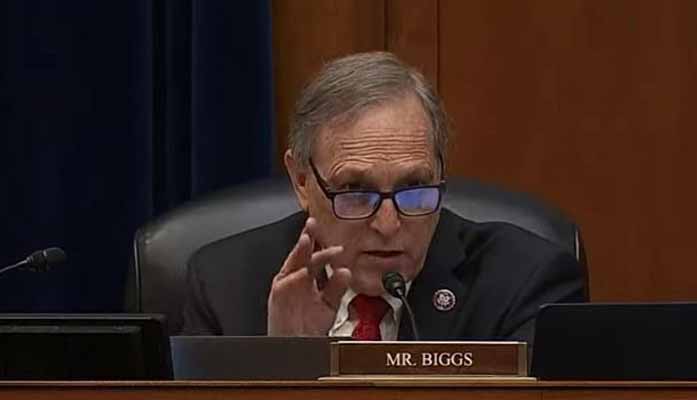
U.S. Agriculture Secretary Brooke Rollins announced a $25 million federal investment to build a sterile fly dispersal facility in Arizona. She made the announcement during a visit to the Douglas Port of Entry with Reps. Juan Ciscomani (R-AZ-06), Andy Biggs (R-AZ-05), and Eli Crane (R-AZ-02) ahead of the planned resumption of livestock imports from Mexico.
Rollins toured the port’s livestock inspection facilities Wednesday with Ciscomani, Biggs, Crane, and Arizona Department of Agriculture Director Paul Brierley. The Department of Agriculture plans to reopen the Douglas crossing to cattle imports on Aug. 24 as the first stage of a phased reopening of southern livestock ports.
During the visit, Rollins announced that the U.S. Department of Agriculture (USDA) would invest $25 million toward establishing a sterile fly dispersal facility in Arizona as part of the federal response to New World screwworm.
“Protecting American agriculture begins with protecting our borders and ensuring we have the strongest animal health safeguards anywhere in the world,” Rollins said. “The Douglas Port of Entry will reopen only because USDA has implemented one of the most rigorous livestock inspection protocols in history, giving us confidence we can safely resume this critical trade while ensuring cattle crossing the border are free from New World screwworm.”
As part of USDA’s phased reopening of 3 southern cattle ports for livestock trade, USDA will reopen the Douglas, AZ, port, which borders Sonora on Aug. 24, 2026. Every animal entering the U.S. through these ports will undergo a full USDA inspection to ensure it is free of any… pic.twitter.com/5k1HtOZSAU
— New World Screwworm Rapid Response (@Screwworm_RR) July 29, 2026
Ciscomani said Arizona livestock producers and agricultural leaders had pressed the department to establish a sterile fly facility in the state.
“Local agriculture leaders and I have been fighting to deliver this sterile fly dispersal facility because Arizona’s livestock industry cannot afford to wait on the New World screwworm threat,” Ciscomani said. “This $25 million investment is the direct result of that work, and I’m grateful to Secretary Rollins for listening to Arizona’s producers and delivering on it.”
Big things are happening in Douglas, AZ! 🐕🦺🐾🦺
As @USDA_APHIS prepares to deploy the New World screwworm detector dogs to the Douglas, AZ port of entry, we are fired up to support the mission — and have modified the cattle chutes to give these canine heroes the best possible… pic.twitter.com/OtmDqpXJLu
— New World Screwworm Rapid Response (@Screwworm_RR) July 30, 2026
The Douglas crossing was selected as the first port to reopen because the USDA considers Sonora among the Mexican states presenting the lowest screwworm risk, citing its animal-health inspection system and distance from the areas of southern Mexico where most cases are concentrated. The department said the closest active case to the Douglas port was approximately 325 miles away as of July 22.
The reopening remains contingent on Mexico’s compliance with a joint federal action plan and continuing USDA risk assessments. Following an evaluation of operations in Douglas, the department will consider reopening livestock crossings at Santa Teresa and Columbus, New Mexico.
Every animal imported through Douglas will receive multiple veterinary examinations, including an inspection by USDA veterinarians before entering the United States. Animals that fail to satisfy federal import requirements will be denied entry, and the discovery of New World screwworm would immediately halt imports through the port.
The USDA described the Arizona dispersal center as a proposed facility and said it would work with state officials to determine its specific location and operating plan in the Douglas area. The department said construction could be completed in as little as several months, depending on the selected site and available infrastructure.
Cochise County officials have proposed placing the center at Bisbee-Douglas International Airport, about eight miles from Douglas. The county has promoted the airport as a potential site because of its proximity to the border, transportation infrastructure, available land, and location in a less-populated area.
A previous USDA sterile fly facility operated near Douglas from 1963 until 1983. The former facility was located at Douglas Municipal Airport, approximately two miles from downtown.
Biggs led a June letter to Rollins urging the USDA to include Arizona in its long-term screwworm prevention and response strategy. The letter was signed by Crane, Ciscomani, and Reps. Paul Gosar (R-AZ-09) and Abraham Hamadeh (R-AZ-08) and identified the historic Douglas sterile fly facility site as a strategically valuable location for future production capacity.
New World screwworm is a parasitic fly whose larvae feed on the living tissue of warm-blooded animals, causing severe wounds that can become fatal. The pest can affect livestock, pets, wildlife, and, in rare cases, people. The USDA confirmed the first animal case in the current U.S. outbreak in a Zavala County, Texas, calf on June 3. Additional cases have since been confirmed in Texas and New Mexico, while Arizona has reported no confirmed cases.
The United States eradicated New World screwworm in 1966 through the sterile insect technique. The method releases sterilized male flies into affected areas. Female screwworm flies that mate with sterile males produce no offspring, reducing the wild population over successive generations.
The USDA said federal and state personnel have maintained trapping operations near Douglas during the past year. Nearly 1,000 captured flies were submitted for scientific testing, and none were identified as New World screwworm.
State Rep. Lupe Diaz (R-LD19), chairman of the Arizona House Land, Agriculture and Rural Affairs Committee, also attended the event and praised the federal investment and reopening plan.
“The port reopening demonstrates that we can protect American agriculture while responsibly restoring commerce through this vital trade corridor,” Diaz said. “USDA’s science-based approach includes multiple layers of inspection and strict federal oversight.”
✅Rep. Lupe Diaz Joins U.S. Agriculture Secretary Brooke Rollins for Douglas Port Reopening and Sterile Fly Center Announcement
"The new sterile fly distribution center at Bisbee-Douglas International Airport is another major step forward. It will serve Arizona, New Mexico,… pic.twitter.com/ebiGbaOoc3
— Arizona House Republicans (@AZHouseGOP) July 30, 2026
Arizona’s fiscal year 2027 budget allows the state Department of Agriculture to use up to $250,000 from the Commercial Feed Trust Fund for two full-time-equivalent positions. One is designated for expenses associated with the screwworm response. The department may conduct border inspections as part of that response if the border opens for live cattle imports, and the state veterinarian may oversee the response. The second position is designated for expenses involving foreign animal diseases or pests, USDA program diseases, zoonotic diseases, and other emerging animal-disease responses.
“The new sterile fly distribution center at Bisbee-Douglas International Airport is another major step forward,” Diaz said. “It will serve Arizona, New Mexico, Nevada, and California, giving western states a critical regional resource to combat the New World screwworm and protect our livestock industry.”
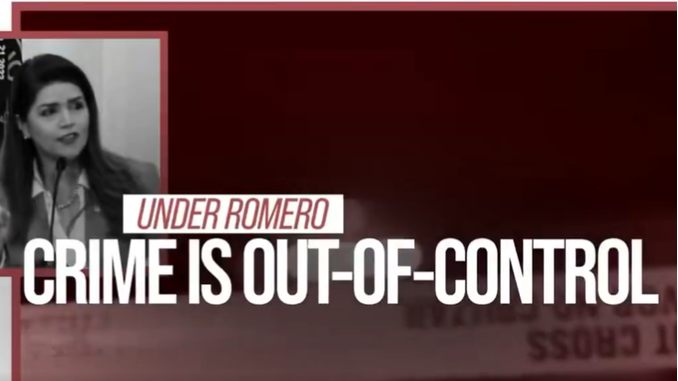
Republican Rep. Juan Ciscomani’s (R-AZ06) reelection campaign released a new advertisement Tuesday targeting Democratic challenger JoAnna Mendoza. The ad links Mendoza to Tucson Mayor Regina Romero and highlights Mendoza’s past comments about reallocating police funding.
The advertisement, titled “Radical Allies,” accuses Mendoza and Romero of sharing an approach to policing, taxation, and homelessness that Ciscomani’s campaign says has harmed Tucson. The spot concludes by warning of “fewer police officers,” “more dangerous streets,” and “the same failed radical policies.”
“JoAnna Mendoza has a clear record of undermining support for and trust in local law enforcement – just listen to her in her own words,” Ciscomani said.
Sharing the advertisement in a post to X, Ciscomani wrote, “JoAnna Mendoza is endorsed by Tucson’s Failed, Unpopular Mayor Regina Romero for AZ06.” He added, “ Under Romero’s failed leadership: Police officers and firefighters stretched thin, Homelessness and crime are rampant, Business owners left to pick up the mess.”
🚨RADICAL POLICIES. RADICAL ALLIES.🚨
JoAnna Mendoza is endorsed by Tucson’s Failed, Unpopular Mayor Regina Romero for AZ06.
Under Romero's failed leadership: ❌Police officers and firefighters stretched thin ❌Homelessness and crime are rampant ❌Business owners left to… pic.twitter.com/FwRy7thZBz
Ciscomani said residents of Arizona’s Sixth Congressional District deserve elected officials who prioritize public safety and provide law enforcement agencies with the personnel and equipment needed to protect their communities.
The advertisement describes Romero as a Mendoza ally and cites her endorsement of the Democrat nominee. Romero publicly endorsed Mendoza in July 2020, when Mendoza was running for the Arizona Senate in Legislative District 11.
“JoAnna has demonstrated her lifelong commitment to serving our country and the people of Arizona,” Romero said during the 2020 campaign.
Mendoza thanked Romero for the endorsement and said she had helped with Romero’s successful 2019 campaign to become Tucson’s first female and Latina mayor.
The Ciscomani campaign’s release did not identify a separate endorsement issued by Romero during the current congressional race. Romero is not listed on Mendoza’s current campaign endorsement page, which includes Democrat Sens. Mark Kelly and Ruben Gallego, Attorney General Kris Mayes, former Rep. Gabby Giffords, and several other elected officials and organizations.
Later Tuesday, Romero explicitly endorsed Mendoza in a post responding to Ciscomani, “@JuanCiscomani has failed Tucsonans. He voted to remove SNAP & Medicare benefits from children & seniors to give his billionaire buddies tax breaks. We need leadership that is more interested in results than theatrics. That is why we must retire Juan & elect @Mendoza4AZ.”
@JuanCiscomani has failed Tucsonans. He voted to remove SNAP & Medicare benefits from children & seniors to give his billionaire buddies tax breaks. We need leadership that is more interested in results than theatrics. That is why we must retire Juan & elect @Mendoza4AZ
Romero referred to Medicare in the post. Congressional Budget Office analyses of the reconciliation law identified Medicaid and SNAP as the principal benefit programs affected by reductions in federal spending.
Romero and Mendoza appeared together in February during a Tucson panel on gun violence with Giffords and Tucson Unified School District Governing Board member Natalie Luna Rose.
The new advertisement also draws from comments Mendoza made during a 2020 town hall hosted by the Arizona Clean Elections Commission and the Arizona Capitol Times amid nationwide protests and disputes over police funding.
“I support the reallocation of funding to programs that would allow people to live their best lives,” Mendoza said when asked whether she supported defunding police, according to a report from Fox News.
Mendoza identified social services, housing, public education, health care, economic stability, and environmental safety among the programs she believed should receive funding.
The Ciscomani campaign also cited Mendoza’s statement that police reform represented “one aspect of the systemic racism” present in the United States. The campaign characterized her support for reallocating funding as an endorsement of the movement to defund police departments.
Mendoza has rejected that characterization. Her campaign told Fox News that she supports providing police with additional resources, including training and body cameras, and said she has repeatedly opposed defunding law enforcement.
“I do not support defunding the police,” Mendoza said during another virtual event in 2020. “Police officers are being asked to do too much.”
Mendoza reiterated that position in an opinion article in the Arizona Daily Star in March 2026 that was republished be her campaign.
“The answer is not to defund law enforcement—it’s to fund law enforcement with intention,” Mendoza wrote.
She called for additional training, body cameras, clear identification, and oversight while expressing support for police officers, Border Patrol personnel, and immigration agents who lawfully perform their duties.
Ciscomani’s campaign also highlighted federal funding the congressman has supported for local public safety agencies. His congressional office said he obtained $4.2 million in Community Project Funding to replace aging Tucson Police Department vehicles.
A January spending package included $809,687 for replacement radios for the Sahuarita Police Department. Ciscomani has also sponsored legislation intended to establish coordination centers where federal, state, local, and tribal law enforcement agencies could conduct joint operations.
Ciscomani and Mendoza advanced to the Nov. 3 general election after running without opposition in their respective July 21 primaries. Ciscomani has represented the district since 2023 and won reelection in 2024 with 50.0 percent of the vote, defeating Democrat Kirsten Engel by 10,822 votes.
Congressman Andy Biggs is projected to win the Republican nomination for Arizona governor. The Associated Press also called several of the state’s closely watched primary races, including the Republican secretary of state contest for Rep. Alexander Kolodin.
Biggs led Rep. David Schweikert and businessmen Ken Miceli and Scott Neely when the AP called the four-way Republican primary in his favor. He will face Democratic Gov. Katie Hobbs, who ran unopposed for her party’s nomination, in the Nov. 3 general election.
The AP declares a winner when its decision team determines that trailing candidates no longer have a path to victory. The election results remain unofficial, pending the official statewide canvass on August 6.
Biggs has represented Arizona’s Fifth Congressional District since January 2017 and previously served as president of the Arizona Senate. He chaired the House Freedom Caucus from 2019 to 2022 and entered the gubernatorial primary with endorsements from Turning Point USA and President Donald Trump.
Schweikert has represented Arizona in Congress since 2011 and currently holds the First Congressional District seat. He remained in Washington during Tuesday’s election as the House considered a government funding bill.
In the secretary of state race, Republican state Rep. Alexander Kolodin defeated former Arizona Republican Party Chair Gina Swoboda for the GOP nomination. Kolodin will face Democratic Secretary of State Adrian Fontes, who ran unopposed in his party’s primary, in the Nov. 3 general election. The secretary of state serves as Arizona’s chief election officer and oversees statewide election administration, business filings, and state records and archives.
WASHINGTON (AP) — Alexander Kolodin wins Republican nomination for secretary of state in Arizona. #APRaceCall at 11:17 p.m. EDT. https://t.co/TS3eIpQI5W
The AP also called the Republican primary for Schweikert’s open First Congressional District seat for former Arizona Cardinals kicker and sportscaster Thomas “Jay” Feely IV.
Feely defeated former state Rep. Joseph Chaplik and technology and telecommunications executive John Trobough. President Trump endorsed Feely after he moved from the Fifth District race into the contest to succeed Schweikert.
WASHINGTON (AP) — Thomas Feely wins Republican nomination for U.S. House in Arizona's 1st Congressional District. #APRaceCall at 11:13 p.m. EDT. https://t.co/TS3eIpQI5W
The First District includes northeast Phoenix, Scottsdale, Fountain Hills and Paradise Valley. Republicans hold a voter-registration advantage in the district, although the seat has become increasingly competitive in recent elections. Schweikert defeated Democratic nominee Amish Shah with 51.9 percent of the vote in 2024.
Former television journalist Marlene Galán-Woods led the initial Democratic First District results against Shah, publisher Rick McCartney, and entrepreneur Jonathan Treble. The Associated Press had not called the Democratic contest Tuesday night.
The Democratic Congressional Campaign Committee supported Galán-Woods in the primary. Shah won the party’s nomination for the district in 2024 before narrowly losing the general election to Schweikert.
Former Pinal County Sheriff Mark Lamb won the Republican nomination to succeed Biggs in the Fifth Congressional District. Lamb defeated construction company owner Daniel Keenan.
WASHINGTON (AP) — Mark Lamb wins Republican nomination for U.S. House in Arizona's 5th Congressional District. #APRaceCall at 11:11 p.m. EDT. https://t.co/TS3eIpQI5W
President Trump endorsed Lamb, who previously sought the Republican nomination for U.S. Senate in 2024. The Associated Press described the Fifth District as a safely Republican seat.
The Democratic Fifth District primary included Elizabeth Lee, Chris James and Brian Hualde. The Associated Press had not called that contest at the time of publication.
Republican Rep. Juan Ciscomani and Democratic challenger JoAnna Mendoza advanced without primary opposition in the Sixth Congressional District, establishing the general-election matchup in one of Arizona’s most competitive congressional seats.
The results remain unofficial while Arizona counties continue processing ballots and complete their required canvasses. County boards of supervisors face an Aug. 3 deadline to canvass the primary results, followed by the official statewide canvass on Aug. 6.
Several races, including the GOP nominations for Attorney General, Treasurer, Corporation Commission, and Superintendent of Public Instruction, remained too close to call as of 10 PM Tuesday.