By Matthew Holoway |
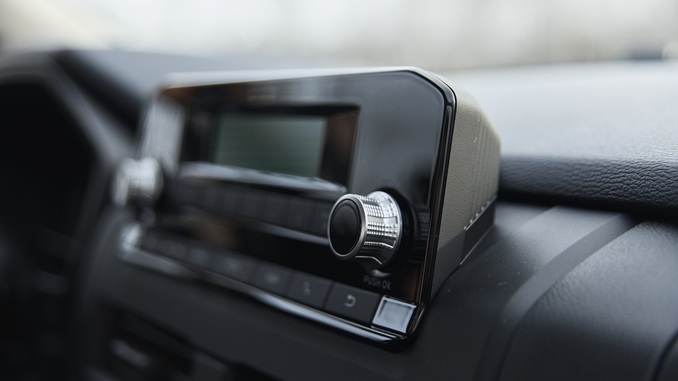
The U.S. House approved legislation Tuesday that would require automakers to provide access to AM broadcast radio as standard equipment in new passenger vehicles sold in the United States.
The AM Radio for Every Vehicle Act of 2025, introduced by Rep. Gus Bilirakis (R-FL), passed Sept. 15 by voice vote under suspension of the rules. The procedure produced no recorded tally identifying how individual House members voted.
Arizona Reps. Eli Crane (R-AZ-02), Greg Stanton (D-AZ-04), Abe Hamadeh (R-AZ-08), and Paul Gosar (R-AZ-09) are among the bill’s cosponsors. The congressional record also lists the late Rep. Raúl Grijalva (D-AZ-07), who died on March 13, 2025, as a cosponsor.
Crane called the voice vote unanimous in a post on X.
“Last night, the House passed the AM Radio for Every Vehicle Act in a unanimous vote,” Crane wrote. “This legislation protects a vital source Arizonans rely on for emergency information, weather updates, and news. Proud to support this measure.”
Under the House-approved text, the Department of Transportation would have one year after enactment to issue a rule requiring new passenger vehicles to include equipment capable of receiving and playing broadcasts from analog or qualifying digital AM stations.
The requirement would cover vehicles manufactured domestically for sale in the United States, imported into the country, or shipped through interstate commerce. The AM function would have to be installed as standard equipment, accessible to drivers, and provided without an additional fee or surcharge.
The legislation defines passenger vehicles as those designed primarily to carry a driver and no more than 12 passengers. Motorcycles are excluded.
The Transportation Department would generally have up to two years after issuing the regulation to make it effective. Manufacturers that produced no more than 40,000 passenger vehicles for the U.S. market in 2022 would receive at least four years to comply.
During the period before the regulation takes effect, manufacturers selling vehicles without AM reception would be required to provide clear labeling notifying buyers. They also could not charge buyers an additional fee to access AM programming.
Supporters have cited AM radio’s role in delivering emergency information when power, cellular networks, or internet services are unavailable. House Speaker Mike Johnson said local communities depend on the technology during natural disasters.
“When disaster strikes—especially in hurricane and tornado-prone states like Louisiana—local communities rely on AM radio to deliver accurate, up-to-date information and critical safety alerts,” Johnson said.
The Federal Emergency Management Agency’s National Public Warning System consists of broadcast stations equipped with backup communications equipment and generators intended to keep them operating during and after disasters. FEMA says the system can directly reach more than 90 percent of the country’s population. The agency lists KDRI 830 AM in Tucson as Arizona’s Primary Entry Point station.
The bill would require the Government Accountability Office (GAO) to study AM radio’s role in the Integrated Public Alert and Warning System and compare its resilience, accessibility, and effectiveness with other emergency communications technologies. The Transportation Department would also be required to examine possible effects on vehicle safety and automated-driving systems before issuing its regulation.
The Transportation Department, in coordination with FEMA and the FCC, would also be required to report to Congress at least once every five years on whether AM radio remains useful for emergency alerts and whether alternative communications systems could provide comparable coverage.
The Congressional Budget Office (CBO) estimated that implementing the legislation would cost the Transportation Department and GAO approximately $1 million from 2026 through 2031. The CBO said the requirement would principally affect manufacturers of electric vehicles that have removed AM equipment or announced plans to do so.
The CBO also estimated that manufacturers would need to update equipment in approximately 2 million to 2.5 million vehicles annually. The agency projected that the private sector mandate would cost several million dollars per year, remaining below the $214 million threshold used to evaluate private sector mandates in 2026.
The Alliance for Automotive Innovation, a trade association representing major automakers, has opposed the mandate, citing interference between AM signals and electric vehicle propulsion systems. The organization cited a Center for Automotive Research estimate placing the potential industry cost at $3.8 billion over seven years.
The House legislation now moves to the Senate, where Massachusetts Democratic Sen. Ed Markey and Texas Republican Sen. Ted Cruz introduced a companion measure, S. 315. The Senate Commerce, Science and Transportation Committee approved that bill in February 2025, and it was placed on the Senate legislative calendar in April.
The Senate bill currently has 60 cosponsors—37 Republicans, 21 Democrats, and two independents. Arizona Sens. Mark Kelly and Ruben Gallego are not listed among its cosponsors. The Senate has not held a floor vote on either the companion legislation or the House-approved bill.
Matthew Holloway is a senior reporter for AZ Free News. Follow him on X for his latest stories, or email tips to Matthew@azfreenews.com.