by Staff Reporter | Sep 11, 2024 | Education, News
By Staff Reporter |
A Scottsdale-area mom is hoping that her success and positions on a local school district governing board will convince voters to elect her to the Arizona State Senate.
Carine Werner is currently running to represent Arizona Legislative District 4 in the state senate. She is an immigrant and small business owner, looking “to address the problems we face and help us protect the community we love together.”
Currently, Werner serves on the Scottsdale Unified School District Governing Board, where she has gained valuable experience for a potential move to the state Senate. In 2022, Werner gave an interview to the Scottsdale Progress Newspaper to outline her motivations for running for the position she would later assume, and to preview her action items and priorities for office.
She told the paper that she was running for the board because, “having experienced the past few tumultuous years with children in Scottsdale schools, I know the frustration and pain our students, families, and community experienced. I bring common-sense leadership, an enduring passion for securing our children’s future, respect for parents and teachers, and a skill for building consensus without compromising values.”
Werner then presented six promises to voters and parents of children within the Scottsdale Unified School District. The first was that she would “address parents’ rejection of SUSD.” She made this commitment because “A recent exit survey reveals that parents are concerned about failing academics, politically-charged classrooms, the promotion of ideological and anti-American rhetoric, and that they lack faith in the SUSD administration and the board.”
The Scottsdale mom added, “When I’m on the board, parental input will guide decisions made. I plan to partner with parents to curate the best educational experience for our children.”
The second promise was that she would “reverse enrollment decline and loss of funding.” Werner made this commitment because, “We cannot market our way out of this problem, nor should taxpayers’ foot the bill. We must restore academic excellence, close the achievement gap, and create a culture students will thrive in.”
The third promise was that she would “pay teachers first.” She made this commitment because “Although enrollment is down, SUSD increased administrative staff overhead. The Arizona legislature approved an additional $1 billion in year-over-year education spending, bringing the total K-12 spending for this year to $8.45 billion. In addition, federal funding and property taxes brings that total to $14.88 billion. Governor Ducey called on school board members to ensure these funds are directed to teachers. I commit to using my vote to prioritize those funds for teachers’ salaries and funding our classrooms first.”
The fourth promise was that she would “improve academic performance. Werner made this commitment because “With less than 37% of SUSD 10th graders proficient in math and ELA, a strategy to improve academic scores must be clearly stated, aggressive, and measurable. Yet, SUSD’s strategic development plan treats academics as an afterthought. We must get back to focusing on the basics. My commitment is to ensure that achievement programs will improve student proficiency and mastery of academic standards.”
The fifth promise was that she would “improve student safety.” She made this commitment because, “We must ensure the safety of our schools through support of our valued School Resource Officers, partnerships with the Scottsdale Police Department, and continuous review and improvement of our safety procedures.”
Werner also noted that, “The Arizona Legislature has approved $50 million in ongoing funding for school safety, supporting school resource officer salaries, and $20 million for the school safety interoperability program, which provides funding to county sheriffs for real-time communication solutions between schools and public safety agencies in the event of an emergency.”
The final promise was that she would “remove politics from the classroom.” Werner made this commitment because, “We must develop students’ interests, not identities. Politics and ideological rhetoric should have no place in our classrooms. I will work to remove the divisive curriculum that has been swept into our schools, restoring our education of revered American principles and ensure every student has the opportunity to thrive.”
It was this promise from Werner that led to the most controversy over her efforts to keep her commitments to constituents. Last year, Werner was unafraid to stand with Arizona Superintendent of Public Instruction Tom Horne when he addressed educational curriculum that may have been in violation of state law. Her appearance led to accusations against her from the president of the Scottsdale Unified School District Governing Board, Julie Cieniawski, claiming that Werner and another member of the board “showcased their inability to honor policy [duties and obligations] and the principles of democracy at an ‘emergency press conference,’ held by the State Superintendent of Instruction, to further complain about the outcome of the collective board decision.”
Cieniawski shared her opinion that “their public commentary contained inaccuracies, disparaged a minority population, and asserted erroneous judgments regarding the benefits SUSD students receive from a comprehensive and multi-faceted education.”
Yet, others saw this episode differently and appreciated Werner’s stand for the children and constituents of her school district. In an op-ed for the Scottsdale Progress, a retired public-school teacher, Susan Winder, defended Werner and called Cieniawski’s earlier piece “divisive, misleading, and frankly, embarrassing for our great city.”
Winder wrote, “Here’s my beef: Cieniawski has attempted to silence her fellow board members – the ones voters elected to represent them. And, while Carney and Werner attacked the content of the curriculum, Cieniawski has stooped to a new low by making personal attacks on Carney and Werner. As an SUSD stakeholder, I do not want the minority board members to be silenced by the majority members. I am grateful that we now have board members who care about the quality of curriculum SUSD offers to our students, as well as the legality of the lessons… and that they are willing to speak up.”
The promises and subsequent actions on the governing board from Werner earned her the support of several women who appeared in a campaign ad on her behalf this summer for her run for the state legislature. In that ad, the women announce their support for Werner, in large part, because of her trustworthiness to keep her commitments to her constituents.
The women say, “I’m not political. I don’t go to rallies. I don’t usually donate to candidates. But this election isn’t about politics to me. This election is about protecting our family and our community. I know Carine Werner. She’s a mom, a school board member, and most importantly she’s a fighter. She stands up for what’s right and not what is politically easy. Politicians say one thing and do another, which is why I trust Carine Werner. She’s not a politician. She’s a mom like me. Carine will fight for our families and help make our neighborhoods safe. It’s time to change who we send to the state Senate. Vote Carine Werner for state Senate. I trust Carine to stand up for us.”
The Republican candidate isn’t done making promises she intends to keep in office. She’s made more commitments to the voters in her new district should they send her to the state Senate. On her campaign website, the first of those promises is that she will fight to “increase teacher pay and reduce wasteful spending.” The second is that she will work to “empower parents.” The third is that she will strive to “empower and fund law enforcement.” The fourth is that she will vote to “secure the border.” The fifth is that she will attempt to “address homelessness with compassion and accountability.” The sixth is that she will work to “champion low-tax, business friendly environment.” The seventh is that Werner promises to advocate for policies that “generate job growth.” And finally, she vows to support efforts to “improve cost of living.”
Legislative District 4 is one of the most competitive in the state. According to the Arizona Independent Redistricting Commission, it has a 3.4% vote spread over the past nine statewide elections within its boundaries, with Republicans winning five of those contests.
Werner emerged from the Republican primary election in July and is facing off against incumbent Democrat state senator Christine Marsh for the right to represent Arizona Legislative District 4.
AZ Free News is your #1 source for Arizona news and politics. You can send us news tips using this link.
by Daniel Stefanski | Mar 15, 2024 | News
By Daniel Stefanski |
A ballot referral to help protect Arizona business owners from degrading landscapes outside their front doors will be considered by state voters thanks to the efforts of legislators.
The Arizona Senate President, Warren Petersen, and Speaker of the House Ben Toma introduced HCR 2023 / SCR 1006, which would “allow a property owner to apply for a primary property tax refund if the owner documents expenses caused by a city, town or county adopting a policy, pattern or practice which declines to enforce existing laws or the maintaining of a public nuisance” – according to the overview provided by the state House.
In a statement after the successful passage of the bill out of his chamber, Petersen said, “There are instances where local governments routinely and repeatedly fail their citizens by not enforcing laws. An example of this would be the City of Phoenix’s handling of the former homeless encampment known as ‘The Zone.’ This area was not only a public safety and public health disaster for those who camped there, but it was also a detriment to the livelihoods of small business owners who set up their shops in the area.”
President Petersen added, “Money talks, and as a way to encourage municipalities to enforce the law, Speaker Toma and I teamed up to sponsor HCR 2023/SCR 1006. This measure is a ballot referral that would protect law-abiding citizens. If approved by voters, property owners would be allowed to request a refund for expenses incurred to mitigate the problem, up to the amount of their property tax liability. The funds would be deducted from the local government’s state shared revenue.”
The chamber’s president also noted that “all Senate Democrats voted ‘no’” on the referral.
At the end of February, the Arizona House approved the referral with a 31-28 vote (with one vacant seat). The Arizona Senate then passed the measure with a 16-12 vote (with two members not voting). The referral was then transmitted to the Arizona Secretary of State to be placed on the November General Election ballot.
Representatives from Barry Goldwater Institute for Public Policy Research, QuikTrip, Arizona Free Enterprise Club, Arizona Chamber of Commerce, Arizona Food Marketing Alliance, and the National Federation of Independent Business, indicated their support for the proposal on the Arizona Legislature’s Request to Speak system. Representatives from the League of Arizona Cities & Towns, Living United for Change in Arizona, Arizona Coalition to End Sexual and Domestic Violence, Professional Fire Fighters of Arizona, Arizona Association of Counties, County Supervisors Association of Arizona, Arizona Housing Coalition, and several state cities and towns, signed in to oppose the measure.
Daniel Stefanski is a reporter for AZ Free News. You can send him news tips using this link.
by Daniel Stefanski | Feb 8, 2024 | News
By Daniel Stefanski |
As Arizona’s homeless problems continue to grow, one Arizona legislator has introduced legislation to deal with some issues the state faces.
This week, State Representative Matt Gress unveiled HB 2782, the Arizona Homeless Protection and Drug Control Act. This bill would “bring significant amendments to existing laws to reduce homelessness and drug-related crime within designated homeless service zones.”
“This legislation is an important step towards reducing chronic homelessness and drug-related crime, ensuring that Arizona’s vulnerable populations are effectively supported while ensuring public safety,” said Representative Gress. “Establishing accountability within homeless service zones will help safeguard our communities from drug-related crime and offer a more structured and supportive environment for our homeless population to rebuild their lives.”
The freshman lawmaker added, “We are taking decisive action to improve the quality of life in these zones, ensuring that they are safe and conducive to rehabilitation and support services. Our goal is to help people and address the root causes of homelessness, which ultimately leads to safer, healthier communities across Arizona.”
According to the press release issued by the Arizona House of Representatives Republican Caucus, the legislation would “introduce new sections under Title 13, Chapter 34, to focus on the unlawful presence and activities related to dangerous drugs in homeless service zones.” Additionally, the bill would “revise existing sections under Title 41 to establish a permanent Homeless Shelter and Services Fund to allow money to be used for temporary emergency shelter while also providing clear guidelines for mixed hoteling in homeless service facilities.”
In the 2023 Annual Homelessness Assessment Report (AHAR) to Congress, which was published in December 2023, there was an estimate of 14,237 people in Arizona who were experiencing homelessness. Arizona had one of the highest rates in the nation of unsheltered people who were experiencing homelessness (7,615, 53.5%). The Grand Canyon State also observed one of the highest increases in individuals who were experiencing homelessness during the COVID-19 pandemic between the years of 2020 – 2022 (29.3%).
Daniel Stefanski is a reporter for AZ Free News. You can send him news tips using this link.
by AZ Free Enterprise Club | Apr 22, 2023 | Opinion
By the Arizona Free Enterprise Club |
Democrats like to believe they are the party of compassion and kindness, but the reality in most blue cities says otherwise. For years, homeless encampments have been springing up in liberal-run cities like Seattle, Portland, San Francisco, and Los Angeles. And in recent years, this trend made its way into Phoenix.
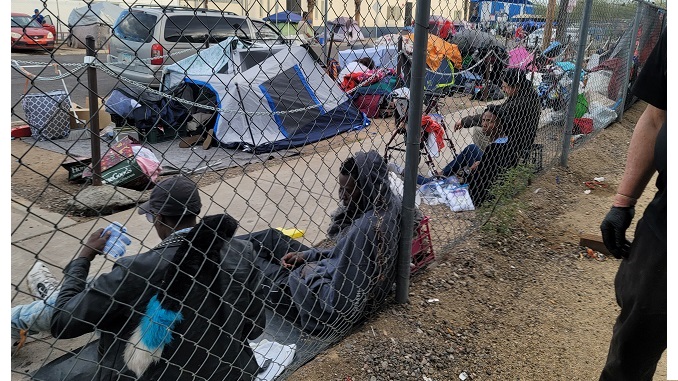
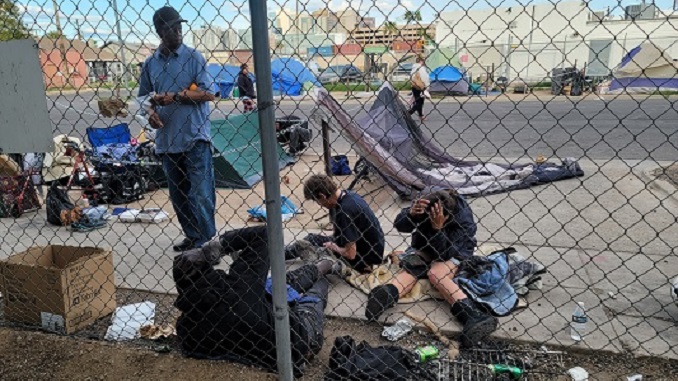
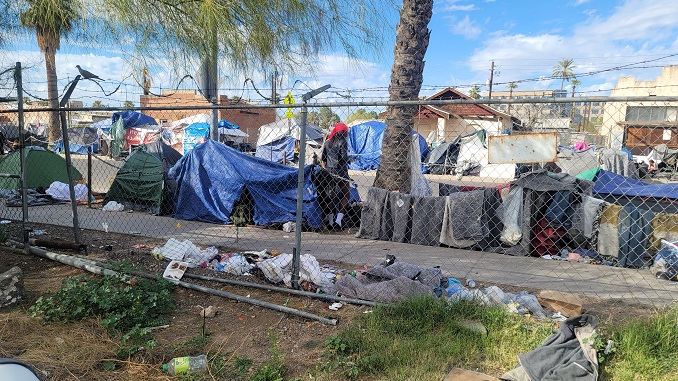
Just blocks from the state capitol, amidst what was once a thriving business district, a sprawling encampment of around 1,000 homeless has come to be known as “The Zone.” It’s a place where drug use, drug deals, defecation, urination, sexual acts, assaults, rape, and murder are frequently committed out in the open—often with little to no consequences. The problem has even gotten so bad that the Phoenix Fire Department won’t respond to calls inside The Zone without assistance from the Phoenix Police Department and assurance that the scene of the incident is secure.
But crime within The Zone is only one part of the problem…
>>> CONTINUE READING >>>
by John Huppenthal | Jul 17, 2022 | Opinion
By John Huppenthal |
I recently observed a tent camouflaged behind freeway road bushes in Chandler. Curious, I looked around the corner. I caught a man heating the bowl of a meth pipe in the act taking a deep drag. There were two men there. The second man looked in terrible shape, like a character out of Breaking Bad. It was 2:30 in the afternoon. I called 911.
Catching him in the criminal act was pivotal. Court decisions have given meth addicts a constitutional right to occupy our right of ways, defecate on our streets, and urinate on our sidewalks.
But these court decisions don’t protect criminal behavior.
I volunteered for two years at the school for the homeless. I never found one of the students to be homeless. They were sleeping on couches, in a spare bedroom, on someone’s carpet. Their families found someone, a relative, a friend, willing to be helpful. In my opinion, most people on the street don’t want to be in someone’s house. They are giving in to their drug addiction. Each one of them, willing to abide by the rules, can immediately enter a shelter. Rules are the key: shelters don’t allow drugs. Most of these people we describe as homeless are really meth addicts and should be described as such, not as homeless.
Meth addiction is a horror beyond all description. Read the case studies. One woman, after three days of smoking meth, cut off her boyfriend’s head and took it to his mother in a bucket.
Meth culture is now everywhere. Several months ago, a friend and I drove to hike Peralta Canyon. Leaving the paved roads, we noticed a man running, flapping his arms. Then, further on, we encountered 50-foot-long skid marks on a dirt road leading to a snapped barbed wire fence. Beyond the fence, in the distance, we could see a truck with an attached travel trailer.
Over the next hour, we put together the story. The man flapping his arms had been smoking meth for several days when he suffered a full-blown psychotic break. Somehow, convinced the cartel had arrived to assassinate him, he threw his cards and driver’s license down into the dirt so that the cartel could not use the magnetic strips to track him. He took off in his truck at an incredible rate of speed along with the attached trailer and another trailer behind it with his motorcycle. Driving in tight circles so that he could dodge the cartel’s bullets, his vehicles were bouncing a half foot into the air as he crossed the berms of the dirt road. His rate of speed was such that he was hitting five-inch palo verde trees, snapping them off without slowing. Losing control, he ran full blast into the barbed wire fence, snapping all three strands. He continued out into the desert hitting so many cholla that the cactus limbs piled up on the hood of his truck more than half-way to the top of the windshield. Finally, the sand of a desert wash trapped him but not before he had destroyed the economic value of all the assets he could claim in this world. As the fire fighters checked him out and the police took him away, he proclaimed to the world “I’m having a bad day.”
That’s the abyss addicts slide toward as they take communities with them.
Meth culture spreads. I encountered a gentleman taking pictures of the water retention basin a little further north. His mother, whose home and fence backs up to the water retention basin, had become fearful upon hearing noises that they were setting up camp in that retention basin. I told him to have her call police. The retention basin is completely fenced but there is plentiful evidence of addicts in discarded clothing and bedding.
All totaled, there were seven of these meth camps along Price Road, both on the Chandler side and the Tempe side.
I interviewed one of their residents. Waking him up at 10 in the morning, I offered him $30 for a 15-minute interview. He couldn’t find his glasses. Mentally fatigued from a stroke (a side-effect of meth addiction), he couldn’t last beyond a few questions. However, he did mention that both his father and his sister had died from drug addiction. His mother lives in Mesa. His age appeared to be late 40s. He couldn’t remember when he was born. This man was living in a makeshift tent in the 2 feet between the freeway sound wall and the bushes on the side of Price Road.
One of the camps was behind an SRP power transformer at the edge of Price Road. I got a garbage bag and just started cleaning it up. I took out 40 pounds of garbage. I didn’t have it in my heart to take out their foam mattress bed, their new running shoes, or their clothes.
I also posted my observations on a neighborhood social media platform. It attracted considerable attention and alarm as people realized how close they were to children.
All seven of these meth camps are now gone.
Unfortunately, according to an article in the Arizona Republic and their sources, there are over 3,500 of these encampments in Phoenix, destroying neighborhoods.
Be disciplined in your thinking. These are meth addicts. You can be sympathetic, empathetic and because of your sympathy and empathy, demand that they not be allowed to slide into a meth culture. They must get off the street. At least they must get off our streets. They are learning to beg and where to steal. They are engaging more people in meth culture. Somewhere, they have a friend, a father, a sister, a relative who will help them get clean. Keep them moving toward a better future.