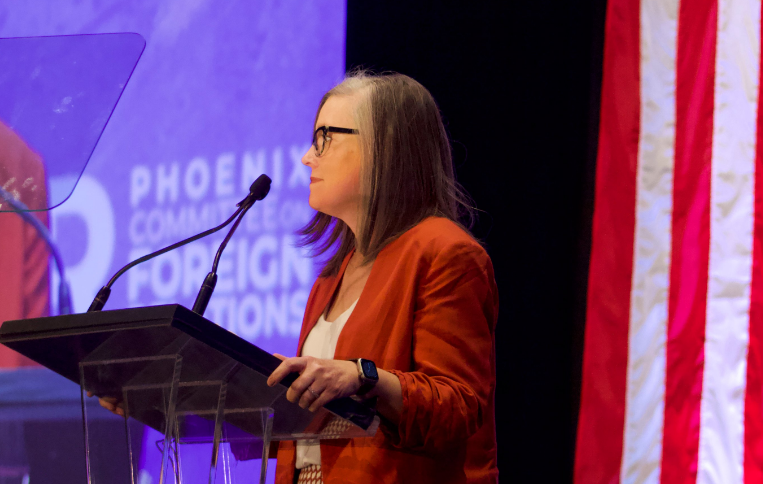
Gov. Katie Hobbs revoked $50 million in school choice funding awarded by her predecessor, Doug Ducey, calling it “illegal and invalid.”
The funds were used for day-long Empowerment Scholarship Account (ESA) Program kindergarten. Hobbs said that this represented unequal treatment of ESA versus non-ESA students, since the state only funds half-day kindergarten for public school students.
“Illegally giving $50 million to private schools while failing to properly invest in public education is just one egregious example of the previous administration’s blatant disregard for public school students,” said Hobbs. “I will always fight to protect our public schools and work to give every Arizona student the education they deserve. Today, we averted a violation of federal law and the State Constitution. In my administration, we are committed to deploying federal funds lawfully and equitably.”
Today, we held the Ducey Administration accountable for illegally handing out a $50 million ESA grant. Instead, we're going to put that money to good use.
In my administration, we are committed to ESA accountability, protecting taxpayer dollars, and truly investing in public…
— Governor Katie Hobbs (@GovernorHobbs) May 25, 2023
Hobbs claimed the $50 million grant violated multiple provisions of the Arizona Constitution concerning equal protection, the gift clause, and the maintenance of public schools. The governor also claimed that the grant conflicted with terms set by the American Rescue Plan Act (ARPA) in its COVID-19 emergency funding because the grant didn’t address educational disparities it purported to address.
Hobbs said her office plans to reallocate the $50 million elsewhere, though the governor hasn’t publicly announced where. She said she delivered notice to the treasurer’s office for next steps.
In response, Treasurer Kimberly Yee criticized Hobbs’ move as “politically driven and belligerent,” and noted that she had no prior notice of Hobbs’ intent to withdraw the funding until she, like the rest of the public, learned of Wednesday’s press release. Yee also disclosed that her legal team was looking into the legality of Hobbs’ actions.
“As has become the norm for this governor, my office first learned of her action through a press release prior to receiving the letter, and we have yet to receive any communication from the Governor or her team on this matter other than the letter. Our legal team is currently reviewing the lawfulness of the governor’s move and determining next steps,” said Yee.
Yee also claimed that Hobbs’ actions reflected a disregard for educational freedom.
“It is clear Governor Hobbs does not care about what is best for Arizona kids or respect the rights of parents to determine the best environment to educate their child,” said Yee. “Instead, she is using these children as pawns in a desperate and transparent attempt to win back support from union bosses and her ultra-progressive base. Educational choice is the civil rights issue of our time, and unfortunately, Governor Hobbs thinks she knows better than parents. I fundamentally disagree, and so do Arizona families.”
Governor Hobbs has just denied thousands of Arizona kids access to kindergarten through this politically driven and belligerent decision.
— Arizona Treasurer Kimberly Yee (@AZTreasurerYee) May 25, 2023
Daniel Scarpinato, former chief of staff to Ducey and former national press secretary for the National Republican Congressional Committee (NRCC), claimed that Hobbs’ true motive was to improve her publicity over other statewide Democratic officials.
“The real story: Katie Hobbs is kowtowing to her far-left base because other statewide Dems are getting way more publicity than her,” stated Scarpinato. “First she canceled summer school. Now she’s against kindergarten. Hobbs’ record is stacking up, and it’s one that hurts real kids. That’s on her.”
The real story: Katie Hobbs is kowtowing to her far-left base because other statewide Dems are getting way more publicity than her. First she canceled summer school. Now she’s against kindergarten. Hobbs’ record is stacking up, and it’s one that hurts real kids. That’s on her. https://t.co/fn4jp6SzsN
Arizona’s public school system has ranked worst across the 50 United States of America for some time.
Scholaroo set out to find the most and least educated states in the country during the COVID-19 pandemic. In order to determine the best and worst school systems per state, the scholarship-centered website compared three key factors:
Student Safety – Arizona ranked 45 out of 50
Student Success – Arizona ranked 44 out of 50
School Quality – Arizona ranked 50 out of 50
According to Scholaroo, Arizona ranks 47th for the least educated, 38th for educational attainment, 48th for school quality, and 48th in the number of colleges/universities per 100,000 adults.
The AZ Schools Report card provides a myriad of statistics. For the most part, Arizona’s public schools are failing miserably with around a 50% proficiency in Mathematics and English among graduating students. Part of the problem is qualified teachers. As an example, Buena High School has 25% of its teachers as non-certified and/or teaching outside of their area of expertise.
I don’t believe it is a lack of funding for the schools. Arizona’s statewide average per-pupil spending for everything is $10,729 in the fiscal year 2022. This marks a nearly 8% increase in spending from the prior fiscal year. But surprisingly, with more students joining the Empowerment Scholarship Account (ESA) program, the state surplus has increased by over $1.4 billion. The ESA program has reflected a cost-savings program for the state because each ESA student receives half of what the state allocates for students per year. Therefore, ESAs are saving tax dollars while providing opportunities for parents to select the education source for their children.
When parents elect to move their child to another school or to homeschool, that does not increase the total cost of education. It simply shifts funding to another educational option. I believe parents should be allowed to determine which educational institute provides the best education for their child.
If the public schools want to increase enrollment, they will need to trim overhead, reduce the administrative burden on teachers, and make the education of the students a priority. If they wish to be competitive, they have to make radical changes. Students who cannot complete the basic aptitude tests for their grade level should be held back and tutored.
What does the ESA program offer? It allows parents to use the money allocated to educate their child, to pay for the education model determined by the parent. The state’s expanded ESA program provides up to $7,000 to participating students. Parents can use these funds to pay for private school tuition or to purchase home education courses, tutoring, materials, and supplies. After the COVID-19 debacle with schools closed for almost two years, tutoring to bring students up to the proper grade level is critical and should be a goal for every public school.
Why am I concerned since my children and grandchildren have grown? I see the deleterious effects of their education, and I do not wish that on any future generations. Too many children are being indoctrinated to accept things like socialism and communism, and a lot of that is taking place in our public schools. If we want to save our country, we must start with the education of our children.
I have been pushing for school choice for 40 years. I believe the public education system is ruled by the teachers’ unions, which need to be abolished, and plenty of leftist bureaucrats. Our students are being dumbed down by the current system, and until we get some competition among schools, the public school system will continue to fail our students. I believe there are many teachers who have not been corrupted by things like Critical Race Theory and want to be good teachers. But until we challenge public schools and make other alternatives for parents, the system will continue with their woke agenda. It’s time to take back the education of our children and stop the bureaucratic interventions in our lives. The ESA Program is a great start.
Steve Conroy is a retired military officer and has been actively involved in his community for over 30 years.
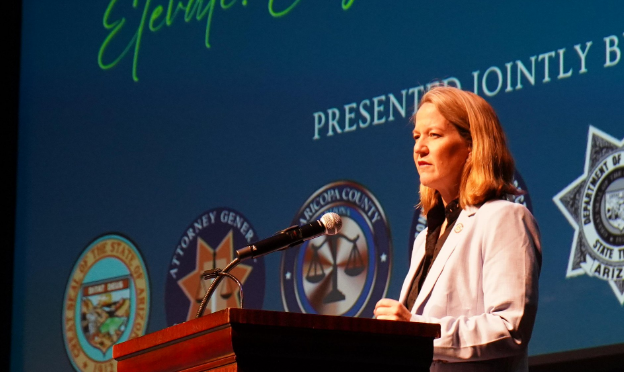
Arizona Attorney General Kris Mayes announced over the weekend her intent to investigate parents participating in the state’s school choice program.
The attorney general issued the announcement exclusively in an interview on “The Sunday Special” by 12 News. Mayes claimed that audits done in the past by the Arizona Department of Education (ADE) proved the prevalence of fraud, waste, and abuse in the ESA Program. The current administration has been in office less than a year.
“Clearly, there’s evidence of [fraud, waste, and abuse] already in audits that have been done in the past by the Department of Education,” said Mayes.
The last audit from the auditor general was issued in 2020. It found that former Superintendent Kathy Hoffman’s administration was slow to answer customer service phone calls and emails, provided poor quality information to ESA families, exceeded the 45-day statutory deadline for 55 percent of applicants, and releasing families’ personal information when fulfilling public records requests.
The last quarterly report was issued by ADE in September 2022 for fiscal year 2023.
Mayes accused the Arizona Department of Education (ADE) of not holding Empowerment Scholarship Account (ESA) Program parents accountable, and of wasting millions in taxpayer funding.
“There are no controls on this program. There’s no accountability, and they’re spending hundreds of millions of dollars of taxpayer money,” said Mayes. “That needs to be looked at. I’m the state’s top law enforcement officer, and I think it’s my responsibility to do that.”
Mayes’ announcement followed Gov. Katie Hobbs’ approval of the budget, which Mayes and other legislative Democrats opposed.
Mayes pointed out that funding for the ESA Program sits at over $300 million. As of Monday, there were just over 56,900 students enrolled in the ESA Program. Since the ESA Program gives families up to $7,000 in school choice funding for alternative schooling options, such as private and home schools, the current cost to the state sits at just under $400 million.
In public schools, the cost per student is about double the cost per ESA student — about $15 billion annually.
The attorney general also claimed earlier this month that the universalized ESA Program would be a “catastrophic drain” on state resources.
“This is taxpayer money that is now going to private schools like Brophy, Xavier, and Phoenix Country Day School, and All Saints. This money is being used by wealthy parents for their kids to go to private schools. That’s not what it was designed to do,” said Mayes.
In response to Mayes’ plan, ADE Superintendent Tom Horne noted that his predecessor, Kathy Hoffman, had intentionally attempted to undermine the ESA Program through improper administration.
“Under my predecessor, who was unfriendly to universal Empowerment Scholarship Accounts (ESAs), the laws were not strictly enforced, and therefore funds were used for non-educational purposes, including restaurants and clothing stores,” stated Horne. “Because I am the defender of the ESA program, I want the laws to be strictly adhered to. I want to ensure that not one penny is used for a non-educational expense. Arizona is the first in the nation, and a model for the rest of the country. I am determined that all laws be strictly enforced, and all funds be used only for valid educational purposes. I’m disappointed that Attorney General Mayes has chosen, at every single opportunity, politics over the law.”
In March, Horne asked the State Board of Education to make four major changes to ESA Program administration to ensure better compliance with state law. The requested changes concerned modification of allowable education-related expenditures, accreditation for tutors and teaching services, access to ESA funds and debit card use, and a vendor change from ClassWallet.
As AZ Free News reported in January, the Horne administration inherited a severely understaffed ESA Program with nearly 171,600 unfulfilled expenditure requests. Of the approved expenditure requests, the administration discovered the approval list of expenditures had grown to include things like espresso machines. Hoffman inherited nearly 37,000 unfulfilled expenditure requests.
Corinne Murdock is a reporter for AZ Free News. Follow her latest on Twitter, or email tips to corinne@azfreenews.com.
Save Our Schools Arizona (SOS) and some Dem lawmakers were up in arms last week. And anytime that happens, you know you’re probably doing something right.
Last Wednesday, the Republican-led legislature passed the $17.8 billion budget, and it was a big win for students, parents, school choice, and Arizona’s taxpayers. Despite the fact that Governor Katie Hobbs made it clear that she planned to dismantle school choice for all with a full repeal of the beloved Empowerment Scholarship Accounts (ESA), Hobbs signed the budget without any cap or restrictions on the historic program. This should be cause for celebration—unless, of course, you’re SOS or certain Democrat lawmakers.
Predictably, SOS got right to work on spreading lies about the popular ESA program, claiming it would drain K-12 public schools of funding, hurt Arizona’s economy, and even bankrupt the state. That last lie is particularly absurd, but then again SOS has a history of such desperation when its back is against the wall. (Can you imagine being this bent out of shape that children from all walks of life can get an education that best fits their needs?)
The reality is that the ESA program has absolutely exploded during this fiscal year…
Attorney General Kris Mayes has claimed that universal school choice will bankrupt the state, despite expenditure data showing that school choice saves the state money.
Mayes made the claims in a Saturday letter threatening to sue Gov. Katie Hobbs and the state legislature over last year’s universalization of the state’s Empowerment Scholarship Account (ESA) Program. Mayes blamed the ESA Program for the state’s decision to deny her office ongoing funding, claiming that the program was a “catastrophic drain” on state resources.
Thank you @AZAGMayes for speaking up. This universal voucher program is dangerous for our public schools but also our entire state and vital programs we rely on. We cannot allow this program to continue as is. Reign it in and protect our kids, their schools and our state!! https://t.co/gUg0THlHYs
The state budget reached an unanticipated increase to $2.5 billion despite the 40,000 leap in ESA Program enrollments. Total ESA enrollments reached nearly 52,000 in March. At present, there are nearly 54,000 students enrolled.
ESA Program students provide a cost-saving measure for the state. Each student receives up to $7,000 in scholarship funds — about half of what the average public school spends on each student.
Current ESA Program participation reflects a cost savings of about $363 million. Originally, those students without universal school choice would cost the state about $725 million.
Although Mayes named Hobbs as an opponent on this issue, Hobbs wouldn’t side with the slim-Republican majority supporting school choice in this fight over ESA Program funding. Hobbs has previously proposed rolling back the ESA Program on the grounds that it would cost the state $1.5 billion over the next decade.
Hobbs omitted the fact that the Arizona public school system costs $15 billion annually. If every one of the estimated 1.15 million students joined the ESA Program, the cost would be just over $8 billion annually.
After Mayes’ letter, other Democrats joined in on the call to roll back the ESA Program. State Rep. Judy Schwiebert (D-LD02) insisted that the ESA Program funds were taken away from other, more important issues.
“We need to fight the fentanyl crisis; protect our children; combat elder abuse; fund our secure & safe elections, and deal with the homelessness, housing, teacher & water crises,” stated Schwiebert.
We must cap universal ESA vouchers in the upcoming budget. They now threaten to bankrupt AZ. We need to fight the fentanyl crisis; protect our children; combat elder abuse; fund our secure & safe elections, and deal with the homelessness, housing, teacher & water crises.
— Representative Judy Schwiebert, AZ House LD2 (@JudyForAZ) May 8, 2023
State Rep. Austin Smith (R-LD29) countered that claim, declaring that ESA Program funding would cause bankruptcy was untrue.
This is just blatantly untrue. ESA’s are not bankrupting Arizona. There should be a misinformation disclaimer here. https://t.co/tqpsH70Q24
Mesa Public Schools (MPS) Board Member Rachel Walden shared that MPS had more funding at present than they had prior to the ESA Program universalization.
MPS has more $$ now than prior to the ESA expansion, above the national avg, with 9,000 less students. They still get federal, local funding regardless. They should be asking why public school is draining the tax payer. ESA students run on half this amount. pic.twitter.com/82Dul38Rhz