by Corinne Murdock | Jan 9, 2024 | Education, News
By Corinne Murdock |
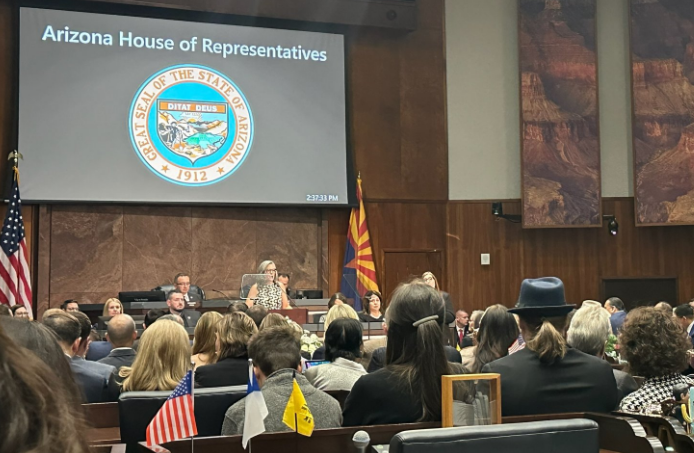
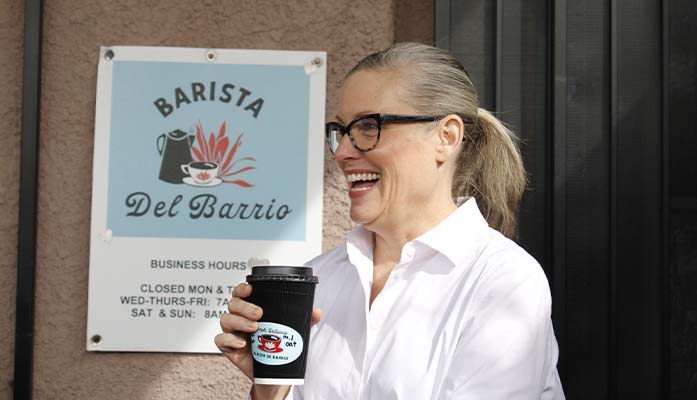
Gov. Katie Hobbs is claiming that the state’s school choice program is rife with abuse and in need of serious reform.
In her State of the State address on Monday, Hobbs claimed the Empowerment Scholarship Account (ESA) program lacks accountability and transparency, alluding to media reports of questionable and controversial expenditures — some of which were debunked previously.
“We have seen a steady stream of news coverage around unacceptable and sometimes downright outrageous use of taxpayer money under this program, including water park admissions, ski passes, and luxury car driving lessons,” said Hobbs.
The Arizona Department of Education (ADE) issues quarterly reports on the ESA program; the latest was released several days prior to Christmas. These reports include the program award amount received by students, as well as the number of orders and reimbursements approved and rejected.
ADE also provides lists of allowable and disallowable expenses, both updated last March. The ADE debunked one of Hobbs’ claims of “outrageous” expenditures last summer. In a statement, ADE clarified that it rejects expenditures for water park admissions.
An ABC15 review of 2022-23 ESA program expenditures found that ADE issued nearly 80 approvals for driving lessons and over 100 approvals for ski passes. However, that report didn’t distinguish whether those expenditures were made in 2022 under former ADE Superintendent of Public Instruction (SPI) Kathy Hoffman, or in 2023 under current SPI Tom Horne. The difference matters because, as Horne stated in November, similar “outlandish purchases” occurred under Hoffman, not him.
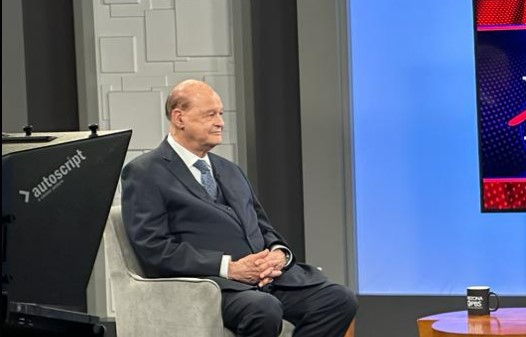
“Approvals like those came during the prior superintendent’s administration led by a friend of the leader of Save Our Schools, and one of my first acts in office was to put an end to it,” said Horne.
As reported by AZ Free News last January, Hoffman’s administration of the ESA program was described as neglectful and improper. In addition to severe understaffing and hundreds of thousands of unfulfilled expense requests, the Horne administration discovered questionable expense approvals such as espresso machines.
Hoffman’s administration of the ESA program has been something that Horne has pointed out repeatedly in refuting claims of improper ESA program expenditures.
“The frivolous ESA spending approvals occurred under the administration of the Governor’s friend, Kathy Hoffman,” said Horne in another statement last month.
As of Monday, over 73,200 students were in the ESA program.
Hobbs’ criticism of the ESA program comes days after she announced a plan to effectively dismantle the ESA program. Monday’s speech made mention of several aspects of this proposed plan: fingerprint background checks for private school educators, a new audit authority for the auditor general specific to monitoring ESA expenditures, and requirement of attendance at a public school for at least 100 days to qualify for the program.
The governor’s plan also aims to require private schools to accommodate Individualized Learning Plans and Section 504 Plans, prohibit private schools from increasing tuition costs at a rate higher than inflation, require private schools to meet certain education requirements, and require ADE to disclose which parental and student rights are waived upon entrance into the ESA program as well as graduation and chronic absenteeism rates.
At least one of Hobbs’ proposals addresses a practice already in place, according to Horne: accountability in the form of manual reviews of purchases over $500 and rejection of non-academic expenditures.
Horne explained in a statement that his staff reviews all expense requests, regardless of amount, leading to a rejection of over 12,000 purchase order requests and the suspension of nearly 2,200 accounts totaling $21 million due to public school enrollment.
“My job is to administer the ESA program in line with state law, and if changes are made, the Department of Education will follow them,” said Horne. “My office already reviews all expense requests regardless of amount, unlike the previous superintendent who approved many frivolous requests.”
That $500 threshold appears to be related to another false expenditure-related claim echoed by Hobbs from the activist group, Save Our Schools Arizona. The activist group implied in a viral post picked up by various media outlets that ADE approved an expenditure of over $500 for a Lego set.
“Contrary to a falsified document tweeted by Save Our Schools, no ESA parent has been reimbursed $500 to buy Legos,” said Horne. “To be clear, district, charter and ESA students are allowed to use Legos. The issue here is a pattern of lying. Save Our Schools admitted they fabricated a document to make it look like a parent made a $500 purchase when she did not. By doing so they have misled both the Governor and a prominent newspaper columnist, both of whom have retweeted this lie.”
Although the claim was debunked, Hobbs didn’t retract her viral accusation of ESA program mismanagement.
“Your taxpayer dollars are being used to buy $500 Lego sets because partisan politicians refuse to place limits on school vouchers,” said Hobbs.
Corinne Murdock is a reporter for AZ Free News. Follow her latest on Twitter, or email tips to corinne@azfreenews.com.
by AZ Free Enterprise Club | Jan 6, 2024 | Opinion
By the Arizona Free Enterprise Club |
After several years of inflated budgets propped up by trillions in unsustainable COVID cash flowing to the states from the federal government, Arizona lawmakers will be coming into the new year and the new legislative session facing a potential shortfall for the budget year in excess of $400 million. Naturally, the left and their sycophants in the media have for months been decrying this to be the result of 1) historic tax cuts enacted by Republicans in 2021 and 2) the successful universal expansion of school choice in 2022. This couldn’t be further from the truth, and there are three key facts that need to be remembered when discussing the state budget and a potential funding gap.
1. The Shortfall Is a Fraction of the Arizona Budget, Nothing Like California’s Crisis
The projected $400 million shortfall represents less than 5% of the total state budget, which spends $17.8 billion this year. Far from catastrophic. Compare this to our neighbor California, facing a $68 billion dollar deficit (nearly four times the size of our entire budget), which represents 22% of their $308 billion bloated budget – up from less than $200 billion only four years ago.
Opposite to our approach, California has continuously increased taxes, having one of the highest income tax burdens in the country. They also don’t provide choice to parents and families to make educational decisions themselves. Surely, if Arizona taking less of the people’s hard-earned money and providing ESAs to all families is the cause of our small funding gap, California, doing the exact opposite, should place them in tip top shape, right?
>>> CONTINUE READING >>>
by Daniel Stefanski | Jan 3, 2024 | Education, News
By Daniel Stefanski |
Mere days before the start of the 2024 Arizona legislative session, the state’s Democrat governor is finally telegraphing her primary plan for the months ahead – though her proposal is likely dead on arrival with the Republican-led House and Senate chambers.
On Tuesday, Governor Katie Hobbs issued a press release to reveal “her plan to increase accountability and transparency in the ESA voucher program.” The governor’s plan has eight elements, including “increasing student safety, protecting rights for students with disabilities, requiring accountability for taxpayer dollars, expanding auditor general authority, prohibiting price gouging, raising educational standards, establishing program transparency, reinstating eligibility requirements.”
In a statement, Governor Hobbs said, “The ESA program lacks accountability and transparency. With this plan, we can keep students safe, protect taxpayer dollars, and give parents and students the information they need to make an informed choice about their education. Arizonans deserve to know their money is being spent on educating students, not on handouts to unaccountable schools and unvetted vendors for luxury spending. My plan is simple: every school receiving taxpayer dollars must have basic standards to show they’re keeping our students safe and giving Arizona children the education they deserve.”
Hobbs’ announcement was followed by two volleys from leading Arizona Republicans. House Speaker Ben Toma immediately highlighted his opposition to the governor’s announcement, saying, “Empowerment Scholarship Accounts are wildly popular with Arizona parents because they leverage private sector solutions to offer the best educational opportunities for their children. Meanwhile, Governor Hobbs and Democratic Party legislators now seek to strangle ESAs and private education with bureaucracy and regulation. I won’t allow that to happen.”
The state’s schools chief, Superintendent Tom Horne, also issued his own statement, focusing on the governor’s proposition to mandate “accountability” for user purchases in the ESA program. Horne said, “One proposal stands out because it’s already in place: The governor recommends a manual review of ESA purchases over $500. My office already reviews all expense requests regardless of amount, unlike the previous superintendent who approved many frivolous requests. In 2023, we rejected several thousand ESA applications for lack of adequate documentation and suspended almost 2,200 accounts totaling $21 million because the student was enrolled in a public school. We’ve also rejected more than 12,000 ESA purchase order requests.”
Other legislative Republicans shared their sentiments against Hobbs’ proposals. Senator Jake Hoffman posted the following to his “X” account: “Let’s be very clear… Katie’s half cocked attempt to destroy an invaluable parental choice option via ‘death by a thousand cuts’ is DOA at the Capitol. The Arizona Freedom Caucus will make sure of it.”
Representative Jacqueline Parker added, “Nothing lacks more accountability & transparency than the government school system. ESA’s are an extremely successful & equalizing solution, so of course democrats want to mess it up.”
Arizona’s universal ESA program has long been a significant point of contention between members of the two major political parties in the state, though legislative Republicans scored a huge victory in 2023 when they negotiated a budget compromise with Hobbs that left the historic school choice opportunities completely unscathed. After news of the budget agreement hit the wires, many Democrats and education interest groups levied their disappointment and disapproval over the governor’s inability to extract any concessions with the program. Hobbs spent the rest of the year picking fights with Horne over the stewardship and leadership of ESAs in an attempt to win back political capital, leading to this announcement just ahead of the commencement of the upcoming session.
Daniel Stefanski is a reporter for AZ Free News. You can send him news tips using this link.
by Daniel Stefanski | Jan 2, 2024 | Education, News
By Daniel Stefanski |
The holiday season didn’t bring holly and jolly to the ongoing feud between Arizona’s Democrat Governor and Republican Superintendent of Public Instruction.
In the days leading up to Christmas, Governor Katie Hobbs and Superintendent Tom Horne exchanged press releases over their dueling perceptions of the due date of the quarterly Empowerment Scholarship Account (ESA) report.
On December 21, the Director of the Governor’s Office of Strategic Planning & Budgeting, Sarah Brown, transmitted a letter to Horne, asking him to send the FY 2024 Quarter 1 Report for the ESA Program to statutory recipients by the following day. Brown opined that this “late report comes after a number of stories showing a concerning lack of accountability and transparency in the ESA program.”
Governor Hobbs posted a short statement to her “X” account, asserting that “Arizonans deserve to know how their taxpayer dollars are being spent. We need true accountability and transparency in the ESA voucher program.”
Horne wasted no time in responding to the latest attack on the program he guides and stewards, saying, “The Department of Education has been in contact with the Governor’s Office for nearly three weeks regarding this issue. They are fully aware that we are preparing the report she has requested. Nothing is being withheld.”
Brown also accused Horne of essentially mismanaging dollars in his budget, highlighting the Department of Education’s spending of “millions of dollars advertising the program even with the escalating costs that threaten to crowd out critical spending from the State budget.”
The superintendent’s marketing efforts for the ESA program were practically mandated and empowered earlier this year with the passage of the State’s budget between Governor Katie Hobbs and Legislative Republicans, when freshman Senator Janae Shamp reportedly earmarked $10 million for school choice advertising at the Arizona Department of Education. On August 24, Shamp responded to a critical piece about the targeted funds, writing, “Families are not getting the REAL facts. So called ‘reporting’ by the left and their media henchmen fails to acknowledge the true winners of this money well spent…THE KIDS! Now they will receive education that meets their personal needs.”
Before Shamp’s allocation, Horne had executed marketing campaigns for the ESA program, though at far less expense than the levels he obtained after the latest State budget.
The Governor’s Office also pointed out the revelations of ESA dollars being used to fund “ski passes and luxury car driving lessons.” In his response to this criticism, Horne retorted that those “frivolous ESA spending approvals occurred under the administration of the Governor’s friend, Kathy Hoffman.” He added that his department had “reviewed more than 15,000 ESA applications, rejecting thousands that were incomplete in the first quarter of Fiscal Year 2024 alone.”
As he closed his statement, the Republican schools chief wished his readers a “Merry Christmas!”
Daniel Stefanski is a reporter for AZ Free News. You can send him news tips using this link.
by Corinne Murdock | Nov 16, 2023 | Education, News
By Corinne Murdock |
On Tuesday, House lawmakers convened to discuss the impact of universal school choice in the state.
The House Ad Hoc Study Committee on Empowerment Scholarship Accounts (ESA) Governance and Oversight heard public comments and expert testimony from Alan Maguire, a consultant with the Maguire Company; Patrick Moran, a Joint Legislative Budget Committee (JLBC) staffer; and John Ward, executive director of the ESA Program at the Arizona Department of Education (ADE).
Maguire said that ESA recipient growth has slowed as the school year has gone on, which he said was typical. He expressed the expectation that almost no matter what happens, the ESA Program’s implications for the state budget would be significant but manageable.
“I don’t think [the changes] we’re facing as a result of changes in the ESA recipients will be that challenging; challenging, but not scary challenging,” said Maguire.
Moran, the JLBC staffer, addressed the K-12 financing issues related to student movement between district and charter schools and the ESA Program. The Arizona Department of Education has $11.8 billion, but public schools receive funds from the Basic State Aid (BSA) Formula, which has $9.7 billion.
The BSA Formula factors funding based on average daily membership (ADM) student counts: enrollment of full-time/fractional students for the first 100 days, minus withdrawals, wherein students must meet the minimum requirements for total instructional hours/courses to be counted. The unweighted student count for the 2024 fiscal year was about 1.1 million.
Then, the ADM is weighted based on several grouped statutory factors: Group A weights adjust for school size, location (whether urban or rural), and type (K-8 or high school); Group B weights adjust for specific student populations, such as special education, English learners, or K-3 reading programs. With these group weightings, the 2024 fiscal year count reached about 1.56 million.
The BSA Formula components within the enacted budget established a base funding level of $7.8 billion, additional assistance at $1.04 billion, and transportation at $213 million. Property taxes fund nearly $2.6 billion of the public school formula, which the state partially offsets with a homeowner’s rebate (50 percent in the 2024 fiscal year with a cap of $600).
The enacted budget projected that the ESA Program would cost $625 million for 68,000 enrollees. However, actual enrollment is currently at about 70,000, and the ADE reported that awards have reached $665 million — $40 million over what was assumed in the budget. Moran said that this didn’t necessarily qualify as a shortfall for the ADE because they lack the data on where those new ESA students hailed from.
“We can’t determine the impact of ‘switchers’ in real time, because we don’t know of those 70,000 how many were in public school in FY 2024 and FY 2023,” said Moran. “We also need to know how much formula funding those students were generating in the district or charter school they were previously attending to calculate that net impact.”
Moran said that the average student award was lower from the ESA Program than for public district schools.
“Based on the data that ADE has shared with us, we think the average ESA [award] across all populations original and universal would be about $9,700 [per student], so it would be lower than the $12,200 [for charter schools] and lower than the $14,000 figure [for districts],” said Moran.
State Rep. Judy Schweibert (D-LD02) stated that Arizona ranked 48th in the nation for public school funding, based on federal data. House Speaker Ben Toma (R-LD22), the committee chairman, rebutted that the federal rank may not be entirely accurate, arguing each state’s funding formula for schools was unique and therefore not an apples to apples comparison.
Ward with the ADE offered management and administration updates concerning the ESA Program. Ward reported that the program has grown to nearly 70,200 students from over 13,400 students last September just prior to universalization. He projected that the ESA Program may reach anywhere from 90,000 to 100,000 students by the beginning of the next school year.
Ward projected that ESA awards may reach about $780 million by the end of the 2024 fiscal year. He dismissed concerns that the awards would bankrupt the state, reporting that even at that total the program would have a $57 million surplus in BSA.
Ward touched back on Moran’s assessment that public school student allocations were higher than ESA student allocations: $13,400 for public school students in the 2022 fiscal year versus $9,800 for ESA students in the 2024 fiscal year.
He reported that of the over 15,000 applications reviewed, several thousand were dismissed as incomplete. Additionally, almost 2,200 ESA accounts were suspended because of records indicating they were still enrolled in public school; their annual awards totaled over $21 million.
The ADE will be automating some of its processes going forward concerning purchase approvals and enrollment. ADE has partnered with ClassWallet to curate the catalogs of vendors on the marketplace and establish a rules engine, as well as to deploy directpay, reimbursement, and debit card auto approval through scanning technology and another rules engine.
Additionally, the ADE plans to improve data transparency by publishing a data dashboard. Types of data will include the number of ESA participants by eligibility type, grade level, gender, age, zip code, and county; number of students previously in a public school; number of applications coming in weekly and monthly; and average and median award amounts.
State Rep. Nancy Gutierrez (D-LD18) asked whether the surge in ESA Program popularity had to do with private school families. Moran said that 40 percent of ESA students came from public schools this fiscal year (2024), an increase from the last fiscal year (2023) prior to universalization.
Corinne Murdock is a reporter for AZ Free News. Follow her latest on Twitter, or email tips to corinne@azfreenews.com.