by AZ Free Enterprise Club | Mar 3, 2024 | Opinion
By the Arizona Free Enterprise Club |
For the past three years, the people of Arizona have been forced to deal with the fallout of a struggling economy, rising prices, and an inflation rate that, at one point, was the highest in the country. With this in mind, Republicans got to work, delivering the largest tax cut in state history and following that up with a budget that included tax rebates for Arizona families.
But Governor Katie Hobbs clearly has much different priorities when it comes to your hard-earned money. True to her 10-year history of pulverizing Arizona taxpayers, Hobbs announced during her State of the State address in January her desire to—you guessed it—massively grow the size of state government. And judging by the executive staff hiring spree that Hobbs is on as governor, it’s clear that this isn’t just empty rhetoric…
>>> CONTINUE READING >>>
by Elizabeth Troutman | Feb 20, 2024 | Education, News
By Elizabeth Troutman |
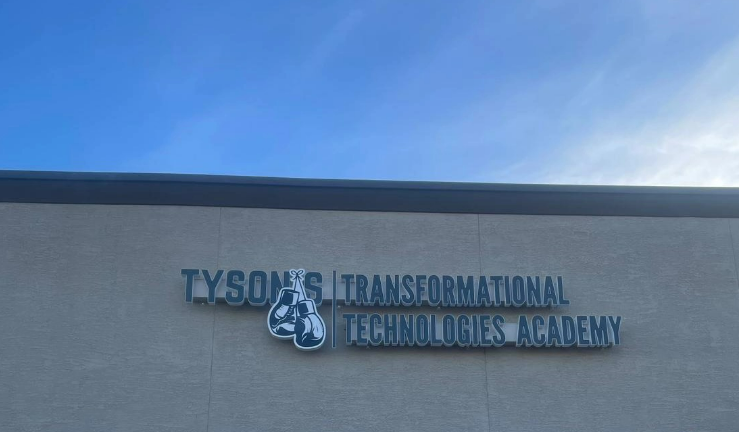
Former boxing champion Mike Tyson recently launched a middle and high school in Phoenix, Arizona.
Tyson Transformational Technologies Academy is a Cognia Accredited Micro-School in Arizona for grades six to 12.
The world Champion boxer, entertainer, and entrepreneur partnered with the Foundations Academies School System and undefeated MMA fighter Daniel Puder to start the school.
“It’s important to me that I am able to share my life experiences to inspire the next generation,” Tyson said. “This new educational institution will build core values that I am honored and grateful to be part of the Arizona community. I was thrilled to be part of the ribbon cutting ceremony and meeting some of the students.”
The price of tuition is covered through the Empowerment Scholarship Accounts (ESAs) and internal school scholarships.
Since late 2022, all Arizona students have been eligible for an ESA as a K-12 student or as a preschool student with a disability. Families with qualifying students enrolled in the ESA program can use their ESA funds for expenses including educational services, education providers, curriculum, and other educational expenses.
Tyson’s school aims to “redefine learning by combining innovation, financial literacy, mentorship, and community engagement.” The academy will provide quality education and opportunities for personal growth to every youth regardless of their academic challenges, ethnicity, or socio-economic status, the Feb. 15 news release says.
“As a society, we get to build our youths for the next generation,” Puder said. “We are so blessed to have Mike Tyson part of our school system. He inspires our students.”
To enroll their child, parents can contact (480) 448-5181.
Elizabeth Troutman is a reporter for AZ Free News. You can send her news tips using this link.
by Corinne Murdock | Jan 31, 2024 | Education, News
By Corinne Murdock |
Gov. Katie Hobbs has introduced legislation that would end the entirety of Arizona’s school choice program come 2032.
On Monday, Hobbs announced the release of the bill, part of a forthcoming package, to bring to heel and then end the Empowerment Scholarship Account (ESA) program.
In the press release announcing the legislation, neither Hobbs nor Democratic leaders mentioned the provision ending the entire ESA Program: both the universal and special education components. The coalition characterized the legislation as containing accountability and transparency measures.
As justification for the legislation, the governor repeated claims of misused ESA funding that have been debunked by Arizona Department of Education (ADE) officials.
“Arizonans deserve to know their taxpayer dollars are being spent giving Arizona children the education they deserve, not on luxury car driving lessons, ski trips, and water park passes,” said Hobbs. “We must bring accountability and transparency to the ESA program.”
The bill, SB1399, was introduced by Sen. Minority Leader Mitzi Epstein (D-LD12). Under the bill, the ESA Program would end on July 1, 2032 unless continued by an act of the legislature approved by the governor.
The bill also would:
- Require educators at ESA-funded schools to have a higher education; at least three years of teaching experience; and specialized skills, knowledge, or expertise related to the subject matter of instruction
- Require fingerprinting and background checks for ESA-funded educators and tutors
- Prohibit sales of items purchased using ESA funds
- Require preapproval of transactions of $500 or more
- Require the purchase of the least-expensive version of educational goods or services
- Require ADE to disclose the legal rights waived by admission to the program
- Require ADE to estimate the funds needed for the ESA program for the upcoming fiscal year
- Implement additional performance and fiscal reporting requirements for ESA-funded schools
- Require ESA-funded schools to adhere to outside individualized education programs or Section 504 plans
- Establish annual audits of ESA-funded schools
- Establish a legislative committee review of the ESA program to determine its economy and efficiency, achievements and shortcomings
Epstein also didn’t mention the bill’s total eradication of the ESA Program. Rather, the senator indicated that her issue with the ESA Program concerned its universalization.
“The unaccountable government expansion of ESA vouchers has put our state’s financial security, and our students, at risk,” said Epstein. “These commonsense safeguards will be vitally important for giving Arizona children a safe and quality education, and bring the same accountability and oversight to ESAs that we expect for any taxpayer spending.”
Similarly, House Minority Leader Lupe Contreras (D-LD22) — anticipated to introduce mirror legislation soon — said that the legislation consisted of “basic standards” for transparency and accountability.
The governor put the legislature on notice of the forthcoming legislative package earlier this month.
The day after Hobbs dropped her legislation, ADE Superintendent Tom Horne released the latest data on the ESA Program. Horne reported a projected surplus of $28 million through the 2024 fiscal year, which ends in June.
Citing the projected surplus, Horne denounced the accusations from Hobbs and Democratic lawmakers that the state’s budget woes were attributable to the ESA Program expansion.
“Whatever budget issues state lawmakers are facing this year, they have not been created by the ESA program or any other aspect of basic state aid for education,” said Horne. “The fact there is a surplus in basic state aid, including the ESA program, demonstrates our commitment to good financial stewardship.”
Matt Beienburg of the Goldwater Institute, a major proponent of the ESA Program, said that Hobbs’ proposal constituted “an all-out assault” on students and their families as well as a “government takeover” of private schools.
“Building off Gov. Hobbs’s recent proposal to rip away 50,000 ESA scholarship awards, this legislation goes even further and would terminate the entire ESA program—including for students with special needs—before thousands of these children even complete their studies,” said Beienburg. “This legislation would impose a government takeover of private school tuition rates and operational decisions, attempting to destroy private education and parental autonomy, forcing thousands of families back into a system they’ve desperately tried to escape.”
Corinne Murdock is a reporter for AZ Free News. Follow her latest on Twitter, or email tips to corinne@azfreenews.com.
by Elizabeth Troutman | Jan 25, 2024 | Education, News
By Elizabeth Troutman |
The Arizona Board of Education’s decision to uphold rejections of questionable Empowerment Scholarship Account (ESA) expense requests shows that “we allow only what public schools provide at reasonable cost,” according to State Superintendent of Public Instruction Tom Horne.
Horne applauded the State Board’s unanimous decision. In Monday’s meeting, the board rejected two appeals of expense requests from parents that the Department of Education had rejected.
“In recent months much has been made of supposedly extravagant ESA expense approvals,” Horne said. “But our policy of reviewing all requests is far different from that of my predecessor who did allow a number of inappropriate expenses to be approved and which ESA opponents continue to falsely claim as alleged abuses today.”
“The department and State Board have again shown this week that we take these expense approvals seriously and will not tolerate attempts to go beyond what the law permits,” Horne continued.
One of the rejected ESA requests was for a $2,300 commercial freeze dryer, which serves no educational purpose, so is not a valid expense under state law. The other rejected request was for car seats.
State law says that every child must be secured in a car seat, and parents do not have the right to use ESA funds to buy something they are already required to provide, according to Horne’s news release.
The department expects to defend against an appeal from a parent requesting a $500 dune buggy in the next few months.
“Despite the claims we hear from opponents of the ESA program, under my watch we review every expense request regardless of dollar amount,” Horne said. “Things such as commercial freeze dryers and dune buggies that might be approved under the previous administration are being rejected now.”
Horned said ESA staff has reviewed 252,000 orders and rejected 12,200 of them in recent months.
“This work takes extra time and effort, but it is necessary to make sure ESA taxpayer funds are spent for valid educational purposes and are in line with state law,” Horne said.
Elizabeth Troutman is a reporter for AZ Free News. You can send her news tips using this link.
by AZ Free Enterprise Club | Jan 20, 2024 | Opinion
By the Arizona Free Enterprise Club |
If any business owner saw 450% growth in one of the company’s products or programs during a 15-month period, they would be ecstatic. And it’s safe to say that whatever that program was doing must be working. But for Governor Katie Hobbs and her allies in the teachers’ unions, who have never been known for their math skills, it’s a completely different story when it comes to the ESA program.
Back in July 2022, when then-Governor Doug Ducey signed universal school choice expansion into Arizona law, 13,400 students were enrolled in the ESA program. That number has now grown—as of January 16, 2024—to an astounding 73,415 students—a near 450% growth. Clearly, the program is in high demand, and it is definitely working. But after signing the Republican budget bill last year, without any cap or restrictions on ESAs, Hobbs is now trying to push a barrage of regulations that would effectively dismantle the popular program…
>>> CONTINUE READING >>>