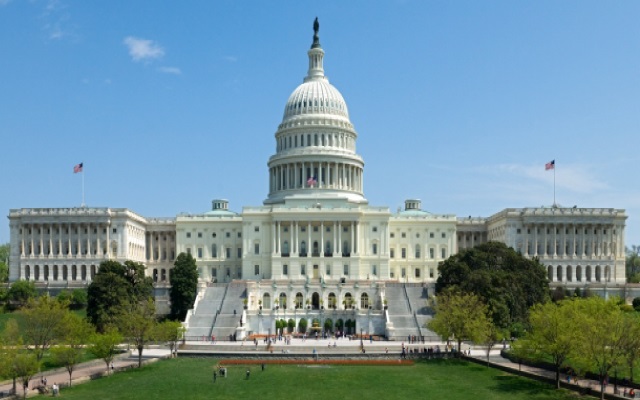
Arizona could gain a tenth congressional seat if population trends continue, according to the U.S. Census Bureau’s new 2023 population estimates.
Population estimates for 2023 released on Dec. 19 show Arizona, Florida, and Idaho gaining one additional seat in the House of Representatives and Texas gaining two additional seats.
Arizona and Idaho narrowly missed gaining a seat with the official apportionment counts two years ago. Arizona was only 79,509 away from adding a tenth seat, while Idaho was 27,579 away from a third.
The estimates show Illinois, Minnesota, and New York each losing one seat, while California would lose two.
The Census Bureau’s new population estimates would provide both the Grand Canyon State and Idaho with the needed seats for a new representative. Arizona would have 111,058 people above the cut-off for an additional seat.
Arizona’s population growth ranked seventh highest in the United States from 2022-2023, increasing by more than 66,000. Arizona had 7,365,684 residents in 2022 and rose to 7,431,344 in 2023, census data shows.
Election Data Services also predicts that 13 states would change seat numbers by the end of the decade, with eight states gaining one or more seats and seven states losing one or more seats.
Arizona would gain one seat; Florida would gain three; Georgia, Idaho, Utah, North Carolina, and Tennessee would gain one; and Texas would gain four.
But the Census Bureau noted potential inaccuracy in its 2030 predictions.
“Projections tend to assume a straightforward line from the initial points of observation on a linear line to the end point,” a news release reads. “But changes can take place over the time period covered by the line.”
People may be drawn to Arizona due to its low taxes. Arizona’s flat individual income tax rate of 2.5 percent took effect in 2023.
The majority of Arizona’s new residents come from California, which has an income tax rate of 13 percent, the highest in the nation. One in every five people who moved to Arizona between 2017 and 2021 came from California, according to census data.
Elizabeth Troutman is a reporter for AZ Free News. You can send her news tips using this link.
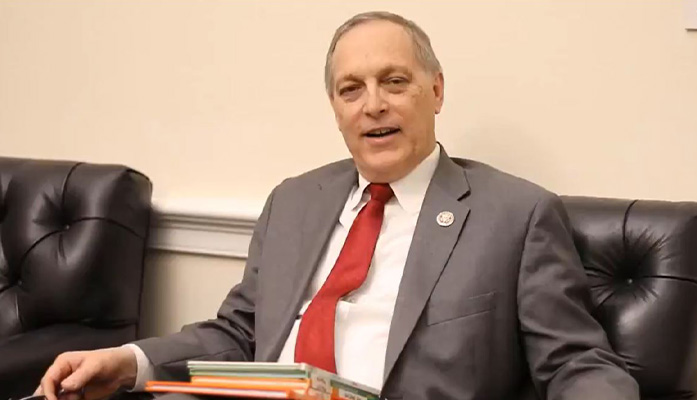
On Tuesday, Rep. Andy Biggs (R-AZ-05) and the House Freedom Caucus spoke in opposition to Congress’ plan to raise the debt ceiling: the Fiscal Responsibility Act (FRA).
Under the current plan, the debt ceiling would increase from $31.5 trillion to $36 trillion by 2025, with no cap in place. Without a raise in the debt limit by June 5, the government will be in default.
“Instead of estimating the actual debt ceiling that will be imposed by that date, January 1, 2025, they simply say that will be the date, there will be an unlimited cap,” said Biggs. “There won’t be a cap for 19 months of the Biden administration, and the Biden administration is probably the most profligate we’ve seen.”
Honored to stand with my colleagues in the @freedomcaucus today.
The national debt current growth rate is projected at over $4 trillion in new debt. Biggs forecasted an increase to $5 trillion by 2025.
Biggs claimed that the version of the FRA agreed to under House Speaker Kevin McCarthy (R-CA-20) would only delay, not prevent the IRS from hiring 87,000 new agents costing $71 billion. Biggs said these agents would not only be weaponized against taxpayers, but presented a significant financial burden.
Biggs further claimed that the FRA establishes Green New Deal tax credits and subsidies for the wealthy. He further criticized the PAYGO program, which would require government bureaucrats to justify how they would afford their expenditures; Biggs noted that a similar program already exists in Congress, yet that program hasn’t slowed spending. He added that Congress also already waives PAYGO provisions.
“How come it is Republican leaders always tell us ‘next year we’ll fight hard’?” asked Biggs.
Rep. Raúl Grijalva (D-AZ-07) also opposed the FRA, but for different reasons. Grijalva expressed opposition to the FRA in his capacity as Democratic ranking member of the Natural Resources Committee. He argued that the FRA would jeopardize the National Environmental Policy Act (NEPA).
Watch the full press conference here:
Rep. Thomas Massie (R-KY-04) criticized the Senate for attempting to corner the House into approving their version of the funding bill.
“[The Senate is] sending us a giant omnibus bill the day before the government funding runs out, and saying, ‘Pass the Senate version or the House will be responsible for the shutdown,” said Massie.
House Republican Conference leadership backs the FRA. The chairwoman, Rep. Elise Stefanik (R-NY-21) claimed the FRA would stop runaway inflationary spending, rescind executive overreach, and improve everyday Americans’ financial status.
With the Fiscal Responsibility Act, House Republicans will:
1. Stop out-of-control inflationary spending. 2. Rein in executive overreach. 3. Lift Americans out of poverty.
McCarthy also characterized the FRA as a win, adding that their version eliminates COVID-19 spending, prevents $5 trillion in new tax proposals, and enacts more work requirements for welfare recipients.
Treasury Secretary Janet Yellen warned Congress in January that the U.S. had reached its statutory debt limit and would run out of funding sometime in early June. In a follow-up letter last week, Yellen specified the expiration date as June 5.
She disclosed that her department would fulfill over $130 billion of scheduled payments in the first two days of June, including payments to veterans as well as Social Security and Medicare recipients. Yellen added that scheduled payouts would leave the Treasury unable to satisfy all its fiscal obligations.
Corinne Murdock is a reporter for AZ Free News. Follow her latest on Twitter, or email tips to corinne@azfreenews.com.
Decades of institutional self-neglect have left Congress dysfunctional and unfit to fulfill its constitutional role as the most consequential branch of government. Government of the people has morphed into government by bureaucrats, by the executive, and by the courts. The decision-making mechanisms of the People’s House are broken.
If you were fortunate enough to be educated in “civics,” you may remember being told of the process by which a bill becomes law. It is introduced by sponsors, assigned to committees, vetted with testimony and amended, referred to the whole body if approved, debated and amended again, passed out, and then sent to the corresponding legislative body if successful.
Known as Regular Order, the process can be tedious, but it has a purpose: to ensure a free, fair process in a lawmaking body where input from all is accepted and the final vote reflects the informed decision of a majority of members.
Well, kids, here’s the bad news. That process doesn’t really exist in today’s Congress. Instead, lawmakers use their authority to exempt themselves from their own rules. A jerry-rigged-substitute process has developed that, in the House, concentrates power in the Speaker’s office.
Meaningful decisions are made almost always at the leadership level. The rank-and-file are simply suits who vote. Representatives write newsletters telling constituents of any pork they’ve been able to score and the issues they are “fighting for” without disclosing how little real influence they have.
Thus, Congress enfeebles itself. It’s well suited to incumbent protection but not for effectiveness as an institution.
The Freedom Caucus, a right-leaning group of Republicans, is determined to change this. They note, for example, Congress hasn’t produced a legitimate budget in decades. Instead, they pass leadership-created “omnibus” bills with little prioritization or accountability, a process that has contributed to our devastating debt.
The Freedom Caucus has taken a lot of guff for their reform efforts. But how can they be faulted for grasping at a rare chance when they have influence? In the last Congress, they were a minority faction in a minority caucus. Now that their votes are needed to elect Kevin McCarthy to the speakership, they are trying to wield their influence usefully.
Their main ask is that the rank-and-file get a voice in the legislative process. Under present rules, for example, no lawmaker is able to introduce an amendment, either in committee or on the floor, in open process. The hoped for solution is to mandate voting on amendments that are supported by at least 10 percent of the members, a move that would greatly open up the legislative process.
Probably the most controversial proposal is to revive the “Motion to Vacate the Chair,” which empowers any member to call for a new speaker election. The rule was in place for 200 years before it was repealed in 2019 by Queen Nancy.
In practice, the rule was rarely invoked, presumably under the ancient dictum that “if you strike the king, you must kill him.” It would make the speakership less autocratic, balancing the power differential between leadership and the rank-and-file.
Pelosi Democrats often wrote significant legislation behind closed doors and then bull rushed it through Congress before legislators had time to read it. The Freedom Caucus members are calling for 120 hours between a bill’s introduction and its passage, which could only be overridden by a two-thirds majority.
Finally, the Freedom Caucus is asking McCarthy to agree to secure majority support from Republican members before bringing legislation to the floor. This too seems reasonable since Americans will rightly hold Republicans accountable for the performance of the House this term.
None of these proposals are outrageous. In fact, by making the legislative process more democratic and transparent, they give Republicans the chance to present themselves as the party of sound governance.
But the Freedom Caucus should not overplay its hand. If Rep. McCarthy is willing to compromise on some of their key demands, they should honor their own principles of majority rule and concur in his election, since it is favored by an overwhelming majority of Republicans.
Both sides should see this is an opportunity for a win-win, the potential kickoff to a new era of constructive change.
Dr. Thomas Patterson, former Chairman of the Goldwater Institute, is a retired emergency physician. He served as an Arizona State senator for 10 years in the 1990s, and as Majority Leader from 93-96. He is the author of Arizona’s original charter schools bill.
Arizona’s congressional leaders on both sides of the aisle didn’t appear too fond of the Democrat-led Congress’ $1.7 trillion, 4,000-page spending bill.
Republicans decried the plan entirely, first noting the Democrats’ last-minute submission of the legislation for review and demand for a vote. They admonished what they considered excessive spending, especially given the nation’s current financial insecurity. Democrats that commented on the spending bill, which were few, were more vocal about the aspects they disliked than the virtues of the package. However, Democrats ultimately voted for the bill.
Rep. Andy Biggs (R-AZ-05) declared that the omnibus was an “assault” on the people, separation of powers, and fiscal responsibility. He warned it would devalue the American dollar to “unprecedented levels.”
If passed, this omnibus will devalue our currency to unprecedented levels.
Biggs and representative-elect Eli Crane signed onto a letter led by Rep. Chip Roy (R-TX-21) urging the Senate GOP to unify their 41 votes to kill the bill.
This slated "omnibus spending bill" is an indefensible assault on the American people.
Biggs said that Republican resistance on the spending bill would allow the incoming Republican-led House to hold the FBI accountable for suppressing free speech online.
If we keep this radical omnibus from passing, my colleagues and I will be able to make adjustments to hold the FBI more accountable.
Just recently it was revealed FBI paid Twitter $3.4M for spying on users making dissenting arguments and jokes.
Biggs also shared commentary from Sen. Rand Paul (R-KY) disputing Democrats’ claim that Republicans were holding up the spending bill. Paul reminded the public and press that the Democrat-led Congress, just as with every other Congress, knows the deadline.
Q: Are YOU going to hold up this spending bill? A: Leadership knows the deadlines. It is all on them. THEY fail every year to meet the deadline. Then they blame conservatives for not rubber stamping a $1.7 trillion, 4,000+ page spending bill. pic.twitter.com/I94ITyrAnt
Rep. Paul Gosar (R-AZ-04) said the bill was “America Last” in nature. He criticized Senate Minority Leader Mitch McConnell (R-KY) for prioritizing Ukraine over America.
Gosar listed a litany of real issues facing the country: inflation, declining wages, World War II-era shortages and supply chain issues, record crime levels, a weaponized Department of Justice (DOJ), FBI censorship and political persecution, Big Tech monopoly colluding with the DOJ, Biden family corruption with illegal Ukrainian bribes, record levels of broken families, a transgenderism crisis, failing infrastructure, record low confidence in government, broken elections systems, inept public health systems, COVID-19 vaccine harms, declining military, over $31 trillion in debt.
“Yet the Omnibus bill failed to remedy a single one of these very real problems. Not one. In fact, it rewards the DOJ, the FBI and the failed military leadership with more money and no reforms and no investigations. Not a dime is allocated towards securing our own border,” said Gosar.
More than two months into FY2023 and in the dark hours of the early morning, Congressional appropriators unveiled their egregiously wasteful omnibus spending plan that includes another $45 billion of hardworking American taxpayer dollars to fund a proxy war in Ukraine. (1/15)
Rep. Debbie Lesko (R-AZ-08) said the plan was “reckless.” Lesko noted that the country’s interest payments would surpass the entire Department of Defense (DOD) budget on a yearly basis ($742 billion).
Lesko also noted that 63 percent of Americans are living paycheck to paycheck.
“We cannot continue spending money that we don’t have,” said Lesko.
🚨🚨MUST LISTEN INTERVIEW: I joined @toddstarnes to discuss how I’ll be voting NO on the Democrats' reckless spending package, how the Biden Administration is complicit in cartels' criminal activities at the southern border, and the sham January 6th Committee. pic.twitter.com/KCx80lF1Jz
Sen. Kyrsten Sinema (D-AZ) backed the bill, declaring that further funding for Ukraine was a good thing. However, Sinema did break with her former party (she now identifies as an independent) to speak out on border policy within the bill. Sinema reaffirmed dedication on a bipartisan solution with Sen. Thom Tillis (R-NC) for border legislation.
As AZ Free News reported last week, Sinema has been attempting to broker a pathway to citizenship for Dreamers in exchange for increased border security measures.
Congress continues standing by Ukraine, and I applaud our bipartisan action supporting Ukraine with the funds and resources it needs to defend itself against Russia’s illegal and unprovoked attacks.
Rep. Greg Stanton (D-AZ-09) criticized the decision to leave out the Afghan Adjustment Act, legislation to expedite the legal status process for Afghan evacuees. Stanton signaled his support for Ukraine as well.
Congress has failed its duty to protect Afghans who risked their lives for our troops.
With the Afghan Adjustment Act left out of our year-end funding bill, thousands will stay in limbo because of a few Senate Republicans. This is morally inexcusable.https://t.co/XhpSnSupM4
Rep. Ann Kirkpatrick (D-AZ-02) had the most favorable view of the spending bill. She championed the legislation as a great increase in funding for Arizona.
As Arizona’s Appropriator, I'm proud of our work on FY23 funding package. My position on committee allowed me to deliver significant victories to AZ
Last gov funding push of my career & we finished strong-highest $$ deliverables in AZ delegation…again!https://t.co/Xz2ytIsRo9
On Wednesday, the House Judiciary Committee rejected a resolution requiring the Department of Justice (DOJ) to turn over records on federal agents or assets that encouraged protesters to enter the Capitol on January 6.
The original version of the resolution, introduced by Congressman Paul Gosar (R-AZ-04) last Friday, focused solely on Ray Epps, an Arizona man and former Oath Keeper leader accused of working as a federal informant. During Wednesday’s hearing, Congressman Thomas Massie (R-KY-04) amended the resolution to focus on federal involvement.
While Republicans urged transparency concerning Epps’ involvement, Democrats claimed ignorance or avoidance of the topic. Aside from Congressman Jamie Raskin (D-MD-08), who called Epps a “poor schmuck” being demonized by his own party, Democrats focused on expressing disdain for Republican characterizations of the January 6 riot.
ICYMI today: @RepThomasMassie amended @RepGosar resolution for DOJ records on #RayEpps , broadened to focus on "agents or assets of federal government who encouraged protesters to enter the Capitol building on January 6." House Judiciary Committee rejected it.
Massie urged the committee to pass the resolution, noting that the Biden administration hasn’t been completely transparent about Epps. He declared that the DOJ’s lack of interest in Epps defied logic, especially since the Biden administration prosecuted all other January 6 rioters and launched a formal committee to investigate the riot.
Massie showed multiple video clips of Epps telling protesters on January 5 and 6 to “go into the Capitol.” Massie stated that Epps is the only person on video telling protestors to go into the Capitol, noting that the first breach of the Capitol grounds occurred directly after Epps whispered into one of the trespasser’s ears.
Massie recounted investigative reporters’ details of the FBI’s action or inaction concerning Epps. This included the Revolver News reports (first and second) that the FBI listed Epps initially on their Most Wanted page for January 6 rioters, but later removed him without explanation. This also included Epoch Times reports (first and second) that Epps was the only protestor that had a premonition of the pipe bombs discovered on January 6. Additionally, this included New York Times reporting on Epps’ alleged text messages to his nephew admitting that he helped people breach the Capitol.
“[Epps’ involvement is] easily proven false if they would release this information. If the federal government would tell us, point-blank, no uncertain terms, under oath, not some staffer, not some statement released on some hearsay, not by leaking it to the New York Times, not by trying to soften the blow by putting things out in the press, just come here and tell us,” said Massie.
Massie rejected the House Select Committee to Investigate January 6 (January 6 Committee) assessment of Epps. In January, the committee revealed that Epps told them that he wasn’t working with or for any law enforcement agency on or before January 6. According to Massie, the committee promised to release a transcript of their interview with Epps. They haven’t.
The Select Committee is aware of unsupported claims that Ray Epps was an FBI informant based on the fact that he was on the FBI Wanted list and then was removed from that list without being charged.
Congressman Dan Bishop (R-NC-09) remarked that there are different standards of justice for Republicans versus Democrats: former President Donald Trump’s Mar-a-Lago documents versus Hillary Clinton’s emails, the months of Black Lives Matter (BLM) riots nationwide in 2020 versus the single afternoon of rioting last January.
“[M]any Americans believe there is a dual standard of justice in the country,” said Bishop. “Nothing reinforces Americans’ sense of a dual standard of justice more than the vehement embrace by Democrats of unequal consequences for like conduct. And it is done all the time.”
Watch the full debate on the resolution below:
Corinne Murdock is a reporter for AZ Free News. Follow her latest on Twitter, or email tips to corinne@azfreenews.com.