by Daniel Stefanski | Jan 9, 2025 | News
By Daniel Stefanski |
Members of Arizona’s Republican delegation to the U.S. House of Representatives were key to a border-related bill passing their chamber.
In one of the first legislative actions of the 119th Congress, the U.S. House of Representatives passed H.R. 29, the Laken Riley Act, which was introduced by U.S. Congressman Mike Collins from Georgia. All members of Arizona’s Republican delegation voted in favor of the bill, as did one Democrat, U.S. Representative Greg Stanton.
According to its congressional summary, H.R. 29, if enacted would “require the Department of Homeland Security to detain certain non-U.S. nationals who have been arrested for burglary, theft, larceny, or shoplifting.”
One of Arizona’s Republicans who voted for the legislation, U.S. Congressman Eli Crane, said, “I’m pleased to report that the Laken Riley Act passed out of the House of Representatives. This bill will protect our communities and give our law enforcement agencies the resources they need to prevent avoidable tragedies. It’s appalling that 159 Democrats sided with criminal aliens by voting against this commonsense measure. Despite their senseless opposition, I’m glad we were once again able to get this bill across the finish line. I appreciate Rep. Mike Collins for his leadership, and I look forward to its swift passage in the U.S. Senate before heading to President Trump’s desk.”
Crane’s press release highlighted that this bill “directly addresses one of the federal policy failures related to Laken Riley’s murder. Her murderer, Jose Ibarra, is an illegal alien who had been previously cited for shoplifting by the Athens Policy Department. If local law enforcement had called ICE, and ICE issued a detainer and picked him up, Laken would be alive.”
U.S. Congressman Abraham Hamadeh added, “While we cannot possibly remediate the pain caused at the hands of violent illegal immigrants, we must do all we are able to do to stop illegal immigrant crime before it begins and save future American lives. This should be a unanimous and non-partisan issue. I’m grateful for my colleagues who see this as such.”
U.S. Congressman Juan Ciscomani wrote, “Securing the southern border and protecting our citizens is a top priority in the 119th Congress! I voted for & cosponsor HR 29, the Laken Riley Act, to honor her memory and ensure bad actors here illegally are detained to prevent innocent lives from being lost to the crisis.”
The bill was named after a young woman at a Georgia nursing school who was horrifically and tragically murdered by an illegal immigrant in the United States. Late last year, the murderer was found guilty and sentenced to life in prison without parole. After the conclusion of the trial, President-elect Donald J. Trump said, “JUSTICE FOR LAKEN RILEY! The Illegal who killed our beloved Laken Riley was just found GUILTY on all counts for his horrific crimes. Although the pain and heartbreak will last forever, hopefully this can help bring some peace and closure to her wonderful family who fought for Justice, and to ensure that other families don’t have to go through what they have. We love you, Laken, and our hearts will always be with you. It is time to secure our Border, and remove these criminals and thugs from our Country, so nothing like this can happen again!”
The Laken Riley Act now heads to the U.S. Senate, where it will need all Republicans and at least seven Democrats to support its passage in order to send it to the president’s desk for his signature. U.S. Senator John Fetterman, a Democrat, co-sponsored the measure, saying, “Laken Riley’s story is a tragic reminder of what’s at stake when our systems fail to protect people. No family should have to endure the pain of losing a loved one to preventable violence. Immigration is what makes our country great. I support giving authorities the tools to prevent tragedies like this one while we work on comprehensive solutions to our broken system.”
Allyson and John Phillips, Riley’s mother and stepfather, spoke out in support of the bill as it proceeded through the congressional process. They said, “The Laken Riley Act has our full support because it would help save innocent lives and prevent more families from going through the kind of heartbreak we’ve experienced. Laken would have been 23 on January 10th. There is no greater gift that could be given to her and our country than to continue her legacy by saving lives through this bill. Every single member of Congress should be able to get behind this purely commonsense bill that will make our country and communities safer. We thank Congressman Mike Collins, Senator Katie Britt, and Senator Ted Budd for continuing to work to honor Laken’s legacy and get this legislation enacted into law.”
Daniel Stefanski is a reporter for AZ Free News. You can send him news tips using this link.
by Matthew Holloway | Jan 4, 2025 | News
By Matthew Holloway |
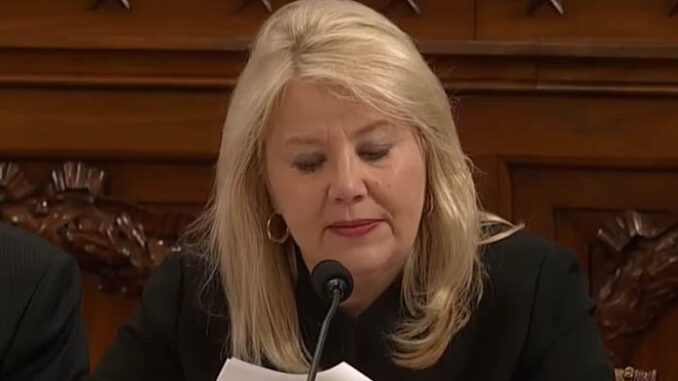
Arizona Congresswoman Debbie Lesko’s eight-year tenure in the House of Representatives recently came to close. As she prepares to take office as a Maricopa County Supervisor, she shared a series of congressional speeches from her colleagues in the House congratulating her on her retirement and recounting her legislative accomplishments.
In an op-ed published by AZ Free News, Lesko looked back on her time in Congress noting her time various committees including Judiciary, Homeland Security, Rules, and Science, Space, and Technology. She also reflected on her time serving on the powerful Energy and Commerce Committee along with the Homeland Security Subcommittee and the controversial Select Subcommittee on COVID-19.
Lesko wrote, “I strive to conduct myself honorably and in accordance with the desires of my district, and I will continue as long as I am in office. I will carry with me the memories of my service in the People’s House as long as I live. I appreciate all who have helped me to this point, and I will always be proud to be the U.S. Congresswoman from Arizona’s 8th Congressional District. May God continue to bless our great nation.”
From Christmas Eve through the weekend several members of Congress took the podium to address Lesko’s retirement including Rep. Virginia Cox (R-NC), who highlighted her as “one of the kindest and most forgiving people I’ve ever met in my life.” She added that Lesko forgave her, becoming emotional as she wished the Congresswoman well.
Congresswoman Michelle Fischbach (R-MN) quipped that she initially met Lesko in a nail salon, eliciting laughs from her fellow Congress members. She noted that she never saw the Arizona Congresswoman “in a bad mood.” Fischbach alluded to Lesko’s upcoming service on the Maricopa County Board of Supervisors saying, “I think that the people of Arizona and your county are going to be so incredibly well served, and you will do a wonderful job for them.”
Praise also came from members of the Arizona Congressional delegation with Rep. Juan Ciscomani telling the House that Lesko “is a conservative,” but is “just not angry about it.”
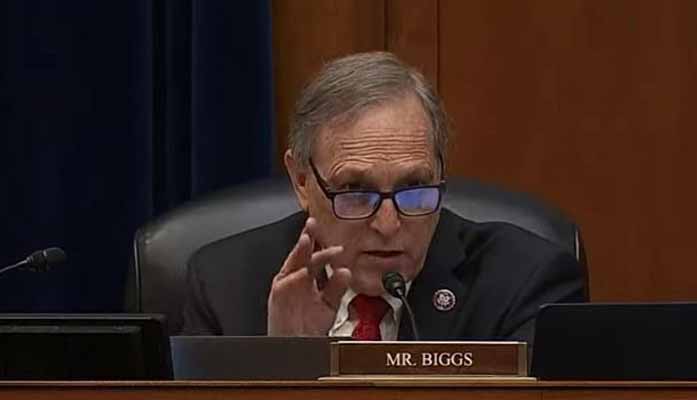
Congressman Andy Biggs told the gathered members that he first heard of Lesko when she served on a school board. He credited her with courage during her work on pension reform in the Arizona legislature. Biggs also joked at the reduction in staff that Lesko now faces, saying she’ll have just “one and a half staffers,” in her new role before being overcome with emotion.
Rep. David Schweikert echoed the sentiment of Ciscomani when he exclaimed, “Look, one of the magic things about Debbie Lesko is that she has proven, you can be conservative and not be angry about it! You can actually be joyful and kind and sweet and just a decent human being!” He stressed Lesko’s calm demeanor in contrast to his anger at times and remarked on her avoiding traveling with a laptop for a “stack of paper” on regular flights to and from Washington, D.C. He quipped, “They do make these things called laptops…”
Noting that Maricopa County is the fourth most populated county in the nation, Schweikert recalled his time as County Treasurer and added that he missed “those day when you could actually do things.”
Matthew Holloway is a senior reporter for AZ Free News. Follow him on X for his latest stories, or email tips to Matthew@azfreenews.com.
by Daniel Stefanski | Dec 12, 2024 | News
By Daniel Stefanski |
Ahead of a new presidential administration’s efforts to secure the southern border, an Arizona Member of Congress is introducing legislation that would help to that end.
U.S. Congressman Andy Biggs recently introduced the Congressional Border Security Assessment Act. According to a release from his office, this bill would ensure “that Members of Congress and accompanying Congressional staff can fully assess border security on Indian reservations that include at least fifty contiguous miles of the U.S. southern border.”
In a statement, Biggs said, “The Biden-Harris Administration opened wide our southern border, and Members of Congress must not be restricted from attempting to survey and report on the state of the chaos. Tribal police on Indian reservations have impeded Members’ ability to travel to the U.S. border in the past. My legislation makes clear that this is unacceptable.”
Biggs was joined in support of the proposal by Texas Congressman Brian Babin. Both Biggs and Babin chair the Border Security Caucus in the U.S. House of Representatives, which they have led throughout the Trump-Pence and Biden-Harris administrations. This caucus brings Members of Congress together with key stakeholders at and around the southern border to discuss solutions to the issues there.
Earlier this fall, Congressman Biggs introduced the Keeping Aid for Municipalities and Localities Accountable (KAMALA) Act, which would “ensure that the federal government is not bankrolling states and localities that provide illegal aliens with housing assistance.” He was also the first Member of Congress who introduced articles of impeachment against Department of Homeland Security Secretary Alejandro Mayorkas in August 2021, and he reintroduced those articles in the current Congress last year. Mayorkas would eventually be impeached by the Republican-led U.S. House. Biggs said of the case against the Biden cabinet official, “It’s clear Secretary Mayorkas has committed high crimes and misdemeanors. His conduct is willful and intentional. He is not enforcing the law and is violating his oath of office. For these reasons, Secretary Mayorkas should be impeached.”
The longtime east valley lawmaker has been one of the top border hawks in the U.S. House of Representatives since he entered Congress in January 2017. Each year, Biggs leads delegations of fellow Members – mostly Republicans – to the southern border to meet with local law enforcement, ranchers, and Border Patrol agents. He was just re-elected to another term in Arizona’s Fifth Congressional District this past month, which will be his fifth in his current office. Previously, Biggs served in the Arizona State Legislature, including a stint as the Senate President.
Daniel Stefanski is a reporter for AZ Free News. You can send him news tips using this link.
by Debbie Lesko | Dec 10, 2024 | Opinion
By U.S. Congresswoman Debbie Lesko |
It is hard to believe that in a few short months, my time in the U.S. Congress will conclude. As I look back on my time in the U.S. House of Representatives, and the rest of my life, I am filled with gratitude for the journey that led me to this point. I had the once-in-a-lifetime chance to represent Arizona’s 8th Congressional District in one of the most consequential periods in our nation’s history. That reality will never be lost on me.
I didn’t always have this success in my life. Over thirty years ago, I left an abusive husband and became a single mom with a young daughter. At times, I had no money and no place to live. I never would have dreamed in a million years that I would someday become a member of Congress and the voice for thousands of men, women, and children in the halls of our nation’s Capitol, where so many American icons have walked.
Yet, God has been so good to me. I remarried, had two more children, and now have six grandchildren. My family means the world to me.
My journey into public service began many years ago, when I started volunteering in my children’s school. I realized there, in those classrooms filled with impressionable minds, that to effect change and to ensure that the next generation received the best-possible education, parents such as myself needed to run for office to make a difference in our communities. I ran for school board and lost, but the lessons I learned from this experience motivated me to stay in the game. Too much was at stake for my family and in my state, and I would not give up.
Two years later, I ran for the Arizona State Legislature and won. I ultimately served nine years in the Arizona State House and Senate and loved serving the people in the Phoenix West Valley. I became the Senate President Pro-Tempore, following in the footsteps of the late-great U.S. Supreme Court Justice Sandra Day O’Connor, who also served in Arizona Senate leadership. I led on many key issues for the future of our state, including school choice, pension reform, the right to life, border security, and economic prosperity.
I had no immediate plans to run for higher office, but life often throws unexpected curveballs that change one’s calculations. In December 2017, my congressman unexpectedly resigned. After much prayer and conversation with my family, I decided to run for office and beat eleven guys in the contested primary election! Now here I am, serving more than 6 years in Congress. Who would have thought I’d be where I am today in Washington, D.C., when over thirty years ago I was just struggling to get by. Only in America could this happen to any man, woman, or child.
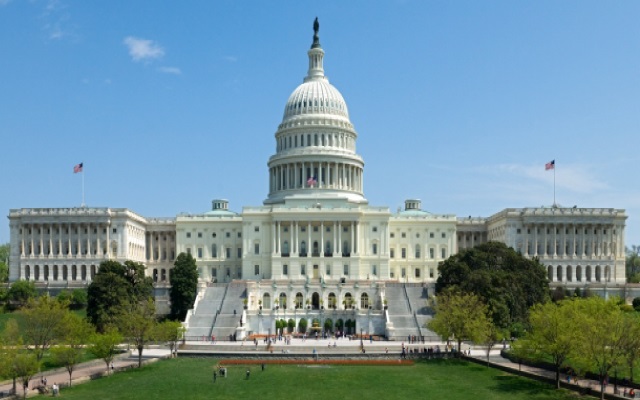
Every day in this job has been an immense privilege. When I drive up to the Capitol, I reflect on all the men and women who have walked these halls, debated our nation’s most important laws, and made decisions that have affected generations of Americans. Being a representative of the people is a great privilege I will never take for granted.
Throughout my time in Congress, I have worked hard to represent the desires of my district and to give a voice to my constituents. I have served on several committees in this body, including Judiciary, Homeland Security, Rules, and Space, Science and Technology. I was the ranking member on a Homeland Security Subcommittee, and I have had the privilege of serving recently on the Select Subcommittee on COVID-19. Over my tenure, I’ve had multiple bills signed into law, and more that have passed out of the House.
I’m especially grateful to have had the opportunity to serve on the powerful House Energy and Commerce Committee, where I have advocated for consumer-focused energy policies that provide freedom and prosperity to countless Americans. I will always fight for the freedoms and liberties that have made this nation great, and Republicans have done that – and more – in this committee.
I have always been committed to carrying out our founders’ vision for representation in my service to my constituents. Since my time in the Arizona Legislature and throughout my tenure in Congress, I have listened to all who have a comment, grievance, or praise for me. I visit many businesses and events of all industries and purposes. I respond to those who take the time to write and call me. I communicate my positions on votes and current events in a reasonable manner and tone. I strive to conduct myself honorably and in accordance with the desires of my district, and I will continue as long as I am in office.
I will carry with me the memories of my service in the People’s House as long as I live. I appreciate all who have helped me to this point, and I will always be proud to be the U.S. Congresswoman from Arizona’s 8th Congressional District. May God continue to bless our great nation.
Congresswoman Debbie Lesko represents Arizona’s 8th Congressional District. She is the Maricopa County Supervisor-Elect for District 4.
by Daniel Stefanski | Dec 4, 2024 | News
By Daniel Stefanski |
Republicans in the Arizona Legislature scored another legal victory with the nation’s high court granting cert on a case they had intervened in earlier this year.
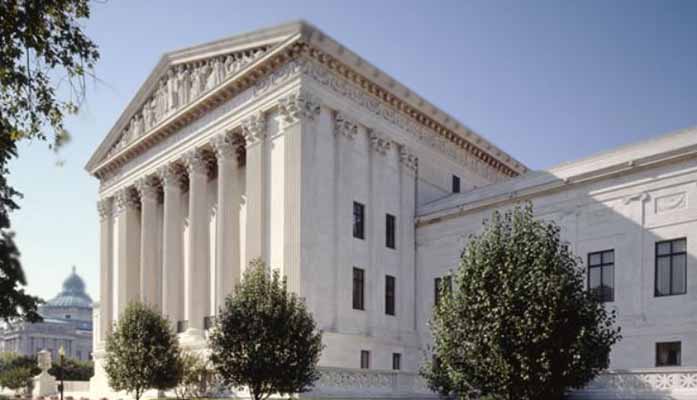
On November 22, the Supreme Court of the United States agreed to hear FCC v. Consumers’ Research in its current term. The case will be consolidated with SHLB Coalition v. Consumers’ Research. This case involves a question of the nondelegation doctrine, which, according to the Legal Information Institute at Cornell, is “the principle that Congress cannot delegate its legislative powers or lawmaking ability to other entities.”
The decision from the U.S. Supreme Court represents a significant victory for Republicans in the Arizona Legislature, who had joined an amicus brief from state attorneys general from around the country to urge the justices to hear arguments in this case.
On its X account, Consumers’ Research reacted to the order, writing, “American citizens and consumers alike deserve basic accountability in government and in the marketplace. Americans currently are forced to pay a tax with every phone bill, set by unelected bureaucrats, at the recommendation by the same private corporation that receives the revenue. This is absurd and we believe SCOTUS will agree as the 5th circuit did.”
Arizona Senate President Warren Petersen, who was instrumental in the Arizona Legislature joining the efforts to support Consumers’ Research, told AZ Free News that, “These carriers are unlawfully taxing the public to the tune of billions of dollars. Congress should instead determine what taxes our citizens are to pay and by how much, not unelected Washington bureaucrats.”
The brief that the Arizona Legislature signed onto was joined by 15 other states, led by the West Virginia attorney general. The other states were Alabama, Arkansas, Indiana, Kansas, Louisiana, Missouri, Montana, Nebraska, Ohio, Oklahoma, South Carolina, Tennessee, Texas, and Virginia.
In their brief, the attorneys general argued that “the states – and our country – need guidance on the nondelegation doctrine,” that “those who mean to scare the court away from these issues are wrong,” that “preserving Congress’s legislative power protects the states’ interests,” and that “this court should evaluate this statute.”
They wrote, “Every year, the Federal Communications Commission extracts billions from American consumers based on a vague statute that says telecommunications providers ‘should make an equitable and nondiscriminatory contribution to the perseveration and advancement of universal service.’ The only limits on this multi-billion-dollar fee are vague notions like ‘quality’ service. And the Commission – an independent agency already shielded from accountability in its own right – doesn’t even set these rates itself. Instead, a private company picks a number that the Commission rubberstamps later.”
The attorneys general added, “Make no mistake: Amici States recognize the goal of securing universal telecommunications service is laudable. Congress can and should find a way to provide these services for everyone. But it’s a ‘fundamental principle that, no matter how laudable its purposes, the actions of our government are always subject to the limitations of the Constitution.’ Congress needs to be the one to act here, not a private band of unaccountable industry participants. The Court should grant the Petition to say so.”
The Court’s decision to hear arguments in this matter follows an opinion from the U.S. Court of Appeals for the Fifth Circuit in July, which found that “this misbegotten tax violates Article I, Section I of the Constitution.” The appeals court stated, “The Q1 2022 USF Tax is not only difficult to square with the Supreme Court’s public nondelegation precedents. It was also formulated by private entities. That raises independent but equally serious questions about its compatibility with Article 1, Section 1, which requires ‘[a]ll legislative Powers herein granted shall be vested in a Congress.’ We (1) explain that the scope of FCC’s delegation to private entities may violate the Legislative Vesting Clause by allowing private entities to exercise government power. Then we (2) explain that even if FCC’s delegation could be constitutionally justified, FCC may have violated the Legislative Vesting Clause by delegating government power to private entities without express congressional authorization.”
According to SCOTUSblog, this case will likely be argued before the U.S. Supreme Court in the spring of 2025. The justices’ opinion will be rendered in June or July at the conclusion of their term.
Daniel Stefanski is a reporter for AZ Free News. You can send him news tips using this link.