by Staff Reporter | Oct 4, 2024 | News
By Staff Reporter |
Congressman Ruben Gallego, the Democratic candidate vying for Krysten Sinema’s seat, denounced Iran’s largest missile attack against Israel on Tuesday. Iran fired nearly 200 missiles in a two-wave attack, which U.S. and Israeli defenses largely repelled.
During his time in Congress, Gallego repeatedly voted against funding Israel’s defense against Iran, sanctioning Hamas, and disengaging from or condemning Israel boycotts—rather than punishing Hamas, the terrorist entity controlling the Gaza Strip.
“Today, Iran carried out a second significant attack on our key democratic ally in the Middle East, Israel, endangering the lives of innocent civilians,” said Gallego. “The U.S. remains steadfast in its support of Israel in the face of Iran, the world’s leading state sponsor of terrorism.”
Iran’s attack comes nearly a year to the day after their last major terrorist attack that escalated fighting between the two nations.
Even though Israel suffered mass casualties of its civilians under that attack, Gallego voted against a bill providing funding to Israel the next month.
The congressman did the same two years prior in 2021, rejecting emergency funds to cover Israel’s Iron Dome missile defense system. Earlier that same year, Gallego voted against sanctions on Hamas.
And that year, Gallego enjoyed an $84,000 trip to Qatar paid for by a special interest nonprofit seeking to strengthen trade relations. The Qatari government supports terrorism against Israel, including entities opposed to the Jewish faith responsible for terroristic attacks against the country: the Muslim Brotherhood and Hamas.
When the Boycott, Divestment, and Sanctions (BDS) movement against Israel picked up in 2019, Gallego voted against efforts to condemn or prevent participation. That same year, Gallego voted to give funding to the Palestinian Authority, a primary financier of terrorism against Israel.
The year after Hamas broke a short-lived peace with Israel a decade ago — it fired off rockets at Israel for a revenge killing on a Palestinian after its members kidnapped and killed three Israeli teenagers in the West Bank — Gallego voted to delay presidential authority to waive, suspend, or reduce sanctions on Iran for two years pursuant to an agreement on the nuclear program of Iran.
For years, Gallego supported the Council of American-Islamic Relations (CAIR), an entity of the Muslim Brotherhood linked to Hamas activity. That all changed within the last year. Gallego pivoted on his sentiments about CAIR last December in response to remarks made by the organization’s executive director and co-founder about the Hamas attack on Israel, Nihad Awad. The CAIR leader said the terrorist attack was a cause for celebration he was “happy to see” occur.
“Statements made by CAIR’s Executive Director regarding the Hamas attack on Israel are despicable and downright antisemitic, and I strongly condemn them,” said Gallego. “The October 7th attack was utterly evil, and any effort to describe it any other way is disgusting. He must resign.”
In June, Gallego voted for an amendment to the 2025 budget prohibiting the State Department’s reliance on death toll statistics given by the Gaza Health Ministry. CAIR condemned this vote.
AZ Free News is your #1 source for Arizona news and politics. You can send us news tips using this link.
by Earl Taylor | Sep 2, 2024 | Opinion
By Earl Taylor, Jr. |
One of the principles of liberty our Founders adhered to is that only limited and carefully defined powers should be delegated to government, all others being reserved to the people. This principle is clearly followed in Article 1, Section 8, of the U.S. Constitution wherein is outlined the 20 or so areas in which Congress can make law. This concept was abandoned decades ago as Congress began legislating in many other areas not mentioned in Article 1, Section 8.
James Madison clearly explained this principle in Federalist Paper 45: “The powers delegated by the proposed Constitution are few and defined. Those which are to remain in the state governments are numerous and indefinite.” Unlike the federal Constitution, you will not find in state constitutions specific areas in which state legislatures can make law because there are so many.
How, then, are we to understand the limits our state legislatures, our city councils, our county board of supervisors have in making law? The answer to this question lies in the constitutional phrase “promote the General Welfare.” If one observes the 20 or so powers in Article 1, Section 8 of the U. S. Constitution, they are all areas that benefit the whole people like: military defense, a monetary system, a postal system, a system of weights and measures, a federal court system, etc. In other words, general welfare means if you tax all the people, then you only spend that money for things that benefit the whole people. Under “general welfare” there is to be no tax money going to individuals, special groups, or specific geographic locations, or any other kind of “specific” welfare.
This same principle should apply to state and local governments. For example, city councils should ask themselves what are the things that benefit all the people and that all the people use? The answer would include such things as: good streets, a well-functioning domestic water system, a good sewage system, good police protection, a fair local court system, etc. These are things individuals all want and are willing to spend money to obtain because they use them. It’s really what makes us want to live in a community rather than out in the wilderness. And furthermore, there is usually not much argument or contention about these things because we consider them things that make our lives comfortable.
But what happens when government officials try to use our tax money to provide things most of us don’t want and don’t use, such as: light rail and bus systems, sports stadiums, homeless facilities, conference centers, arts centers, museums, libraries, electric vehicle charging stations, narrower streets and more bike lanes? They try to sell us on these ideas as “Quality of Life” issues. These are issues that do not pay for themselves and therefore are a significant burden paid for mostly by taxpayers who do not use them. These are also issues that cause the most disagreement and contention in a community.
But the true purpose of government is to only protect equal rights so that people can be free to invent and produce items that give us real quality of life. This also leaves more resources in the hands of the people to give compassionate service to the truly needy.
The authority to govern rests innately with the people. Government only has the authority that the people give it. If a person has no authority to take from one person and give to another (stealing), then how can he give his agent, the government, the authority to forcibly take money from citizen A and give it to citizen B so he can, for example, be transported from point A to point B? Isn’t that stealing also? Someone may say, “Well, that’s why we vote.” But can the vote take away a person’s property by legalizing stealing? Of course not!
When we vote this November, hopefully we will choose those who respect the rights of all citizens and reject those who endorse programs which use the power of government to do what individuals can’t do – steal from the people.
Earl Taylor, Jr. is the President of The National Center for Constitutional Studies.
by Corinne Murdock | Mar 18, 2024 | News
By Corinne Murdock |
Congresswoman Debbie Lesko (R-AZ-08) brought her endorsement of Arizona House Speaker and congressional candidate Ben Toma (R-LD27) to the U.S. House floor.
During Tuesday’s House floor session, Lesko praised the state representative as “an accomplished and dedicated leader.” The congresswoman specifically applauded Toma’s work on passing universal school choice, voter ID, border security through e-Verify, and the state’s largest tax cut.
Lesko closed with what sounded like confidence in Toma’s fitness to represent the state at the congressional level.
“Speaker Toma’s career is a testament to his dedication to Arizona, his legacy of leadership will last for years to come,” said Lesko.
Lesko formally endorsed Toma in December, emphasizing Toma’s longtime residence and understanding of the eighth congressional district.
“Ben Toma lives in our district. He knows our district. He cares about the people who live in our district. As a legislator and Speaker of the Arizona House, Ben has a proven, conservative track record for getting things done and for standing up for the principles that have made our nation great. Now, more than ever, we need principled, experienced leaders, like Ben Toma, who will stand up for our values and advance our conservative priorities in Congress. I’m proud to endorse Ben Toma for Congress and will be working hard to get him elected because I know he will do a great job!”
Toma also has endorsements from former Sen. Jon Kyl; former Gov. Jan Brewer; State Sens. Frank Carroll (R-LD28) and John Kavanaugh (R-LD03); State Reps. Beverly Pingerelli (R-LD28), David Livingston (R-LD28), Quang Nguyen (R-LD01), and Justin Wilmeth (R-LD02); Surprise Mayor Skip Hall; former State Rep. Jean McGrath; Maricopa County Treasurer John Allen; Glendale Councilmember Lauren Tolmachoff; and former Republican Senate candidate Jim Lamon.
Ten other Republicans who have filed a statement of interest for the eighth congressional district are 2022 attorney general candidate Abe Hamadeh, State Sen. Anthony Kern, 2022 Senate candidate Blake Masters, former congressman Trent Franks, Isiah Gallegos, Rollie Stevens, Patrick Briody, Seth Coates, Jon Forsythe, and Jimmy Rodriguez.
An internal poll in December by National Public Affairs, a firm run by former Trump administration staffers, found Hamadeh had between 37 percent (uninformed of endorsements) and 45 percent (informed) voter support: a 23-point lead over the next leading candidate, Masters (14 percent uninformed, 10 percent informed). Franks followed behind (six percent uninformed, seven percent informed), then Toma (seven percent, both informed and uninformed), and then Kern (three percent uninformed, two percent informed). About 30 to 34 percent of polled voters remained undecided.
Another internal poll from last month by Fabrizio, Lee & Associates found that Hamadeh and Masters had equal voter support, both polling at 24 percent, with Franks following behind (nine percent), then Toma and Gallegos (three percent), and then Kern (one percent). 35 percent remained undecided.
Hamadeh has endorsements from a whole host of Trump administration officials, endorsees, and former President Donald Trump himself. Among Hamadeh’s endorsers are Senate candidate Kari Lake, Trump administration national security advisor Robert O’Brian, Trump administration national intelligence director Ric Grennell, Trump administration senior national intelligence advisor Kash Patel, Florida Congressman Cory Mills, and former Arizona GOP chair Kelli Ward.
Seven Democrats to have filed a statement of interest for the eighth congressional district are Sheila Bilyeu; Donald Case; Bernadette Greene Placentia; Marc Lewis; Steven Sawdy; Mark Thompson; and Whitten Gregory.
Two Libertarians also filed their statements of interest: January 6 participant Jacob Angeli-Chansley, the “Shaman,” and Alex Kolb.
Corinne Murdock is a reporter for AZ Free News. Follow her latest on Twitter, or email tips to corinne@azfreenews.com.
by Corinne Murdock | Feb 15, 2024 | News
By Corinne Murdock |
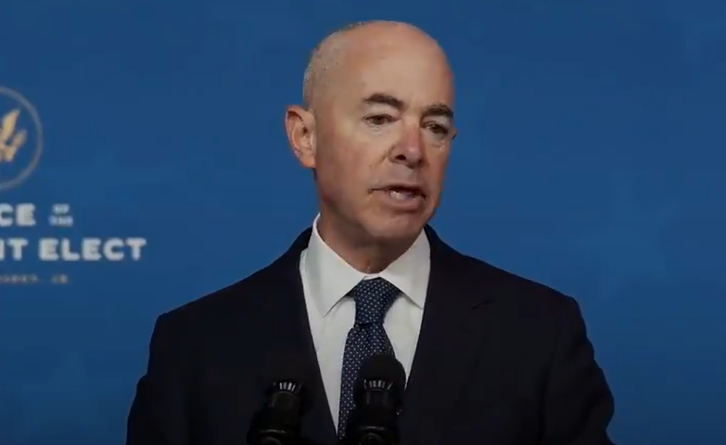
On Tuesday, Department of Homeland Security (DHS) Secretary Alejandro Mayorkas was impeached under an effort initiated and led in part by Rep. Andy Biggs (R-AZ-05).
The resolution to impeach Mayorkas for high crimes and misdemeanors passed 214-213, with three Republicans voting against it: Ken Buck (CO), Mike Gallagher (WI), and Tom McClintock (CA). Biggs has been proposing legislation to impeach Mayorkas since 2021.
In remarks preceding the impeachment vote, Biggs said the Founding Fathers were supportive of impeachment as a means of addressing serious offenses to the nation.
“It’s hard for me to conceive of any bigger offense against the nation than opening up the border and actually willingly and intentionally inviting in 10 million-plus illegal aliens to cross into the country,” said Biggs. “Secretary Mayorkas opened up our border and encouraged people to come in.”
Biggs cited Mayorkas’ inability to confirm during his sworn testimony that the border was operationally under control as defined by the Secure Fence Act of 2006. Mayorkas implied that the standard was impossible to meet, and that DHS had created its own standard to meet.
“That is a violation of separation of powers, and it is also a violation of his oath of office and duties,” said Biggs.
Additionally, Biggs cited DHS implementing a catch and release policy by abusing the policy allowing parole passes for certain immigrants on a case-by-case basis for humanitarian purposes. Those passes granted temporary legal status to the migrants that received them. Over the course of several decades, only an average of several dozen migrants annually received parole passes. Under Mayorkas, over a million have been issued to illegal immigrants over the last three years.
The congressman also cited Mayorkas testimony that his administration wasn’t deporting illegal immigrants even if they had removal orders from a court.
Biggs said it was imperative to impeach Mayorkas to prevent the unrelenting, ever-worsening tide of illegal immigrants constituting the border crisis.
“It isn’t a matter of a policy difference; it isn’t a matter of incompetence or maladministration. This is somebody who is a public official who has breached the public trust, and if we keep him in office for another 12 months, we shall surely see several million more people in this country,” said Biggs.
The impeachment resolution now heads to the Senate.
Tuesday’s vote was the second attempt against Mayorkas. House Republicans failed to gain enough votes to pass the impeachment resolution last week.
Rep. Eli Crane (R-AZ-02) said that the impeachment was warranted and claimed the border crisis was a deliberate effort by Mayorkas.
“The crisis at the border was deliberate, which more than warrants this historic action,” said Crane.
Rep. Raúl Grijalva (D-AZ-07) condemned the impeachment as “baseless” and that there was “no evidence” of wrongdoing by Mayorkas. Grijalva claimed that the border crisis was now Republicans’ fault, not the Biden administration.
“[H]e has lawfully carried out the policies of President Biden and still requires significant help from Congress to manage the issues we face at the border,” said Grijalva. “[House GOP] now bear full responsibility for the situation at our southern border.”
Corinne Murdock is a reporter for AZ Free News. Follow her latest on Twitter, or email tips to corinne@azfreenews.com.
by Elizabeth Troutman | Jan 10, 2024 | Economy, News
By Elizabeth Troutman |
Rep. David Schweikert, R-Ariz., urged Congress to “take our nation’s fiscal health seriously” in response to the growing national debt.
Schweikert’s Daily Debt Monitor shows the federal government’s gross national debt increasing by $839 billion already this fiscal year, which began in October.
“That’s ~$8.65 billion per day, and just over $100,000 per second,” Schweikert tweeted.
“I implore my brothers and sisters in Congress to take our nation’s fiscal health seriously,” the congressman continued.
The national debt has increased by more than $360 million per hour, $6 million per minute, and $100,00 per second this fiscal year.
The total national debt as of Jan. 4 was more than $34 trillion, compared to around $31 trillion on Jan. 4, 2023. This includes both intragovernmental and publicly held debt. Between 2023 and 2024, there was an increase in debt of more than $7 billion per day and $300 million per hour.
The national debt hit the $34 trillion record this month. The Congressional Budget Office’s January 2020 projections didn’t expect gross federal debt to surpass $34 trillion until fiscal year 2029.
The Congressional Budget Office expects the debt to only get worse in coming years. An estimate shows America’s entitlement spending, mandatory spending, and net interest payments on the debt will exceed the government’s total revenue by the early 2030s.
In June, Republican lawmakers and the White House agreed to temporarily lift the nation’s debt limit, making an agreement that lasts until January 2025.
The Congressional Budget Office estimated in its 30-year outlook last June that publicly held debt will be equal to a record 181% of American economic activity by 2053.
Elizabeth Troutman is a reporter for AZ Free News. You can send her news tips using this link.