Bill Gates, the billionaire Microsoft founder who has served as a prominent advocate for prevailing narratives that fuel the climate alarm movement, set the climate debate on fire this week with a long essay signaling a major shift in direction.
Rather than continuing efforts to use atmospheric content of carbon dioxide as a global thermostat, Gates now advocates a refocusing on efforts to mitigate for the impacts of climate change and dedicate more funding to “the most effective things we should be doing to improve life in a warming world.”
Gates’s belated endorsement of an alternative approach long advocated by many critics of climate alarmism is laudable. But one must wonder what took him so long.
One argument Gates puts forth to justify his shift in narrative is, as he puts it, “surprisingly, excessive cold is far deadlier, killing nearly 10 times more.” But that only comes as a surprise to those who haven’t been paying attention to data that has long been in the public domain. Australian analyst Bjorn Lomborg, himself a believer in man-cause warming theory, has regularly made the same point for years now.
Gates also veers away from climate alarmist dogma with the recognition that “using more energy is a good thing,” because it means economic growth, slamming efforts by alarmists to deny companies the ability to produce more fossil fuels. Noting that such “keep-it-in-the-ground pressure” “has had almost no impact on global emissions,” Gates writes, “but it has made it harder for low-income countries to get low-interest loans for power plants that would bring reliable electricity to their homes, schools, and health clinics.”
More than any other aspect of Mr. Gates’s change in narrative, this statement reveals a divergence from the central goal of the climate alarm global religion. It has long been obvious that the goal has been to intentionally and massively raise the cost of all forms of energy to force the world’s masses to consume less of it, not more.
Some of the most prominent climate alarm advocates, like Bill McKibben, have long railed against affordable energy and continuing economic growth as inherent evils that must be ended to save the planet. So, this is a real bit of heresy by Gates, and it will be interesting to observe how this part of his message is received at the upcoming COP 30 climate conference and the annual World Economic Forum conference in Davos, Switzerland next January.
Gates also diverges from a prevailing alarmist talking point when he writes, “Although climate change will hurt poor people more than anyone else, for the vast majority of them it will not be the only or even the biggest threat,” he writes. “The biggest problems are poverty and disease, just as they always have been.” Again, true, but we must wonder why Gates remained silent about this reality when Joe Biden spent four years repeatedly claiming that climate change was our most existential threat?
In an interview with Bloomberg on Thursday, Energy Secretary Chris Wright noted Gates’s change of narrative, saying he has had “multiple great dialogs with Bill Gates over the last year multiple times and at some length,” adding that Gates has “done fabulous stuff in public health around the world, and I’m thrilled to see him talk in a more candid way about this issue.”
Wright added his own view that, “climate change is a real thing. It’s a real challenge. It is just not remotely close to the world’s top challenge.”
Former World Bank Group President David Malpass told me in an interview he also views Gates’s shift favorably. “I was very happy to see (Bill Gates’ new view), of course,” Malpass said. “Wouldn’t itbe good if we saw Antonio Gutierrez, the head of the United Nations, John Kerry or Al Gore understand the logic that Bill Gates is laying out? Whatever people think about the warming of the planet, what was so harmful in the climate fanaticism was they didn’t care at all about the cost or about the opportunity cost.”
It’s hard to know what motivated Mr. Gates’s sudden narrative shift on this crucial topic. Regardless, his reconsideration can only help efforts to adopt a more serious, reality-based approach to addressing the problem.
David Blackmon is a contributor to The Daily Caller News Foundation, an energy writer, and consultant based in Texas. He spent 40 years in the oil and gas business, where he specialized in public policy and communications.
Americans are fed up with the endless partisan chaos pouring out of Washington, D.C. For too long, radical extremists have hijacked our government—stalling progress, undermining confidence, and jeopardizing the American Dream for future generations.
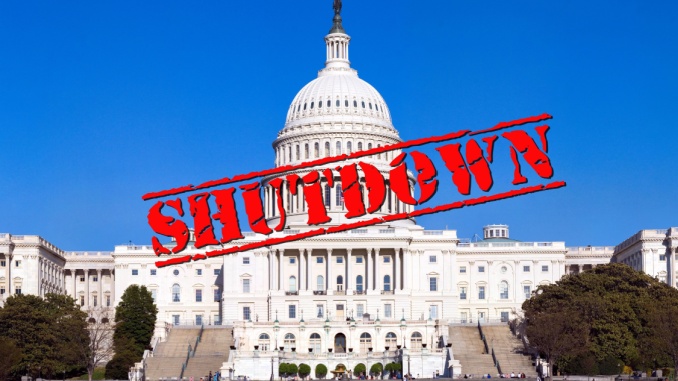
Instead of restoring faith in our republic and passing a clean continuing resolution, Democrats have decided the best idea to survive the second Trump administration is to shut down the federal government, hurting families nationwide and risking our nation’s stability and security. Unfortunately, thanks to the Democrats’ obstinance, this shutdown is quickly becoming one of the lengthiest in our country’s history.
The Democrats’ shutdown, brought about by their pursuit of extremist policies is reckless. According to the Republicans on the U.S. House Committee on Appropriations, the Democrats’ counter proposal included free health care for illegal aliens, electric vehicle access to HOV lanes, taxpayer-funded criminal defense, liberal news programs, DEI projects in foreign countries, and Biden administration grant policies and COVID-era subsidies. These policies rank among the most radical ideas from the left—part of a broader plan to disregard the will of the American people in the General Election of 2024 and continue their transformation of our nation away from the principles that have made the United States the strongest and most prosperous in world history.
Their actions have jeopardized paychecks and services across the country. Families, small businesses, and seniors are being squeezed by the 2025 federal government shutdown. According to the White House Council of Economic Advisors, states would see a decline of billions of dollars of their gross state product each month during the shutdown, thousands of workers would find themselves unemployed weeks away from the holiday season, and Social Security benefits by check would be delayed.
It’s important to note these are just a few of the catastrophic issues facing everyday Americans due to the Democrats’ shutdown shenanigans. The Democrats have compromised pay to our brave men and women who serve in our military and on the front lines of our border. Rather than doing their job, most U.S. Senate Democrats, including Arizona’s own Mark Kelly and Ruben Gallego, have voted twelve times (and counting) to obstruct efforts to reopen the government. This is shameful, but Democrats feel no shame in their blindly partisan rampage to hurt their own constituents. U.S. House Democrat Whip Katherine Clark put her party’s position best when she said, “I mean, shutdowns are terrible and, of course, there will be, you know, families that are going to suffer…. But it is one of the few leverage times we have.”
Worse yet, though, America’s enemies are watching for any opportunity to exploit our weaknesses. China, Russia, and other adversaries are studying this shutdown as they look for ways to take down the world’s greatest superpower. The leaders of these nations see the Democrats’ extremist desires and how those policies conflict with efficient operations to keep America running. They read the stories about the family members of our troops wondering how they might pay bills and put food on the table the longer the shutdown continues, hurting the morale of our military in a critical time for the world. Our enemies are not stupid or ignorant. They are recalculating and recalibrating thanks to the radical left.
Despite these clear and present dangers, Democrats are doubling down on their decision to shut down the government, creating spectacles to distract from harms their antics impose on everyday Americans. One of the top sideshows Democrats have exploited this month is the election of Adelita Grijalva to fill her father’s seat in Arizona’s Seventh Congressional District. Because the U.S. House of Representatives has not been in regular session since her victory, House Speaker Mike Johnson has not had the opportunity to swear her in to office. These facts, however, have not stopped Democrats from harassing Speaker Johnson and other Republicans over this continued vacancy (for legitimate reasons they are alone responsible for). Even Arizona Attorney General Kris Mayes got in on the “fun,” transmitting a letter to the Speaker to threaten legal action if Grijalva was not allowed to assume her position immediately. While Democrats know Grijalva will certainly be sworn in to office, her vacant seat has been used for political fodder.
Americans are not amused, nor are they fooled. A recent poll from YouGov/The Economist showed that more respondents than the week prior blamed Democrats for the shutdown, and that a majority trust Republicans for economic issues. Hardworking men and women around the nation are disgusted with the never-ending partisan games being played at their expense. They want results and the promise of a brighter future for their children and grandchildren—not one-sided political standoffs that jeopardize the happiness, safety, and security of countless families.
This shutdown is not about helping Americans; it’s about defending unpopular priorities like protecting welfare programs for illegal immigrants. It is time for Democrats—both in Congress and across the nation—to end the political games and put hardworking Americans first. Time is of the essence. Let’s open the government and get back to work!
Warren Petersen is the President of the Arizona State Senate and represents Legislative District 14.
As an Arizonan, a small business owner, and a concerned citizen, I’m deeply troubled by how the Left’s government shutdown is hurting our communities. Every day Washington fails to act, hardworking Arizonans pay the price.
Military families at bases like Luke and Davis-Monthan, air traffic controllers keeping our skies safe, National Guard members protecting our borders, and countless small business owners are being forced to shoulder the consequences of political inaction—many continuing to serve without pay or any certainty about the future. Furloughed federal workers in Tucson and Phoenix are dipping into savings just to cover groceries, while delayed permits and contracts grind local projects to a halt.
I run two small businesses here in Arizona—a volleyball coaching company and a social media management brand—so I see firsthand how government shutdowns ripple through real lives. They slow things down, shake confidence, and make it harder for families and business owners to plan ahead. When federal payments stall, suppliers wait longer to get paid, employees across industries worry about their next paycheck, and everyday customers start cutting back. It’s working families, small businesses, and community builders who feel it most—while politicians argue over deadlines and programs they created themselves.
Let’s rewind to March 2021. President Joe Biden signed the American Rescue Plan—a massive spending package sold as emergency relief. Hidden inside was an expansion of premium tax credits under the Affordable Care Act, increasing federal payouts to insurers and expanding who qualifies. These subsidies were supposed to be temporary bridges to help Americans get through the pandemic. Yet years later, some in Washington are treating them as untouchable—willing to shut down the government rather than let them expire.
These subsidies were never meant to be permanent, and they can’t be sustained responsibly. The Congressional Budget Office projected that making them permanent would add over $34 billion to the federal deficit in the next decade.
Even worse, these handouts have distorted the healthcare market. When the government guarantees bigger subsidies no matter the cost, insurers and providers raise prices—knowing taxpayers will cover the difference. Executives pocket bonuses, red tape piles up, and real healthcare workers get squeezed. What was supposed to make care “affordable” has instead insulated the system from competition and transparency, driving costs higher for everyone not lucky enough to qualify for the subsidies.
The hard truth is that the Affordable Care Act never lived up to its name. It drove up prices and created layers of bureaucracy. Now, temporary subsidies—originally sold as short-term relief—are being treated as permanent entitlements. Holding the government and everyday Americans hostage over these failed policies is simply wrong.
Senators Kelly and Gallego, you represent a state known for independence and common sense. The House has already passed a clean Continuing Resolution to fund the government and end this unnecessary pain. Support it. Reopen federal agencies. Let our military families breathe easier, our air traffic controllers get their paychecks, and our small businesses plan for the future without Washington’s chaos.
Arizona’s working people have carried enough. It’s time for our leaders to choose stability over subsidies, solutions over gridlock, and the Grand Canyon State over partisan games. End the shutdown now.
Alison Furno is an Arizona Resident, Small Business Owner, and Independent Women’s Network Phoenix Co-Leader.
The Green New Scam got its start in Arizona two decades ago when a 5-0 Republican Commission (including then Republican Kris Mayes) adopted the Renewable Energy Standard and Tarriff Rules, or the REST Rules. Among other things, most significantly it ushered in the first “renewable” mandates in our state, forcing utilities to obtain at least 15% of their power from “renewables.” Ratepayers have been paying the costs (over $2 billion) ever since.
The REST Rules had a target date: 2025. Well, it’s now 2025, and the utilities have not only met that mandate, but they have also voluntarily exceeded it. Now our current 5-0 Republican Commission has started the process of repealing them.
Repealing the REST Rules is important, but the targets have already been met, and the price has already been paid. Substantively, the repeal won’t really affect ratepayers all that much. Why? Because mandate or no mandate, our utilities are completely committed to going “Net Zero” by 2050, and so far, they’ve been allowed to do it…
“From the data on the class of 2025, college admissions officers and future employers can reasonably conclude that if the applicant is a graduate of Arizona schools, more likely than not, they cannot proficiently read, write, perform math, or understand science in comparison to their peers.”
A Legal Process also noted that a majority of Arizona’s 2025 graduates failed to meet one core academic benchmark. “55% of Arizona’s students can graduate high school and still not demonstrate college-ready level competency in a single core academic subject matter,” the publication said.
World Population Review published Public School Rankings by State 2025, which shows Arizona dead last overall in four categories: K-12 performance, school funding and resources, higher education quality, and safety. This is corroborated by Consumer Affairs, which rated Arizona number one on its list entitled, “Which states rank poorly for education?”
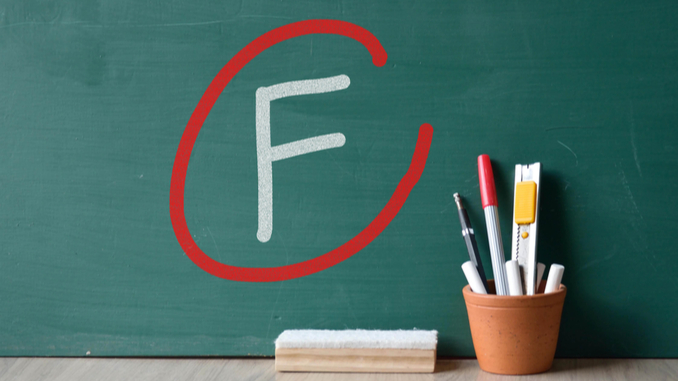
Arizona wastes between $10,000 and $14,000 per student, depending on the source. Meanwhile, the average ESA is estimated between $6,000 and $9,000 for students in 1st through 12th grade. Current trends also reveal that K-12 families are ditching government education at an impressive rate. Even if these calculations are off by 10 decimal points, my conclusion remains the same: The A-F School Letter Grade classification system is a complete joke, and school choice is the one good thing happening in Arizona education.
“Arizona school district superintendents receive high salaries. Yet, the true scale of that pay is often obscured by a triangle of complex contract provisions that school boards, and the superintendents themselves, deliberately design to mask the full measure of compensation from taxpayers…
These same school districts go to great lengths to block access to superintendent contracts—in some cases even from their own board members—shielding from the public how tax dollars enrich those who often are their community’s highest-paid public employees.”
Goldwater requested more than 40 superintendent contracts—official records that should be accessible to the general public—only to receive the documents after four months of repeated requests and warnings of potential litigation. The following information is also sourced from their report:
Not including health insurance or pension costs, Arizona superintendents’ base salaries average $215,000 a year, while taxpayers are charged up to $490,000 per superintendent after accounting for “lucrative perks.”
In addition to pension benefits, several school districts are double-charging taxpayers for superintendents’ retirement packages.
Taxpayers are funding superintendents’ personal and vacation leave to the tune of 15 weeks off, when combined with school holidays. When vacation days are unused, superintendents receive a payout in the form of additional compensation.
Goldwater rightly called attention to Tolleson Union High School District Superintendent Jeremy Calles, who makes off with roughly $500,000 a year. Although Tolleson ranks as the 16th largest district in the state, Calles earns at least $100,000 more than any other Arizona Superintendent. Not surprisingly, he was accused of financial misconduct and, according to ABC 15, the auditor general’s investigation into Calles is expected to be completed by January 2027.
Notably, Calles also stands accused of inflating enrollment numbers, loaning $25 million to the Isaac School District, and allowing one teacher to resign with full benefits after complaints that the former employee had an inappropriate relationship with a student. Regardless, Calles appears to have an explanation for everything. And, despite the embarrassing controversy, he still finds half a million reasons to show up for work.
“There are so many good things happening [in] our district right now that it is difficult to put them all into one newsletter…Our letter grades continue to rise…Success is not without consequence. If we are going to be the best district in the state, then we cannot get there by trying to do what everyone else is doing; we have to innovate.”
He signed off by stating that how Tolleson residents respond to a bond and override this November will “reveal how the community feels about the direction of the district.” I know how I would vote if I lived in Tolleson—it’s the same way I’m voting in Peoria.
If you’re anything like me, you’re a fish out of water when it comes to district finance. Simple is the only way I know how to be. Thus, maintenance and overrides (M&O) allow school districts to exceed their budget for salaries and daily operations by 15% in most cases. M&Os are marketed to the public as a means to “enhance student safety and special education programs.” Districts sell educators on increased pay, so (radical) teachers’ unions generally support overrides as well.
Tax increases are presented to homeowners in fractions and decimals and crumbs, rather than the sum total. Consequently, landowners must research their property value before they can know the full size of their “fraction.” Note that since overrides have literally been in place for decades, district representatives automatically expect taxpayers to honor the tradition of compliance as they’ve done in previous elections.
“Despite a 5% drop in district school enrollment since 2019, Arizona’s public-school districts have continued to expand facilities, increase capital spending by 67% to $8.9 billion, and boost transportation costs by 11.3% to $561.2 million, even as eligible bus riders plummeted by 45%…The fastest-shrinking districts have increased capital spending the most, with 20% of districts (serving 73% of students) receiving 81% of capital funding.”
Let’s be real. Taxpayers are not investing in gifted programs or sponsoring all-day kindergarten. This, my fellow proletariats, is what you call a bailout.
Rather than telling Arizonans how to vote in this election, I will instead refer you back to the information covered in this post. I encourage parents, property owners, and slighted educators to use sound judgment at the ballot box. Remember, the most basic definition of insanity is doing the same thing over and over again, expecting a different result.
Again, I’m no mathematician. But I’m willing to believe that at least a significant portion of the funds required to increase teacher salaries, enhance special needs programs, and implement cutting-edge safety plans can be found in the bank accounts of every district’s highest-paid employee.
Tiffany Benson is the Founder of Restore Parental Rights in Education. Her commentaries on education, politics, and Christian faith can be viewed at Parentspayattention.com and Bigviewsmallwindow.com. Follow her on socials @realtiffanyb.
Just two years after voters approved a $161 million bond in 2023, the Kyrene Elementary School District has unveiled a deeply unpopular, albeit long overdue, austerity plan to shutter nine of its 25 schools. Final decisions on which campuses will close remain in flux until December.
This should alarm not only Kyrene residents but also taxpayers in neighboring East Valley districts such as Chandler, Gilbert, and Mesa, which have likewise postponed needed consolidations despite data showing the urgency for school districts to “rightsize” to avoid future financial shocks.
Kyrene’s predicament shows what happens when district leaders, aided by special-interest boosters, ignore demographic realities and lean too heavily on bonds and overrides to prop up aging, half-empty facilities. Beyond the loss of schools and public trust, Kyrene’s crisis is a cautionary case study in how long districts can keep kicking the can on closures and restructuring before the math catches up.
For decades Kyrene ESD has fiercely defended its autonomy, resisting consolidation with Tempe Elementary School District, most notably in 2008, when Tempe voters approved a merger that Kyrene voters rejected by a 2-to-1 margin. The district has also resisted unifying with Tempe Union High School District, which serves most Tempe and Kyrene graduates. The result: three separate, duplicative bureaucracies servicing the same boundary zones of attendance.
That independence once seemed justified. By the 1980s and 1990s, Kyrene’s fortunes soared with population growth and rising property values following Phoenix’s annexation of Ahwatukee. A building boom beginning in the 1970s relieved Kyrene’s historic reliance on drawing students from outside its boundaries. That same appetite in housing translated to Kyrene’s expansion of schools, fueled by voter-approved bonds and overrides. Like many East Valley districts, Kyrene’s bond and override measures have passed easily, and typically without organized opposition.
Those glory days are long gone. Enrollment has fallen from 20,000 students in 2001 to roughly 12,000 today. That represents a 40 percent drop while the district continues operating 26 schools, a daunting figure considering it only serves grades K-8. Demographers project another 1,000-student decline within five years, equating to roughly $7 million less in state funding. Eight Kyrene campuses are less than half full, and three others are barely above that mark, culminating in the present restructuring effort.
Although Kyrene does have an override measure on the ballot for 2025, it remains to be seen if the drastic restructuring plan will have any impact on voter sentiment in the area for future bond requests. Given that Kyrene has spent millions from the recent bond request on schools now marked for closure, governing board members would be hard-pressed to make their case to residents for additional funding. Taxpayers who were told in 2023 by Superintendent Laura Toenjes that the bond would be “one more example of Kyrene’s commitment to fiscal responsibility” are right to demand answers about the gap between two decades of declining enrollment and the district’s continued inaction.
Kyrene is hardly alone. Large systems such as Chandler Unified remain locked in a perpetual bond-and-override cycle, masking structural enrollment declines with new debt and vague promises of an enrollment recovery effort that grows less plausible each year.
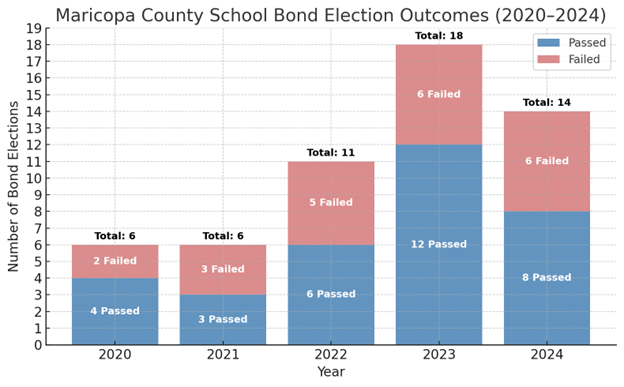
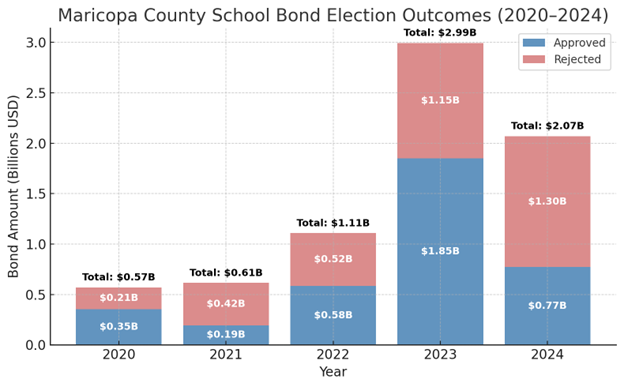
As seen in the chart below between 2020 and 2024, bond requests across Maricopa County have ballooned as pandemic stimulus dollars expired and districts turned back to property-tax financing. The pace of school bond elections far exceeds municipal ones, and the total amounts sought have surged as seen in the 2nd chart below. Inflation alone doesn’t explain the escalation, though it is often erroneously cited as the root cause of this growth.
The lesson isn’t that districts should never seek voter support, but that leaders must confront an uncomfortable truth: demand for traditional district schools is shrinking. Some causes, like rising housing costs and lower birth rates, are beyond their control. Others, like families choosing charters or ESAs, are the direct result of competition and consumer preference. Pretending otherwise guarantees more sudden, painful closures down the road, along with wasted opportunities adding up to hundreds of millions in taxpayer funds.
Kyrene’s crisis is neither the first nor the last domino of overbuilt school districts. Every district that keeps chasing bonds to prop up half-empty schools is writing the same ending. The can has been kicked far enough. It’s time to stop borrowing from tomorrow to preserve yesterday’s mistakes.
Arman Sidhu is a lifelong Arizona resident and educator who has served as a teacher and principal in both traditional public and charter schools. He is a doctoral student in education at Arizona State University’s Mary Lou Fulton Teachers College. His opinions are entirely his own.