Proximity to the people does not prevent abuse of power. In fact, it often does the opposite. Municipal governments enact restrictive policies just as easily as state or federal governments and often with less scrutiny.
There is a myth in America that the closer government is to the people, the more checks exist and the better the governance. By that logic, local governments, city and town councils, being closest to the people, must be the least corrupt and most responsive. Because of this, municipalities and their proponents constantly argue that they should be free to govern their communities without interference, or as it’s often framed, maintain “local control.”
The local control argument might seem intuitive, however, does shifting power from one level of government to another actually protect individual freedom? The burden on the people is the same, if not more, whether bad policy comes in the form of higher taxes, increased fees, restrictive regulations, or costly utility rate hikes from federal, state, or local government.
In Gilbert, residents have been outraged by astronomical water bills and rate increases, decisions made not in Washington, D.C. or in Phoenix, but by their own local government. Proximity did not protect them; it made the impact more immediate. Gilbert is not the only town with unceasing increased costs, municipalities across Arizona are raising taxes, fees, and rates (good thing there is a resolution moving through the legislature to alleviate this)…
Democrats keep attacking President Donald Trump’s Big Beautiful Bill Act of 2025, as a tax cut for the rich. But the data show that the average family GAINED roughly $2,000 on their lower tax bill for this year. Every Democrat in Congress voted no, even as they complained of a “middle-class affordability crisis.” Maybe that’s because $2,000 is peanuts to rich and famous limousine liberal Democrats. But not for the rest of us.
The goal of the Trump tax cut was simple: strengthen the economy with lower tax rates and let working and retired Americans keep more of what they earn. The early evidence confirms this is exactly what has happened. Initial IRS data shows that almost HALF of filers have already taken advantage of the bill’s middle‑income tax provisions.
Income taxes have become such an ingrained part of American life that many workers barely notice how much is snatched from their paychecks – payroll taxes, federal income taxes, state income taxes, etc. We see the net amount and forget the gross amount is what we actually earned. Because less is now taken out, the Trump tax cut functions like a pay raise.
So who is getting a pay raise from the One Big Beautiful Bill? Three major provisions were deliberately crafted to help working‑class and middle‑class Americans keep more of their hard‑earned dollars.
First, the law eliminated income tax on tipped wages, subject to certain caps. For millions of waiters, waitresses, bartenders, baristas, barbers, hairstylists, DoorDash drivers, tour guides, casino dealers, and counter staff at casual restaurants, this means a substantial share of their income is no longer taxed. In some of these occupations, tips make up more than half of total earnings, so the impact is enormous. These workers may lead rich and fulfilling lives, but none of them qualify as Trump’s “rich friends.”
Second, the bill eliminated federal income tax on overtime pay, again with income limits. This provision frees hourly workers from being taxed when they put in extra hours. Put differently, eliminating tax on overtime reduces the number of hours each day that hourly workers labor not for themselves or their families, but for the government. Given how many Americans are paid hourly, this provision overwhelmingly benefits people who are not wealthy.
Third, the tax bill reduces the tax RATE you pay. This incentivizes more work because the reward for getting a job and working more hours is more money.
Through March 25, more than 85 million individual tax returns had been filed. Of those, 37.5 million — 44% — saw an immediate reduction in their tax bill.
The bill also created a forward‑looking benefit for children: Trump Accounts. These accounts help young Americans begin investing early, giving them a head start on saving for education, starting a business, or building long‑term financial security. Children born between Jan. 1, 2025, and Dec. 31, 2028, are eligible for a $1,000 federal contribution, and early tax data shows strong enthusiasm. Roughly 2.6 million returns established Trump Accounts for more than 4 million children, and nearly one million qualified for the federal contribution.
When we account for all of these tax benefits, what we find is that far from being “tax cuts for the rich,” the One Big Beautiful Bill’s tax provisions actually reduced the tax bill paid by the middle class by roughly 14%. Meanwhile, the SHARE of federal income taxes paid by the richest 10% rose from 70% to 77% and the top 1% share rose from 38% to 40%.
If the rich are now paying a larger share of the tax pie, how is the Trump tax cut “a giveaway to the rich?” Maybe the left calls the Trump tax cut “One Big Ugly Tax Bill” because they want every one of us – not just the rich – to pay more taxes.
Stephen Moore is a contributor to The Daily Caller News Foundation, a senior fellow at America First Policy Institute, and a cofounder of Unleash Prosperity.
Arizona is known as the national gold standard for education opportunity. With a decades long history of tax credit scholarships supporting families and the nation’s first education savings account (ESA) program, Arizona paved the way for other states to make bold education reforms. Senate Bill 1142, now on the governor’s desk, is the next iteration of such reforms.
Arizona faces a choice: opt in to the federal education freedom tax credit (EFTC)—or lose big. Created by the Working Families Tax Cut Act, taxpayers can claim up to $1,700 in dollar-for-dollar federal tax credits for contributions to nonprofit Scholarship Granting Organizations, referred to as school tuition organizations (STOs) in Arizona. From there, STOs provide scholarships for numerous educational resources—including tuition, tutoring, and special education services—all designed to prioritize students.
And at what cost to state budgets? Absolutely none.
Simply put, these private donations will have a tremendous impact for Arizona families. If Arizona rejects this opportunity, 177,000 scholarships may be lost over the next three years alone. That’s 177,000 kids who won’t receive the educational support they need. Access to the EFTC ensures that Arizona parents can continue tailoring education to the unique needs of each child.
Importantly, Arizona taxpayers can donate to STOs regardless of their state’s opt in status. But states that decline to participate will effectively require residents to send donations across state-lines, instead of using funds to educate children in their home state.
Arizona is positioned to immediately and uniquely benefit from the EFTC because of its mature network of STOs. These non-profits are well-established—ready to immediately process charitable donations without the ramp up period that may hinder less-prepared states. Where other states may spend the early years building up organizational capacity of the nonprofit sector, Arizona can spend them distributing scholarships.
EFTC scholarships will be another avenue to fund the freedom for families who seek educational instruction alternatives. Denying families this simple yet effective tool will only hinder their ability to do what they need to for their child’s success. Research shows that choice benefits not only participating families, but traditional public school systems, too. A peer-reviewed study examined all 50 states and Washington, D.C., measuring access to private, charter, homeschool, and public school options. The findings were clear: states with higher levels of educational freedom consistently demonstrated higher student achievement.
One of the biggest reasons families chose to privately educate their children is that they desire instruction aligned with their values; one school cannot meet the needs of all students. By providing an array of opportunities, families are free to choose what’s best for their child. Arizona now has an opportunity to provide an additional $983 million in funding over the next three years.
Momentum is growing across the country with nearly 30 states opting in to the credit. A bipartisan coalition of governors and state legislators have embraced educational freedom, and now our state can supercharge education freedom for students and families.
Opt in or lose big, Arizona.
Kimmie Dillon serves as executive director of the America First Policy Institute’s Arizona state chapter.Sarah Hitchcock serves as director of the Education Freedom campaign at the America First Policy Institute.
For more than a decade, the teachers’ unions and their allies at Save Our Schools (SOS) have made their mission clear: stop school choice in Arizona. They fought the expansion of our state’s Empowerment Scholarship Account (ESA) Program at every turn. And after the program was made universal in 2022, they have endlessly pushed to repeal the expansion—including a failed ballot initiative where their signature count was off by more than 50,000. (Yes. These are the people pushing public education.)
With another election around the corner, SOS and the teachers’ unions have once again launched a ballot initiative designed to cripple ESAs. But a funny thing has happened in their efforts to get on the ballot. SOS and the teachers’ unions are suddenly claiming that the initiative isn’t about “eliminating the program.” And they’re pushing a talking point that their only concern is that the program isn’t “functioning properly.”
It’s a remarkable rewrite of history—and Arizona voters shouldn’t buy it…
Nearly half of high school seniors are not proficient in reading or math, and one-third of eighth graders cannot read at a basic level. The aftershocks of pandemic-era school closures are still playing out, with students regressing to levels not seen in more than 25 years, and one in four now chronically absent from the classroom. An overreliance on technology, lax policies around personal devices like cell phones, and weakened discipline standards have only deepened the problem, eroding focus, accountability, and real learning.
The current challenges also extend beyond students. Nearly eight in 10 teachers say they have considered leaving the profession, citing burnout as their pay continues to fall behind that of other college-educated workers. The system is strained at every level, and every person with skin in the game knows it.
Who is at the center of it all? America’s teachers’ unions. While students slip to historic lows in reading and math and classrooms struggle to recover from union-driven school shutdowns, the American Federation of Teachers (AFT) and its president Randi Weingarten appear focused elsewhere, pouring time, money, and political muscle into ideological conflicts and partisan campaigns instead of fixing the schools they supposedly represent.
As president of the nation’s largest teacher’s union, Weingarten represents 1.8 million educators and plays a central role in shaping K-12 policy and the direction of American education. At a moment of historic academic decline, one might expect her influence to be directed toward fixing it.
It’s not. She is focused on her own political ambitions.
Weingarten has directed the AFT’s resources toward organizing and amplifying explicitly political activism, including the anti-Trump “No Kings” rallies. There, she took the spotlight to declare that “we are not going to let Donald Trump continue to do what he has been doing” and ignoring the fact that Americans voted to elect Donald Trump as President, boldly claimed that “we, the people, have to have the ultimate say.”
Unfortunately, this latest spectacle is nothing new. The AFT has a long record of channeling resources into left-wing political campaigns, protests, and advocacy efforts that have little to do with whether students can read, write, do basic math, or are proficient in these core competencies.
The AFT has funneled tens of millions of dollars to left-wing aligned groups and candidates since 2022, and spent most of last year engaged in aggressive legal and activist campaigns against Trump administration-directed education reforms aimed at restoring parental oversight in curricula and de-politicizing the classroom.
This ideological activism was on full display during the pandemic, when Weingarten advocated and defended keeping schools closed far longer than necessary, even as evidence showed it was safe to reopen. After these devastating setbacks from school closures and virtual learning, the average student is less than halfway to a full academic recovery. In some grades, there has been little to no improvement in reading since classrooms reopened. Chronic absenteeism has surged, especially among lower-income students; in 2024, rates were 57 percent higher than before the pandemic, and Weingarten is directly responsible for this generational learning loss.
Even after nearly $200 billion in emergency federal spending on K-12 education, student performance continues to decline. Students are doing worse than they were a decade ago, and lower-performing students are now further behind than their counterparts were more than 30 years ago. National test scores have fallen to their lowest levels in decades, while The Nation’s Report Card data shows the gap between high- and low-performing students continuing to widen.
At a moment when student outcomes are deteriorating at record levels, the priorities for educational leadership like Weingarten should not be difficult to identify. It begins in the classroom: ensuring children are given foundational tools for critical thinking and can learn how to think (not what to think) and supporting teachers and parents as they help students achieve their full potential.
At the American Parents Coalition, we will continue to educate parents on the blatant partisan actions academic leaders like Weingarten are doing, at the expense of our children. It’s time to reclaim parental authority, and to demand teachers’ unions focus on academic success and not divisive ideologies.
Our children do not get another chance at learning. Their childhood is finite. The major setbacks taking hold now will shape not only academic prospects in their immediate future, but also their confidence, opportunity, and quality of life.
Randi Weingarten prioritizes a political agenda over our kids. She promotes policies that cut parents out of their children’s lives. She uses her platform to advocate for herself, not teachers or students. It’s time for Randi Weingarten to be replaced with a true advocate for education.
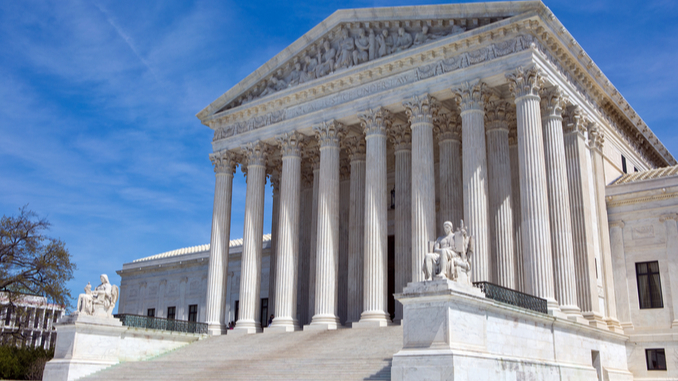
Arizona has been working to stop noncitizens from voting in our elections for over 20 years. After years of litigation, we are near the final step in proving our model works. That’s why last month we filed a brief asking the U.S. Supreme Court to overturn the 9th Circuit’s radical decision blocking our proof of citizenship laws from going into effect, and it should be an easy decision for them.
The Supreme Court told us in 2013 that we could require proof of citizenship on our own state voter registration form. They said it again in 2024, just weeks before the election. And yet, the 9th Circuit, in defiance of the Supreme Court, determined that essentially every aspect of the laws is unconstitutional, and that they were passed with “discriminatory intent.”
While we continue to wait on Congress to pass the SAVE Act, Arizona’s model is one every state can and must adopt immediately. When the Supreme Court takes the case, every obstacle will be removed for them…