by AZ Free News | Sep 16, 2021 | Opinion
LOS ANGELES, Calif. — Frustrated California voters may have lost the battle to recall Democrat Gov. Gavin Newsom on Sept. 14, but the war to unseat him in 2022 is just beginning.
Multiple outlets officially called the referendum on removing the governor a failure on Tuesday night, less than one hour after polls closed. Some California residents were stunned, but others said they are determined to use the power they amassed to create the recall to keep fighting to hold the governor accountable for his tyranny.
by AZ Free Enterprise Club | Sep 15, 2021 | Opinion
By the Free Enterprise Club |
We should be doing everything we can to ensure election integrity moving forward. Too many Americans have lost faith and trust in our election system. And while the results of the last election are done, that doesn’t mean we can’t learn lessons from November 2020 and apply them going forward.
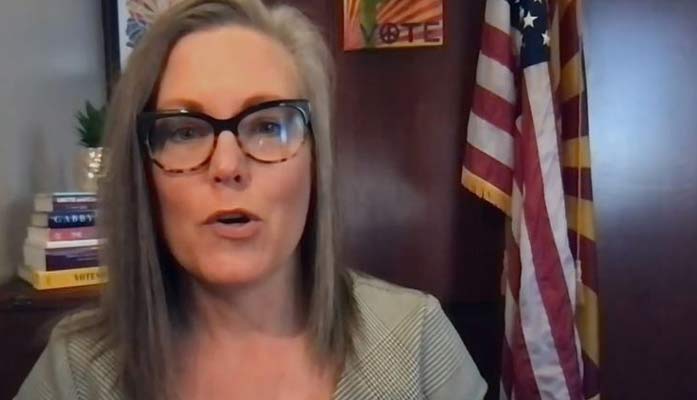
Someone should tell that to Arizona Secretary of State Katie Hobbs. Last month, Hobbs released a draft of a new elections manual. This manual establishes the election procedures that are to be used by the counties in Arizona for accepting and tabulating votes.
If approved, the manual would go into effect next year…when Democrat Katie Hobbs will be running for governor.
Problems with the elections manual
While the Arizona Free Enterprise Club is currently conducting a thorough review of the manual to identify any issues and concerns, one major problem has already arisen. In her manual, Hobbs proposes counting votes for certain offices, like president or statewide offices including governor, even if the voter shows up and votes at the wrong precinct.
But a rule like this opens the door to extensive fraud. And it’s why the United States Supreme Court ruled against this sort of thing just a couple months ago.
Do you remember that? Apparently, Katie Hobbs forgot. Or maybe she just wants to protect her own interests.
In Brnovich v. Democratic National Committee, the nation’s highest court ruled 6-3 in favor of Arizona’s ban on ballot harvesting and the state’s requirement that individuals vote in their assigned precinct for their votes to count…
>>> READ MORE >>>
by Andrew Gould | Sep 11, 2021 | Opinion
By Andrew Gould |
Our Country is based on the rule of law. From the rights and liberties protected by our Constitution to the statutes enacted by federal and state governments, we are a nation of laws. Unfortunately, the Biden administration has abandoned this principle. The most shocking example is the administration’s refusal to enforce federal immigration laws on our southern border. This dangerous “Open Border Policy” has placed the health and safety of Arizonans in grave danger. The Biden administration has reduced our southern border to a zone of lawlessness run by criminals making billions of dollars from illegal immigration — $7,000 to $8,000 per illegal immigrant. Further, these lawless crooks profit off the sale of lethal drugs such as fentanyl and methamphetamine, all the while raping women, molesting children, and assaulting and murdering thousands of victims.
We have petitioned, complained — and, at times, begged — for the federal government to help, but to no avail. The sad reality is that there is no help on the way. We are on our own.
But all is not lost. Embedded in our Constitution is the principle of federalism. Specifically, under the Tenth Amendment, powers not delegated to the federal government are reserved to the States (and the People). Federalism provides states with the power and authority to protect the safety and welfare of their citizens through new and innovative solutions without relying on the federal government.
Thus, we do not have to rely on the federal government to secure our border with Mexico. Rather, we can use state law and resources to address it on our own. We can begin securing our border by enforcing state laws that protect our citizens and their property. This can be accomplished by creating a state enforced No Trespassing Zone along the border.
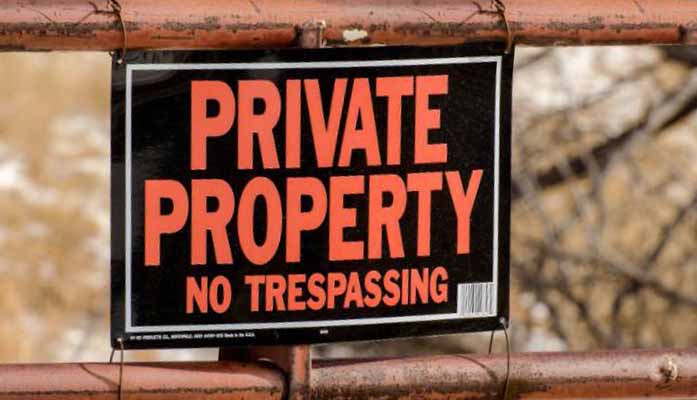
The No Trespassing Zone is a simple concept. First, persons entering the country illegally must, at some point, enter private or state land. If given reasonable notice that such entry constitutes trespassing (through the posting of “No Trespassing” signs), they can, and will, be arrested for trespassing. In addition to trespass, those entering the No Trespassing Zone may be arrested and prosecuted for the criminal damage they cause to state and private property. Additionally, the trespassers and the cartels will be prosecuted for any illegal drugs and weapons they carry into the Zone.
Second, entry into the No Trespassing Zone is detected by placing a “virtual wall” along the Zone. This technology, which employs hidden cameras placed in strategic locations, provides crystal-clear, real-time images of persons entering a surveilled area. This “virtual wall” technology is already in place on the border in Cochise County and has been funded by the Arizona legislature to extend to Yuma County.
Third, the policy requires the local county attorney’s offices and the Attorney General’s office to commit to a “zero-tolerance policy” regarding violations occurring in the No Trespassing Zone. Simply put, a “zero-tolerance policy” means that these agencies will dedicate staff and resources to prosecuting crimes committed in the Zone when there is sufficient evidence to do so.
Posting no trespassing signs would, of course, require the consent of private landowners. Additionally, much of the border includes locations, such as federal and reservation land, where state law enforcement and prosecutors have no jurisdiction. Thus, in some areas, the No Trespassing Zone will have to extend inside the state to the nearest adjacent private or state property where entry is made.
It is time for Arizona to act. As Arizona’s Attorney General, I will aggressively use the power of the Office to develop creative legal strategies to solve the problems we face together. The “No Trespassing Zone” initiative will put the law on our side to ensure border security.
Andrew W. Gould was appointed as a Justice to the Arizona Supreme Court in 2017 after serving 5 years on Division One of the Arizona Court of Appeals. He retired from the Supreme Court in March 2021. Prior to his appointment to the Court of Appeals, Justice Gould spent 11 years as a Judge of the Superior Court in Yuma County, where he served as both Associate Presiding Judge and Presiding Judge.
Andrew received his J.D. from Northwestern University School of Law in 1990. He began his legal career in Phoenix, Arizona, practicing in the field of civil litigation. In 1994, he became a Deputy County Attorney, prosecuting major criminal cases for Yuma and Maricopa Counties. He served as Chief Civil Deputy for the Yuma County Attorney’s Office from 1999-2001. Justice Gould has previously served on the Arizona Supreme Court Commission on Technology, as the President of the Arizona Judges’ Association, and has taught at the Judicial Conference and New Judge Orientations.
by Rod Dreher | Sep 8, 2021 | Opinion
By Rod Dreher |
This sign of American decadence and stupidity in Afghanistan cannot be improved on. The Spectator columnist Cockburn reports on America’s attempt to turn a nation of medieval goat herders and Islamic hillbillies into penis-possessors and vulva-havers suitable for campus life at some of America’s more elite colleges. Excerpts:
So, alongside the billions for bombs went hundreds of millions for gender studies in Afghanistan. According to US government reports, $787 million was spent on gender programs in Afghanistan, but that substantially understates the actual total, since gender goals were folded into practically every undertaking America made in the country.
>>> READ MORE >>>
by Marilyn M. Singleton | Sep 5, 2021 | Opinion
By Marilyn M. Singleton, M.D., J.D. |
In Patrick Henry’s June 4, 1788 speech, “A Wrong Step Now and the Republic Will Be Lost Forever” he pleaded for less power to the federal government and the preservation of states’ and individual rights as a condition for ratification of the Constitution. We got our Bill of Rights, including freedom of religion, speech, assembly and to petition the government for a redress of grievances. We also have the right to be secure in our “persons, houses, papers, and effects against unreasonable searches and seizures.” And we cannot be deprived of life, liberty, or property, without due process of law.
Despite the Constitution’s admonitions, fear and anxiety have led to an increase in federal powers. The Great Depression gave birth to some 70 new agencies and programs. The mother of all programs was the Social Security Act, constitutionally justified under the Congress’ Constitutional taxing power. We have been so irrational as to deem it constitutional to place American citizens in internment camps with no due process.
COVID-19 is the latest justification for government overreach in the name of public health. There is little reason for confidence given the CDC’s faulty COVID-19 tests, the conflicting information on the usefulness of wearing masks, and censoring of effective treatments that were not on the infallible Dr. Fauci’s personal favorite list. (Note: the World Health Organization recommended against the use of his favored drug, remdesivir). Adding to the erosion of trust is the change in definition of a COVID-19 “case.” Prior to the vaccination rollout, any positive COVID-19 test—with or without symptoms—was a “case.” Now, a positive test in a vaccinated person is only considered a “case” if the patient was hospitalized or died.
The federal health bureaucracy is encouraging businesses and local governments to mandate vaccines, despite the growing list of adverse effects, their modest effectiveness against the predominant Delta variant, and the imminent need for booster shots. According to data gathered from the Vaccine Adverse Events Reporting System, as of August 23, 2021, there have been 13,068 deaths, 154,142 hospitalizations, 5,617 cases of anaphylaxis, 4,681 cases of Bell’s Palsy, 1,607 miscarriages, 4,861 cases of myocarditis/pericarditis, 13,812 life-threatening reactions, and 17,228 permanently disabled, among other issues. On one hand, it is arguable that this is a pittance given that 360,634,287 doses of Pfizer, Moderna, or Johnson & Johnson/Janssen (J&J) vaccines have been given. On the other hand, a 2011 Harvard study concluded that only 1 per cent of adverse events are reported to the government system.
Other drugs have been removed for less. The 1976 H1N1 (swine flu) vaccine was rapidly developed over fears that the flu would overtake the nation as did the 1918 Spanish Flu. The vaccinations were halted after 45 million doses and 450 cases of Guillain Barré Syndrome (ascending paralysis). As it turned out, millions did not die.
We all remember the limb deformities at birth caused by the 1956 over-the-counter anti-nausea drug, thalidomide. It took four years to make the connection. Another hidden dragon was diethystilbesterol (DES). Believed to reduce miscarriages, DES was given to pregnant women for 30 years. In 1971, after it was discovered that DES could cause genital abnormalities and vaginal cancer, the FDA withdrew approval for pregnant women. It took 5 years to discover that the anti-inflammatory drug Vioxx may cause heart disease. One report estimated that some 140,000 people suffered from coronary artery disease because of Vioxx.
We do not know all the risks of the current COVID-19 vaccines available in the United States. Yet the vaccines are given in drive-through parking lots with little to no discussion.
Moderna’s, Pfizer’s, and J & J’s fact sheets warn that the “vaccine may not protect all recipients.” The Moderna and Pfizer fact sheets give special mention to myocarditis and pericarditis reported “during mass vaccination outside of clinical trials.” J&J specifically notes the large vein blood clots. Additionally, all the fact sheets note that “additional adverse reactions, some of which may be serious, may become apparent with more widespread use of the Moderna [Pfizer, J&J] COVID-19 Vaccine.” It appears that we are nonconsenting participants in the final phase of the vaccine trials.
Given that no one knows the risks, how can physicians (much less the “provider” in the drive-through window) give the patients the information needed to decide whether the potential benefit of taking the drug is worth the risk?
Drunk with power and preying on our fears, the federal government is having corporations do its bidding. Mandates unsupported by medical science could be the greatest threat to our lives and liberty.
Take heart. The spirit of Patrick Henry is alive. A professor—using the science—won a medical exemption from vaccination because his antibodies from a prior COVID-19 infection are longer lasting that those of a vaccine. Airline pilots are suing for a restraining order against mandates until “the science/medicine is more fully developed and better understood.” Teachers, health care workers, first responders are demanding choice.
Since the establishment of our republic, we have taken some very wrong steps. Let’s not let the COVID-19 response become another one.
by AZ Free Enterprise Club | Sep 3, 2021 | Education, Opinion
By the Free Enterprise Club |
For over a decade, Arizona Democrats and the education lobby have been beating the same K-12 drum- that our schools are underfunded, spending is at historic lows, and that the legislature refuses to invest more in K-12. And every establishment media outlet and so-called “investigative journalist” in Arizona have been more than happy to parrot this narrative for them. Most articles and opinion columns published by the Arizona Republic read more like repackaged press releases from the Arizona Education Association than anything resembling a real news story.
But unfortunately for the Democrats and their pals in the media, the recent Arizona Supreme Court decision on Prop 208 just blew their K-12 funding narrative into pieces. Under the court’s 6-1 decision, the majority ruled that any revenue generated from the Prop 208 income tax surcharge is not exempt from the constitutional K-12 expenditure cap, so if the tax hike would cause K-12 funding to exceed the cap, then the measure is unconstitutional.
This shouldn’t be a problem, right? According to the backers of Prop 208 and the Media, we haven’t been properly funding K-12 for decades.
Yet the lone dissent in the decision referred to the majority opinion as “almost certainly dooming the measure.” Dooming the measure? If Republican lawmakers have truly slashed education funding, if we haven’t been properly funding K-12 for decades, how could we be hitting a constitutional spending limit that hasn’t been reached since 2008?
That’s because everything the education establishment and the media has been telling you about K-12 funding levels in Arizona has been one big lie. Education spending in Arizona is at an all-time high, and we know this because we are hitting the K-12 constitutional spending cap…
>>> READ MORE >>>