by Corinne Murdock | Sep 7, 2022 | News
By Corinne Murdock |
On Monday, Customs and Border Patrol (CBP) busted a vehicle smuggling 233,000 fentanyl pills through a Nogales port of entry. 47,000 of those pills were “rainbow fentanyl,” a new marketing tactic by drug traffickers to entice children and young adults. The remainder were the traditional blue pills usually associated with fentanyl.
It is the latest of many similar busts in recent weeks. Last week, the Arizona Department of Public Safety (AZDPS) busted 46 pounds of fentanyl pills.
According to the DEA, even as little as two milligrams of fentanyl may be lethal — equivalent in size to 10-15 grains of table salt. It’s 50 times more potent than heroin and 100 times more potent than morphine. Approximately 42 percent of pills contained at least two milligrams. By those estimates, the 233,000 pills recovered on Monday could contain a minimum of 97,800 deadly doses. The troopers’ bust last week contained enough fentanyl to kill over 10.4 million people.
In a warning about rainbow fentanyl issued last week, the DEA noted that rainbow fentanyl was also being trafficked as powder and blocks resembling sidewalk chalk.
During the White House’s daily briefing last Wednesday, Press Secretary Karine Jean-Pierre evaded questions about President Joe Biden’s plans to address rainbow fentanyl and the larger fentanyl crisis. Instead, Jean-Pierre focused on the fact that it was Overdose Awareness Day and that the administration bolstered DHS with $80 million for general drug prevention. Jean-Pierre didn’t identify the root cause of the fentanyl crisis.
Instead, Jean-Pierre claimed that the increased number of drug seizures meant that their administration’s policies were working. She ignored Fox News reporter Peter Doocy’s counterpoint that fentanyl overdoses have increased as well, occurring by several hundred every day. Jean-Pierre also claimed that the Biden administration is successfully securing the border, despite overseeing a historic all-time high of illegal entries into the country.
“We see those same numbers as well. But the fact that we are securing the border, the fact that we are securing record levels of funding for DHS so they can stop illicit drugs from entering the country, the fact that it’s not just drug traffickers we’re dealing with as well, we’re stopping finance shares, this is happening under this administration,” said Jean-Pierre.
The primary suppliers of fentanyl in the U.S. are the Sinaloa and Jalisco New Generation Cartels. However, Mexico isn’t America’s sole or primary source of fentanyl; China is the primary source for all fentanyl-related substances trafficked into the country.
Health experts warned the Arizona legislature in January that fentanyl traffickers were targeting children. Prior to the rise of the rainbow fentanyl, drug traffickers made fentanyl that looked exactly like prescription oxycodone. These counterfeits are nicknamed “Mexican Blues,” “Blues,” or “M-Boxes.”
Traffickers also disguise other drugs as prescription drugs: methamphetamine as Adderall and fentanyl as Xanax. These counterfeits have disproportionately harmed youth, prompting the DEA to launch an awareness campaign, “One Pill Can Kill.”
Over 71,000 of over 107,600 fatal drug overdoses last year involved fentanyl.
The DEA advises those who encounter fentanyl to call 911 immediately.
Corinne Murdock is a reporter for AZ Free News. Follow her latest on Twitter, or email tips to corinne@azfreenews.com.
by Corinne Murdock | Sep 7, 2022 | News
By Corinne Murdock |
In an attempt to set voter expectations ahead of the upcoming midterm elections, Maricopa County Recorder Stephen Richer shared that initial results would favor Democrats heavily.
Richer based his prediction on the voting patterns from November 2020 and last month’s primary election. Both elections first tabulated early ballots received the week beforehand, most of which voted for Democratic candidates. Then, the county tabulates early ballots dropped off the day before and on Election Day, as well as in-person ballots, most of which voted for Republican candidates.
“First moral of the story: in Arizona, initial results will likely be much bluer than eventual final results,” said Richer. “Second moral: if you want your ballot to be part of results released at 8:00 pm on Election Night, return it before the weekend before Election Day.”
Less than two weeks after last month’s primary election, the Maricopa County Board of Supervisors released their canvas of the election results. Over 866,000 voters (35 percent of the 2.47 million registered voters) cast ballots in the primary election, over 87 percent of which were early voters.
According to the canvas, Republicans had a higher turnout than Democrats in Maricopa County: over 59 percent to just over 47 percent, respectively.
REVIEW PRIMARY ELECTION RESULTS HERE
While Richer predicted the county’s potential initial outcomes for the midterms, the primary’s voter turnout and the county’s voter registration numbers hint at the potential final outcomes.
According to the county’s latest voter registration statistics in July, most voters identified as Republican. Over 854,000 voters were Republican (34.5 percent), while over 851,000 voters were “other” (34.4 percent) and over 748,000 were Democrats (30.2 percent).
For months, party switches have trended in the following order from least to greatest: other, Republican, Democrat, than Libertarian. In July, over 5,500 voters switched to “other,” over 4,500 switched to “Republican,” over 3,500 switched to Democrat, and over 400 switched to Libertarian.
Maricopa County’s pattern of voter registrations aligns with the state’s. According to the secretary of state’s latest voter registration statistics, there are over 1.4 million Republicans (34.5 percent), over 1.4 million “other” voters (33.7 percent), and nearly 1.3 million Democrats (30.9 percent). Less than one percent, or 32,600 voters, were Libertarian.
Corinne Murdock is a reporter for AZ Free News. Follow her latest on Twitter, or email tips to corinne@azfreenews.com.
by Corinne Murdock | Sep 7, 2022 | Education, News
By Corinne Murdock |
While gathering signatures for a ballot initiative overturning Arizona’s universal school choice, Save Our Schools Arizona (SOSAZ) activists informed passersby erroneously that the state doesn’t review school choice expenditures until participants leave the program. These claims were exposed by one of those passersby, Stewardship Pro founder Grant Botma, who later posted an audio recording of the activists’ remarks online.
The signature gatherers also claimed that the Empowerment Scholarship Account (ESA) Program gives participants a “debit card” with $20,000. Under the universal expansion, children likely receive about $6,500 each: less than a third of the amount SOSAZ was claiming.
“They give you a debit card with $20,000 for you to use. They do have you do, like, an expense report, but they don’t really review it until you leave the program,” stated the SOSAZ woman.
The Arizona Department of Education (ADE) requires program members to submit expense reports on a quarterly basis in order to maintain eligibility. If ADE wasn’t reviewing these expenditure reports until the program member leaves, that would be due to Superintendent Kathy Hoffman’s oversight.
Hoffman is a vocal opponent of the ESA Program and supporter of the SOSAZ ballot initiative. Hoffman, who is up for reelection this November, echoed SOSAZ’s claim in a July tweet that the ESA Program she oversees has “zero accountability.”
Although Hoffman and SOSAZ call Arizona’s school choice funds “vouchers,” they are actually education scholarship accounts. Vouchers are education funds for use at private schools only. The ESA Program universal funds may be applied to a variety of education-related things on top of private schooling, such as: tutoring, supplemental curriculum, online learning programs or courses, standardized testing fees, and community college.
In other clips, SOSAZ signature gatherers expanded on their claim that the state exerted no oversight of the school choice funds. They also issued the outdated claim that the ESA Program issues Bank of America prepaid debit cards. The ESA Program transitioned to ClassWallet in 2019.
“No transparency,” said a woman. “They give you a card from Bank of America[.]”
One of the signature gatherers then asserted that the main reason to defund the universal school choice program was to ensure that private schools don’t benefit from funds formerly slated for public education.
“Basically it will keep a billion dollars in public education and away from the private schools,” stated one of the women.
The $1 billion estimate wasn’t an official estimate discussed by the state legislature. Rather, it came from SOSAZ.
In advancing the narrative that the ESA Program recipients lack oversight, the activists claimed that they could run a Prenda home microschool out of their house with multiple dangers present, like an unfenced pool and a child molester. Prenda is a tuition-free K-8 microschool program, comparable to outsourced homeschooling or the old one-room schoolhouses.
“Not hypothetical. True. Prenda home microschools: they do not do any investigations on the facilities, the people involved,” said a woman. “It’s in my living room. I’ve got a pool that isn’t fenced, and I’ve got a creepy uncle that’s a child molester.”
The women also claimed that private school families who applied for ESA Program funds didn’t actually need the funds. Approximately 75 percent of the first 6,500 universal ESA Program applicants had no prior enrollment in public schools.
“It’s just putting the money into their pockets when they don’t super need it,” said one of the women.
School choice proponents criticized the SOSAZ claims as lies, and asked for an official investigation into the legality of their speech. One Scottsdale father, Kevin Gemeroy, tweeted his concerns.
“When you lie about money to induce payments, that’s fraud. When you lie about money in exchange for signatures, what crime is that, exactly?” wrote Gemeroy.
Corinne Murdock is a reporter for AZ Free News. Follow her latest on Twitter, or email tips to corinne@azfreenews.com.
by Corinne Murdock | Sep 6, 2022 | Education, News
By Corinne Murdock |
Arizona families have filed nearly 6,500 applications to join the state’s universal school choice program since enrollment launched two weeks ago. The Arizona Department of Education (ADE) estimated that about 75 percent of the Empowerment Scholarship Account (ESA) Program applicants, about 4,870, had no prior record of public school enrollment.
Universal ESAs award students up to $7,000 in funding. ADE disclosed that the figure usually falls around $6,500 for grades 1-12 and $4,000 for kindergarteners.
ESA Program universalization takes effect on September 24.
In an effort to reverse the ESA Program universalization, public school activists with Save Our Schools Arizona (SOSAZ) launched a referendum for a 2024 ballot initiative, “Stop Voucher Expansion.”
In response to the 6,500 applications, SOSAZ claimed that the state was handing over $47.4 million in taxpayer dollars to private schools “with no transparency or oversight.” Their calculation included the several hundred students who applied to the original ESA Program for students with special needs, not the universalized version.
SOSAZ said that they would have the 118,823 signatures required to qualify for the November 2024 ballot by September 23.
“Should [universal school choice] go into effect, these numbers will certainly balloon as special interests promote vouchers for for-profit schemes,” wrote SOSAZ.
ADE Superintendent Kathy Hoffman signed onto the SOSAZ ballot initiative. Hoffman, who is up for reelection this November, echoed SOSAZ’s claim that the ESA Program she oversees has “zero accountability.”
Although the ballot initiative and Hoffman describe the ESA Program funds as “vouchers,” they are actually education scholarship accounts. Vouchers are education funds for use at private schools only. The ESA Program universal funds may be applied to a variety of education-related things on top of private schooling, such as: tutoring, supplemental curriculum, online learning programs or courses, standardized testing fees, and community college.
Pro-school choice activists have launched a counter-initiative to the AZSOS campaign, “AZ Decline to Sign.”
Arizona Governor Doug Ducey expressed total support for universalization of the ESA Program.
In an email to school choice advocate Corey DeAngelis, ADE shared that it would post the total number of universal ESA Program applications every week on social media.
Corinne Murdock is a reporter for AZ Free News. Follow her latest on Twitter, or email tips to corinne@azfreenews.com.
by Corinne Murdock | Sep 6, 2022 | News
By Corinne Murdock |
A new law prohibiting restrictions to parental access of children’s records will take effect at the end of this month, on September 23. Even so, health care facilities are maintaining policies upholding their minor patients’ confidentiality. HB2161 will upend decades of common practice for Arizona health care providers.
The history of confidentiality in health care for minors leads back to the inception of the Title X family planning program in 1970 and the ensuing controversy over confidential reproductive health care services for minors. Beginning with the Clinton administration in 2000, the federal government issued privacy protections for medical records that extended to minors.
Since then, federal precedent has informed and shaped Arizona’s health care system. One of the most recent examples of this occurred in late June, when HonorHealth implemented a policy allowing its 12 to 17-year-old patients to shield their medical records from parental view. According to the Arizona Daily Independent, parents don’t have full access to their child’s online medical records.
Meanwhile, Banner Health precludes parental access to all of their 12- to 17-year old child’s records without the child’s consent. One Arizona mother, Jacquie Wedding, felt the effects of this policy recently. In a viral Tiktok video, Wedding shared the following email sent to her by Banner Health shortly after her children’s 12th birthday:
“Please be informed that access to your child’s account has been revoked. The reason for this is because the child is now between the ages of 12 and 17. Based on state law, a minor child may consent to certain treatments without parental consent. Records of those treatments are protected and may not be released to a parent without the minor patient’s consent. As Banner Health is not able to separate those records, we do not provide proxy access to MyBanner for minor patients between the ages of 12 and 17.”
Banner Health and HonorHealth are both part of the Health System Alliance of Arizona (HSAA), an advocacy organization that also includes Dignity Health and Tenet Healthcare Corporation.
These HSAA members align with Arizona Medical Association (AMA) standards on confidentiality for adolescent treatment. AMA advised health care providers to limit parental access to their child’s records.
“Providing confidential care to teenagers for certain personal issues is essential to providing appropriate health care and helping them develop autonomy by encouraging them to be responsible for their own health care,” stated the guide. “In addition, by providing confidential care, the clinician can develop a trusting relationship with the teen.”
One of the AMA guide authors was Veenod Chulani: the doctor who founded and currently leads the Phoenix Children’s Hospital (PCH) Gender Support Program, one of the only comprehensive gender transition programs for minors in the state.
PCH allows minors aged 12 to 17 to grant or prohibit parental access to their records.
Corinne Murdock is a reporter for AZ Free News. Follow her latest on Twitter, or email tips to corinne@azfreenews.com.
by Terri Jo Neff | Sep 6, 2022 | News
By Terri Jo Neff |
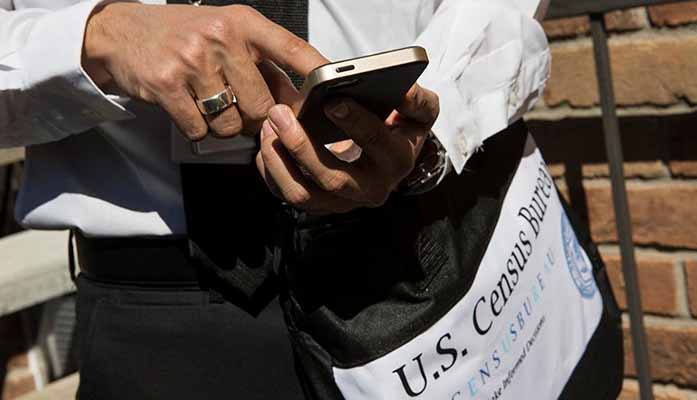
The U.S. Census Bureau recently announced it wants the public to share ideas and comments about how the 2030 Census can be improved. The deadline for responding is Nov. 15, according to a Federal Register Notice.
The Census Bureau is in the early stages of planning the next decennial census, which includes “doing a deep dive on 2020 Census Data Quality,” the announcement states.
This is of particular interest in Arizona, where the Census Bureau estimated earlier this year that Hispanics and Native Americans were undercounted. The undercount in population is believed by many census observers to have cost Arizona a 10th seat in the U.S. House of Representatives.
By late 2024, the agency expects to outline its initial operational design for the 2030 Census, followed by refining procedures and putting technology and other infrastructure in place for the national count in April 2030.
As part of the planning efforts, the public is invited to comment on how the Census Bureau can improve the public’s census experience. Particular attention will be paid to suggestions on how to better reach and count historically undercounted people.
“Public input is needed now so it can inform the Census Bureau’s decisions on the initial operational design, along with the findings of dozens of research projects underway,” according to the announcement.
Particular attention will be paid to more effectively reaching mobile populations as well as people living in informal, complex living arrangements. Planners are also interested in suggestions related to technology that can make responding to the census more user-friendly and enhance the efforts of census takers.
Census officials are also interested in better understanding additional data sources (administrative records or other data sources) and methods that could increase census operational efficiency and effectiveness and improve data quality, as well as tools and messaging that should be used to reach out to each household.
Another area for suggestions and comments involves how the Census Bureau can increase census access for people with disabilities, as well as improving support for the public in responding online, by phone, by mail, in English, or in another language.
Comments can be made via email to DCMD.2030.Research@census.gov or by going online to the 2030 Census webpage.
Decennial census data is confidential under federal law for 72 years to protect respondents’ privacy. Data collected from the first census in 1790 through 1950 is available for free at most public libraries or from several pay-to-view online services.
Records of the 1960 to 2020 censuses can only be obtained by the person named in the record (or their heir) by submitting a required form.