Arizona public school students would spend a designated week each year studying the nation’s founding documents, and students in grades three through twelve would recite a passage from the Declaration of Independence, under legislation sent to Gov. Katie Hobbs.
The “Return to Civics Instruction Act,” Senate Bill 1572, sponsored by Sen. Mark Finchem (R-LD1), would require public schools to observe Celebrate Freedom Week. The measure was transmitted to Hobbs earlier this month after passing both chambers of the Legislature.
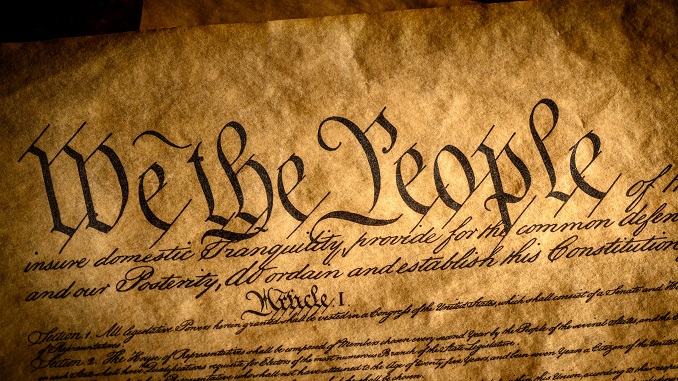
The bill would require each public school to include instruction during Celebrate Freedom Week in each social studies course on the “original intent, meaning and importance” of the Declaration of Independence, the United States Constitution, including the Bill of Rights, and the historical context of those documents.
🚨FOR IMMEDIATE RELEASE: Arizona Students Could Receive Expanded Instruction on America's Founding Principles Under Senator Finchem Bill Sent to Governor
The instruction would apply to students in grades one through twelve and would also cover the relationship between the ideas expressed in the Declaration of Independence and several periods and movements in American history, including the nation’s history as a country of immigrants, the American Revolution, the creation of the Constitution, the abolitionist movement, the Emancipation Proclamation, and the women’s suffrage movement.
For students in grades three through twelve, the measure would require a recitation of the passage from the Declaration of Independence already referenced in state law under duties assigned to the State Board of Education.
Students would not be required to participate in the recitation if a parent submits a written request to excuse the student, if the school determines that the student has a conscientious objection, or if the student’s parent is a representative of a foreign government to which the United States extends diplomatic immunity.
Celebrate Freedom Week would be defined as either the instructional week that includes Sept. 17 or another instructional week designated by the public school’s governing body. The bill would allow the State Board of Education to adopt rules and policies to implement the requirement and would require the board to ensure public schools do not censor the Declaration of Independence, Constitution, or Bill of Rights to exclude religious references.
SB 1572 passed the Senate on Feb. 26 by a 16-12-2 vote and passed the House on June 11 by a 31-23-6 vote. It was transmitted to the governor the following day.
“This bill was brought forward by a constituent with language from a similar bill that was passed into law by the Texas Legislature,” said Finchem. “If our students don’t know where their civil rights come from, how will they resist attempts to separate them from their civil rights?”
Finchem said the measure is intended to strengthen students’ understanding of the country’s founding principles.
“Too many students graduate without a basic understanding of the principles that shaped our nation and continue to protect our freedoms today,” Finchem said. “A strong civics education helps students understand not only how our government works, but why the Declaration of Independence, Constitution, and Bill of Rights matter. If we want future generations to preserve liberty, they first need to understand the ideas and sacrifices that made liberty possible. This bill helps ensure Arizona students receive that foundation.”
Arizona already requires American civics education as part of the state’s high school social studies standards. Under A.R.S. § 15-701.01, the State Board of Education must prescribe social studies standards that include American civics education and a comparative discussion of political ideologies, including communism and totalitarianism, that conflict with the principles of freedom and democracy essential to the founding principles of the United States.
State law also requires students to pass a civics test based on the civics portion of the U.S. naturalization test in order to graduate from high school or obtain a high school equivalency diploma.
The department’s 2026 Arizona Civics Test Administration Manual says students are required to score 70% or higher beginning with the graduating class of 2026 and may take the test between grades seven and twelve.
SB 1572 would add a separate requirement for annual instruction during Celebrate Freedom Week in public school social studies courses.
Arizona Superintendent of Public Instruction Tom Horne announced earlier this month that the Arizona Department of Education will receive $300,000 in grant funding to expand its teacher apprenticeship and mentoring program amid the state’s ongoing teacher shortage.
According to a statement from the Arizona Department of Education (AZED), the department is among the sub-recipients of grant funds awarded by the National Center for Grow Your Own (NCGYO) through the private, nonprofit Ascendium Education Group. AZED will receive $300,000 over the next two years to support approximately 100 apprentices and mentor teachers statewide.
“This is excellent news because recruiting, training and supporting teachers is vital and the teacher shortage has reached catastrophic proportions,” Horne said. “These funds will be used to expand our already-robust efforts to help bring more teachers into the profession and retain those valuable educators currently in the classroom.”
Superintendent Horne announces $300K in grant funds to help recruit, train more teachers–apprenticeships help address chronic shortage. A new $300,000 grant will be used by the Arizona Department of Education (ADE) to expand its existing teacher apprenticeship and mentoring… pic.twitter.com/EtkADSdl0K
— Arizona Department of Education (@azedschools) June 9, 2026
The department said the grant will expand AZED’s existing teacher apprenticeship and mentoring program. According to AZED, the Arizona Teacher Registered Apprenticeship Program prepares future educators through paid, hands-on classroom experience under the mentorship of experienced teachers while apprentices complete educator preparation coursework.
Horne said the state has developed alternate pathways for prospective teachers who did not attend an education college but have the content knowledge needed to teach.
“We have developed and implemented numerous ‘alternate pathways’ for those who did not go to education college but have the content knowledge needed to teach,” Horne said. “We must also continue to push for more help for educators by increasing teacher pay using State Land Trust funds with no new taxes, and ensuring school administrators support teachers on classroom discipline, the two major issues that teachers cite as reasons to leave the profession.”
The NCGYO said its National Registered Apprenticeship in Teaching Network includes states working to use registered apprenticeships in teaching to address educator shortages. According to the NCGYO, the network supports states and local partners as they develop registered apprenticeship pathways into the teaching profession.
According to AZED, NCGYO will provide technical assistance to participating states and local partners, including support with apprenticeship program registration, subgrant design and implementation, sustainability planning, and quality assurance.
The grant project’s stated goals include increasing the number of fully licensed teachers prepared through high-quality, debt-free apprenticeship programs; building state-level infrastructure and policy systems to sustain programs beyond philanthropic funding; and using the registered apprenticeship model to improve educator preparation while lowering the cost of earning a teaching degree.
Ascendium’s broader education philanthropy focuses on removing barriers for low-income learners and expanding postsecondary and workforce pathways.
NCGYO’s work sits within a broader national educator pipeline movement, promoted by some education policy groups as a tool to increase teacher diversity. A 2023 National Council on Teacher Quality report on policies to increase teacher diversity discusses “Grow Your Own” programs in that context and lists NCGYO founder David Donaldson as a contributor.
The AZED announcement describes the Arizona grant as funding teacher apprenticeships and mentor support and does not state that the funds are tied to a DEI program or mandate.
The Arizona Department of Child Safety (DCS) will implement a new child safety reform set to be codified until Gov. Katie Hobbs’ office intervened.
Sen. Carine Werner (R-LD4) had championed the legislation that prompted the new policy, SB 1175. It passed the legislature with bipartisan support earlier this month.
The legislation would have required DCS caseworkers to photograph children during abuse and neglect investigations, followed by a review of those images when evaluating the safety and well-being of those children. Specifically, the legislation would have required caseworkers to consider any decline in a child’s appearance or health.
DCS leadership announced it would voluntarily adopt the requirements as policy.
SB 1175 was part of a legislative package of bipartisan reform bills to improve DCS handling of reports of abuse. The reforms were prompted by high-profile child abuse cases in which prior DCS involvement failed to prevent deaths, including 10-year-old Rebekah Baptiste, 14-year-old Emily Pike, and 16-year-old Zariah Dodd.
At Werner’s urging early last year following Pike’s death in 2024, Arizona lawmakers launched an investigation into DCS for systemic failure. The subsequent deaths of Baptiste and Dodd further compelled lawmakers to take expedited action.
At the time, Werner said the failures of the state had too great of consequences to be ignored.
“These tragedies make it painfully clear that when our child protection systems — both state and tribal — fail, the consequences can be horrific,” said Werner.
Werner said in a press release issued last week that Hobbs’ office attempted to require SB 1175 to have legislative appropriation. Werner and legislative staff disagreed with the assessment from Hobbs’ office, citing an estimated implementation cost low enough to be absorbed within the existing DCS budget: $50,000. Hobbs’ office refused to relent on their request, and the House opted to recall the statutory route and instead relied on DCS to implement it through policy.
Summaries of SB 1175 noted that the new DCS requirements would have no anticipated fiscal impact to the state general fund.
DCS Director Kathryn Ptak said the legislation-turned-policy was a “commonsense solution” for keeping children safe while in DCS care.
“I will be issuing a directive to our staff to guarantee each child in our care has an updated photograph to help us maintain accurate records and respond quickly in any situation where a child’s safety or whereabouts need to be confirmed, while continuing conversations around this topic,” said Ptak. “We are grateful to Senator Werner for her partnership in advancing bills that help keep children safe, while also balancing the privacy needs of families.”
Werner said the legislation was a fulfillment of government responsibility to respond to those tragedies that occur despite oversight, especially when it comes to children entrusted to a state system.
“Children cannot afford for warning signs to be missed. If something as simple as maintaining and reviewing photographs helps a caseworker recognize a child is deteriorating and intervene sooner, then it is absolutely worth doing,” said Werner. “I’m grateful to Director Ptak and the Department for their partnership in moving these reforms forward right away through administrative action. This ensures Arizona’s most vulnerable children benefit from improved documentation and earlier recognition of warning signs without delay.”
AZ Free News is your #1 source for Arizona news and politics. You can send us news tips using this link.
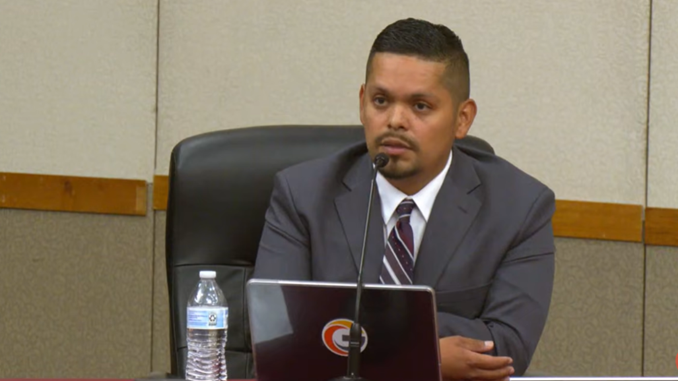
The Glendale City Council must reinstate a Democrat ousted for accepting a compensated public position, per a court order.
Maricopa County Superior Court Judge Greg Como ordered the council to reinstate Jose “Lupe” Conchas, who represented the Cactus District until the council voted 4-3 to remove him from office last month.
Mayor Jerry Weiers, Vice Mayor Ray Malnar, and Councilmembers Lauren Tolmachoff and Dianna Guzman voted to remove Conchas, while Conchas along with Councilmembers Bart Turner and Leandro Baldenegro voted against it.
The council took their vote to vacate Conchas’ seat following his election to the Salt River Project Agricultural Improvement and Power District (SRP) board earlier this year, since that position offers compensation in the form of a per diem and the Glendale City Charter precludes councilmembers from holding public offices which award compensation, save for select public offices.
“[The mayor and council members] shall hold no other public office for which they receive compensation except that of a notary public or member of the national guard or naval or military reserve[,]” states the Glendale City Charter.
Conchas’ term was set to expire in 2028. He was first elected in 2024.
However, Como ruled this week that the compensation awarded to SRP board members was low enough to be reasonable and not qualify as a salary, and therefore didn’t constitute “compensation” as understood by the Glendale City Charter.
“The $60.00 SRP pays its directors is a per diem payment that reimburses directors for an amount that reasonably approximates their actual expenses in attending board and committee meetings. Facts supporting this conclusion include the relatively small payment amount, and that payment is only for directors who physically attend meetings,” stated Comos. “The Glendale City Council exceeded its authority under the Glendale City Charter when it passed Resolution No. 22-60 disqualifying Jose Conchas, Jr., from serving on the Glendale City Council and by finding that his seat is vacant.”
The SRP board’s bylaws describe the per diem provision as the “compensation of officers and board of directors and official bonds.”
Como cited the Arizona Constitution and Arizona statute to justify his interpretation. Both laws have identical language which restrict individuals from holding multiple public offices — but they restrict on the basis of salary, not compensation.
“Except during the final year of the term being served, no incumbent of a salaried elective office, whether holding by election or appointment, may offer himself for nomination or election to any salaried local, state or federal office,” states the Arizona Constitution and corresponding statute.
Conchas said in a statement that the court ruling validated his belief that he had abided by the law.
“I am looking forward to continuing to serve,” said Conchas. “I have followed the law this entire process and the ruling today made that official.”
A city of Glendale spokesperson indicated that they would accept the ruling and reinstate Conchas as soon as possible.
“The city of Glendale has reviewed the Superior Court’s ruling and is taking the necessary steps to complete the reinstatement of Councilmember Lupe Conchas to his position representing the Cactus District,” stated the spokesperson.
AZ Free News is your #1 source for Arizona news and politics. You can send us news tips using this link.
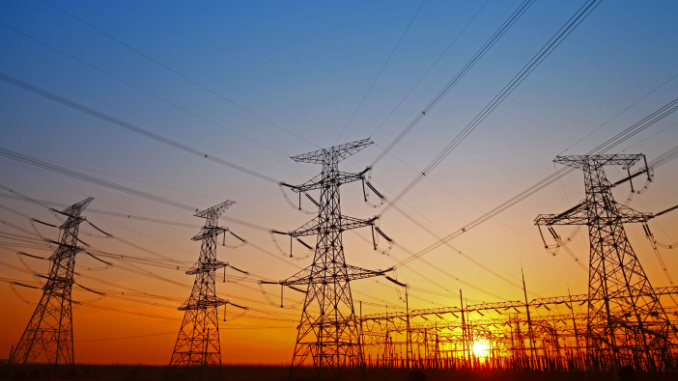
An Arizona coal-fired power plant will receive federal funding for modernization efforts under a U.S. Department of Energy (DOE) initiative aimed at strengthening grid reliability and preserving dispatchable power generation.
According to the DOE, project selections announced under its Defense Production Act (DPA) Title III Coal Fleet Projects program, Arizona Electric Power Cooperative’s (AEPCO) Apache Generating Station will receive approximately $21 million in DOE funding along with $32 million in non-DOE funding. The project is one of several selected nationwide as part of the Trump administration’s effort to support coal-fired generation infrastructure.
The Apache project, known as RECOAL — Revitalizing Energy Capacity with Optimized Assets and Long-Life Infrastructure — is intended to modernize the facility’s coal generation assets, improve operational efficiency, and extend the useful life of existing infrastructure.
Arizona Corporation Commissioner Nick Myers highlighted the project in a statement following the federal announcement.
“In the recent announcement from the administration, Arizona is benefiting from the money designated to keep coal plants open,” Myers wrote. “The Apache Generating Station is getting about $21M in DOE funding and $32M in non-DOE funding. This will help modernize the plant to increase efficiency and retain that dispatchable energy for years to come.”
In the recent announcement from the administration, Arizona is benefiting from the money designated to keep coal plants open. The Apache Generating Station is getting about $21M in DOE funding and $32M in non-DOE funding. This will help modernize the plant to increase…
— Nick Myers – Arizona Corporation Commissioner (@votenickmyers) June 5, 2026
The funding was announced as part of a broader DOE initiative described in a department fact sheet titled “The Energy Department is Unleashing Beautiful Clean Coal.” According to the agency, the initiative supports projects to build, recommission, upgrade, and modernize coal-related energy infrastructure in order to strengthen electric grid reliability and maintain generation resources capable of providing power on demand.
The DOE stated that it has now “saved or supported” 45 coal plants and more than 40 gigawatts of coal-powered generation through actions taken since President Donald Trump declared a National Energy Emergency. The department said its latest actions include support for 17 additional coal plants and one coal export facility.
According to the DOE fact sheet, the coal fleet projects are intended to strengthen domestic energy production, improve power system resilience, and ensure sufficient dispatchable generation capacity as electricity demand increases. The agency cited growing power needs for artificial intelligence, data centers, manufacturing, and national security as factors driving the initiative.
“American coal miners remain essential to American energy dominance,” U.S. Secretary of Energy Chris Wright said.”Unfortunately, previous leaders launched relentless attacks on U.S. coal workers and industry, threatening grid reliability and driving energy prices higher for the American people. Thanks to President Trump, we are not only stopping the premature closure of our coal plants, but also taking steps to expand and modernize existing coal infrastructure. These actions will help ensure affordable, reliable, and secure energy access for decades to come.”
The Apache Generating Station is located in Cochise County and supplies power to rural electric cooperatives and other customers in Arizona and the surrounding region. Under the DOE-supported project, modernization efforts are expected to improve efficiency and support continued operation of the facility’s existing generation assets.
The Trump administration also intervened in Arizona’s coal-powered energy sector in 2025, using emergency authorities to support continued operations at the Cholla Power Plant in Navajo County.
Vice President JD Vance will appear next week in Arizona to deliver remarks and speak with residents about America’s future.
Vance will speak in the Tucson area on Monday. The vice president will discuss the future of the Republican Party and its next steps to continue putting America first.
Arizona Republican Party Chairman Sergio Arellano told AZ Free News that Vance has been very involved in electing solid candidates across the country, and that this event would be an opportunity for Arizonans to participate in that effort.
“I am thrilled to invite my fellow Republicans to join us as we hear from our great vice president of the United States,” said Arellano. “The vice president and President Trump have done a remarkable job of bringing peace and prosperity to the globe. I am excited to hear about his plans to make sure that Republicans can continue to make America great again.”
Vance will address Arizonans fresh from handling the rapidly evolving effort to secure peace in the Middle East, after a tentative ceasefire agreement and the cancellation of anticipated talks between the U.S. and Iran on Friday. The vice president was scheduled to visit Switzerland for those talks, but that trip was postponed.
During a Thursday press briefing at the White House, Vance warned Israel against criticizing President Donald Trump’s memorandum of understanding with Iran. Israel Prime Minister Benjamin Netanyahu has signaled opposition — reportedly expressing it more frankly in private — to the president’s peace plan.
“Donald J. Trump is the only head of state in the entire world who is sympathetic to the nation of Israel at this moment in time,” said Vance. “If I was in the cabinet of the Israeli government, I might not be attacking the only powerful ally that I have anywhere left in the entire world.”
— Rapid Response 47 (@RapidResponse47) June 18, 2026
Trump has promised in talks with reporters and on social media that the U.S. remains focused on achieving peace through a complete ceasefire.
Vance has not ruled out a presidential run altogether. The vice president revealed in an interview with CBS earlier this week that the fate of his presidential aspirations would be tied to future conversations with his wife following the midterm elections later this year.
“[T]he way that I make decisions is that I try not to make them until I absolutely must,” said Vance.
Under Arellano, the Arizona Republican Party has focused its involvement in issues relevant at both the local and national scale, like bolstering election integrity and combating the homeless epidemic.
The Arizona Republican Party also hosted the head of Centers for Medicare & Medicaid Services, Dr. Mehmet Oz, last month in Mesa to address the waste, fraud, and abuse of Medicaid funds, another pressing topic for taxpayers concerned with the adequacy of government program oversight.
The Tucson speaking event with the vice president is scheduled for Monday, June 22. Doors open at 9:30 a.m., with programming to begin at 11:30 a.m. Individuals interested in attending must register in advance, with one ticket available per person on a first-come, first-serve basis.
AZ Free News is your #1 source for Arizona news and politics. You can send us news tips using this link.