As Sunshine Residential Homes remains at the center of an ongoing investigation into alleged “pay-to-play” conduct involving Gov. Katie Hobbs, public records link founder and CEO Simon Kottoor to a Paradise Valley residence that Zillow estimates is worth nearly $10 million. The property has drawn renewed attention amid scrutiny of Sunshine’s political donations and subsequent state-approved rate increases.
Arizona campaign finance records reviewed by AZ Free News show that Gov. Katie Hobbs was the only Arizona candidate to receive contributions from Simon and Elizabeth Kottoor during the 2022 and 2024 election cycles. Simon Kottoor’s only other recorded contribution to a political candidate was a 2023 donation to New York Democratic congressional candidate Kevin Thomas.
Simon Kottoor founded Sunshine Residential Homes (formerly Sunshine Group Homes) in 1996, according to the company’s website. Sunshine says it provides congregate foster placements for Arizona children, has served more than 25,000 children since its founding, and currently has more than 300 children in care with approximately 200 employees.
Maricopa County property records reviewed by AZ Free News list the residence under the Kottoor Family Trust, with Simon M. Kottoor and Elizabeth Kottoor named as trustees. AZ Free News has withheld the street address from publication.
Zillow describes the property as a 7,719-square-foot, five-bedroom, six-bathroom home on 1.08 acres and estimates its value at approximately $9.53 million. Realtor.com estimates the property’s value at about $8.71 million and reports it last sold for $1.55 million in 2020.
Sunshine Residential Homes and Kottoor have faced scrutiny over political donations connected to Hobbs and subsequent state-approved rate increases. The Arizona Republic reported in June 2024 that Sunshine Residential Homes received a large rate hike from the Arizona Department of Child Safety (DCS) after making six-figure contributions to Hobbs’ inauguration fund and the Arizona Democratic Party. The outlet reported that Sunshine applied for a rate increase in December 2022, was denied in February 2023, then applied again in May 2023 and was approved, citing DCS records.
The Republicreported in July 2024 that both the Kottoors’ and Sunshine Residential Homes’ donations to Hobbs and the Arizona Democratic Party amounted to approximately $420,000 from 2022-2024.
According to the Arizona Capitol Times, Sunshine Residential Homes gave $100,000 to Hobbs’ inaugural fund and separately gave $300,000 to the Arizona Democratic Party. The outlet also reported that the Arizona Republic found Hobbs personally called Kottoor shortly after winning the 2022 election and asked him to serve as a gold-level sponsor of her inauguration. The same report said the Department of Child Safety later increased payments to Sunshine in 2023 to nearly 40 percent above the average for other group homes.
Kottoor was also on Hobbs’ inaugural committee, and he and his wife made maximum contributions to Hobbs’ campaign, according to reporting cited by Governing. That report also noted that Hobbs attended a private event at the Kottoor’s Paradise Valley residence.
Calls for investigation from Arizona lawmakers followed within days of the initial reporting.
From @GovernorHobbs spokesperson: "Like every other 'investigation' launched by this chaotic and radical legislature, this is another desperate, partisan stunt. It will do nothing but show the administration put the best interest of Arizona first." https://t.co/taQAZTmb52
The Arizona Attorney General’s Office opened an investigation into the Sunshine Residential matter in June 2024. The office’s public records archive lists communications and records related to the Sunshine Residential Homes investigation, including correspondence with Maricopa County Attorney Rachel Mitchell and Auditor General Lindsey Perry, as well as a criminal referral.
I requested an investigation by the Maricopa County Attorney into Governor Hobbs' alleged "pay to play" scheme. Arizona taxpayers deserve financial accountability. Giving state dollars to political donors is a grave misuse of public funds.
— Arizona Treasurer Kimberly Yee (@AZTreasurerYee) June 10, 2024
Hobbs’ office has denied wrongdoing. Axios reported that Hobbs spokesman Christian Slater said the administration would be “cleared of wrongdoing” and called the allegations partisan. Slater and DCS spokesman Darren DaRonco told Axios that Hobbs and her office had no involvement in agency decisions regarding Sunshine Residential Homes. Sunshine told the Arizona Republic that it remained committed to cooperating with any inquiry, Axios reported.
The investigation remains a prominent political issue in Arizona well into 2026. In April, KJZZ reported that Mayes’ team had asked Hobbs for an interview as part of the investigation and that Hobbs would not publicly commit to sitting for one. KJZZ reported that Hobbs continued to deny wrongdoing.
Republican lawmakers have cited the Sunshine controversy as they advance legislation requiring more disclosure from companies seeking state contracts. The Arizona Senate Republican Caucus announced last week that SB 1186, sponsored by Arizona Senate President Pro-Tempore T.J. Shope (R-LD16), had been sent to Hobbs’ desk. The bill would require companies seeking taxpayer-funded contracts and grants to disclose political donations, gifts, and other things of value connected to the governor and affiliated political organizations. A House summary of SB 1186 states that the measure establishes disclosure requirements for the request-for-proposal and grant-application processes.
Hobbs announced her own ethics reform proposal in February, calling it a sweeping transparency package intended to strengthen public trust in government. According to the Governor’s Office, the proposal includes a public transparency and disclosure database, contracting reforms, and a lobbyist gift ban.
The Sunshine Residential Homes matter remains under investigation, and no public finding of wrongdoing by Hobbs, Kottoor, or Sunshine Residential Homes has been announced.
A Goldwater Institute-backed measure to constitutionally protect Empowerment Scholarship Account (ESA) funds for children of military families will go before Arizona voters in November after receiving legislative approval.
House Concurrent Resolution 2048, sponsored by Rep. Michael Way (R-LD15), asks voters to amend Article XI of the Arizona Constitution by adding a new section prohibiting the state from confiscating money from certain scholarship accounts of students who are children of military families.
Under the resolution text, the prohibition would apply if the scholarship account is established and maintained by the state under a program that designates children of military families as eligible to receive scholarship money, and if the student may use the money for tuition or fees at eligible postsecondary educational institutions. The resolution states that the provision is not limited to scholarship account programs established and maintained by the state only for children of military families.
The measure defines a “child of a military family” as a student whose parent is serving on active duty in the U.S. Armed Forces, was serving on active duty when the student’s eligibility was initially determined, or was killed in the line of duty. The measure defines “confiscate” as seizing, transferring, or otherwise taking money from a scholarship account.
The resolution includes exceptions for closures of accounts tied to individualized findings of illegal activity or wrongdoing after due process. It also accounts for routine account closures, including voluntary closure or failure to renew an account, graduation from an eligible postsecondary institution, or loss of eligibility after a student fails to enroll in an eligible postsecondary institution for at least four consecutive years after graduating from high school.
HCR 2048 also states that if a bill enacted into law or a voter-approved measure on or after Nov. 1, 2026, violates the proposed constitutional provision, the entire bill or measure is void and a court may not sever any portion of it. The resolution directs the Secretary of State to submit the proposition to voters at the next general election.
The measure passed the Senate on June 12 by a 16-13-1 vote and passed the House on final reading June 13 by a 31-22-7 vote.
The Goldwater Institute described the measure as its “Military Family Protection Act” and said it is intended to protect military families participating in Arizona’s ESA program from future efforts to redirect or reclaim scholarship funds.
The Arizona Department of Education (AZED) currently lists 100,713 students enrolled in the ESA program this school year. The department’s Fiscal Year 2026 Quarter 1 report, covering July 1 through Sept. 30, 2025, counted 93,993 ESA students, including 975 students in the category for students whose parent is active-duty military or was killed in the line of duty.
Goldwater’s Director of Education Policy, Matt Beienburg, told lawmakers that military families should not lose scholarship funds through a separate ballot proposal aimed at the ESA program.
“There is a current ballot measure being proposed to attack the scholarship funds and confiscate the scholarship funds of children, including military families,” Beienburg said. “These families should not be treated as a piggy bank to raid. These are families who have protected this nation.”
Rep. Way said the measure is intended to prevent Arizona from reclaiming scholarship money after families were promised access to the program.
“This measure asks a very simple question: should Arizona be allowed to take scholarship money from military families after we promised them? My answer is no,” Way said.
The referral comes as opponents of the ESA program are circulating the Protect Education Act, a proposed ballot initiative that would impose new restrictions on the ESA program. The campaign says the measure would require background checks and safety standards for voucher-funded schools, add spending transparency rules, prohibit non-educational and luxury purchases, cap family income for ESA eligibility at $150,000 with annual inflation adjustments, require unused ESA funds to be returned, and require voucher-funded schools to be accredited or administer approved assessments. The campaign says students with disabilities would be exempt from the income cap and assessment provisions.
In an op-ed for AZ Free News, Matthew Ladner and Jason Bedrick of the Heritage Foundation wrote that AZED published the results of a random audit of the ESA program in March 2026, “finding very low rates of misspending relative to other publicly funded programs and even lower rates of fraud. Less than 2% of ESA funds were spent on unallowed items, and 0.3% of the funds were spent on items considered ‘egregious’ or fraudulent.”
AZED disputed claims that the ESA program had a 20% fraud rate in a March release, saying about 2.0% of dollars spent by ESA account holders were for items deemed unallowable under program rules and that actual fraud or egregious purchases accounted for 0.3%.
“The submission of a purchase that is deemed unallowable does not constitute fraud,” AZED said. “Most are innocent mistakes, such as an error in a form that must be resubmitted, or educational items that are not on the allowable list but that the user could have in good faith believed were permitted. Some examples would be backpacks, lunch boxes and water bottles.”
AZED said the 20% figure represented program participants selected for risk-based auditing and “had nothing to do with fraud.” The department said action is taken to recover or collect funds or refer matters to law enforcement when necessary, and that more than $1.2 million had been recovered through that process.
Opponents of HCR 2048 have argued that its voidability provision could invalidate ESA reform proposals if voters approve conflicting measures. ABC15 reported that critics said the measure is aimed at blocking the Protect Education Act, while supporters said it is intended to protect scholarship funds promised to military families.
HCR 2048 was one of three education-related ballot referrals approved before the Legislature adjourned. Senate Republicans said the measures were intended to protect military families, direct more education dollars into classrooms, and restrict the use of taxpayer-funded school resources for labor organization activities.
“These scholarship funds were created for helping the children of military families pursue higher education,” Senate Appropriations Committee Chairman David Farnsworth said. “When government faces budget pressures, dedicated funds can become tempting targets. Arizona should never balance its books on the backs of military families or treat money set aside for their children’s futures as a piggy bank.
“This referral permanently protects those funds and ensures they remain available for the students they were intended to serve.”
Arizona has signed into law a new measure that significantly increases penalties for individuals who pay or agree to pay for prostitution, targeting the demand side of prostitution and sex trafficking by elevating these offenses to felonies with mandatory jail time. The law also directs dedicated funding toward support services for victims of sexual trafficking.
House Bill 2720, sponsored by Rep. Selina Bliss (R-LD1), passed both chambers of the Legislature with bipartisan support and has been signed into law. The measure targets individuals who “offer to pay, agree to pay, or pay a monetary fee or other valuable consideration for engaging in sexual conduct with another person,” classifying such acts as a Class 6 felony under revisions to A.R.S. § 13-3214.
The law imposes mandatory minimum jail sentences: 15 consecutive days for a first time offense, 30 days for a second, and 60 days for a third, with no eligibility for probation or suspended sentences until the full term is served. Repeat offenders with three or more prior violations face Class 4 felony charges and at least 180 consecutive days in jail.
“Arizona is going after the demand that fuels prostitution and sex trafficking,” stated Rep. Bliss. “This is a victory for families, neighborhoods, and victims who deserve a path out. The people paying for sex are funding an industry that traffickers exploit, and communities across Arizona are left to deal with the crime, abuse, and damage that follow.”
In addition, convicted offenders must pay a non-waivable $200 assessment. These funds will be transmitted to the state’s Anti-Human Trafficking Grant Fund and used exclusively to provide services to victims of sexual trafficking.
HB 2720 also strengthens protections for survivors by requiring courts to seal records of prostitution convictions that are later vacated upon determination that the individual was a victim of sex trafficking. This provision aims to remove barriers to employment, housing, and recovery for those exiting exploitation.
“This law holds offenders accountable, puts money directly toward helping victims recover, and puts every person who pays for sex in Arizona on notice: you can face jail time, a felony record, and the consequences that come with it,” added Rep. Bliss.
Ethan Faverino is a reporter for AZ Free News. You can send him news tips using this link.
The Republican-led Arizona legislature has submitted a legislative package to Gov. Katie Hobbs that they say will further strengthen parental rights and protections for children.
Among these bills are HB 2249, which would expand on Arizona’s current parental bill of rights by requiring schools to notify and obtain written consent from parents prior to facilitating a child’s social transition of their biological gender.
Social transitioning includes the usage of preferred pronouns and provision of accommodations that align with the child’s gender identity to include access to nonbiological restrooms and locker rooms.
Additionally, SB 1095 would outlaw gender transition procedure referrals or procedures for minors, and SB 1094 would allow individuals to take a civil cause of action against physicians who perform gender reassignment surgeries on minors.
Arizona banned gender reassignment surgeries on minors in 2022, and excludes gender reassignment procedures from Medicaid coverage. SB 1095 extends that ban to medications, as in puberty blockers and cross-sex hormones.
Senate Majority Leader John Kavanagh (LD-3), who sponsored SB 1094, said in a press release last week that these latest bills were created in response to requests from parents.
“Arizona families have made clear that they want commonsense protections for children and stronger parental rights,” said Kavanagh. “This legislation ensures that parents remain involved in critical decisions impacting their children while protecting minors from irreversible procedures with lifelong consequences.”
State Sen. Janae Shamp (LD-29), sponsor of SB 1015, said regulation was necessary to ensure accountability for irreversible procedures, and that a lack of regulation would essentially subject children to political experimentation.
“Arizona children are not political experiments, and parents should never be cut out of life-altering decisions involving their own kids,” said Shamp. “For too long, activists have pushed radical gender ideology into medicine, education, and government while silencing common sense and ignoring the concerns of families. These bills draw a clear line.”
GOP lawmakers have had trouble codifying bills addressing the gender transition of minors under Hobbs. In accordance with the stance of the Democratic Party, Hobbs supports gender transitions for minors and typically spurns enacting statutory pressures on this modern social practice.
The governor has consistently vetoed bills which would impose restrictions on individuals who identify as transgender. Last year, Hobbs vetoed bills that would have prohibited amending birth certificates and driver’s licenses to reflect gender identity rather than biological gender.
Hobbs also issued an executive order her first year in office requiring state employee healthcare plans to cover gender transition surgeries. Every summer since taking office, Hobbs has flown the Pride flag above the American flag in honor of Pride month.
We dropped the Pride banner from the Executive Tower to kick off Pride Month. To our LGBTQ+ community: I will always stand up for your freedom to be who you are, love who you love and your right to live with dignity and respect. pic.twitter.com/ffO9InrjX0
— Governor Katie Hobbs (@GovernorHobbs) June 2, 2026
Hobbs’ husband, Patrick Goodman, was formerly a counselor specializing in youth gender transitions at the Phoenix Children’s Hospital.
There’s also been resistance to Arizona regulation on transgenderism from the courts. In 2023, a federal court blocked Republican lawmakers’ attempt at enacting a ban on biological males who identify as females from participating in women’s and girls’ sports, the Save Women’s Sports Act. Petersen v. Doe (formerly Doe v. Horne) is pending petition with the Supreme Court.
AZ Free News is your #1 source for Arizona news and politics. You can send us news tips using this link.
Legislation sent to Gov. Katie Hobbs last week would add an additional layer of legislative oversight before the Arizona Department of Revenue could adopt certain new legal interpretations that increase tax liability.
SB 1221, sponsored by Sen. J.D. Mesnard (R-LD13), would require the Arizona Department of Revenue to notify the chairmen of the Senate Finance Committee and the House Ways and Means Committee before adopting a proposed new interpretation or application of state tax law that would adversely affect taxpayers prospectively. An affected taxpayer would also be permitted to notify the committee chairmen of the proposed change.
🚨FOR IMMEDIATE RELEASE: Senator Mesnard Bill Protecting Taxpayers from Surprise Tax Hikes Heads to Governor
If the committee chairmen hold a hearing on the proposed interpretation or application, the Department of Revenue would be required to provide testimony explaining why the change is necessary.
The Arizona Senate Republican Caucus announced that the measure had passed the Legislature and was being transmitted to Hobbs for consideration. The caucus said the bill is intended to protect taxpayers from unexpected tax burdens and provide public scrutiny before agency interpretations take effect.
“Taxpayers should not wake up one day and discover a state agency has quietly changed the rules in a way that costs them money,” Mesnard said in a statement. “If the Department of Revenue wants to adopt a new interpretation of tax law that negatively impacts Arizona families, job creators, or small businesses, there ought to be transparency, public scrutiny, and accountability first.”
The measure would amend A.R.S. § 42-2078, which governs the Department of Revenue’s new interpretations or applications of tax law. Current law generally bars the department from applying newly enacted law retroactively or penalizing a taxpayer for complying with prior law unless expressly authorized by law.
Current law also provides that when the department adopts a new interpretation or determines that a tax law applies to a new or additional category of taxpayer, the change applies prospectively unless it is favorable to taxpayers. The department may not assess tax, penalties, or interest retroactively based on that change, and the change may be used as an affirmative defense in an administrative or judicial action involving retroactive assessments.
SB 1221 would add a step before that kind of adverse interpretation is adopted. The notice requirement would apply to proposed interpretations or applications of provisions under Title 42 or Title 43 of Arizona law, which govern taxation and income tax.
The bill specifies that a “new interpretation or application” includes policies and procedures adopted by administrative rule, tax ruling, tax procedure, or instructions to a tax return.
The proposal moved through the Legislature largely along party lines.
Mesnard, who chairs the Senate Finance Committee, said the legislation is aimed at giving taxpayers more certainty before state tax administration changes affect families, businesses, and employers.
“SB 1221 helps ensure taxpayers have a voice before government expands its reach, while providing the certainty and predictability people deserve when planning their finances and investments,” Mesnard concluded.
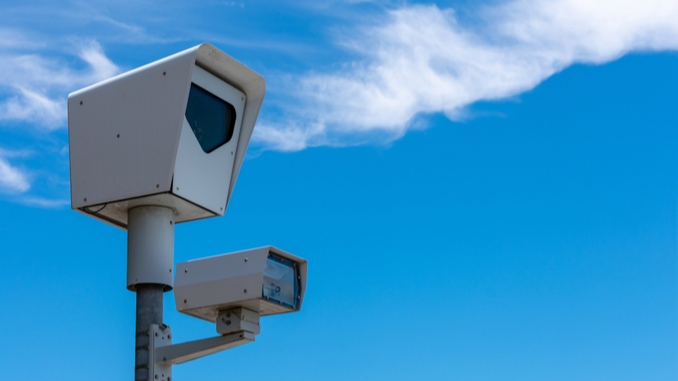
Legislation sponsored by Sen. David Gowan (R-LD19) that would significantly change how photo radar violations are enforced in Arizona has cleared the Legislature and now awaits the governor’s decision.
Senate Bill 1624, which was transmitted to the Governor last week, seeks to limit financial penalties associated with most photo radar violations while preventing those citations from affecting a driver’s insurance rates or driving privileges.
Under the legislation, individuals found responsible for a civil traffic violation resulting from a photo enforcement system would face a maximum civil penalty of $75. The cap would apply to most photo radar violations but would not affect existing penalties for red-light violations or school-crossing violations. Of the penalty collected, $15 would be directed to Arizona’s Peace Officer Training Equipment Fund.
“Arizonans are tired of being treated like an ATM by photo radar systems,” stated Senator Gowan. “For years, these cameras have generated frustration because they often feel more focused on collecting revenue than improving public safety. A photo radar ticket should not carry the same consequences as an interaction with a law enforcement officer who can evaluate the circumstances, exercise judgment, and make a real determination about what occurred.”
The bill also contains several provisions designed to limit the long-term consequences of automated traffic enforcement citations. State agencies would be prohibited from considering qualifying photo radar violations when determining whether a driver’s license should be suspended or revoked.
Courts would be barred from transmitting records of those violations to the Arizona Department of Transportation, and insurance companies would be prohibited from using the violations to establish rates, determine insurability, cancel coverage, or refuse policy renewals.
“SB 1624 restores some common sense to the system by limiting excessive penalties and preventing these automated citations from being used to raise insurance rates or jeopardize a person’s driving privileges,” added Gowan. “This bill protects drivers from unfair consequences while maintaining accountability for legitimate traffic violations. Arizona families deserve a system that is fair, reasonable, and focused on safety—not one that treats every camera flash as an opportunity to extract more money from hardworking taxpayers.”
If signed into law, SB 1624 would establish a statewide framework limiting the use of photo radar citations in insurance and licensing decisions while maintaining existing enforcement standards for red-light and school-zone violations.
Ethan Faverino is a reporter for AZ Free News. You can send him news tips using this link.