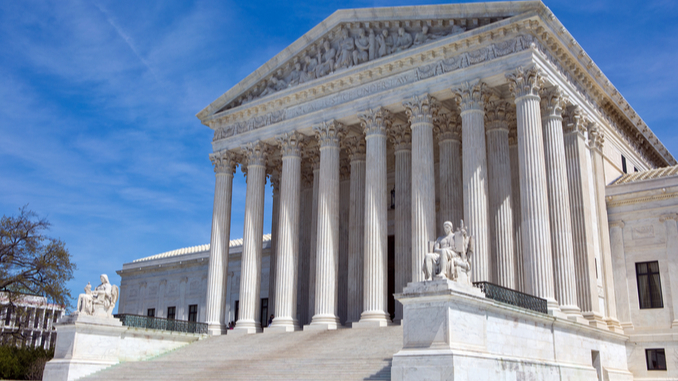
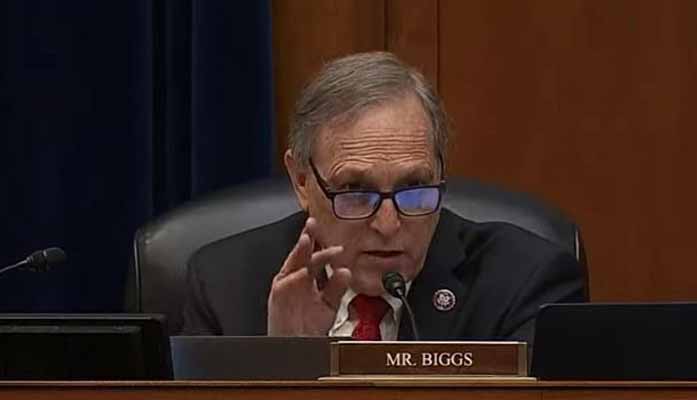
Rep. Andy Biggs is advancing a constitutional amendment to permanently set the size of the U.S. Supreme Court at nine justices. He says the proposal would prevent future attempts to expand the Court through legislation.
According to a statement released by Biggs’ office, House Joint Resolution 1 would amend the U.S. Constitution to require that the Supreme Court consist of one chief justice and eight associate justices. The proposal seeks to place the Court’s size in the Constitution rather than leaving it subject to change by Congress.
The resolution was introduced at the start of the 119th Congress and referred to the House Judiciary Committee.
On June 3, the House Judiciary Committee voted 15-8 to advance the proposed amendment. According to Reuters, the vote fell largely along party lines, with Republican members supporting the measure and Democratic members opposing it.
During the committee proceedings, Biggs framed the proposal as a response to court-packing efforts.
“How can the Supreme Court protect Americans from government overreach if the same government can pack the Court whenever it dislikes a ruling?” Biggs asked. His office stated that the resolution is intended to preserve judicial independence and to prevent future court expansion efforts.
“Our nation’s founders built a system of checks and balances to protect citizens from concentrated power – a central part being the U.S. Supreme Court, whose duty is to defend the rights and freedoms of every American, not to serve as a political tool for any party,” Biggs said. “The judiciary was designed to be the quiet guardian of liberty, insulated from the passions of the moment. Unfortunately, special interests have been increasing their attacks on the Court, threatening to pack this iconic American institution to ensure favorable outcomes for their causes. The goal is not ethics or protecting rights but gaining power and intimidating the Court.”
This week, the U.S. House Judiciary Committee passed H.J. Res. 1, which proposes an amendment to the Constitution of the United States to require that the Supreme Court of the United States be composed of nine justices.
The U.S. Constitution does not specify the number of Supreme Court justices. Congress has altered the Court’s size several times throughout American history, with the number of justices ranging from five to ten before being set at nine by statute in 1869. The Court has remained at nine members since that time.
Supporters of the amendment have cited proposals by some Democrats in recent years to increase the number of Supreme Court justices. Opponents have argued that Congress should retain its constitutional authority to determine the Court’s size and structure through legislation.
“The ongoing and escalating assault on the U.S. Constitution and Supreme Court must stop,” Biggs noted. “That is why I have introduced this constitutional amendment to fix the number of justices at nine. This action will protect the Court’s legitimacy, preserve the checks and balances that safeguard our cherished freedoms, and ensure every American’s rights remain secure – no matter who holds political power. I’m grateful for my colleagues’ support of this amendment, and I look forward to its passage on the U.S. House floor.”
Constitutional amendments face a high threshold for approval. A proposed amendment must receive support from two-thirds of both the U.S. House of Representatives and the U.S. Senate before being sent to the states for ratification. Ratification requires approval from three-fourths of the states.
The last newly proposed constitutional amendment to clear Congress and be ratified by the states was the 26th Amendment, setting the national voting age at 18 in 1971. The D.C. Voting Rights Amendment was passed by Congress in 1978 but failed to meet the state ratification requirement before its statutory deadline expired. The 27th Amendment, which bars changes to congressional compensation from taking effect until after an intervening House election, was ratified in 1992; however, Congress originally passed it in 1789 as part of the Bill of Rights package.
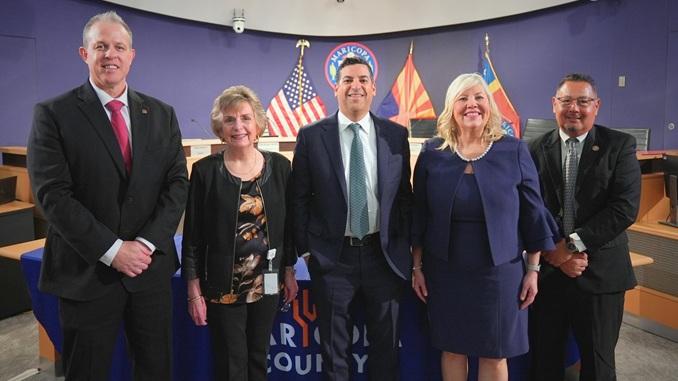
Several Maricopa County staffers are now in the middle of an elections authority dispute between the recorder’s office and the Maricopa County Board of Supervisors.
Several employees with the recorder’s office have been placed under investigation for the alleged theft of a piece of election equipment.
Several employees were contacted by an officer with the Pinal County Sheriff’s Office over the weekend as part of a criminal investigation initiated by special counsel appointed by Maricopa County Attorney Rachel Mitchell, following a complaint from the Maricopa County Board of Supervisors (BOS).
Mitchell’s office said MCAO has no involvement in the investigation.
An allegation was made to Maricopa County Attorney @Rachel1Mitchell, who had a conflict of interest, and she appointed a Special Counsel. MCAO is not involved in the investigation and has no further comment. https://t.co/HA2GYOxkDR
— Maricopa County Attorney's Office (@marcoattorney) June 8, 2026
BOS leaders Kate Brophy McGee and Debbie Lesko, chair and vice chair, said the criminal investigation was not some new development but the result of an incident that occurred months ago in March.
Per McGee and Lesko, Chief Information Officer Bryan Colby and one other, unnamed recorder’s office employee briefly removed a pre-tabulation ballot scanner from the Maricopa County Election and Tabulation Center (MCTEC) during the Tempe Jurisdictional Election. The two employees removed the scanner from MCTEC property for approximately 50 minutes before returning it.
The board also accused Colby of potentially jeopardizing the chain of custody by removing “a handful” of provisional ballots from MCTEC. However, the board said all ballots and envelopes were accounted for the day following the incident.
Maricopa County Recorder Justin Heap contends the scanner belonged to his office, since recorder funds paid for it.
Following the brief removal of the scanner, the county decommissioned and replaced the equipment for $70,000.
Brophy McGee and Lesko issued their press release explaining the criminal investigation into Heap’s employees after Heap filed an emergency motion with the Arizona Superior Court over the weekend.
Heap petitioned the court to take stronger action against the board by stopping further actions like the deputy contacts with his staff that occurred over the weekend — which Heap characterized as retaliation — and for an enforcement action to require the board to adhere to the court’s previous ruling.
🚨 BREAKING: LEGAL UPDATE Yesterday, I filed an emergency motion with the Court after armed sheriff's deputies appeared at the homes of three Recorder's Office employees and informed them they were under criminal investigation.
— Maricopa County Recorder Justin Heap (@azjustinheap) June 8, 2026
Last month, the Arizona Superior Court ordered the board to restore election authority and resources to Heap’s office. The board, which maintains it has “plenary authority” over elections administration, rejected this ruling and plans to appeal.
Last week, Heap asked the court to hold the board in contempt.
And now this week, Heap has accused the board of doing the very thing they have accused him of doing: criminalizing election workers.
“For weeks, the board has attempted to convince the public that I somehow intend to seek criminal penalties against election workers for performing their duties,” said Heap. “That claim is a lie, and they know it. Yet, while making those false accusations, the board was quietly pursuing criminal investigations and penalties against election workers employed by the recorder’s office.”
Heap said “meaningful cooperation” with the board of supervisors has been “impossible,” as evidenced by this latest development.
“While the Board publicly talks about collaboration, claims it wants to work together, and falsely accuses others of creating conflict, behind the scenes it bullies employees, interferes with the recorder’s operations, and now seeks to subject election workers to criminal investigations for attempting to lawfully do their job using equipment purchased and owned by the recorder’s Office,” said Heap.
AZ Free News is your #1 source for Arizona news and politics. You can send us news tips using this link.
The U.S. Department of the Treasury reported Tuesday that millions of Americans claimed tax relief under President Donald Trump’s Working Families Tax Cuts during the most recent filing season. According to the analysis, low- and middle-income households received the largest share of the benefits.
According to a June 2 press release from the Treasury Department, taxpayers claimed approximately $82 billion in individual tax relief through the April filing deadline under provisions included in the Working Families Tax Cuts. Treasury officials said the total is expected to increase as taxpayers who requested filing extensions continue submitting returns.
Treasury Secretary Scott Bessent said the data demonstrates that the tax package delivered significant relief to working Americans and families.
“American families and workers overwhelmingly benefited from the Working Families Tax Cuts, receiving the largest share of the historic tax relief delivered this past filing season,” Bessent said. “This analysis confirms President Trump’s tax policies deliver substantial tax cuts to hardworking Americans and provide greater relief and financial certainty to low- and middle-income households.”
While Iran’s economy is in free fall, the regime has chosen to co-opt digital asset technologies for its own corrupt agenda, including evading sanctions and transferring wealth out of the country. Iran’s current economic chaos is proof that @POTUS’ maximum pressure campaign has… https://t.co/CJPNSgccqh
— Treasury Secretary Scott Bessent (@SecScottBessent) June 2, 2026
The Treasury Department stated that without the legislation, taxpayers would have faced the scheduled expiration of the 2017 Tax Cuts and Jobs Act, which officials said would have resulted in approximately $5 trillion in tax increases over time. According to the Treasury, 97% of filers who received a tax cut during the most recent filing season would have owed more in taxes absent the extension of the 2017 tax provisions.
The analysis found that tax relief was concentrated among households earning less than $200,000 annually. The Treasury reported that 96% of filers receiving a tax cut earned less than $200,000 per year, while nearly 70% earned less than $100,000.
Among taxpayers earning between $100,000 and $200,000 who claimed one of the tax provisions, the average tax reduction exceeded $1,250. Taxpayers earning between $50,000 and $100,000 who claimed one of the provisions received an average tax cut of more than $815.
The report highlighted several signature provisions included in the package. The Treasury reported that more than 7.5 million filers claimed the “No Tax on Tips” deduction, receiving an average deduction of more than $7,000. According to the department, 90% of taxpayers claiming the deduction earned less than $100,000 annually, while 99% earned less than $200,000.
More than 29 million filers claimed the “No Tax on Overtime” deduction, with an average deduction exceeding $3,100. The Treasury reported that 75% of taxpayers using the provision earned less than $100,000 annually, while 96% earned less than $200,000.
The department also reported that more than 35 million seniors claimed the Enhanced Deduction for Seniors, receiving an average deduction of more than $7,500. According to the Treasury, 68% of participating seniors earned less than $100,000 annually and 94% earned less than $200,000.
Other provisions cited in the report included the “No Tax on Car Loan Interest” deduction, which the Treasury said was claimed by more than 1.4 million taxpayers purchasing qualifying American-made vehicles. Those taxpayers received an average deduction of more than $1,800. The Treasury reported that 62% of claimants earned less than $100,000 annually and 98% earned less than $200,000.
The Treasury also reported that more than 5.5 million Trump Accounts have been opened since the program’s launch, with approximately 1.4 million qualifying for a $1,000 pilot contribution. According to the department, 86% of the accounts are linked to families earning less than $200,000 annually.
The report further found that nearly 40 million families claimed the enhanced Child Tax Credit, which the Treasury noted was permanently expanded under the legislation. Approximately 65% of participating families earned less than $100,000 annually, while 89% earned less than $200,000.
In addition, the Treasury reported that more than 127 million taxpayers—representing roughly 90% of all filers—claimed the permanently doubled standard deduction during the filing season. The department said the provision continues to simplify tax filing requirements for millions of Americans.
The Republican National Committee is targeting Sen. Ruben Gallego (D-AZ) following reports that Rep. Jimmy Gomez (D-CA) is facing a House Ethics Committee investigation into allegations of sexual misconduct.
The attack comes after Gomez publicly acknowledged an extramarital affair following reporting by the New York Post and amid reports that House investigators are reviewing allegations involving his conduct toward congressional staffers. Gomez has denied violating House rules and has maintained that any relationships were consensual.
In a statement distributed Wednesday, RNC Western Regional Communications Director Nick Poche sought to tie Gallego to Gomez and other congressional Democrats who have faced controversy.
“Ruben Gallego’s sick freak friends prey on women and employees. You are the company you keep, so Gallego needs to answer for what he’s seen, and the people around Gallego need to answer whether or not he is part of the problem as well,” Poche said.
According to the New York Post, Gomez admitted to an affair after initially denying reports concerning his personal conduct. The outlet also reported that allegations involving Gomez’s interactions with congressional staffers prompted a House Ethics Committee investigation. Gomez has disputed allegations that he engaged in misconduct and has stated that he did not violate House ethics rules.
As discussion of the allegations spread online, Brian Anderson of Saguaro Group and Arizona Capitol Oversight highlighted a resurfaced 2018 X exchange involving Gallego, Gomez, and Swalwell.
The RNC statement also referenced former Rep. Eric Swalwell (D-CA), another California Democrat who has faced scrutiny in recent years. Poche argued that Gallego’s political associations with Gomez and Swalwell warranted additional questions about the Arizona senator’s judgment and political alliances.
Gallego served alongside Gomez during his tenure in the U.S. House before winning election to the Senate in 2024. The RNC did not allege that Gallego engaged in any misconduct.
The new scrutiny also follows controversy surrounding Gallego’s comments on allegations of sexual conduct involving Democratic Maine Senate candidate Graham Platner raised by a Fox News report.
FIRST ON FOX: Democratic Maine Senate candidate Graham Platner's deleted Reddit account reveals graphic posts about masturbating in portable toilets and praising explicit military restroom graffiti — the latest in a growing trail of vulgar comments that could define his race… pic.twitter.com/oejepVCv9y
— Fox News Politics (@foxnewspolitics) May 19, 2026
In May, Gallego defended Platner, arguing in a post to X that some of the conduct being criticized reflected experiences and attitudes common in military culture. The remarks drew criticism from Republicans and became a point of contention in Arizona political circles.
As of publication, Gallego’s office had not publicly responded to the RNC statement.
No investigation was ever made concerning GOP congressional candidate and former Pinal County Sheriff Mark Lamb by the Pinal County Attorney’s Office (PCAO), says the current administration.
PCAO made an announcement on Friday that disputed former County Attorney Kent Volkmer’s claim that PCAO had conducted a “cursory investigation” into Lamb under his leadership.
Volkmer made the claim to the Arizona Republic as part of their recent investigative report into accusations that Lamb threatened the women he’d engaged in affairs with over the years. Volkmer alleged his office acted on Lamb’s request to investigate possible criminal charges for two women speaking out about his affairs.
Volkmer also alleged that the supposed cursory investigation didn’t lead to any possibility of criminal charges.
PCAO said it could find no records of reports, investigative summaries, witness interviews, referrals due to conflict, or documented findings that could verify Volkmer’s claim. PCAO said their discovery indicated potential issues with the due diligence of past county leadership.
“Even a limited or ‘cursory’ investigation would ordinarily generate some form of documentation or investigative notes. At this time, the PCAO has not located any such records in its files,” stated the PCAO. “[R]equests for investigations by Sheriff Lamb should have been formally documented, appropriately reviewed, and, if necessary, referred out to avoid any appearance of bias or conflict of interest.”
However, PCAO did find records indicating that Volkmer’s office received word on allegations against Lamb over six years ago and failed to act.
In January 2020, the Pinal County Board of Supervisors received a packet of information outlining allegations of sexual impropriety by Lamb. The packet contained nearly 40 pages of text message screenshots and photographs to support the allegations. Tim Gustafson, a local pastor running to unseat Lamb — who was county sheriff at the time — gave the board the packet.
Per board meeting records, the board asked PCAO to review potential limitations to speech in public sessions concerning sexual topics. A deputy county attorney with the PCAO at the time promised to look into the matter.
County Attorney Brad Miller has denied that he was behind the rumor that Lamb was a “swinger” as well as a sexter.
Rep. Andy Biggs (AZ-05), whose district Lamb is hoping to represent, told KTAR in an interview last week that he would “reserve judgment” on the accusations against Lamb. Biggs is leaving Congress to try to unseat Democratic Gov. Katie Hobbs.
Both Biggs and Lamb are both members of the Mormon church.
As new developments continue to emerge regarding the sex scandal allegations against Lamb, the former sheriff declined to appear for the Arizona Clean Elections Commission’s Republican primary debate for the 5th Congressional District on Thursday.
Only Lamb’s primary contender, a Christian builder named Daniel Keenan, appeared for the debate. Keenan discussed his campaign platform for nearly half of an hour.
There are three Democratic candidates vying to flip Biggs’ seat: Brian Hualde, Chris James, and Elizabeth Lee.
AZ Free News is your #1 source for Arizona news and politics. You can send us news tips using this link.
Arizona House Majority Leader Michael Carbone (R-LD25) has endorsed Congressman Andy Biggs for Governor, praising his proven ability to unite lawmakers and advance conservative priorities through collaboration with the Legislature.
Carbone, who represents Maricopa County’s West Valley, becomes the 44th current or former state legislator to publicly back Biggs and the first member of State House leadership to do so.
“We need conservative leadership ready to work with the Legislature and advance policies that bring down the cost of living on Arizonans so our state can prosper,” stated Carbone. “Andy Biggs is the best choice to do that from day one as Governor. He understands the legislative process at the Capitol and knows what it takes to make our state thrive. He’ll be a great advocate for the West Valley and for all of Arizona as Governor.”
Carbone also joins the growing list of West Valley elected officials supporting Biggs, including U.S. Congressman Abe Hamadeh, Maricopa County Supervisor Debbie Lesko, Arizona State Senator Janae Shamp, and Arizona State Representatives Nick Kupper, Lisa Fink, Michele Peña, David Livingston, and Beverly Pingerelli.
“Majority Leader Carbone has been a champion for thoughtful conservative policies, like expanding our nuclear capabilities to bring utility costs down and supporting pro-growth policies for our Arizona small businesses,” said Congressman Biggs. “Our campaign is focused on building out our support amongst Republican leaders and voters with a positive vision that brings our party together. With less than three weeks until ballots go out for the Republican primary election, we are well prepared for a victory on July 21st before defeating Katie Hobbs in November.”
Biggs has consistently maintained a commanding lead in the Republican primary field, according to multiple independent polls conducted since September 2025. A survey by NextGen Polling found Biggs ahead by 42%, while Emerson College showed him leading by 33%. GrayHouse reported a 24% advantage and Pulse Decision likewise found Biggs leading by 24%.
The most recent poll, conducted by Noble Predictive Insights, lists Biggs leading the Republican primary field by 30%. The study, conducted May 5-7, 2026, among 996 registered voters in Arizona including 375 registers Republicans, shows Biggs rising to 48% — up from 40% in February.
Biggs leads across key GOP demographics, including:
Men: 50% Biggs – 21% Schweikert
Women: 46% – 15%
Voters Aged 65+: 57% – 17%
Conservatives: 52% – 16%
Trump Supporters: 55% – 16%
Hispanic Republicans: 57% – 9%
Biggs is the only candidate in the Arizona Republican gubernatorial primary endorsed by both President Trump and the late Charlie Kirk. Additional high-profile support includes endorsements from Turning Point CEO Erika Kirk, Arizona Congressmen Eli Crane, Paul Gosar, Abe Hamadeh, and Texas Governor Greg Abbott, and Maricopa County Supervisors Debbie Lesko and Mark Stewart.
Biggs has also secured backing from influential conservative organizations including Turning Point Action, Moms for America Action, and Gun Owners of America-Arizona Chapter. Law enforcement support includes former Pinal County Sheriff Mark Lamb, Pinal County Attorney Brad Miller, the Arizona Law Enforcement Association, and the Arizona Council of Prisons Locals.
Rep. Biggs leads all Republican gubernatorial candidates in fundraising, with $2.7 million raised and $1.1 million cash on hand, an advantage of more than 10:1 over his closest primary competitor. He has set multiple personal funding records throughout the 2026 cycle.
Ethan Faverino is a reporter for AZ Free News. You can send him news tips using this link.