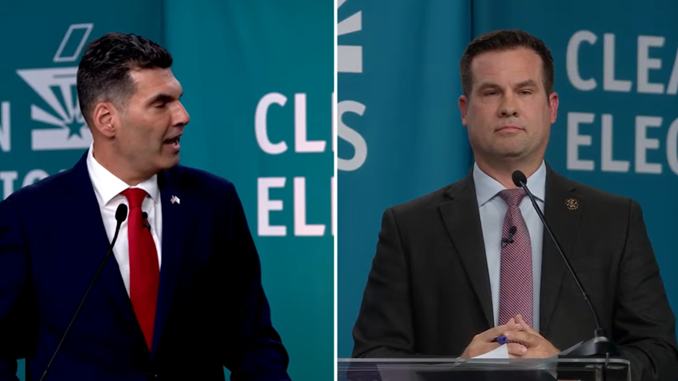
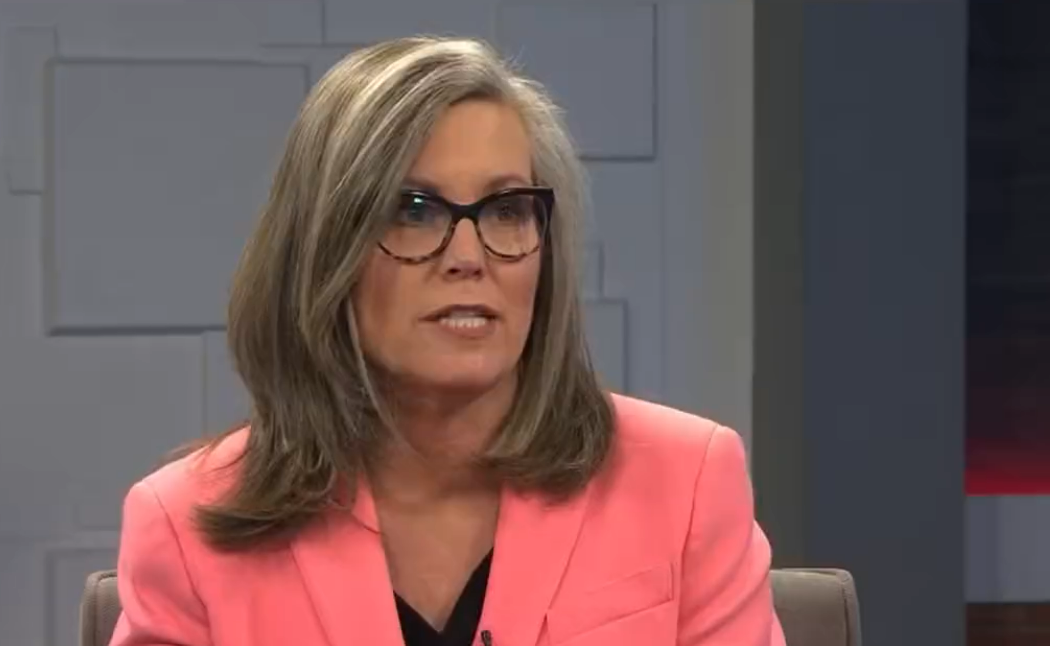
The two candidates for the Republican primary in the attorney general’s race took to the debate stage on Thursday.
Rodney Glassman and Senate President Warren Petersen (R-LD14) exchanged jabs about the legitimacy of the other’s status as an attorney.
Glassman first ran for public office as a Democrat in the 2010 U.S. Senate race, where his campaign video “Sweet Home Arizona” went viral. Glassman lost to the incumbent, the late Sen. John McCain. Since then, Glassman has made unsuccessful runs in other races as a Republican candidate: Arizona Corporation Commission in 2018, Maricopa County assessor in 2020, and attorney general in 2022.
Petersen has been a Republican since he first ran for public office in 2012, where he won in the Arizona House of Representatives race for the 12th district. He has served in the Arizona legislature since then.
During Thursday night’s debate, Glassman said Petersen was problematic for engaging in bipartisanship to secure a state budget every year under the Democratic leadership of Gov. Katie Hobbs and incumbent Attorney General Kris Mayes.
Glassman argued that Petersen allowing the passage of several state budgets with a Democrat attorney general in power, Kris Mayes, was improper for a Republican to have done. Glassman blamed Petersen for Mayes filing 42 lawsuits against the Trump administration.
Petersen said Glassman was “not a serious candidate,” in part for making that argument. Petersen said the implications of refusing to fund the attorney general’s office in the state budget would effectively defund law enforcement, which he called “reckless” on Glassman’s part. Petersen did clarify that the Republican-led legislature had cut Mayes’ budgeting.
“We have cut [Mayes’] funding, to hold her accountable, and she sued us [the legislature],” said Petersen.
Petersen claimed Glassman lacked any noteworthy professional experience, save for a status as a perennial candidate — first as a Democrat, then a Republican.
ICYMI: Rodney Glassman let the mask slip. He admitted he supports defunding law enforcement and opposes Republican budgets that fund public safety. Watch Warren Petersen completely dismantle him. Rodney spoke like a radical lefty. When someone tells you who they are, believe them pic.twitter.com/vcWocWKapB
— AZ Politics War Room (@AZPolWarRoom) May 29, 2026
Glassman said he supports President Donald Trump and his agenda. This represents a flip from the years leading up to this race in which Glassman aligned with mainstream Democrat policies on major issues like abortion, border security, campaign finance, public education, energy, healthcare, and taxation.
Glassman also stressed his experience as a lieutenant colonel in the Air Force JAG Corps Reserve at Luke Air Force Base.
ICYMI👇
Last night, I went head-to-head with my Republican primary opponent. While he resorted to false, unproven attacks, I focused on what actually matters: experience.
Arizona Republicans want to fire Kris Mayes this November. I’m the only candidate with the background to… pic.twitter.com/gZKyJgwn8T
Petersen responded with a claim that personnel within the Luke Air Force Base legal department have denied knowing Glassman.
Petersen said under his administration, the state would enter into a 287(g) agreement to assist immigration enforcement with deportations. Petersen also promised to prioritize election integrity regardless of the party in power. Glassman vowed a loyalty to Trump on the matters of election integrity, alluding to some doubts about the validity of the 2020 election.
Petersen also said he would approach the state’s water crisis through a focus on water augmentation, specifically by 2.5 million-acre feet. Glassman didn’t offer a solution that could be heard (that portion of the debate faced technical difficulties), but instead cited his doctorate in arid-land sciences and environmental law degree from the University of Arizona.
Petersen called Glassman “a trust-fund baby” whose entire occupation is running for office, and that Glassman was a candidate “who lies about everything” and belongs in prison.
Recent polling shows Petersen as favored to win the Republican primary for attorney general.
Glassman has raised over $3 million for his campaign, $1 million of which came from his own pocket (33%). $77,500 came from interest or dividends received from banks.
Petersen has raised over $1.4 million for his campaign, $123,000 of which came from his own pocket (8%).
The Arizona Clean Elections Commission hosted the hourlong debate:
AZ Free News is your #1 source for Arizona news and politics. You can send us news tips using this link.
The Joint Economic Committee (JEC) released an update Thursday showing inflation remained above the Federal Reserve’s target in April while consumer spending increased and personal savings declined.
According to the JEC’s Monthly Expenditures Update, the headline personal consumption expenditures (PCE) price index increased 0.40% from March to April, while core PCE inflation, which excludes food and energy prices, rose 0.24%. The annual inflation rate from April 2025 to April 2026 measured 3.77% for headline PCE and 3.29% for core PCE, both exceeding the Federal Reserve’s stated 2% inflation target.
The PCE index is the Federal Reserve’s preferred inflation measure and tracks changes in prices paid by consumers for goods and services.
The JEC reported that spending increased during the same period while savings declined. Real personal consumption expenditures increased by 0.11%, representing approximately $18.08 billion in additional spending. Real spending on services increased 0.19%, or $21.47 billion, while real spending on goods rose 0.08%, or $4.7 billion. At the same time, the nominal personal savings rate declined by 0.6 percentage points to 2.6%.
Y/Y, headline PCE price index inflation was 3.77%, which is higher than the Federal Reserve’s target of 2% & core PCE price index inflation was 3.29%. M/M, headline personal income remained unchanged, or $19 million, while real disposable personal income per capita decreased by…
— Joint Economic Committee Republicans (@JECRepublicans) May 28, 2026
According to the committee’s update, headline personal income remained effectively unchanged month-over-month, increasing by approximately $19 million, while real disposable personal income per capita decreased by 0.50%. The report stated that after-tax income increased more slowly than consumer prices during the month.
The figures align with data released Thursday by the U.S. Bureau of Economic Analysis (BEA), which reported increases in both consumer spending and inflation during April. According to the BEA, personal income increased by $210.1 billion, or 0.8%, while disposable personal income increased by $189.4 billion, or 0.8%. Personal consumption expenditures increased $47.8 billion, or 0.2%.
The BEA reported that prices for personal consumption expenditures increased 0.4% month-over-month and 3.8% annually, while core PCE prices increased 0.2% during April and 3.3% over the previous twelve months.
The JEC also released its Gross Domestic Product Update for the second estimate of first-quarter 2026 economic activity.
According to the committee, real gross domestic product increased 1.62% from the fourth quarter of 2025 to the first quarter of 2026. Current-dollar GDP increased 5.15%, or approximately $396.9 billion, bringing the total size of the U.S. economy to $31.819 trillion.
JEC Chairman Rep. David Schweikert (R-AZ01), who is also running for governor of Arizona, discussed affordability and inflation during a segment with KTAR host Mike Broomhead, describing what he characterized as the continuing effects of “Biden inflation” on Arizona households.
“For people in Arizona, for a whole segment of our working middle class — you know, hardworking population — they’re poorer today than they were five years ago,” Schweikert said. “We were one of the epicenters of Biden inflation. Then you actually do policies from particularly the governor’s office of not recruiting new businesses here to compete for your willingness to work. So affordability — because our wages haven’t gone up — we’re now 45th in affordability. That’s miserable. I mean how many people can afford a house right now?”
Arizona’s working middle class is poorer today than five years ago. Wages are flat, housing is out of reach, and families are trying to make the mortgage and car payment.
If we want affordability, we need jobs that force businesses to compete for Arizona workers again. pic.twitter.com/lU9c983UUT
— David Schweikert (@DavidSchweikert) May 27, 2026
In a post to X on Thursday, he wrote, “If we’re serious about affordability, the first thing we do is raise wages by bringing employers here that have to compete for Arizona workers.”
The committee’s GDP update reflected the Bureau of Economic Analysis’ second estimate for first-quarter economic growth. The full Joint Economic Committee Monthly Expenditures Update and GDP Update are available through the committee’s website.
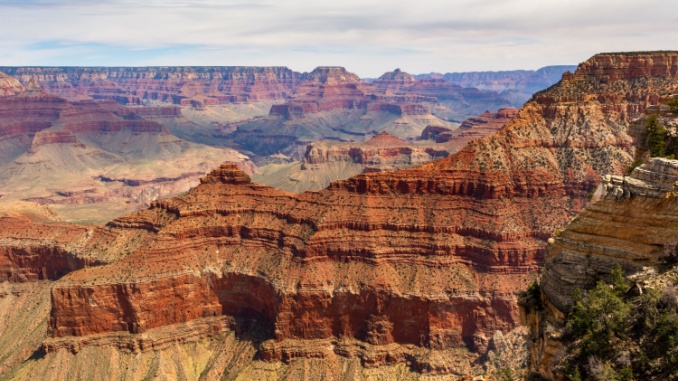
As Summer RV travel peaks across the United States, new research highlights stark differences in crowding at America’s national parks. Arizona’s iconic Grand Canyon National Park stands as a major draw for RV enthusiasts, ranking ninth busiest overall despite a cooling trend in 2025.
According to data from Blue Capital Holdings, RV campers flocked to Glacier National Park in Montana more than any other over the past five years, logging more than 429,000 summer visits (June-August) from 2021 to 2025. Yosemite National Park in California followed closely in second place.
Top 5 Most Popular National Parks for Summer RV Camping (2021-2025):
Glacier National Park, Montana – 429,693 visits
Yosemite National Park, California – 423,672 visits
Great Smokey Mountains National Park, Tennessee – 333,739 visits
Olympic National Park, Washington – 280,272 visits
Acadia National Park, Maine – 158,105 visits
“Summer shows just how concentrated RV travel has become around a small number of national parks,” stated Blue Capital Holdings CEO Rich Turasky. “Glacier and Yosemite are in a league of their own, and together they logged more than 850,000 summer RV visits over the past five years. What is interesting is that popularity does not always mean momentum. Glacier still ranks first overall, but its numbers slipped in 2025, while Yosemite surged by 43%. Rocky Mountain also climbed 23%, and Kings Canyon rose 42%, so there are still parks seeing very strong summer demand.”
Grand Canyon National Park in northwestern Arizona recorded 124,968 summer RV visits over the five-year period, securing ninth place nationally. The park saw 26,075 visits in 2024 before declining roughly 20% to 20,854 in 2025, reflecting broader patterns where many headline destinations experienced softening demand amid concerns over heat, crowding, and access.
Arizona’s crown jewel continues to captivate travelers seeking its world-renowned vistas, dramatic landscapes, and unique Southwest character. While not topping the list, the Grand Canyon remains a bucket-list staple for the RV campers drawn to Arizona’s natural wonders.
According to the National Park Service, Grand Canyon’s North Rim reopened as of May 15, 2026, following impacts from the Dragon Bravo Fire. All paved roadways within the park have reopened, restoring access to many iconic viewpoints such as Point Imperial, Cape Royal, Roosevelt Point, and Angels Window.
The North Rim Campground is expected to reopen in June 2026 for tent and RV camping, however there will be no water or RV hookups available — campers must bring all their own portable water.
Stage 2 fire restrictions also remain in effect throughout the 2026 season due to limited water resources, prohibiting wood and charcoal fires.
Several trails remain closed due to fire impacts, including Bright Angel Point, Widforss, Transept, Uncle Jim Trail, and sections of the Ken Patrick Trail. No overnight lodging is available on the North Rim inside the park this season, though options exist outside the park boundaries.
At the other end of the list, several parks recorded dramatically lower traffic, providing quieter alternatives for summer travel.
Top 5 Least Popular National Parks for Summer RV Camping (2021-2025):
Badlands National Park, South Dakota – 1,845 visits
Death Valley National Park, California – 4,245 visits
Big Bend National Park, Texas – 4,979 visits
Guadalupe Mountains National Park, Texas – 5,531 visits
Canyonlands National Park, Utah – 6,138 visits
“At the same time, some of the biggest names lost ground. Great Smoky Mountains fell 19%, Grand Canyon was down 20%, and Yellowstone dropped 31% year on year,” added Turasky. “That suggests RV travelers are not just following the most famous names blindly, but are being influenced by heat, crowding, access, costs and the overall experience once they arrive. The least-visited summer parks also tell their own story. Places like Death Valley and Big Bend are spectacular, but summer can be a difficult time to visit them in an RV. For travelers willing to plan carefully, though, the lower numbers can mean a much quieter national park experience.”
Ethan Faverino is a reporter for AZ Free News. You can send him news tips using this link.
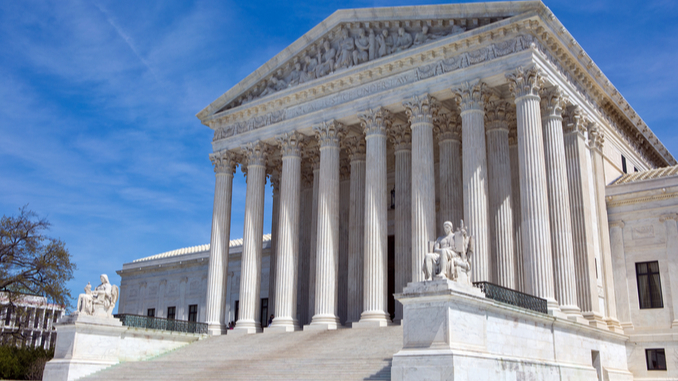
This week, the Department of Justice (DOJ) asked the Supreme Court to uphold Arizona’s proof-of-citizenship requirements for voting.
The DOJ filed a brief in Republican National Committee, et al. v. Mi Familia Vota, et al. (case Nos. 25-1017, 25-1019, and 25-1022).
The case will determine whether the National Voter Registration Act (NVRA) prohibits states from: removing noncitizens from voter rolls within 90 days of an election, requiring individuals to provide documentary proof of citizenship when registering to vote in federal elections using the state registration form, and denying individuals the ability to vote by mail if they don’t provide documentary proof of citizenship.
These questions emerged from House Bills 2243 and 2492; both passed in 2022. Together, these bills require the secretary of state and county recorders to regularly review voter rolls, mandate registrants using the state registration form provide proof of citizenship, and prohibit vote by mail for federal-only voters.
The Ninth Circuit Court of Appeals ruled that the NVRA does preempt that legislation, impacting any similar citizenship proof measures taken by other states concerning their voting laws.
The federal court ruled the provisions in the Arizona laws amounted to unlawful voter suppression and were therefore unconstitutional. The court determined that voters must be allowed to vote federal ballots at least, even when they fail to provide proof of citizenship.
The respondents in the present litigation — Mi Familia Vota, Voto Latino, Arizona Asian American Native Hawaiian and Pacific Islander for Equity Coalition, Democratic National Committee, and the Arizona Democratic Party — want to preempt Arizona and other states from imposing proof-of-citizenship limitations on voting.
Jesus Osete, principal deputy assistant attorney general for civil rights, said in the DOJ announcement that the NVRA doesn’t prohibit states from removing noncitizens from voter rolls.
In its filing, the DOJ argued the lower court’s ruling conflicted with the NVRA since it would effectively render state forms into mere replicas of the federal form. States would lack the flexibility afforded by the NVRA, said the DOJ.
The DOJ filing argued that proof-of-citizenship requirements were harmonious with NVRA requirements to increase the number of eligible citizens registered to vote and ensure the maintenance of accurate and current voter rolls.
“When noncitizens with no right to shape American government vote in American elections, the ballot box no longer speaks for the People, because its tally no longer reflects their voice,” argued the DOJ.
Senate President Warren Petersen (R-LD14) said he was “thrilled” by the Trump administration’s intervention.
“Only U.S. citizens should vote in our elections,” said Petersen. “Excited for SCOTUS to take up this important case.”
Thrilled the Trump DOJ is backing Arizona’s proof-of-citizenship requirements! Only U.S. citizens should vote in our elections. Excited for SCOTUS to take up this important case. https://t.co/xWBiciTxjV
The Supreme Court has already overruled the Ninth Circuit Court of Appeals on one of the issues in 2024. The Supreme Court allowed Arizona to enforce its proof-of-citizenship requirement for state voter registration forms, but refused to allow enforcement of the requirement for those registering with federal forms.
That follows the precedent set in 2013, when the Supreme Court ruled that the NVRA prohibited Arizona from requiring proof of citizenship of those voters registering to vote with the federal voter registration form.
AZ Free News is your #1 source for Arizona news and politics. You can send us news tips using this link.
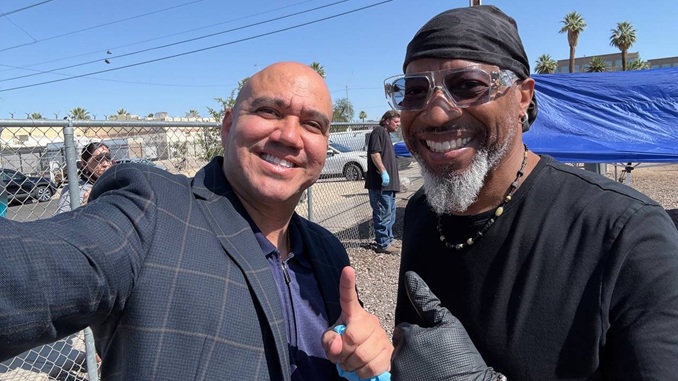
Arizona Republican Party Chairman Sergio Arellano joined 550 KFYI’s Conservative Circus host James T. Harris during a visit to downtown Phoenix’s homeless encampment area known as “The Zone,” where he highlighted faith-based outreach efforts and criticized local leadership over homelessness and public safety conditions.
In a video posted by the Arizona Republican Party, Arellano appeared alongside Harris in the downtown Phoenix area known as “The Zone,” which for years drew public attention over homelessness, drug activity, and crime concerns. The Arizona Republican Party said Harris and members of a faith-based group that “receives NO taxpayer dollars” were serving homeless residents in the area.
The party’s post also characterized The Zone as “where the Democrats in charge keep their homeless community drugged and dangerous.”
Sergio Arellano @surgeshow chairman of @azgop Republican Party spent time with @JamesTHarris and members of a faith-based group that receives NO taxpayer dollars to feed and minister to the homeless in "The Zone." The Zone in downtown Phoenix – is where the Democrats in charge… pic.twitter.com/EFWgPOm9Gk
— Republican Party of Arizona (@AZGOP) May 27, 2026
“Good morning, I’m Sergio Arellano, and I am here today with the conservative radio talk show host James T. Harris,” Arellano began in the video. “We’re in this place called The Zone in a blue area of what is Phoenix.”
Arellano linked conditions in the area to Democratic governance and urged voter participation ahead of the upcoming 2026 elections.
“We cannot allow what is happening here to happen to the rest of the state in Democrat-controlled communities,” Arellano said. “This is what you get. You get lack of response, lack of resources.”
Arellano also praised the faith-based nonprofit operating in the area and alleged that Phoenix officials under Mayor Kate Gallego had moved to restrict its activities. “People that are making a difference here — this non-profit — are getting kicked out by the liberal city and mayor,” Arellano said.
“That’s why it is very important that you get involved in November. You talk with your neighbors, you register people to vote, and have them turn out this election.”
The chairman warned that Arizona could face worsening homelessness conditions without political change.
“Because if not, you’re going to get amplified times 10,” Arellano said. “Skid Row, exactly like Los Angeles, is coming here to Arizona. We need to stop that. Register to vote. Get up. Make a difference.”
Harris has regularly participated in Sunday outreach efforts in downtown Phoenix with The Bridge for Community Services, a non-profit where he serves as Corporate Vice President and Executive Director, and has previously described the work as a Christian ministry serving homeless residents in the area.
The Zone, located near downtown Phoenix, became nationally known in recent years as one of the city’s largest homeless encampments. The area was the subject of litigation and enforcement disputes involving the City of Phoenix, nearby businesses, and residents, as previously reported by AZ Free News. In 2023, a court ordered Phoenix to clear portions of the encampment following allegations involving crime, sanitation problems, and unsafe conditions.
According to an April 30 report by 12News, after three years, hundreds of homeless people are living in the area again, with outreach teams counting more than 300 living there at the time.
The Arizona Republican Party’s post did not identify the nonprofit involved in the outreach effort, though Harris has previously documented recurring faith-based outreach activities in the area through social media posts.
Senate Republicans have advanced legislation aimed at strengthening private property rights and streamlining the removal of unlawful occupants from homes and residential properties.
Senate Bill 1426, sponsored by Senator Wendy Rogers (R-LD7), passed the legislature on May 26, 2026, and is now headed to the Governor’s desk.
The legislation strengthens Arizona’s forcible entry and detainer statutes by creating a clearer, faster process for property owners to reclaim their homes from squatters. SB 1426 defines specific conditions under which a person is considered an unauthorized occupant — including individuals who are not current or former tenants, immediate family members, or parties to any verbal or written agreements to occupy the property. It also established criteria for situations involving forcible entry into residential homes not open to the public.
Key provisions of the bill include:
Allowing courts to issue a writ of restitution immediately upon judgement in qualifying cases involving unauthorized occupants.
Directing the Arizona Supreme Court to adopt rules for the expeditious resolution of these claims.
Preserving all existing protections and remedies under the Arizona’s Residential Landlord and Tenant Act.
“Private property rights are not a suggestion; they are a cornerstone of our freedoms,” stated Senator Rogers. “If someone breaks into your home, moves into your property, and refuses to leave, the law should stand with the homeowner, not the unlawful occupant. That’s just common sense.”
Hats off to ALL the law enforcement, constables, sheriffs and our astute Senate legal policy advisor Brooke Huppenthal who got this DONE… protecting Arizonans! A wonderfully collaborative effort. 🔥 https://t.co/PGfb34MacE
Rogers emphasized that the bill resulted from extensive collaboration with stakeholders, lawmakers, and law enforcement. “This bill has been years in the making,” added Rogers. “The overwhelming support we’ve received, including from members of law enforcement who deal with these situations firsthand, shows just how badly these reforms are needed. Arizonans shouldn’t have to spend months fighting to reclaim property they already own. SB 1426 cuts through the red tape, closes loopholes that have been exploited for too long, and puts homeowners back where they belong—in control of their property. I’m proud to see this legislation finally reach the governor’s desk and hopeful she will sign it into law so Arizona families can receive the protections they deserve.”
The bill amends Arizona Revised Statutes sections 12-1171 and 12-1173. Among other updates, it expands the definition of forcible detainer to include unauthorized persons who refuse to leave a residential property after reasonable request from the owner or authorized agent, provided multiple safeguards are met.
Ethan Faverino is a reporter for AZ Free News. You can send him news tips using this link.