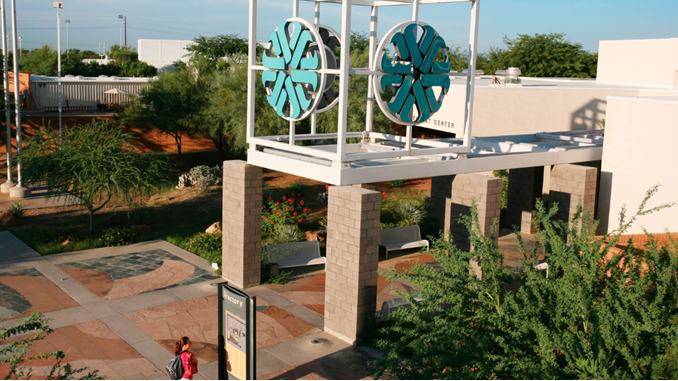
Democratic Rep. Yassamin Ansari (AZ-03) again demanded that Immigration and Customs Enforcement (ICE) be abolished in her first State of the District address on Wednesday.
The address — which was not livestreamed or posted to any of Ansari’s social media accounts — was largely an indictment of President Donald Trump and his administration.
“We are living through the most corrupt and the most authoritarian administration in American history, led by a lunatic with no regard for human life,” said Ansari.
Ansari advocated for the immediate abolition of ICE. She claimed the agency was a murderous, chaotic, cruel entity lacking accountability.
“It is absolutely clear that we must do everything in our power to stop and abolish ICE as quickly as possible,” said Ansari. “Immigration enforcement [is not] locking up tens of thousands of people into what can only be described as concentration camps run by private prison companies designed to profit off of human suffering.”
The congresswoman has made similar calls for immigration enforcement abolition throughout her freshman tenure. At the Munich Security Conference in February, Ansari advocated for abolishing all immigration enforcement in addition to implementing a wealth tax and subsidizing healthcare, homeownership, and childcare.
During her State of the District, Ansari also announced her endorsement of a ballot proposal to gut universal school choice in Arizona, the Protect Education Act. Present for this recommendation were the state’s largest teacher’s union, the Arizona Education Association (AEA), and the activist group Save Our Schools Arizona.
Featured speakers at Ansari’s first State of the District were Reyna Montoya, founder and CEO of Aliento Arizona; Mike Renaud, president and CEO of Valle Del Sol; Marisol Garcia, president of the AEA; Karyleni Alburquerque, Ansari’s former ambassador for the 3rd congressional district; Dr. Matthew Whitaker, executive director of the George Washington Carver Museum and Cultural Center; and Jake Hylton, executive director of Lookout Publications.
Andrew Simek, Ansari’s field representative and community manager, claimed in a LinkedIn post that Ansari has attended over 300 community events, hosted over a dozen town halls, logged over 1,000 volunteer hours, and engaged with over 77,000 constituents.
On that last point — it was unclear whether that total for constituents included any illegal aliens facing detainment or deportation, since Ansari has claimed this class as part of her “historically underserved and underrepresented” constituency.
Ansari disclosed during her address that she prioritized community outreach to these underserved and underrepresented populations, specifically calling out the Afghan refugees, Iranian students, and Sudanese and Asian communities.
The congresswoman also advocated for government-run pharmacies, taxation on excess profits by oil companies, expansion of government-run housing, expansion of government-subsidized rent, government subsidies for house down payments, double wages for overtime, and universal healthcare.
Ansari also laid claim to securing over $17 million in federal funding for community projects, or Community Project Funding:
$2.1 million for the city of Phoenix Fire Wildland Urban Interface;
$2 million for the Arizona State University Center for Heat Resilient Communities;
$2 million for the Arizona State University CHIPS and Domestic Manufacturing Research Initiative;
$2 million for the city of Phoenix’s Real Time Crime Center;
$2 million for the town of Guadalupe’s Biehn Colony Park Reconstruction;
$1.1 million for the city of Tolleson Wastewater Digester No. 4 Project;
$1 million for the city of Tolleson Multi-Modal Path Lighting Project;
$1 million for the Arouet Foundation’s 2026 Reentry Prosperity Model;
$1 million for the Valley Metro Community Safety Project;
$850,000 for the city of Glendale Transportation Improvements;
$830,000 for the city of Phoenix Central Arizona Shelter Services’ Single Adult Shelter Renovations;
$800,000 for the city of Phoenix Alternative Fuel Vehicle Fires Mitigation;
$580,000 for Axiom Community of Recovery’s Transition to Recovery and Reentry Program; and
$250,000 for Phoenix Sky Harbor Airport Improvements
Ansari introduced 32 bills and cosponsored over 450 bills. None of her bills have advanced beyond introduction. Two bills propose to overhaul and defund ICE.
AZ Free News is your #1 source for Arizona news and politics. You can send us news tips using this link.
Pima Community College (PCC) approved a restricted $5.9 million workforce-development gift agreement with Beale Infrastructure Group while later confirming that its Sustainability Director position will be eliminated as part of an organizational realignment.
According to PCC Governing Board records, trustees approved a Restricted Gift Agreement with Beale Infrastructure Group, LLC during the board’s May 13 meeting by a 4–0 vote, with board member Kristen Randall abstaining. The Board’s approved-items agenda lists the agreement but does not include its value or terms.
Beale Infrastructure is the project developer for the proposed “Project Blue” data center complex under construction on 290 acres outside of Tucson near the Pima County Fairgrounds.
The company is also pursuing construction of the “Luckett Road Data Center,” a 600-acre data center development in Marana, where it became embroiled in a legal battle with the town over two rejected referendums related to the project, according to AZPM News.
Anti-data center protests getting physical here in Tucson @Jason@chamath.
“According to a Beale Infrastructure representative, a masked group marched through the offices loudly banging drums, shouting threats and pulling items from desks.”https://t.co/3BGthcSxQP
Board Chair Theresa Riel Taylor introduced the item as a five-year restricted gift agreement beginning June 1, 2026, with the possibility of extension and additional funding.
Amanda Evans, PCC Assistant Vice Chancellor for Workforce Development and Strategic Partnerships, described the agreement as “a significant philanthropic investment in Pima Community College.”
During the presentation, Evans confirmed the Beale donation totals $5,912,992 and is structured as a restricted workforce-development gift.
“The funds are specifically designed for areas of need for Pima to support student access and success,” Evans told the board.
According to Evans, the funding will support expansion in information technology and cybersecurity, including three full-time faculty positions, along with scholarships for several workforce programs.
“Those areas include supporting expansion in IT and cybersecurity by funding three full-time faculty members,” Evans said, adding that scholarships will support “Pima Fast Track Electrical, our building and construction technology programs, IT and cyber programs, and our computer aided drafting… and welding as well.”
Evans said the gift also provides support for transportation, housing, and childcare assistance, along with funding for veterans services, high-school transition programs, and career-placement efforts.
“The gift also provides additional funds to help remove barriers for students — things like transportation, housing and childcare,” Evans said.
Evans told trustees the agreement carries a five-year term beginning June 1 and includes the possibility of additional future funding. “The initial term does begin on June 1st. It does go for five years, with a subsequent gift of approximately $6.8 million,” Evans said. “That could be something that Beale Infrastructure chooses to enter into an agreement with us.”
The board agenda identified the item only as a “Restricted Gift Agreement” and did not publicly list the donation amount or program details in its approved-items summary.
Calling for a vote to approve the agreement, Taylor addressed the public controversy surrounding Project Blue:
“I just want to acknowledge that I understand the environment of controversy in which this happens in terms of the data center development and… and what Beale is involved with. But, you know, tonight we’re facing a choice between a philosophical statement about data centers and a tangible investment in our students. And so I want to be clear that whether this board accepts this gift or rejects it, the development of that data center project continues. It has absolutely nothing to do with the development of that project.
“All that voting ‘no’ tonight does will… Voting no tonight wouldn’t stop a single brick from being laid, or a single drop of water from being used in that data center project. It only stops those resources from reaching our classrooms. And I don’t think I can, in good conscience, tell our students, who have now faced nearly two decades of disinvestment from the state and now millions in federal disinvestment over the last year, that we turned away millions of dollars for their success to make a symbolic gesture that will have zero impact on the project in question. So it’s definitely something I’ll be voting in favor of tonight. And I think it’s something that fits within the core of our mission and our purpose to help students achieve their educational outcomes.”
Board member Kristen Randall praised PCC’s sustainability efforts during her trustee report. Randall highlighted the college’s Climate Community Day and cited sustainability programming as an area of growth.
“Climate and sustainability aren’t just subjects,” Randall said while discussing the event. “They are lenses for seeing the world.”
Later in the meeting, Randall abstained from the vote on the Beale gift while the remaining trustees voted in favor of the agreement.
PCC Provides Confirmation: Sustainability Director Position Eliminated
AZ Free News contacted PCC administration, the Office of Sustainability, and Governing Board members to seek clarification on the future of the sustainability office, whether staffing or budget changes have been approved, and whether any connection exists between those decisions and the Beale gift agreement.
Justin Kree, Director of Media Relations for Pima Community College, responded on the college’s behalf. Kree confirmed PCC approved the agreement May 13 and said the $5.9 million gift will support workforce-development programs in IT, cybersecurity, electrical training, and skilled trades, with the Pima Foundation serving as fiscal agent.
Kree also addressed questions regarding the future of PCC’s sustainability programs, the Sustainability Director position, and the Climate Action and Sustainability Plan.
AZFN: Has PCC eliminated or otherwise dissolved the Office of Sustainability/Director position? Has PCC eliminated or reduced the sustainability program budget for FY2027? If so, please provide details regarding funding levels and changes.
PCC: The College remains fully committed to sustainability, climate action, and environmental responsibility. As part of an organizational realignment, the College decided to eliminate the Sustainability Director position, effective June 30, 2026. Sustainability remains an institutional priority reflected in the College’s strategic principles, and Climate Action and Sustainability courses, faculty-led initiatives, and operational efforts, including energy efficiency and renewable energy initiatives, remain ongoing. The College’s sustainability initiatives and academic offerings continue to receive institutional support.
Students continue to have access to Climate Action & Sustainability (CAS) courses focused on environmental challenges, sustainable futures, and practical solutions. CAS course offerings and student enrollment are, in fact, growing. Summer and Fall 2026 offerings include CAS 110: Food, People and the Planet and CAS 120: Systems, Logic & Sustainability. Enrollment in this area has doubled over the past year, with the program serving more than 340 enrolled students during the most recent academic year.
AZFN: Has PCC formally concluded or discontinued implementation of its Climate Action and Sustainability Plan, or is the June 2026 conclusion part of a previously scheduled planning cycle?
PCC: The College’s Climate Action and Sustainability Plan (CASP) will reach the end of its planned cycle in June 2026. The conclusion of this plan is part of its established timeline and does not represent a discontinuation of the College’s sustainability efforts. PCC is currently developing the next CASP to guide sustainability initiatives in the upcoming academic year. Sustainability remains an institutional priority and is reflected in the strategic principles approved by the Governing Board in May 2026.
PCC remains committed to the goals established in the CASP, including reducing greenhouse gas emissions, expanding climate and sustainability education, pursuing sustainability certification, and advancing long-term climate action planning. In 2026, the College will reaffirm its commitment to the Second Nature Presidents’ Climate Commitment, further demonstrating PCC’s continued focus on sustainability and environmental stewardship.
AZFN: Does PCC’s proposed FY2027 budget or pending bond proposal contain sustainability-related capital, infrastructure, or operational funding? If so, please identify those allocations.
PCC: Yes. Both the proposed FY2027 budget and the pending bond proposal include funding that supports PCC’s broader sustainability efforts through personnel, facilities, infrastructure, and operational investments.
While sustainability-related funding is not always identified as separate, standalone line items, sustainability practices and goals are integrated throughout the College’s planning and operations. This includes support for personnel, facility improvements, infrastructure modernization, energy efficiency considerations, curriculum integration, and capital projects designed to improve long-term environmental performance and resource stewardship across the College.
In addition, bond-funded facilities projects are being planned and evaluated with sustainability principles in mind, including opportunities for efficient building systems, modernization, and responsible campus development.
Later in the meeting, faculty and students urged PCC leadership to reconsider reported changes involving the college’s sustainability programs, including reports that the Office of Sustainability could be dissolved or substantially restructured.
Katie Brown, a faculty member who said she has taught at PCC for more than 25 years and now teaches climate action and sustainability courses, told the board she learned the Office of Sustainability faced elimination.
“I was astounded and dismayed… to hear that the Office of Sustainability is planned to be eliminated, along with much of that program,” Brown said. “That is horrifying to me.”
Brown praised PCC’s Climate Action and Sustainability Plan and said the college had developed a national reputation for climate and sustainability programming. “The Climate Action Sustainability plan that you have is amazing,” Brown said. “It is an example to many other places.”
Brown also read a statement from Dr. Crystal McKenna, whom she identified as a faculty member and the Department Chair in Climate Action and Sustainability at PCC.
“I’m here today to respectfully request a pause and reconsideration of the decision to dissolve the Office of Sustainability,” Brown read from McKenna’s statement.
McKenna’s statement argued that the office played a central role in implementing the college’s sustainability initiatives and coordinating environmental planning. “The Office of Sustainability has been the structure that made that work possible,” the statement said.
McKenna further argued that dissolving the office would raise concerns about institutional consistency and credibility. “This request is not simply about a single office,” Brown read. “It is about institutional alignment, accountability, and our credibility as a college.”
Student speaker Mary Jane Blanton, who said she is enrolled in climate and sustainability coursework, also urged the board to preserve the program. “The sustainability department has changed that for me,” Blanton told trustees, describing herself as previously disengaged and “nihilistic” before taking climate coursework at PCC.
PCC’s public sustainability webpage currently states that the Office of Sustainability oversees implementation of the college’s Climate Action and Sustainability Plan. The college’s published Climate Action and Sustainability Plan states the current planning cycle was already scheduled to conclude in June 2026, following a previously approved extension.
At the time of publication, AZ Free News received no direct responses from the Governing Board Members.
Last week, the U.S. House of Representatives passed legislation to expand parental rights in education and prohibit federal education funds from being used to advance what the bill characterizes as radical gender ideology. Rep. Abe Hamadeh (R-AZ08) voted in support of the measure.
H.R. 2616, the Stopping Indoctrination and Protecting Kids Act, passed the House by a recorded vote of 217-198 under Roll Call 184 following adoption of an amendment in the nature of a substitute. The legislation has since been received in the Senate and referred to the Committee on Health, Education, Labor, and Pensions.
According to a statement from Hamadeh’s congressional office, the Arizona congressman supported the legislation as part of an effort to “defend parental rights, protect America’s children, and ensure that families are empowered to make decisions about their children’s upbringing and education.”
🇺🇸NEW🇺🇸
Congressman Hamadeh Applauds Passage of Bill to Protect Children from Radical Indoctrination
— Office of Congressman Abe Hamadeh (@RepAbeHamadeh) May 26, 2026
The legislation was introduced by Rep. Burgess Owens (R-UT) and advanced with support from Rep. Tim Walberg (R-MI). According to Hamadeh’s office and congressional materials, H.R. 2616 incorporates provisions from previously introduced legislation, including the PROTECT Kids Act and the Say No to Indoctrination Act.
Among its provisions, the bill would require schools receiving federal funds to maintain communication with parents regarding significant decisions involving their children and would prohibit federal funding from being used to promote concepts or instruction characterized in the legislation as “radical gender ideology.” The bill would also codify executive actions issued during President Donald Trump’s administration recognizing two sexes.
Hamadeh said the legislation addresses what he views as increasing ideological influence within public education.
“Indoctrination of any kind does not belong in the classroom; education does and little of it is occurring due to the fact that too many administrators and predatory teachers have turned our classrooms into incubators for radical thought,” Hamadeh said.
Hamadeh said he supported the legislation because of what he described as growing ideological influence in public education. “Our students are supposed to be exposed to the wonders of science and the elegance of math; instead, they are being turned into foot soldiers for the extreme left.”
Kim Miller, founder and president of Arizona Women of Action and America’s Women, showed support for the bill, citing both religious and constitutional arguments for parental authority in education and referencing the U.S. Supreme Court’s decision in Pierce v. Society of Sisters.
“Parents have the fundamental liberty to direct the upbringing and education of their children,” Miller said. “As Proverbs 22:6 reminds us, ‘Train up a child in the way he should go; even when he is old, he will not depart from it.’ The U.S. Supreme Court affirmed this principle in Pierce v. Society of Sisters, declaring that ‘the child is not the mere creature of the State.’ Bills like the Stopping Indoctrination and Protecting Kids Act rightly restore parental authority and ensure classrooms teach truth rather than radical ideology.”
H.R. 2616 now heads to the Senate for further consideration.
Congressional candidate Amish Shah vowed to represent a further left faction of the Democratic Party should he be elected.
Shah made the promise during a recent candidate forum hosted by LD3 Democrats. His shift represented a reflection on his 2024 loss against Rep. David Schweikert (R-01), who is running for governor. Shah served in the Arizona House of Representatives from 2019 to 2024.
Per Shah, the Democratic Congressional Campaign Committee (DCCC) told him that he was too much of a “nice guy” to win the 2024 election. The DCCC refused to endorse Shah this time around, instead endorsing his primary opponent, Marlene Galan-Woods, earlier this month.
Elites in Washington should not be meddling in this race. This election will be decided by Arizona voters, not by establishment insiders in back rooms. Here is my full statement. pic.twitter.com/ajE9J9nSIP
It appears Shah’s response was to move aggressively to the left on policy.
“I am not hesitating one bit to use my platform to be able to prosecute [President Donald Trump and Republicans] as vigorously as I can, sometimes with expletives or whatever it takes,” said Shah during the LD3 virtual forum.
Shah also promised to repeal Trump’s tax cuts for working families. He called them “abominable.”
National Republican Congressional Committee spokesman Ben Peteresen told The Yellow Sheet, which first reported on this virtual forum, that Shah’s statements were “radical.”
“Democrat Amish Shah said he lost because Biden and Harris were toxic, then ran even further left by calling for massive tax increases, socialism and open borders,” said Petersen.
The version of his candidacy that Shah presented on that virtual forum diverges slightly from the public version of his candidacy.
Shah has publicly claimed that he doesn’t recognize party differences and would work across the aisle to solve problems.
“When I served in the Arizona House, I didn’t see ‘Democrats’ and ‘Republicans.’ I saw problems that needed to be solved,” said Shah. “I’m running for Congress to bring that same mindset to Washington; focus on solutions, find common ground where we can, and actually deliver results that improve people’s lives.”
When I served in the Arizona House, I didn’t see “Democrats” and “Republicans.” I saw problems that needed to be solved.
That’s how we got things done; working across the aisle to pass commonsense legislation on healthcare access, public safety, and lowering costs for everyday… pic.twitter.com/xXgSu00ri1
Shah’s platform on his campaign website focuses on expanding federal healthcare, codifying abortion, ending tariffs, and increasing public school funding and teacher pay. On his “resources” page targeting primary opponent Galan-Woods, Shah promised to pass a ban on stock trading by members of Congress.
Similarly, in his failed 2024 challenge to incumbent Schweikert, Shah styled himself as an “independent” candidate — despite his consistently progressive actions in the state legislature and a past admission to his alliance with socialists.
In a town hall with the Phoenix Democratic Socialists of America and the Progressive Democrats of America in 2019, Shaw encouraged the adoption of government-run universal healthcare. Months prior to that town hall, Shah proposed replacing capitalism with socialism.
Shah received national recognition by the American College of Obstetricians and Gynecologists for successfully defending the abortion drug mifepristone against attempts to outlaw it.
Shah was also behind legislation to expand anti-discrimination laws to afford protections to gender identity and sexual orientation, and to redefine marriage within the state constitution.
Shah has funneled over $230,000 of his own money into his congressional campaign according to Federal Election Commission records. So far, Shah has raised nearly $1.9 million.
Top donors include the D.C. organizations IA Victory Fund and 314 Action Impact Slate; Illinois entrepreneur Purav Kapadia; and Chandler doctor Snehal Bhoola.
AZ Free News is your #1 source for Arizona news and politics. You can send us news tips using this link.
Rep. Juan Ciscomani (R-AZ06) is leading a bipartisan effort to accelerate modernization of the Dennis DeConcini Land Port of Entry in Nogales, urging federal officials to advance improvements at one of the busiest crossings along the U.S.-Mexico border.
Ciscomani joined Reps. Greg Stanton (D-AZ04) and Abe Hamadeh (R-AZ08) in sending a letter to the Department of Homeland Security (DHS) and General Services Administration (GSA) calling for swift action to modernize the port, which lawmakers described as critical to both trade and border security.
The lawmakers wrote that the DeConcini Land Port of Entry plays a major role in commerce between Arizona and Mexico and requires modernization to address operational challenges and infrastructure concerns.
“The DeConcini Port of Entry is at the heart of U.S.-Mexico trade, moving everything from medical supplies to agricultural products that directly impact Arizona businesses and daily life,” Ciscomani said. “Modernizing this port is a once-in-a-generation opportunity to upgrade infrastructure, enhance lawful trade, and create a more efficient environment for the business community and border personnel alike.”
In their letter, the lawmakers urged federal agencies to expedite the next phase of the project, citing concerns over aging infrastructure, border operations, and public safety. The DeConcini facility was originally constructed in 1931, and last underwent major modernization in 1994. Lawmakers said portions of the port are increasingly vulnerable to flooding and related infrastructure failures that can disrupt travel and commerce.
The letter described the port as one of the nation’s busiest land crossings and emphasized its role in supporting economic activity beyond a local level as well as national security. The lawmakers wrote, “This is not a Nogales project; this is a national asset in desperate need of investment.”
According to Ciscomani’s office, modernization of the port would improve inspection capabilities, increase efficiency for lawful crossings, and enhance safety for Customs and Border Protection personnel working at the facility.
Emphasizing the facility’s necessity for border security, Ciscomani wrote, “Ensuring CBP has access to modern infrastructure and advanced screening technologies at DeConcini is essential to counter evolving smuggling tactics and protect our communities. The battle against the flow of narcotics has shifted from those measured by the bundle and the ton to those that measured in the thousands of pills that are strapped around a smugglers’ waist. The DeConcini LPOE is at the forefront of this fight, and we must ensure that enforcement personnel have the best facilities, tools, and training to do their job to the best of their ability.”
A woman was arrested in April after CBP officers at the DeConcini crossing referred her vehicle to secondary inspection as she attempted to enter Mexico, accompanied by three minors. According to a CBP press release, officers seized “a rocket-propelled grenade launcher tube, four rifles, an Avtomat Kalashnikova–or AK–pistol, 16 AK rifles, 24 rifle magazines, 16 rifle stocks, 20 pistol grips, and miscellaneous other weapons parts.”
KEEPING OUR HOMELAND SAFE.
On Sunday, @CBP officers at the Area Port of Nogales seized dozens of weapons from a car attempting to cross the border — including a ROCKET-PROPELLED GRENADE.
The other weapons included four rifles, an AK-style pistol, 16 AK rifles, 24 rifle…
Local business leaders also expressed support for the effort. Jaime Chamberlain, a Nogales businessman and member of the Border Trade Alliance, said that modern infrastructure is necessary to maintain trade flow and public safety at the crossing.
Chamberlain said, “Nearly 10 million people cross through Nogales each year, and without significant investment, we risk falling behind at a time when global competitiveness demands the opposite. Our region—and our nation—cannot afford inefficiencies at one of its most important gateways. Just as importantly, modernization will provide our frontline officers with the facilities and technology they need to protect our communities while keeping legitimate travel and commerce moving.”
The lawmakers’ call for modernization comes as federal agencies continue environmental and planning reviews associated with a potential large-scale redevelopment of the crossing. The DeConcini Port of Entry operates continuously and serves millions of travelers annually, though officials and local stakeholders have argued the current footprint and infrastructure are no longer sufficient to meet long-term demands.
A new analysis of housing data found that less than half of households in Arizona could afford their monthly mortgage in 2025.
A new report from the Common Sense Institute (CSI) determined that only 42% of Arizona households could afford their mortgages last year.
In 2019, 66% of Arizona households could afford their monthly mortgages.
The report also found that the state faces a 56,000-unit housing shortfall, and estimated a long-term cumulative housing deficit of 110,800 units.
Based on those estimations, CSI predicted that it would take well over a century — 119 years — to close the housing gap in Arizona.
CSI found that Arizona households need to make $87,000 annually or nearly 60 hours of work per month at the average hourly wage rate ($35.10) to afford a typical home mortgage. In 2019, the hours of work per month needed to afford an average mortgage amounted to just under 40 hours.
CSI’s analysis found that housing costs remain elevated while building permits have declined.
Although home prices fell by about 3% in 2025, the average home was estimated to cost nearly $42,000 (or 11%) above the pre-pandemic pricing — nowhere close to historical trends or price-to-income ratios. Home prices peaked in 2022.
At present, the average house in Arizona costs nearly $421,000. That figure represents a 3.4% decline from summer 2024 and an 8.6% decline since summer 2022. However, that average home cost sits $142,900 higher than the average cost in 2019.
As of February, the average 30-year mortgage rate was over 6%.
Compared to the earliest data provided (2015), many things have increased greatly for Arizonans: the average home price (doubled), the average mortgage payment (nearly tripled), and the hours of work required (nearly doubled).
The average home pricing in December 2015 was just over $211,100, with a 30-year mortgage rate just under 4%, an average mortgage payment of $800, and the average wage rate of $23.23 requiring 35 hours of work per month.
Average monthly mortgage payments doubled from 2019 to 2025: about $1,000 in 2019 to $2,000 in 2025.
The state issued just under 51,000 residential building permits last year, representing a 14% decline from 2024.
Though lower, last year’s total permits fell within the range for keeping up with population growth and housing demand. CSI estimated that the state needs between 45,000 to 60,000 permits annually to keep pace with growth and demand. Maintaining that safety range doesn’t appear to be the reality shaping up for 2026, however. The state authorized about 3,000 new housing units in January, putting the state on pace to have 36,700 units by the year’s end — well below the necessary annual permit range.
This report on the state of housing was released around the same time as the latest employment report from the Senate’s Joint Economic Committee (JEC).
The JEC found that the unemployment rate remained unchanged in April (4.7%), which is higher than the national unemployment rate (4.3%). The state had an increase in about 8,100 net payroll jobs, one of 42 states to experience an increase; in March, the state had a 1,900-job increase.
Over the past year, Arizona added 13,300 payroll jobs and the unemployment rate rose by 0.5%.
AZ Free News is your #1 source for Arizona news and politics. You can send us news tips using this link.