by Staff Reporter | Nov 23, 2025 | News
By Staff Reporter |
Maricopa County leadership is dissatisfied with the rejection rate of ballot signatures.
Following Wednesday’s canvass of this month’s election, Board of Supervisors Chairman Thomas Galvin said the new signature verification policy was problematic for having yielded a much higher rejection rate compared to years past.
“At this rate, 15,269 ballots would’ve been rejected in ‘24 prez election,” said Galvin. “Only 7,220 were rejected in ‘24.”
About 30,000 ballots were subject to further review, and of those 15,000 went through the curing process. Altogether, about 5,900 ballots were rejected following the curing process out of about 700,000 total cast ballots. An additional 1,000 ballots were rejected for having no signatures and the voter failing to respond to the county’s curing attempts by deadline.
The rejection rate rose to .8 percent this go around. Last year and in 2023, the rejection rate was .3 percent. It was .1 percent in 2022.
The recorder’s office also clarified that this was the first election in decades to send mailed ballots to all voters, which they say also contributed to the higher rejection rate.
Heap responded to Galvin’s criticism by accusing the chairman of deflecting from the county’s election bungles with fabricated, nonexistent issues in his office.
“Instead of holding his own staff accountable for misplacing thousands of Election Day ballots and illegally seizing control of the Recorder’s statutory responsibilities, Chairman Galvin chose to attack the only part of the process that worked flawlessly,” said Heap.
Heap was referencing the misplacement of two sealed transport boxes with nearly 2,300 ballots by election workers this month. The ballots were discovered several days after the election occurred, on the day of the ballot curing deadline. This forced the recorder’s office to complete ballot processing in record time, and attempt to cure ballots in a matter of hours.
Galvin acknowledged the 2022 election was a disaster in private, sources say, but publicly he defended the county’s administration.
The Heap administration implemented certain changes to ease and strengthen signature verification efforts: side-by-side screen viewing of a voter’s on-file signature and their cast ballot signature, rather than having a worker scroll up and down; and requiring three separate levels of review rather than relying on the same person double-checking their work.
During Wednesday’s board of supervisors meeting, Heap repeatedly defended his position that the signature on the cast ballot must match the voter’s historic signatures on file in their record.
“In the end, if we have a signature, and the signature on the envelope does not match the signatures we have on file, and it’s now been reviewed through multiple phases, we cannot accept that signature unless that person calls,” said Heap. “We can make all diligent efforts to reach out but, in the end, the signatures either match or they don’t.”
The supervisors were divided on Heap’s approach — and whether the changes were worth it — although they did agree that the bipartisan review was a good step.
Supervisor Debbie Lesko approved of Heap’s signature verification process.
“I’ll give you credit when credit’s due, and I think if you’ve done it faster and it’s still accurate and you’re able to make it easier for the people, it sounds like a good thing,” said Lesko.
Supervisor Steve Gallardo questioned how time-consuming the process was in comparison to Heap’s predecessor, Stephen Richer. Heap responded that the signature verification has sped up due to the bipartisan team setup, and that they concluded their work the day after the election.
Some familiar voices chimed into the social media chatter over the bristling interactions between select supervisors and Heap.
Maricopa County’s former recorder, Stephen Richer, said Heap’s approach went against the state’s signature verification law.
“That’s not even how statute works,” said Richer.
Richer told KJZZ that election fraud through stolen mail-in ballots in an off-year election was so far-fetched as to be humorous.
“It’s laughable to think 5,000-plus people stole ballot envelopes and forged signatures so they could cast one more vote in a school bond election,” said Richer.
ABC15’s Garrett Archer said Heap’s multiple levels of review was problematic because matching signatures has a certain level of subjectivity that can cause individuals to disagree on what they’re seeing.
“In the old process, private information was on screen that could be used as a second check. This has been stripped to allow observers to be closer to the process,” said Archer. “If they so choose to proceed this way, there will likely be 80,000+ signature elevations in 2026. They need to staff accordingly or this could become a major problem.”
An elections advocate, Merissa Hamilton, countered that signature verification is “ultimately subjective,” and that the elimination of the private information component allows for a more unbiased review of the ballot.
AZ Free News is your #1 source for Arizona news and politics. You can send us news tips using this link.
by Ethan Faverino | Nov 23, 2025 | News
By Ethan Faverino |
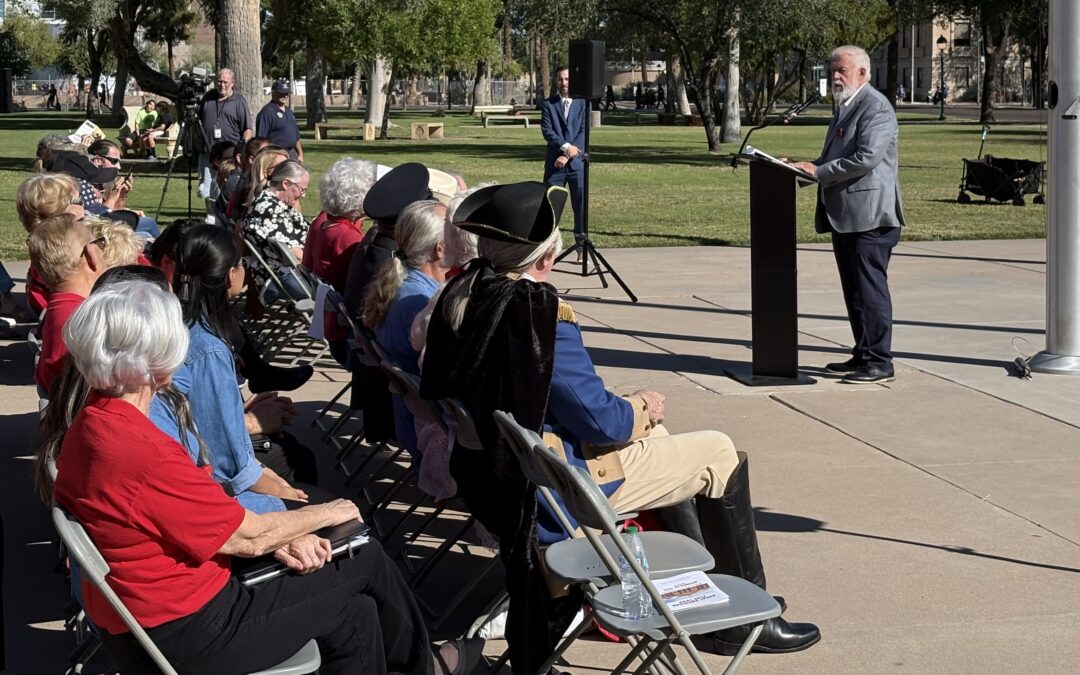
On Saturday, October 25, 2025, Glendale Mayor Jerry Weiers stood on the grounds of the Arizona State Capitol and watched the final hoisting of a remarkable American flag. This same flag, over the past seven years, has been proudly flown above every state capitol in the United States, along with the nation’s capital, and U.S. territory Puerto Rico.
With the Arizona raising, Mayor Weiers officially completed “The Great American Flag Tour”, a personal mission to fly one locally made flag at all 50 state capitols as the nation approaches its 250th birthday on July 4, 2026.
“What a journey,” said Mayor Weiers. “The patriotism across our great nation is still alive in every state. This flag is a symbol of unity – recognizing we are 50 States, 1 Nation!”
The flag was hand-sewn in Arizona by Joe Cicero and his team at a Phoenix-based flag manufacturer that produces approximately 10,000 flags annually. Cicero called this particular flag “pretty special because it has touched every capitol in the entire country.”
“Although we live in different places, come from different backgrounds, sometimes speak different languages, and worship in different ways, we are all Americans,” said Mayor Weiers. As America’s 250th anniversary approaches, let us not just mark a date, but instead let us renew our commitment to liberty, to justice, to equality, and to being one nation under God.”
The seven-year journey saw Mayor Weiers personally carry the flag to 49 states before returning home to Arizona for the ceremonial finale. Along the way, the flag was raised in honor of America’s history, its promising future, and especially its veterans.
With the tour now complete, Mayor Weiers plans to create an exhibit featuring the flag and its story. Arizona cities and organizations will be able to request the display for patriotic events.
He also hopes the flag will be considered for temporary exhibition at the Smithsonian Institution in Washington, D.C., during the national 250-year celebration in 2026, with a potential permanent home afterward at the Arizona Capitol Museum.
Ethan Faverino is a reporter for AZ Free News. You can send him news tips using this link.
by Staff Reporter | Nov 22, 2025 | Education, News
By Staff Reporter |
One of the Scottsdale Unified School District (SUSD) governing board members was busted by the cops for a party attended by teens.
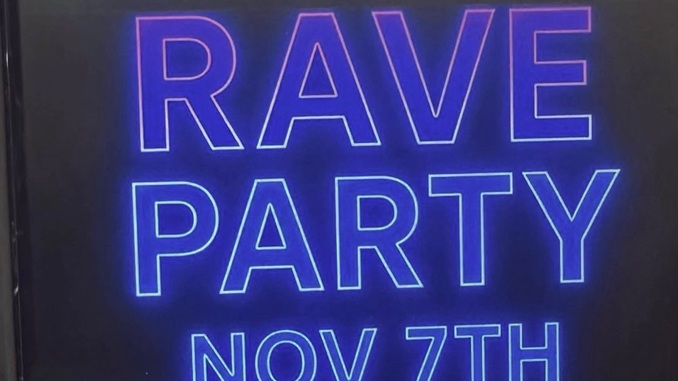
SUSD governing board member Matt Pittinsky threw a “rave party” for his teenage son’s birthday earlier this month that ended with police and an ambulance responding to the scene, per sources cited by the advocacy group, Scottsdale Unites For Educational Integrity.
Pittinsky’s son attends Brophy College Preparatory School, a private high school, where Pittinsky sits on the board of regents.
At a special meeting last week, one of Pittinsky’s neighbors addressed the board about the party. The neighbor said he witnessed a young girl taken to the hospital by first responders for alcohol poisoning. The neighbor questioned Pittinsky’s judgment, especially amid ongoing conversations about the potential closures of two schools: Echo Canyon School and Pima Elementary School.
“There was an underage girl hauled away in an ambulance for alcohol poisoning from a rave party at Mr. Pittinsky’s house,” said the neighbor. “Paradise Valley Police Department had to shut this mess down, and our neighborhood had a mess from it. It was quite the scene.”
Along with his SUSD seat, Pittinsky is an Arizona State University (ASU) visiting scholar for the Sanford School.
Pittinsky has also been CEO of Parchment, which manages and sends academic transcripts, and formerly CEO to Blackboard, a leading education software and learning management system company which he co-founded.
Blackboard received criticism over the years within the education and legal communities over alleged anticompetitive practices: lawsuits over alleged patent infractions and a steady acquisition of competitors that, essentially, forced educators to use them though Blackboard wasn’t their preferred vendor.
An invitation for the Pittinsky party posted by a since-deleted Instagram user, “nov.7.funcoverflow,” said the party would last from 8 pm to “GTFO” (an acronym for “get the f*ck out”), and told guests to “BYOE,” which stands for “bring your own everything.”
According to a letter from Pittinsky and his wife delivered to neighbors, the Pittinskys hired security to limit attendance to invited guests, and promised the party would last only until midnight.
However, eyewitness accounts said that police “shut down” the party several hours into the festivities. Eyewitnesses also reported at least one teenager was taken away from the party in an ambulance.
Scottsdale Unites For Educational Integrity urged parents and community members to address the Pittinsky party during the SUSD’s regular governing board meeting on Tuesday.
Much of the public comment on Tuesday’s meeting focused on voicing opposition to the proposed closures of Echo Canyon School and Pima Elementary School.
Those who did address the Pittinsky party questioned Pittinsky’s dedication to student health and safety.
Scottsdale resident Mike Bengert, a father and grandfather, asked for a complete, public investigation into the incident, as well as an apology and resignation from Pittinsky. Bengert’s remarks were met with applause.
“Hosting, permitting, or failing to prevent an environment in which underage drinking and medical emergencies could occur is deeply troubling,” said Bengert. “Why should the community trust your judgment on issues so critical to our public schools? Your actions suggest a disregard for the safety and wellbeing of the very students you are sworn to serve.”
AZ Free News is your #1 source for Arizona news and politics. You can send us news tips using this link.
by Matthew Holloway | Nov 22, 2025 | News
By Matthew Holloway |
Greg Roeberg, a Scottsdale attorney, announced his intention to join the race for Arizona Attorney General on Thursday with an appearance on Steve Bannon’s War Room. Roeberg, who describes himself on his campaign website as “serving as President Trump’s campaign attorney and defending the integrity of our elections,” has defined himself as an America First candidate on a mission to provide President Trump with needed “backup.”
Roeberg’s Statement of Interest in the 2026 Primary Election was filed shortly before 1 PM on Thursday, according to the Arizona State Election system at Arizona.vote.
“President Trump needs backup, and Arizona needs an Attorney General who will enforce the law with zero apologies,” Roeberg said in his video announcement posted to X. “Safe streets, strong borders, and secure elections — those are the foundations that will give my kids’ generation a chance to build new industries, new opportunities, and a better Arizona. With your help, we will Make Arizona Great Again.”
In a campaign statement, Roeberg wrote that he “vows to bring an America-First agenda directly into the halls of justice by:
- Restoring law and order with aggressive prosecution of violent criminals and drug traffickers.
- Standing shoulder-to-shoulder with law enforcement as radical politicians try to tie their hands.
- Securing Arizona’s elections with uncompromising oversight, tougher penalties for fraud, and ironclad protections to ensure every legal vote counts — and only legal votes count.
- Putting Arizona families first by fighting for parental rights, shielding our kids from harm, and making Arizona the most secure, pro-business state in the country.
In a statement published to X, Roeberg wrote,
“For years, I’ve worked alongside President Trump and the America First movement, pouring my energy into strengthening our elections and safeguarding the integrity of our democratic system. I’ve always believed that if our elections aren’t secure, nothing else matters.
Right now, we are at a crossroads. And Arizona doesn’t need any more empty suits. It needs action. That’s why I’ve decided to run for Attorney General of our great state.”
Speaking with Bannon on War Room, Roeberg reflected on serving as “President Trump’s 2024 election attorney,” adding that he was “with Trump like [Bannon] before it was popular, back in 2016.”
Turning to incumbent Democrat Attorney General, he told the host, “Arizona’s current Attorney General, Kris Mayes, is an absolute disaster. She needs to be replaced. I’m the one to do it because I’m a fighter.”
He added, “People on both sides of the aisle are sick and tired of hearing about Arizona’s elections dragging on months on end, weeks, and weeks on end, and questionable results, and people on both sides of the issue want that finally resolved. Strong borders and safe streets. It’s pretty easy. We have to stand with President Trump, and the administration, and the work they’re doing. Kris Mayes has currently… thirty-one lawsuits against the administration, shutting down the progress that President Trump and the administration are trying to do.”
“She does so at the expense of the Arizona people. She has a limited number of resources, and she could be spending those resources going after the drugs, going after the border, going after the homeless, the fentanyl, you name it. But instead, she just wants to score points with Act Blue and Soros and folks like that back East. And that’s got to stop,” he continued.
Roeberg concluded his remarks on Mayes saying, “I’m sick and tired again of seeing our squishy go-along, get-along Republicans do nothing about it. I’m not a politician. This is my first race, and I’m getting in and we’re in it to win.”
Matthew Holloway is a senior reporter for AZ Free News. Follow him on X for his latest stories, or email tips to Matthew@azfreenews.com.
by Jonathan Eberle | Nov 22, 2025 | News
By Jonathan Eberle |
Scottsdale’s popular Old Town Farmers Market will soon have a new home. The City Council voted on Nov. 17 to approve an agreement relocating the long-running Saturday market from its current spot at the city-owned parking structure at First Street and Brown Avenue to the surface lot at City Hall on 75th Street and Bennie Gonzales Way.
The shift comes as Scottsdale prepares to expand the parking structure that has hosted the market for more than a decade. The move will take effect at the start of the 2026–27 season. City Manager Greg Caton said city leaders worked to ensure the change would keep the market thriving with minimal disruption for both shoppers and vendors.
“The farmers market is one of Scottsdale’s most loved traditions,” Caton said. “Moving it to City Hall keeps it close to the heart of Old Town and gives vendors and visitors the space they need while we make improvements elsewhere. It’s a win for residents, small businesses and the community as a whole.”
Since its founding in 2009, the Old Town Farmers Market has grown into a weekly staple for Scottsdale residents, operating each Saturday from October through June. Roughly 100 vendors participate each week, offering fresh produce, baked goods, specialty foods, and locally made products in a lively, community-focused setting.
Officials say the new location will provide more room and easier access, allowing the market to continue offering the variety of goods and events that have made it a weekend favorite. Beyond its role as a shopping destination, the market has become a community hub—supporting Arizona farmers and food producers, drawing customers to nearby businesses, and accepting food assistance vouchers to help low-income families access healthy food.
The market also partners with Scottsdale’s Senior Services and plays a recurring role in major city events such as Western Week, Scottsdazzle, and June Days. Under the new agreement, the market will be permitted to operate on up to 40 Saturdays per year at the City Hall site. City staff noted the relocation will not require additional municipal resources or staffing.
Jonathan Eberle is a reporter for AZ Free News. You can send him news tips using this link.
by Matthew Holloway | Nov 21, 2025 | Economy, News
By Matthew Holloway |
A new report from the Common Sense Institute (CSI) Arizona examines the state’s management of its state trust lands, set aside in 1912. It makes the case that the lands represent a “$140 Billion Missed Opportunity.” CSI Arizona argues that the beneficiaries of the trust, primarily K-12 education, could benefit from developing the land, while potentially addressing Arizona’s growing demand for developable space.
Released by the nonpartisan research organization, the full report, “Building What Was Promised: Correcting the Missed Opportunity of Arizona’s Land Grant While Addressing its Growing Need for Space,” details the history, current status, and projected impacts of the Arizona State Land Department’s (ASLD) administration of approximately 9.2 million acres of trust land.
In a release posted to X on Wednesday, the CSI wrote, “Arizona’s State Land Trust was supposed to be a generational funding engine for K–12 schools. But new research shows how much potential has been left on the table. CSI finds Arizona could have distributed up to $140 billion to K–12 students if trust land had been sold and reinvested more efficiently over the last century — compared to just $5.8 billion distributed to date.”
Arizona received about 10.96 million acres under The Arizona-New Mexico Enabling Act of 1910, with roughly 8 million acres dedicated to K-12 education—one of the largest such grants in the nation. As of 2024, the state retains approximately 84% of its original grant, compared to an average of 36% across other land-grant states. More than 80% of the remaining trust land is used for low-intensity purposes such as grazing or rights-of-way, generating an average annual return of $8.40 per acre for K-12 beneficiaries.
The report estimates that historical delays in selling and developing trust lands have cost beneficiaries approximately $134 billion in lost distributions over the past century. Had lands been sold early (1913–1923) and proceeds invested at market rates, the K-12 Permanent Land Endowment Trust Fund (PLETF) could be worth $163 billion today, compared to its current combined value (distributions plus assets) of approximately $19 billion.
The ASLD has grown the trust’s value from $811 million in 1995 to $8.7 billion today, with the PLETF reaching over $9 billion in 2024. However, only 80,000 acres statewide are under commercial lease, and since 1998, the department has sold 101,600 acres while initiating new commercial leases on just 588 acres.
The report identifies up to 3 million acres of trust land within a 10-mile radius of population centers and argues that even if a portion of this land were sold or leased strategically, Arizona could add more than 1 million new housing units over the next 20 years easing pressure on a market where prices have risen more than 40% since the pandemic.
An econometric model using REMI TaxPI+ projects that an orderly sale of remaining trust lands over the next decade could generate $18.5 billion in direct revenue, $55 billion in new economic activity, and an additional $65 billion in distributions to public schools over 50 years, while reducing housing prices by approximately 10% over two decades.
Arizona remains one of the most land-constrained states in the country. Roughly 83% of all land within its borders is publicly owned, in the form of federal, tribal, or state trust land, leaving comparatively little privately held land for growth.
CSI argues that this structural constraint has pushed up development costs and slowed housing construction, even as the state’s population has more than doubled over the past 30 years.
The study concluded that modernizing ASLD’s statutory framework, improving development timelines, and exploring new leasing and disposition tools could unlock long-untapped value for taxpayers, schools, and communities.
Matthew Holloway is a senior reporter for AZ Free News. Follow him on X for his latest stories, or email tips to Matthew@azfreenews.com.