Coalition Accused Of Seeking To Protect Voting Power Of Only Latino Democrats

Coalition Accused Of Seeking To Protect Voting Power Of Only Latino Democrats

By Terri Jo Neff |

When the five members of the Arizona Independent Redistricting Commission (AIRC) meet on Monday, they will discuss their differing opinions on what the new boundaries should be for Arizona’s 30 legislative districts and 9 congressional districts for the next decade.

Arizona’s current district boundaries in use since 2011 include seven legislative districts and two congressional districts with a Hispanic-majority population. The AIRC has looked at dozens of public-proposed maps, as well as draft maps proposed by the commissioners.  

Yet despite the U.S. Census showing more Latinos were added to Arizona’s population than any other demographic, the number of Hispanic-majority districts is likely to not change. And that, according to AIRC observers, is due to the efforts—and political influence—of the Arizona Latino Coalition for Fair Redistricting.

But the Coalition does not appear to be interested solely in amplifying the political power of Arizona’s Hispanic population. Instead, it appears to only be interested in the segment of that population who are presumed be Democrats. 

In fact, the group’s Statewide co-chairs—Maricopa County Supervisor Steve Gallardo and Pima County Supervisor Adelita Grijalva—are both Democrats, as are the five regional co-chairs. 

The Coalition also appears to be receiving strategic advice from DJ Quinlan, who worked closely with the AIRC’s Democratic members during the 2011 redistricting effort. Quinlan, a former top official of the Arizona Democratic Party, has admitted to an association with the Arizona Latino Coalition for Fair Redistricting.

Critics say the Coalition’s interest comes at the price of ignoring an increasingly vocal and involved group—conservative Hispanics. And those conservatives are calling out the hypocrisy of folks like Gallardo and Grijalva for appearing to speak for all Latinos.

“Hispanics are the fastest growing part of the Republican Party and make up quite a large segment of Independent voters as well,” Steve Montenegro told AZ Free News. “The idea that all Hispanics vote the same way is both stupid and inherently racist.”

Originally from El Salvador, Montenegro has long been a voice for conservative values and for the elimination of race-based policies. He served nearly 10 years in the Arizona House and Senate, rising to the position of House Majority Leader.  

Montenegro says the fact is more minority Republicans are getting elected from a variety of districts, including majority white districts.

“Most voters don’t care about race, and it is time for our mapmaking process to remove race and ethnicity from the process, and stop grouping Americans and Arizonans on the basis of the color of our skin,” he said.

Montengro and others point to the Arizona Latino Coalition for Fair Redistricting’s initial advocacy for creating an 8th legislative district with a predominantly Hispanic population. But the group’s proposal was unceremoniously dropped.

Critics say the reason the group dumped the idea is that with so many Hispanic voters leaning to the Right, the Democratic Party leadership feared spreading Hispanic population centers among eight instead of seven legislative districts would have benefited conservative candidates instead.  

“The [redistricting] process is driven by partisan goals masquerading as concerns about racial groups or communities of interest,” says Montenegro. “So the Left uses Hispanics when helpful to create Democrat districts and then suddenly no longer cares about Hispanics when it negatively impacts the number of Democrat districts they can draw.  They made that obvious when the so-called Latino Coalition suddenly stopped caring about drawing more Latino districts.”

The shift away from creating an 8th Hispanic-majority legislative district also caught the attention of Sergio Arellano, who served on the Latinos for Trump coalition.

“It is incumbent on us to call out the hypocrisy and lack of authenticity of Latino groups claiming to represent us all,” says Arellano, a Veteran, a businessman, and a Latino community leader who strives to support conservative candidates and causes. “For far too long, we have allowed others to speak for a demographic as if it is a monolith.”

And although it appears the new legislative district maps will be intentionally drawn to avoid an 8th Hispanic-majority district, Arellano insists he would have embraced the opportunity provided by such a district.  

“It would be an incredible experiment to have had that additional district because that would become the catalyst that tears down the narrative about Latinos being Democratic; it would serve as a platform to prove once and for all who has the best interest of the community and state at heart,” he says. “Personally, it would be a dream come true to have the opportunity to run in an all-out Hispanic district against the racist liberal Democratic Party nominees.”

The same concerns have been raised with the Arizona Latino Coalition for Fair Redistricting’s involvement in how the state’s nine Congressional districts are configured.

Under the Voting Rights Act, the new CD maps must have at least two majority Latino districts to avoid reducing the current minority status.  The Coalition noted in a letter to the AIRC in October of its interest ensuring the Congressional districts were formed to “protect and enhance majority Latino districts, helping to ensure that Latino voters have the ability to elect a candidate of their choice.”

And again, the Coalition considered proposing another Hispanic-majority Congressional district “due to the growth of the Latino population in Arizona.” The group did not pursue the idea, however, in order to preserve “the voting strength of the community.”

Yet some of the draft maps submitted to the AIRC by interested parties were able to maintain two Hispanic-majority districts while splitting up some predominantly Hispanic population centers or aligning smaller Hispanic communities with traditionally Republican areas that were in closer physical proximity.

Those maps were quickly discarded, which critics contend was due to ensuring Democrats did not end up in a more competitive race. And Montenegro believes some of the Democrats involved in the redistricting effort are actually using the Voting Rights Act to undermine the political interests of conservative Hispanic voters.

“The idea that you draw a district filled with Hispanics who will then elect a Hispanic and be happy because they’re represented by a Hispanic is dumb,” he says. “The left will tell them to smile and be happy because of the ethnicity of their representation, but only actual racists care about that as opposed to the votes and ideology of their representative.”

Both Arizona Senators Voted Against Overturning Biden’s Vaccine Mandate

Both Arizona Senators Voted Against Overturning Biden’s Vaccine Mandate

By Corinne Murdock

Democratic Senators Mark Kelly and Kyrsten Sinema voted against a resolution to nullify President Joe Biden’s mandate that businesses with 100 or more employees get vaccinated for COVID-19 or implement weekly testing.

The only Democrats to vote for the resolution were Senators Joe Manchin (D-WV) and Jon Tester (D-MT). The resolution was sponsored by Senator Mike Braun (R-IN). As AZ Free News reported, it was based on the Congressional Review Act (CRA), which establishes that the House and Senate together may overturn a federal regulation without presidential approval.

The two senators didn’t address their vote against stopping Biden’s vaccine mandate, one that aligned with a majority of their party. A day after that vote, Sinema said that she encouraged all Arizonans to get vaccinated quickly in a post announcing COVID-19 vaccinations through the Phoenix Veterans Affairs (VA).

“We strongly encourage all veterans — and all eligible Arizonans — to get vaccinated as soon as possible,” wrote Sinema. 

At the end of October, Kelly asserted that the goal was to “beat” COVID-19 through higher vaccination rates.

“Our mission is to beat this virus. The science and data are clear. Vaccines save lives,” wrote Kelly. “Higher vaccination rates = Mission Success.”

Around that same time, Sinema posted a similar affirmation of the necessity to vaccinate most, if not all, Arizonans.

“Glad to see the continued progress toward returning to normal. We’re encouraging all eligible Arizonans to get the vaccine for our continued health and economic recovery,” wrote Sinema.

Sinema followed up with an urge to vaccinate as many American youths as possible.

“The sooner young Arizonans get vaccinated, the sooner our schools can fully return to safe and effective in-person learning. We strongly encourage all Arizona families to get vaccinated as soon as vaccines are available,” wrote Sinema.

Big COVID-19 Pharma hasn’t spent much on Kelly directly, but they have invested in Sinema. 

Pfizer spent over $1 million on Democratic congressional candidates and nearly $860,200 on Republican congressional candidates in the 2020 election. They didn’t donate to Kelly’s campaign directly, but they did donate $10,000 to an affiliated PAC, “BOLD,” which donated $3,000 to Kelly. In fact, Pfizer donated $7,500 to Kelly’s Republican opponent Martha McSally. Pfizer did donate $2,500 to Sinema and $5,000 to her PAC, “Getting Stuff Done.” 

Pfizer spent under $360,000 on Republican House candidates versus $288,000 on Democratic House candidates, and $190,386 on Republican Senate candidates versus $75,300 on Democratic Senate candidates. The company did spend more on Democratic campaign committees than Republican ones, by around $22,000.

Johnson & Johnson had similar donation patterns: they didn’t donate to Kelly, but they did donate $4,500 to Sinema. They also donated $10,000 to BOLD.

Johnson & Johnson also donated more to Republicans overall in the 2019-2020 election cycle: $160,500 to Republican committees versus $121,000 to Democratic committees, $214,500 to Republican House candidates versus $211,750 to Democratic House candidates, $67,000 to Republican Senate candidates versus $47,500 to Democratic Senate candidates. The same was true when it came to governors’ associations: the Republican Governors Association received $105,000 compared to $55,000 for the Democratic Governors Association. 

Committees for the Republican and Democratic committees for the House and Senate all received $30,000. The company gave $10,000 each to the Democratic and Republican Parties of Arizona ahead of the 2020 election.

Moderna stated as recently as June that they don’t plan on endorsing a political action committee (PAC), and that they wouldn’t engage in partisan donorship for candidates.

Corinne Murdock is a reporter for AZ Free News. Follow her latest on Twitter, or email tips to corinne@azfreenews.com.

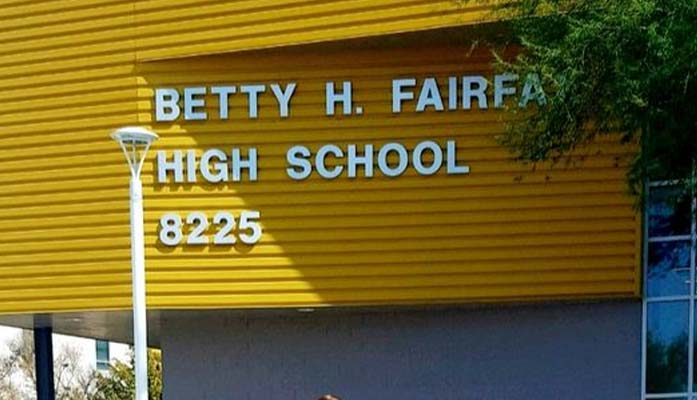
Chandler Teachers Pushing Rebranded Social-Emotional Learning: Guise for Child Sexualization, CRT

Chandler Teachers Pushing Rebranded Social-Emotional Learning: Guise for Child Sexualization, CRT

By Corinne Murdock |

Chandler Unified School District (CUSD) teachers are pushing the adoption of a rebranded version of social-emotional learning (SEL) referred to as “Windows, Mirrors, and Sliding Glass Doors” (WMSGD). SEL itself is a guise for controversial educational approaches such as Comprehesive Sex Education (CSE) and Critical Race Theory (CRT).

Windows, Mirrors, and Sliding Glass Doors was first introduced as the “windows and mirrors” concept in 1988 by a white woman, Emily Styles. It was later picked up and popularized in a 1990 essay by a black woman, Dr. Rudine Sims Bishop, with the addition of “sliding glass doors”—children not only see into others’ perspectives (windows) and reflections of themselves (mirrors), they are able to step into others’ perspectives (sliding glass doors). The essay insisted that children can and must understand the world through multiculturalism, and that books should reflect that reality. Multiculturalism signifies a diversity of cultures, ethnicities, and races; it’s an offshoot of intersectionality, which reduces an individual to different aspects of their identity — such as race or sexuality — in order to create a hierarchy of discrimination, oppression, and privilege. 

Bishop claimed that children could be affirmed, uplifted, or even offended by books. In reference to children’s interaction with majority-white literature, Bishop asserted that “nonwhite” children understand how they are “devalued” in modern society. She further suggested that a lack of diversity within children’s books contributed to racism, or a “dangerous ethnocentrism,” which she claimed was still pervasive.

“When children cannot find themselves reflected in the books they read, or when the images they see are distorted, negative, or laughable, they learn a powerful lesson about how they are devalued in the society of which they are a part,” claimed Bishop. “Children from dominant social groups have always found their mirrors in books, but they, too, have suffered from the lack of availability of books about others. They need books as windows onto reality, not just on imaginary worlds. They need books that will help them understand the multicultural nature of the world they live in, and their place as a member of just one group, as well as their connections to all other humans. In this country, where racism is still one of the major unresolved social problems, books may be one of the few places where children who are socially isolated and insulated from the larger world may meet people unlike themselves. If they only see reflections of themselves, they will grow up with an exaggerated sense of their own importance and value in the world—a dangerous ethnocentrism.”

Windows, Mirrors, and Sliding Glass Doors doesn’t just address race—since it’s steeped in the principles of cultural responsiveness and equity, it also offers a framework suitable for broaching topics of sexuality. One example of this is the children’s book on gender identity, “It Feels Good to Be Yourself” by Theresa Thorn, marketed for children 4-8 years old. 

On all fronts, the Bishop teaching approach mirrors SEL.

In the push for adopting Windows, Mirrors, and Sliding Glass Doors, it appears that the teachers are being led by their most esteemed peers. During CUSD’s Governing Board meeting on Wednesday, the first to advocate for a Windows, Mirrors, and Sliding Glass Doors curriculum was Chandler High School (CHS) teacher Sara Wyffels. She claimed schools weren’t effectively humanizing or providing unspecified resources to their students. Wyffels has taught with CUSD for 15 years and earned Arizona Teacher of the Year in 2021.

“I would like some support to humanize public education: the teachers, students, and curriculum,” said Wyffels. “This is an amazing opportunity to validate students as humans existing in this world and to provide resources to meet the needs of our children.”

Wyffels added that she not only teaches Spanish to her students, she validates students as humans and provides other resources to fit their needs — though she didn’t specify what those “needs” were, or what she was providing. Wyffels also asked for assistance from parents and community members for herself and all other educators because their teachers were “in crisis.”

The Declaration of Independence already identifies and protects the dignity and worth of individuals. That validation of humanity is further secured by the Constitution and the Bill of Rights.

“We hold these truths to be self-evident, that all men are created equal, that they are endowed by their Creator with certain unalienable Rights, that among these are Life, Liberty and the pursuit of Happiness. That to secure these rights, Governments are instituted among Men, deriving their just powers from the consent of the governed,” reads the Declaration of Independence.

In a written reflection inspired by a Proverb from the Bible, former President Abraham Lincoln further clarified one of the main purposes of the founding documents.

“There is something back of these, entwining itself more closely about the human heart. That something is the principle of ‘Liberty to all’ — the principle that clears the path for all — gives hope to all — and, by consequence, enterprize [sic], and industry to all. The expression of that principle, in our Declaration of Independence, was most happy, and fortunate. Without this, as well as with it, we could have declared our independence of Great Britain; but without it, we could not, I think, have secured our free government, and consequent prosperity. No oppressed people will fight, and endure, as our fathers did, without the promise of something better, than a mere change of masters,” wrote Lincoln. “The assertion of that principle, at that time, was the word, ‘fitly spoken’ which has proved an ‘apple of gold’ to us. The Union, and the Constitution, are the picture of silver, subsequently framed around it. The picture was made, not to conceal, or destroy the apple; but to adorn, and preserve it. The picture was made for the apple — not the apple for the picture. So let us act, that neither picture, or apple shall ever be blurred, or bruised or broken. That we may so act, we must study, and understand the points of danger.”

Though she wasn’t as explicit about her support for implementing a Windows, Mirrors, and Sliding Glass Doors curriculum, CHS World History teacher and 2021 Chandler Woman of the Year Gloria Garza-Wells said that test scores were down because they weren’t meeting the needs of students and their families. 

“By offering a curriculum centered on honesty, integrity, and courage we can provide the windows and doors to make sure that every child is seen,” asserted Garza-Wells.

CHS dual enrollment English teacher and Arizona State University (ASU) faculty associate Dr. Monica Baldonado-Ruiz praised Bishop’s idea that students should see their identities reflected in the curriculum and the ways they’re taught. As she began to cry, she apologized for “get[ting emotional.”

“For most of their school experience, many of our students have only seen windows. They have not been reflected in the curriculum. Their experiences have not been celebrated or highlighted as points of genius. I speak as one who never saw herself reflected in curriculum until she went to college,” said Baldonado-Ruiz. 

Former Arizona Superintendent of Public Education Diane Douglas wrote at length in an Arizona Daily Independent opinion that the push for “safe sex” education for children wasn’t safe for the children at all. Rather, Douglas asserted that children lacked the maturity to process sexuality materials. 

“There is NO kind of sexual activity—heterosexual, homosexual, bi-sexual, any SEXUAL—that is ‘safe’ for emotionally immature school-aged children—male or female—even those who have reached that miraculous, chronological ‘age of majority’—18 years old. Nor is it my business how consenting adults choose to privately express their sexual beliefs and inclinations unless it crosses the line into abusing children or stealing their innocence with public sexual exhibitions or desensitizing and sexualizing children; deluding them that they too should and can be safely, sexually active,” wrote Douglas.

Corinne Murdock is a reporter for AZ Free News. Follow her latest on Twitter, or email tips to corinne@azfreenews.com.

Maricopa Community Colleges Suspend Vaccine Mandate

Maricopa Community Colleges Suspend Vaccine Mandate

By Corinne Murdock |

In the wake of multiple federal court rulings striking down all provisions of President Joe Biden’s vaccine mandates, Maricopa County Community College District (MCCCD) has suspended their vaccine mandate for employees. A number of colleges and universities followed Biden’s executive order requiring federal contractors to get vaccinated. 

MCCCD notified employees that it would hold onto the policy detailing their now-suspended mandate on their website, indicating that they would await further ruling on the subject. For the time being, their January 7 deadline is no longer in effect.

“Given the rapidly changing landscape, if an employee would like to voluntarily provide your vaccine information or continue with the accommodation process you may certainly do so,” wrote MCCCD. “MCCCD will leave the Federal Vaccine Mandate submission structure (including this website) in place and will continue to monitor the situation.”

All three of Arizona’s public universities — Arizona State University (ASU), Northern Arizona University (NAU), and University of Arizona (UArizona) — also have employee vaccination mandates in place. UArizona and NAU told AZ Free News that they were reviewing the court ruling and its potential impact, and indicated that ASU was as well. 

“At this time, we continue to strongly encourage employees to get vaccinated and verify their vaccination status,” said UArizona spokeswoman Holly Jensen.

Pima Community College also has a vaccine mandate; spokeswoman Libby Howell told Arizona Republic that they were keeping their mandate in place despite the ruling, but noted that their governing board may decide to vote to suspend it next week. 

The federal contractor vaccine mandate was suspended nationwide on Tuesday by U.S. District Judge R. Stan Baker, a Trump appointee to Georgia’s southern district court, in the State of Georgia, et al., v. Biden, et al. 

Baker’s opinion concurred with those issued by judges in separate rulings on other mandates prompted by Biden: that the president’s exercise of power didn’t align with the Constitution or other legal precedents. Baker also cited the ruling of another federal judge in Kentucky, Gregory Van Tatenhove, a Bush appointee, who previously suspended the same order in several states: Kentucky, Ohio, and Tennessee.

“As another Court that has preliminarily enjoined the same measure at issue in this case has stated, ‘[t]his case is not about whether vaccines are effective. They are.’ […] Moreover, the Court acknowledges the tragic toll that the COVID-19 pandemic has wrought throughout the nation and the globe,” wrote Baker. “However, even in times of crisis this Court must preserve the rule of law and ensure that all branches of government act within the bounds of their constitutionally granted authorities. Indeed, the United States Supreme Court has recognized that, while the public indisputably ‘has a strong interest in combating the spread of [COVID-19],’ that interest does not permit the government to “act unlawfully even in pursuit of desirable ends.” 

The reason that Baker applied his ruling nationally — as opposed to a limited application like Tatenhove’s Kentucky v. Biden ruling — was because the intervening plaintiff, Associated Builders and Contractors, Inc. (ABC), is a national company. 

Corinne Murdock is a reporter for AZ Free News. Follow her latest on Twitter, or email tips to corinne@azfreenews.com.

Kyle Rittenhouse Will Attend ASU in Spring, Says ASU Lied About Enrollment Status

Kyle Rittenhouse Will Attend ASU in Spring, Says ASU Lied About Enrollment Status

By Corinne Murdock |

Kyle Rittenhouse told Louder With Crowder (LWC) on Wednesday that Arizona State University (ASU) wasn’t honest in their characterization of his enrollment status, and declared he will attend ASU in the spring despite student activists’ pushback late last month. 

Rittenhouse was vindicated by a jury of all charges last month, proving he’d lawfully exercised self defense during the Kenosha riots. During Wednesday’s episode of political news and comedy show Louder with Crowder, Rittenhouse explained that he’s a student at ASU currently. 

“Yeah, it’s online. I took a compassionate withdrawal from my classes. My professors offered it and then a week later they gave me a compassionate withdrawal which – thank you for that. But then they came out with a statement saying, ‘Oh no no, he’s not enrolled at ASU anymore.’ I’m enrolled, I’m just not in any classes, but I have a student portfolio,” said Rittenhouse.

AZ Free News inquired with ASU about the technicality of student portfolios and enrollment. ASU spokesman Jay Thorne told AZ Free News it couldn’t go into detail about Rittenhouse’s enrollment status due to FERPA law. Their official statement contradicted Rittenhouse’s claim, saying he wasn’t enrolled currently.

“Kyle Rittenhouse did not go through the ASU admissions process but was enrolled in two publicly available online courses for this semester. University records show that he is now no longer enrolled, a status precipitated by his own actions,” stated Thorne.

That wasn’t all that Rittenhouse had to say about his future education. Rittenhouse also told LWC that he wasn’t deterred by the socialist and social justice student protestors at ASU. 

“There weren’t even a lot of protestors there. It was a very, very small amount. And then people are just like, ‘I thought you were getting an education?’ and I’m like, yes, that’s what I want to do,” explained Rittenhouse. “I want to go to law school. I’m going to ASU in the spring in person. I want to do my four year undergrad there before I take the LSAT and go do my three years of law.”

Some recognizable faces were among the protestors’ number. One of the featured speakers there was Mastaani Qureshi – one of the three women found guilty of ASU’s Code of Conduct for harassing two white male peers with apparently rival political beliefs out of a common space on campus. Mastaani apparently took issue with another white male that represented apparently rival political beliefs, Rittenhouse, for his potential attendance at ASU. She claimed he was a white supremacist, vigilante, and killer.

“We want to say that Kyle Rittenhouse is not just any random killer, he’s a white supremacist killer. He is a vigilante. He is the descendant of white Americans who killed black and brown people. White supremacists back in the day were also acquitted of all charges if we have read history,” asserted Mastaani. “Kyle Rittenhouse didn’t get a guilty verdict because he was f*****g white!” 

The entire Kenosha ordeal has shaped Rittenhouse’s career goals. Rittenhouse originally expressed an intent to study nursing, a desire reflected by his reason for being in Kenosha that fateful night last August: to put out fires and administer first aid to anyone present. Then on Wednesday, Rittenhouse confirmed with Crowder that he intends to study law instead of nursing because of the prosecutorial misconduct he witnessed and experienced during his trial. 

“I want to be a criminal defense attorney,” said Rittenhouse. “I’m big on, no matter who the person is, I believe everybody deserves fair and good legal representation.”

OJ Simpson jury consultant Jo-Ellan Dimitrius helped select the jury for Rittenhouse’s trial. Rittenhouse said that she was an amazing support for them.

“She’s a phenomenal jury consultant. She’s more than that for us, though. She was a rock for my mom – someone my mom could lean on and hold during this entire ordeal,” said Rittenhouse.

Watch the LWC Rittenhouse interview here.

Corinne Murdock is a reporter for AZ Free News. Follow her latest on Twitter, or email tips to corinne@azfreenews.com.

Health Care Industry Divided On Billing Dispute Rule Under No Surprises Act

Health Care Industry Divided On Billing Dispute Rule Under No Surprises Act

By Terri Jo Neff |

The No Surprises Act passed by Congress in the waning days of Donald Trump’s presidency to better inform patients of the costs of medical procedures and other services doesn’t take effect until Jan. 1, but the Biden Administration is already getting pushback on how it intends to implement one provision of the new law.

That pushback is coming from health care providers who recently blanketed federal officials with negative comments about a regulatory rule issued by U.S. Department of Health and Human Services (HHS) the providers claim goes against the language of the Act, which was passed to formulate a nationwide process for resolving “surprise” or unexpected medical bills.

The two most common expected billing problems patients face in Arizona result from being treated by an out-of-network doctor at a medical facility within their network, or when a patient requires emergency or urgent care at an out-of-network facility.

For those in rural areas, a third common surprise billing issue involves charges for out-of-network air ambulance, or medical evacuation, services.

Under the new law, a patient’s copayment for an out-of-network bill will be limited to roughly what the patient’s copayment would be had the service or procedure been fully conducted in-network. Any unpaid balance can be challenged by the out-of-network provider, who must first attempt to negotiate the matter with the patient’s insurer or commercial health plan.

The rule also establishes an arbitration process the provider must follow if an agreement cannot be reached with the insurer / health plan. And after that, according to the American Hospital Association and other provider groups, is where the rule as currently written verves away from the intention of the new law

As put forth by HHS Secretary Xavier Becerra, the rule requires an arbitrator to consider an insurer or health plan’s in-network median payment rate for the service or procedure in question as the “presumptively correct” rate. Priority is given to that rate over other factors mentioned in the Act, such as complexity of the billed procedure or service, whether a party engaged in good faith during negotiations, and the health care provider’s training and expertise.  

“By directing arbiters to presume that the plan’s or issuer’s median contracted rate is the appropriate out-of-network reimbursement rate and creating a significantly higher bar for consideration of other factors means that the [independent dispute resolution] process effectively will be unavailing for providers,” according to Stacey Hughes, AHA executive vice president.

But not everyone in the health care industry is opposed to the rule’s presumption of the reimbursable rate during arbitration. Insurance companies and commercial health plan support the arbitration rules which make it harder for out-of-network providers to receive payment.

It is also seen as a way to force providers to sign on to more networks to reduce the cost of getting paid.

“The approach taken in the interim final rules is a clear win for hardworking people,” said Matthew Eyles of America’s Health Insurance Plans, a national association whose members provide health care coverage. “This is the right approach to encourage hospitals, health care providers, and health insurance providers to work together and negotiate in good faith. It will also ensure that arbitration does not result in unnecessary premium increases for businesses and hardworking American families.

For now, the Biden Administration appears to be standing behind the rule even though 35 percent of the U.S. House of Representatives signed off on a letter in November urging the presumptive rate rule be reconsidered.

The Biden-Harris Administration will continue implementing federal regulations from the No Surprises Act to not only protect the patients but also curb rising costs in health care,” Becerra said in response to the pushback. “We want costs to go down. When the arbitration process is wide open, no boundaries, at the end of the day health care costs go up, not down.”

The No Surprises Act was passed as part of the Consolidated Appropriations Act.