The American Civil Liberties Union (ACLU) has ended its lawsuit about a month after it filed to challenge the constitutionality of Proposition 314 — at least, for the time being.
The ACLU filed a notice of voluntary dismissal with the Arizona District Court on Wednesday. It made that filing a day after the preliminary injunction hearing was initially scheduled to occur, but which had been vacated the Friday prior.
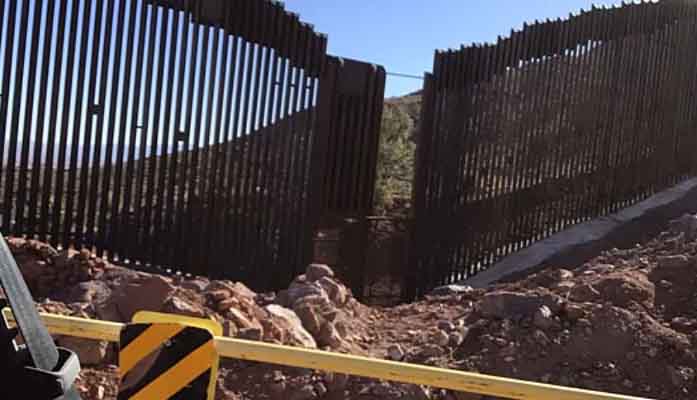
Prop 314, passed by Arizona voters in 2024, gave law enforcement the authority to enforce federal immigration laws. An ACLU attorney representing Florence Immigrant & Refugee Rights Project (Florence Project), the plaintiff challenging the proposition, says their team can find no evidence of law enforcement exercising this new authority.
Prop 314 made illegal immigration a state crime. That means state and local police may arrest illegal aliens and state judges may order deportations of illegal aliens. The proposition also required immigration verification for financial aid and public welfare, and made it a Class 6 felony to submit false information or documents for purposes of employment or public benefits.
The proposition went into effect in mid-July.
ACLU attorney John Mitchell said their team would wait for evidence that law enforcement or state judges had acted upon Prop 314 before relaunching their challenge.
“The trajectory of this litigation has always depended on when and how the state chooses to enforce Section 5,” said ACLU attorney John Mitchell. “In the first month that Section 5 has become fully enforceable, we’ve just seen none. So, from a litigation standpoint, it means our best strategy is to hold off until we get evidence of that enforcement.”
Mitchell’s take appeared to be the ACLU heeding arguments made by Attorney General Kris Mayes, who was named as a defendant in the lawsuit. Mayes’ team warned in a filed response that the lawsuit was premature since no law enforcement or courts had exercised Prop 314 authority.
“Because Section 5 has barely gone into effect, Florence Project has not shown and likely cannot show that anyone has been subject to arrest, detention, or prosecution for violating the illegal entry provision,” stated the attorney general’s office. “Likewise, no one has been subject to an order to depart the country under [the law], because such orders are tied to a charge or conviction for violating the illegal entry provision.”
The Florence Project, with the support of the ACLU and the ACLU of Arizona, filed its lawsuit in early July, claiming Prop 314 violated the Supremacy Clause of the Constitution. The organizations stated that only the federal government may regulate immigration.
“Immigration is a quintessentially federal authority. Congress has created a carefully calibrated immigration system, with detailed procedures that determine whether a person may remain in the United States, when to pursue criminal entry charges in the exercise of prosecutorial discretion, and what protections people receive to ensure that they do not face persecution or torture upon removal,” stated their complaint. “Congress placed all relevant authority in the hands of federal officials — in keeping with the federal government’s exclusive immigration powers and the sensitive foreign policy implications of these powers.”
The Arizona District Court denied the organization’s motion for a temporary restraining order about two weeks ago.
Living United For Change, another progressive group, lost their lawsuit challenging the constitutionality of Prop 314 last year.
AZ Free News is your #1 source for Arizona news and politics. You can send us news tips using this link.
A federal judge denied a request on Tuesday from two healthcare nonprofits seeking to block Phoenix from enforcing restrictions on food distribution and medical treatment in city parks. The court found that the organizations had not shown a likelihood of success on their argument that the activities constitute expressive conduct under the First Amendment.
U.S. District Judge Diane J. Humetewa denied the preliminary-injunction motion filed by Circle the City and Valle del Sol Community Health. Humetewa also canceled a hearing that had been scheduled for Wednesday.
“The Court disagrees that Plaintiffs’ provision of medical care or food to the unhoused is inherently expressive conduct under the First Amendment,” Humetewa wrote.
The order leaves Phoenix’s Medical Treatment and Food Distribution in Parks Ordinance enforceable against the two organizations while their underlying lawsuit continues. The organizations filed the case, Circle the City et al. v. City of Phoenix et al., in the U.S. District Court for the District of Arizona on June 15 and submitted their motion for preliminary injunction the following day.
Circle the City provides street medicine and other healthcare services to homeless residents, while Valle del Sol operates harm-reduction programs that include syringe services. Their lawsuit argues that the ordinance violates the First Amendment by restricting charitable food distribution and medical care while exempting other activities involving food or medical assistance.
The plaintiffs also contend that the city’s permit system operates as an unconstitutional prior restraint and that Arizona law authorizing harm-reduction programs preempts the ordinance’s restrictions on syringe services.
Humetewa found that the nonprofits had not demonstrated that observers would understand their provision of food and medical care as communicating their stated message that every person deserves dignity and access to basic services. Humetewa cited the absence of signs, literature, or other accompanying communications in the record.
Humetewa also wrote that the First Amendment gives governments greater latitude to regulate conduct than spoken or written expression.
Attorney Will Knight of the National Homelessness Law Center said the plaintiffs were disappointed with the ruling and were reviewing their legal options. Phoenix declined to comment on the decision, citing the pending litigation.
The Phoenix City Council approved the ordinance on May 6, and it took effect on June 7. Individuals and organizations must obtain a Parks Services Permit before conducting charitable food distributions or providing covered medical treatment in a city park.
Phoenix will issue no more than two per eligible park each month. The ordinance requires covered medical services to be provided under the supervision of a licensed professional inside an enclosed tent or mobile medical vehicle located on a parking lot or other approved hardscape area.
The ordinance also prohibits the sale, distribution, or exchange of syringes or needles, needle-exchange programs, and the distribution of needle or intramuscular naloxone in city parks. Violations constitute a Class 1 misdemeanor.
The ordinance contains exemptions, including those for first responders, assistance provided during emergencies, aid given to family members, water and electrolyte distribution, educational outreach, and private gatherings where food is served to participants.
Phoenix says the framework is intended to keep parks clean, safe, and accessible while connecting homeless residents with established service providers. The city encourages residents to support organizations participating in its Healthy Giving program.
The Humetewa ruling follows a different result in a parallel challenge brought by St. Herman’s Table, an Orthodox Christian ministry that distributes meals to homeless residents at Cave Creek Park.
U.S. District Judge Krissa Lanham granted St. Herman’s Table and its founder, Lance Brace, a temporary restraining order on June 10, finding that they were likely to succeed on their First Amendment Free Exercise claim. Lanham extended the order on June 16 until she rules on their preliminary injunction motion.
The temporary order prohibits Phoenix from enforcing the ordinance against St. Herman’s Table and Brace. It does not apply to other organizations.
AZ Free News reported in June that St. Herman’s Table distributes meals, water, Bibles, and hygiene supplies each week as part of its religious ministry.
The ordinance and Phoenix’s handling of homelessness have also drawn political criticism. In May, Arizona Republican Party Chairman Sergio Arellano joined radio host James T. Harris during a visit to the downtown area known as “The Zone.”
Arellano criticized city leadership and praised an unidentified faith-based nonprofit that the Arizona Republican Party said received no taxpayer funding. Harris regularly conducts homeless outreach through The Bridge for Community Services, where he serves as corporate vice president and executive director. The party’s post did not identify the organization accompanying Harris, and The Bridge is not a party to either federal lawsuit.
Humetewa’s ruling addresses the request for immediate relief filed by Circle the City and Valle del Sol. Their broader challenge to the ordinance remains pending before the federal court.
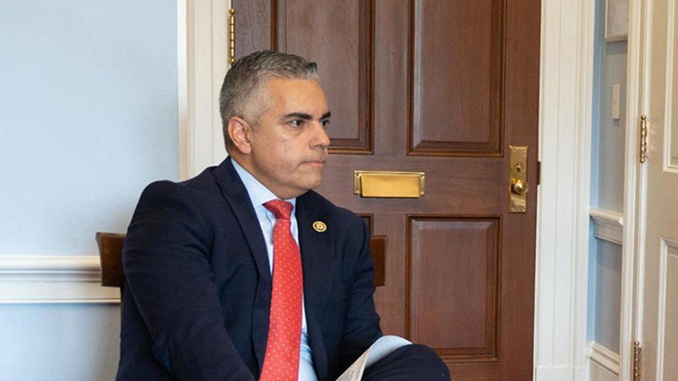
Congressman Juan Ciscomani (R-AZ-06) has once again been ranked as Arizona’s most bipartisan member of Congress, earning an “A” grade and a 97.5 Bridge Score in the latest Bridge Grades report evaluating members of Congress.
The score, based on data through June 30 2026, places Ciscomani among the top 20 most bipartisan members of the entire House. His 97.5 score is more than double the House average of 44.9.
Bridge Grades, a nonpartisan project of the Mediators Foundation, evaluates members of Congress based on how collaboratively or divisively they govern.
The organization uses third-party data examining legislative records, bipartisan bill sponsorship and co-sponsorship, public statements, rhetoric, and other measures of congressional collaboration.
According to the organization, “bridgers” are lawmakers who build bipartisan consensus and coalitions, while “dividers” pursue more partisan approaches to governing.
For Ciscomani, the latest recognition marks the second consecutive time he has received an “A” grade from the Bridge Grades.
“Getting results for Arizona families means working with anyone willing to find solutions, regardless of party,” stated Ciscomani. “I was sent to Congress to deliver common-sense, lasting results for Arizonans, and I will keep fighting to deliver real, tangible outcomes for our local communities. This recognition again reflects the hard work of my team and our commitment to ensuring Southern Arizona has a seat at the table in Washington.”
Ciscomani’s bipartisan ranking comes alongside his record of legislative activity during the 119th Congress.
According to data cited by the congressman, he has introduced 32 bills, with 10 passing the House of Representatives, as well as bringing tens of millions of dollars in federal investment back into Arizona.
The congressman has also been recognized for his legislative effectiveness. The nonpartisan Center for Effective Lawmaking previously ranked Ciscomani as the most effective member of Arizona’s congressional delegation during the 118th Congress.
As a member of the House Appropriations and Veterans’ Affairs Committees, Ciscomani has focused on issues including national security, veterans’ services, border security, Arizona’s water resources, and federal investments in local communities.
The latest Bridge Grades recognition adds another national bipartisan distinction to Ciscomani’s record as he prepares for another general election campaign in Arizona’s Sixth Congressional District, where he faces Democratic nominee JoAnna Mendoza.
“Voters who want lower costs, safer communities and funding for local priorities trust Representative Juan Ciscomani to break through the D.C. noise and get results,” stated NRCC Spokesperson Ben Petersen. “But far-left lobbyist Joanna Mendoza would jeopardize Arizonans’ priorities for her extreme agenda, raising taxes and risking their safety.”
“Working down the aisle” has remained a central theme of Ciscomani’s congressional record with his office pointing to bipartisan legislation, federal funding for Arizona communities, and legislation addressing issues ranging from veterans and critical mineral to economic development.
Ethan Faverino is a reporter for AZ Free News. You can send him news tips using this link.
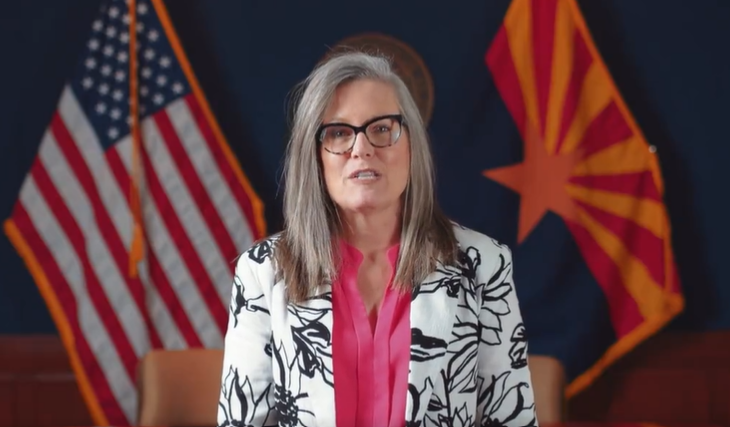
Gov. Katie Hobbs says public education is woefully underfunded, but fiscal reporting indicates districts are flush with cash.
According to the latest Arizona Department of Education annual financial report, public school districts carried forward more than $8.3 billion in unspent funds from the 2024-25 fiscal year.
That is nearly equivalent to total appropriations that the state allocated for public education in the 2024-25 fiscal year: $8.9 billion, which goes beyond K-12 schools to include the Board of Regents, community colleges, and universities.
That $8.9 billion accounts for 55% of total appropriations out of the state’s general fund, which amounted to more than $16.2 billion in the 2024-25 fiscal year.
Within the $8.3 billion carried over from the 2024-25 fiscal year:
$1.6 billion for bond building
$1.3 billion for maintenance and operations
$1.2 billion for “other” funding
$941,000 for the Classroom Site Fund and Instructional Improvement Fund
$884,000 for unrestricted capital outlay
$708,000 for federal projects
$672,000 for bond principal deduction
$393,000 for debt service
$248,000 for food service
$150,000 for adjacent ways
$147,000 for school plant
$41,000 for state projects
The emergency deficiencies correction, building renewal, and new school facilities funds had negative balances of approximately $395,000, $19 million, and $33 million, respectively.
Last fall, the Common Sense Institute estimated that school districts hold more than $20 billion in combined cash reserves and underutilized real estate.
Public school district enrollment has declined steadily since 2008, more so in recent years after the state allowed universal enrollment for the ESA program in 2022.
Hobbs has advocated for lawmakers to revive Proposition 123, which would take around $300 million every year from the State Land Trust Permanent Fund and give it to education. $300 million is equivalent to a drop in the public education fund bucket: approximately 3% of what the state allocated from its general fund in the 2024-25 fiscal year.
Hobbs credited Prop 123 as providing “critical funding” for districts and educators in her State of the State address earlier this year. The governor said the funding provided by the proposition curbed the budget shortfall and would enable teacher pay raises and prevent future tax hikes.
The governor and lawmakers have failed to reach a consensus on renewing Prop 123. The proposition expired in June 2025.
Teresa Leyba Ruiz, the Democratic nominee for superintendent of public instruction, wants to claw back another 3% from a potential funding source. As reported earlier this week, Ruiz proposed reverting the $350 million set aside in Empowerment Scholarship Account (ESA) program funds back to public schools.
32% of educators reported having an external job and 21% of educators indicated additional paid responsibilities and a second job outside their school, according to a 2024 report by Hobbs’ Educator Retention Task Force issued in partnership with the Arizona State University Morrison Institute for Public Policy.
That same report identified inadequate salary, unpaid duties and hours, pay differences, and salary compression as issues impacting retention. The report estimated that only 16% of educators agreed that their salary was satisfactory and motivated them to stay in their professions.
A more recent poll of more than 9,300 educators during the 2025-26 school year by the Arizona Department of Education also found that teacher pay was one of the biggest sources of dissatisfaction for educators.
AZ Free News is your #1 source for Arizona news and politics. You can send us news tips using this link.
The Joint Economic Committee released its Monthly Inflation Update for July 2026, showing that consumer prices continued to rise, while real earnings remained mostly steady during the month.
According to the report, the headline Consumer Price Index for All Urban Consumers (CPI-U) increased 0.07% from June to July and rose 3.36% over the previous year.
Core CPI, which excludes food and energy prices, increased 0.22% in July and was up 2.48% from July 2025.
Energy prices declined 1.48% in July but remained significantly higher than a year earlier, with energy price inflation increasing 14.73% over the past 12 months. Food prices increased 0.08% during July and were up 2.98% compared with July 2025.
CPI-U increased 0.07% in July & rose to 3.36% over the past year. Core CPI increased 0.22% & rose to 2.48% over the past year. Energy price inflation was down by 1.48% in July & was up 14.73% over the past year. Food price inflation rose 0.08% & was up 2.98% over the past year.…
— Joint Economic Committee Republicans (@JECRepublicans) August 12, 2026
Inflation also varied across the country. Annual headline CPI inflation was highest in the Northeast at 4.1%, followed by the Midwest at 3.5%. The South recorded annual inflation of 3.2%, while the West had the lowest rate among the four regions at 3.0%.
The inflation report comes less than a week after a disappointing jobs report that showed the U.S. economy unexpectedly lost 23,000 jobs in July. Economists had expected employers to add jobs during the month.
The Bureau of Labor Statistics also sharply revised employment gains for May and June downward by a combined 103,000 jobs, providing a weaker picture of the labor market than previously reported.
The July employment report also showed an unemployment rate of 4.1%, down slightly from June. However, the decline was accompanied by a reduction in labor-force participation, while employment fell in areas including local government, education, and retail trade sectors. Healthcare continued to trend upward.
The combination of persistent inflation and signs of a weakening labor market leaves the Federal Reserve facing a difficult balancing act as it considers its next interest-rate decision.
The Federal Reserve previously voted 9-3 to maintain the benchmark interest rate, and the latest inflation and employment data could further reduce pressure on the central bank to raise rates at its September meeting.
While inflation remains above the Fed’s 2% target, the weaker-than-expected jobs numbers and downward revisions to previous employment gains could give policymakers additional reason to exercise caution.
The Federal Reserve will receive another round of inflation and employment data before its September meeting, giving policymakers a final set of economic data to consider as they weigh continued price pressures against growing signs of a cooling labor market.
The July report also examined changes in workers’ real earnings, which account for the effects of inflation. For all employees on private, non-farm payrolls, real average weekly earnings decreased 0.02% from June to July, while real average hourly earnings declined 0.09%.
Among production and nonsupervisory employees on private non-farm payrolls, real average weekly earnings increased 0.06% during the month. Real average hourly earnings for the group remained unchanged, with a net change of 0.00%.
Ethan Faverino is a reporter for AZ Free News. You can send him news tips using this link.
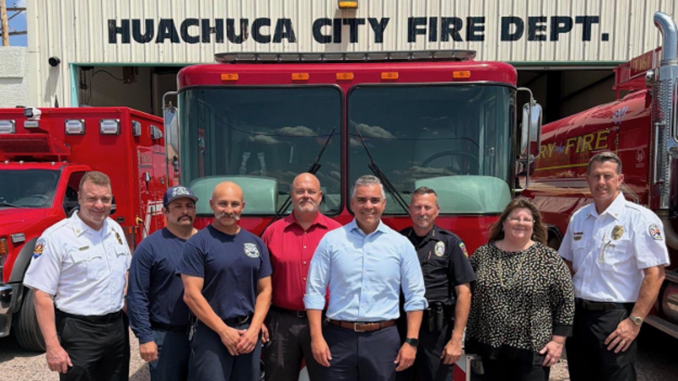
Congressman Juan Ciscomani (R-AZ-06) met with Huachuca City officials Tuesday to discuss a $1.3 million federal funding provision intended to replace the town fire department’s aging ladder-equipped fire engine.
The congressman visited Huachuca City this week and met with local leaders and fire personnel about the proposed purchase. The funding remains preliminary and has not been distributed to the town.
The provision appears in H.R. 8646, the Agriculture, Rural Development, Food and Drug Administration, and Related Agency Appropriations Act for fiscal year 2027. The House passed the bill 213-210 on June 4, and it was received by the Senate on June 8. Senate approval and enactment of the appropriations legislation are still required before the funding becomes available.
Grateful to see firsthand how the $1.3 million in federal funding I preliminarily secured will strengthen fire response in Huachuca City and across the region.
Proud to fight for this meaningful investment, which will bring a much-needed quint ladder truck and help keep #AZ06… pic.twitter.com/p5j5qGuHhg
— Congressman Juan Ciscomani (@RepCiscomani) August 12, 2026
Ciscomani’s Community Project Funding disclosure identifies Huachuca City as the intended recipient of $1.3 million for the “Community Fire Protection and Regional Mutual Aid Ladder Truck Acquisition Project.”
The money would replace an aging fire engine with a quint ladder truck equipped with a 78-foot Viper aerial. According to the disclosure, the apparatus would be used for fire suppression, rescue operations, and emergency response.
Huachuca City’s existing ladder-equipped engine dates to 2008 and is approaching the end of its service life. It is currently the department’s only apparatus equipped with a ladder. The town relies on grants and federal funding to finance large equipment purchases.
The proposed truck would be stationed in Huachuca City and made available for regional mutual-aid responses. Ciscomani’s disclosure states that the apparatus would also support emergency operations in Sierra Vista, Fort Huachuca, Whetstone, and unincorporated areas of Cochise County.
“This has different layers of purpose,” Ciscomani told KGUN while discussing the project’s regional role.
Huachuca City Mayor Johann Wallace said the purchase would give the department approximately 20 additional years of apparatus service and allow it to continue assisting other communities throughout Cochise County.
The Huachuca City proposal is among 20 fiscal year 2027 Community Project Funding requests supported by Ciscomani. His office announced in June that the fire-truck provision and two other projects in Arizona’s Sixth Congressional District had been included in the House-passed agriculture appropriations bill.
According to a press release from Ciscomani’s office, the proposed funding for Huachuca City is included among a total of $7.3 million in FY2027 funding for Cochise County.
“As Arizona’s sole appropriator in either the House or Senate, I have made it my mission to be a relentless advocate for Southern Arizona by listening to the needs of our communities and fighting to bring those priorities to Washington,” Ciscomani said.
“Every Community Project Funding request I champion is driven by local leaders and the people they serve, ensuring taxpayer dollars are invested where they will have the greatest impact. These meaningful investments in Cochise County will improve and strengthen public safety by equipping our first responders with the tools necessary to do their job effectively, such as replacing an aging fire engine with a new quint ladder truck, to ensure that across Cochise County they are prepared to meet the moment when it matters most.”
H.R. 8646 remains pending in the Senate. The Huachuca City allocation will depend on the project remaining in the final appropriations legislation approved by Congress and signed into law.