On Tuesday, House Democrats attempted to kill a Republican-introduced bill to address the teacher shortage.
The bill, HB2428, would allow private universities and colleges to participate in and receive funding from the Arizona Teachers Academy (ATA). Reimbursements for academy scholarships would be capped at the average in-state tuition and fees determined by the Arizona Board of Regents (ABOR): currently, about $7,100. The four Democratic members of the House Education Committee opposed the bill.
The bill sponsor, State Rep. Matt Gress (R-LD04), said that there are thousands of students seeking an educational degree currently, noting approximately 3,000 qualified students at Grand Canyon University alone. Gress cited data that approximately 80 percent of these types of students go on to teach in public schools, but not necessarily in Arizona. Gress argued that they should be pulled into Arizona ones.
“It represents a state commitment to addressing our teacher workforce shortage,” said Gress.
ATA helps pay for tuition and fees for state university or community college students, with the contingency that these students commit to one year of teaching in an Arizona public school.
Over 3,300 individuals were enrolled in the ATA last year, the largest class since its creation in 2017 under former Gov. Doug Ducey. Enrollment for the past five years totaled nearly 9,300. Scholarships totaled $22.7 million, averaging $7,100 each. Gress’ proposed expansion of the ATA to private institutions may cost an additional $17 million. The ATA funds student-teachers across 16 different graduate and undergraduate programs.
The teacher shortage may soon worsen: over 20,000 teachers qualified for retirement last year, according to the Arizona State Retirement System.
Committee Democrats admitted that the state’s ongoing teacher shortage is urgent. However, they disagreed that public dollars should go into private institutions.
State Rep. Judy Schwiebert (D-LD02) said the state should prioritize public institution students over private ones. She expressed concern that expanding ATA eligibility would disrupt the current waitlist of public university students.
“I feel like our priority needs to be with our public schools that need to be held accountable, and if they’re going to be accountable we need to make sure that we’re providing the funding for them to be able to train as many teachers as they have applications for, and right now they don’t,” said Schwiebert. “We need to make it a priority to further invest in our institutions before we send any money, or if we even should send any money to a private institution that doesn’t require any accountability from the state.”
State Rep. Nancy Gutierrez (D-LD18) concurred, arguing that it wasn’t appropriate to use public funds for private institutions. Gutierrez said the teacher shortage wasn’t due to a lack of accessibility to programs like ATA, it was teachers enduring purportedly low pay and disrespect.
State Rep. Laura Terech (D-LD04) said she didn’t believe this bill was a long-term solution for the shortage.
“I have a fundamental problem with sending public money to private institutions,” said Terech.
Corinne Murdock is a reporter for AZ Free News. Follow her latest on Twitter, or email tips to corinne@azfreenews.com.
The Paradise Valley School (PVUSD) Governing Board President Pro Tem indicated that white Christians shouldn’t determine curriculum.
Newly elected PVUSD member Kerry Baker issued the remark over the weekend in response to Arizona Department of Education (ADE) Superintendent Tom Horne’s recent actions to purge social-emotional learning (SEL), critical race theory (CRT), and other progressive ideologies from classrooms. Baker claimed that CRT isn’t present in schools but that what Horne sought to eradicate was true history; she pinned blame on white Christians for the purportedly misdirected purge.
“We are not a society of white Christians,” tweeted Baker. “It is dangerous to assume we are. It is even more dangerous to believe public schools are only made up of white Christians. Our communities are full of rich and diverse cultures and families. We should ALL be celebrated. Not just a certain population.”
Baker added the claim that Horne’s opposition to CRT made him a “racist.”
“When [Tom Horne] says he’s anti-CRT, he’s just reminding us he’s racist,” stated Baker.
I’m going to say this again real slow. CRT. Is. Not. Taught. In. Our. Schools. It’s called history and diversity, and it is vital to raising productive members of society. We are not a society of white Christians. pic.twitter.com/ULFQt7IAO4
Baker, a former Peoria Unified School District and Dysart Unified School District teacher endorsed by teacher union lobbyist group Save Our Schools Arizona (SOSAZ), stands in opposition to major policy changes defining the Horne administration. Baker ran on a campaign opposing universal school choice, supporting SEL, and resisting public posting of teaching materials.
Baker is a product of the Leading For Change (LFC) fellowship program: a Democrat-run group that trains up Democratic elected officials and activists, founded by a board member of dark money group Arizona Advocacy Network (AAN), who’s also the former executive for Center for Progressive Leadership and Planned Parenthood of Central and Northern Arizona.
Baker explained in her LFC biography that she decided to run for PVUSD governing board because two of her six children had identities that aligned with her activist interests. According to Baker, she has helped one of her children transition genders, and another one of her children has autism.
In an interview with The Arizona Republic last year, Baker said that SEL was important because it enabled K-12 educators to fulfill students’ social and emotional shortcomings caused by school closures throughout the pandemic — much of which were prompted by educators and teachers unions.
During her first school board meeting earlier this month, Baker listed greater inclusivity of special needs children in regular classrooms, expanding LGBTQ+ rights, hiring SEL teachers, and emphasizing diversity among her priorities. Baker quoted Gov. Katie Hobbs in her introductory speech, saying that there wasn’t a shortage of teachers, just a crisis retention.
In addition to her dislike of “white Christians,” Baker appears to have a disdain for any groups composed mainly of white people — even if they’re children. In response to SOSAZ Director Beth Lewis posting a picture of Treasurer Kimberly Yee’s visit to the Brophy College Preparatory Republican Club last fall, Baker scorned the fact that the group looked too white.
“There wasn’t one [GIF] that said ‘so many white boys,’” wrote Baker.
There wasn’t one that said “so many white boys”. 🤷🏼♀️
Baker also supports allowing biological males to join female sports teams and enter female spaces, such as locker rooms and restrooms. Baker derided concerned parents opposed to this permissiveness as “transphobic.”
Throughout her campaign, Baker opposed efforts to ban any books from classrooms. She emphasized this stance as recognizing the importance of multiculturalism. Yet, Baker opposed any aspect of religion from entering the classroom — namely, Christianity. Baker claimed her opposition represented the proper understanding of ensuring a separation of church and state.
Corinne Murdock is a reporter for AZ Free News. Follow her latest on Twitter, or email tips to corinne@azfreenews.com.
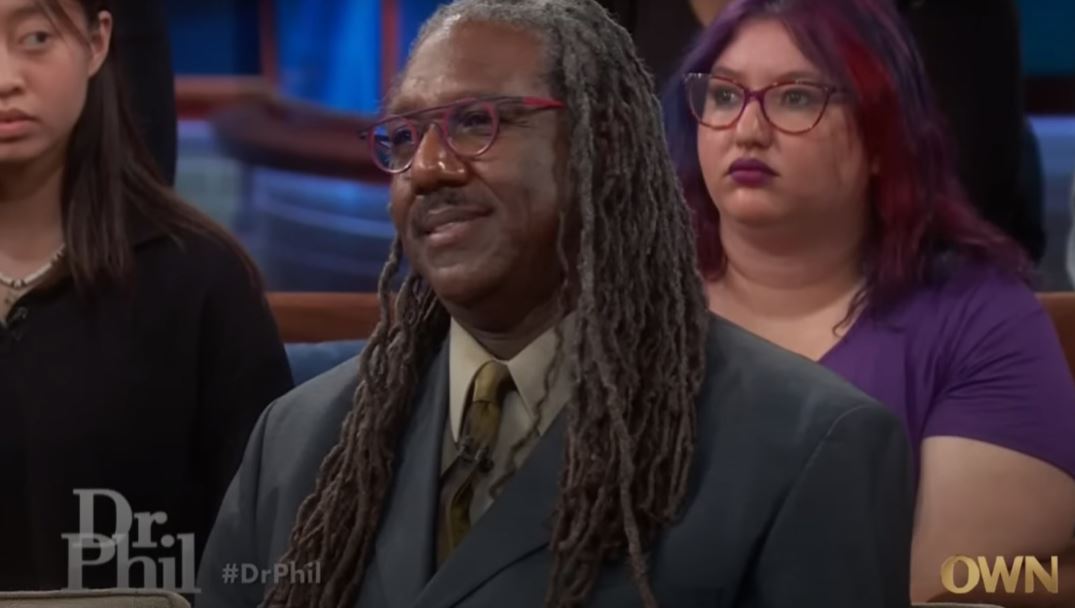
Arizona State University (ASU) professor Neal Lester said that cultural appropriation is equivalent to racism and white supremacy, specifically claiming it lacked humanity.
Lester — an English professor at ASU for 26 years and founder of ASU’s social justice-focused initiative, Project Humanities — made these remarks during a September episode of “Dr. Phil.”
“We can say the same thing about racism, sexism, homophobia. Just because you can’t solve it and don’t see it at every corner doesn’t mean you shouldn’t be aware of it and trying to address it,” said Lester. “I put [cultural appropriation] on the same level as white supremacy, because white supremacy is intersectional.”
Lester added that cultural appropriation was not only inhumane, but disrespectful. “Dr. Phil” host, Phil McGraw, pointed out that not everyone who puts on other cultural items was necessarily doing so in a manner intending comedic effect. Lester responded that even those instances would be reductive, performative, and ultimately disrespectful of those from that culture.
“You’re getting some kind of cultural capital by doing it,” said Lester. “It’s not necessarily who’s hurt by it, it’s who is disrespected by it. A whole culture of people whose identities are wrapped in whatever you’re dressing into and can then take off.”
The focus of the “Dr. Phil” episode, “Appropriation Nation: Has it Gone Too Far?”, concerned in part a 2018 controversy after an 18-year-old Utah teenager, Keziah Daum, posted her wearing a qipao dress to prom. A 20-year-old University of Utah student at the time, Jeremy Lam, quote-tweeted the post with the viral comment, “My culture is NOT your goddamn prom dress.”
Lam later told outlets that Daum’s outfit was a sign of racism. His original caption on Daum’s dress inspired months of memes, where social media users would use the phrase in their own captions when reposting others’ outfits.
Though Lam and a select few social media users at the time claimed Daum’s outfit choice was cultural appropriation, Daum revealed in September’s “Dr. Phil” episode that China invited her to its Qipao Festival to be their guest of honor.
“They loved the fact that someone from America was taking in a part of their culture and showing their appreciation for it,” said Daum. “I wasn’t appropriating it. I wore it because it was a beautiful dress and I appreciated it.”
The episode also addressed content created by former Prager University influencer, Will Witt, in which he wore outfits depicting various cultures on college campuses and then in areas dominated by the culture reflective of that outfit. Witt wore outfits representative of Native American, Mexican, and Chinese cultures. Only those on college campuses expressed negative sentiment toward Witt’s outfits, a majority of whom didn’t hail from the areas dominated by the culture while those in the areas reflective of his outfits expressed positive sentiment.
“The only people who are actually offended by cultural appropriation don’t really have anything else of meaning going on in their lives, it seems,” said Witt. “[Cultural appropriation] is a thing created by elitist white people who don’t really ever talk to these people in these cultures.”
Lester likened cultural appropriation to plagiarism. Witt said Lester’s comments proved him to be one of the “anti-white, ivory tower professors” attempting to domineer cultural norms.
The Arizona Department of Education (ADE) is eliminating social-emotional learning and other “woke” initiatives from its administration, with an eye on barring it from schools entirely.
ADE Superintendent Tom Horne explained his vision during an interview with “The Conservative Circus” on Thursday. Horne said that leftist agenda initiatives took away critical funding from teacher salaries.
“The money should be going to teachers’ salaries, and not, as we say, ‘woke’ ideology,” said Horne.
Tom Horne, AZ Superintendent of Public Instruction, discusses the elimination of emotional learning training along https://t.co/ML7GQVsO36
Horne said that social-emotional learning, sexualized curriculum, and critical race theory (CRT) had nothing to do with academics.
“The nonsense is producing the low test scores. If we focus on academics, we can bring the test scores back up,” said Horne.
Arizona students have struggled to perform well in tests over the last few years: a sharp downturn in achievement from forced school closures amid the pandemic following years of general decline.
Last October, the National Assessment of Educational Progress (NAEP) revealed in a report that students suffered severe learning losses in math and nominal losses in reading due to the COVID-19 shutdowns. In September, ADE revealed that a majority of Arizona students were still failing the statewide assessment.
In response to critics alleging Horne operated out of racial animosity, Horne disavowed claims of racism and noted that he’s been a longtime supporter of Civil Rights. Horne participated in Martin Luther King, Jr.’s March on Washington in 1963.
Horne’s first moves in office included purging ADE of initiatives by former Superintendent Kathy Hoffman: sex chat rooms for minors, such as “Queer Chat”; the division on Equity, Diversity, and Inclusion (EDI); and references to social-emotional learning.
“The word ‘equity’ in common-use of the English language is a very positive word,” said Horne. “But what they’ve done with Critical Race Theory is they’ve made it into a negative word: it is the desire that we have equal outcomes by racial groups which doesn’t recognize individual merit. I believe in individual merit.”
The Office of EDI contained the Office of Indian Education (OIE), which administered federal and state program resources for Native American students;
As part of ADE’s annual conference that began on Wednesday and concludes Friday, ADE eliminated presentations on social-emotional learning and racial trauma, as well as diversity and equity.
ADE spokesman Doug Nick said that these events didn’t address core academic issues: namely reading, science, and math. Nick said that teachers tell ADE that they oppose prioritizing SEL in the classroom.
“[Teachers] disagree with being compelled to use social-emotional learning curriculum instead of teaching core subjects,” said Nick.
During his campaign, Horne declared “war” on CRT and other “woke” curriculum championed by former Superintendent Kathy Hoffman.
“[CRT is] venal racism, and its war against merit and achievement, which if not stopped, will make us a third world country,” stated Horne.
There are two reasons I want to take office to fight CRT: its venal racism, and its war against merit and achievement, which if not stopped, will make us a third world country.Visit https://t.co/3hsKA2QKwf click donate now in the upper right hand side of web page. Thank you!
The Tucson Unified School District (TUSD) is violating state and federal law by making it too difficult for its employees to leave a labor union, according to a Jan. 18 letter sent to district officials by the Goldwater Institute.
Parker Jackson, staff attorney with the Scharf-Norton Center for Constitutional Litigation at the Goldwater Institute, advised TUSD Superintendent Dr. Gabriel Trujillo that a review of five collective bargaining agreements revealed “alarming restrictions” which infringe on the rights of district employees.
“We request that the District immediately act to bring these agreements and policies and practices made pursuant to them into compliance with federal and state law,” Jackson wrote to Trujillo and the district’s governing board.
At issue are memoranda of understanding (MOU) which TUSD has entered into with four labor organizations: the American Federation of State, County, and Municipal Employees, Local 449, AFL-CIO (“AFSCME”); the Communications Workers of America (“CWA”); Educational Leaders, Inc. (“ELI”); and the Tucson Education Association (“TEA”) with which there are two agreements.
TUSD employees may freely join a union at any time, but an employee covered by one of the five agreements must receive authorization from union bosses before district officials will process a request to resign from the union. This is unlawful, Jackson wrote, as it restricts when an employee may terminate their union membership and halt union dues deductions from their paychecks.
And then there is the issue of deduction revocation windows and/or deadlines which Jackson’s letter says do not comport with federal or state law. District policies and practices further exacerbate the unconstitutional activity.
For instance, the MOU with AFSCME—which Jackson calls “the worst of the five agreements”—restricts membership cancellation and dues deduction revocations to only two weeks per year, from May 1 to May 15. Similarly, the CWA agreement only permits cancellation of membership and dues deductions in July, while the other MOUs have comparable revocation restrictions.
This often results in an employee revoking their consent to union membership, only to have TUSD continue to deduct dues from each paycheck until the next opt-out period commences or the current membership year ends.
“This is not only unfair and predatory—it is also unconstitutional,” Jackson contends. “An employee revocation is obviously evidence that an employee does not affirmatively consent to pay union dues.”
Jackson’s letter to Trujillo cites Arizona’s Right to Work laws, the U.S. and Arizona constitutions, and various court cases in making its arguments.
“In order to prevent ongoing and future unconstitutional activity, the District must immediately revoke or revise any MOU provision that includes a union dues opt-out period and any requirement that a labor union must approve an employee’s request to stop the deduction of union dues,” Parker wrote. “The District must also revise any policy and procedure that imposes these unconstitutional conditions.”
The Goldwater Institute, which is dedicated to upholding the constitutional rights of all citizens, is a public policy and public interest litigation organization. It frequently initiates lawsuits when government entities do not voluntarily change conduct.
“The Goldwater Institute will always defend the constitutional right of all citizens to associate—or not associate—with whatever private organizations they choose,” Parker said after making the TUSD letter public. “Restrictive dues deduction revocation windows and deadlines, of course, are designed to make it difficult for people to leave powerful labor organizations. Fortunately, the U.S. and Arizona constitutions protect workers and prohibit the school district and the unions’ money grab.”
Terri Jo Neff is a reporter for AZ Free News. Follow her latest on Twitter, or send her news tips here.
Arizona State University (ASU) has placed men’s urinals in women’s restrooms.
The woman who discovered one of these installations, Rachel Hope, was at ASU’s Art Building. The urinal was located inside one of the enclosed stalls next to a regular toilet. Hope is the vice chair of the East Valley Young Republicans.
ASU caves to the far left by putting men’s urinals in the woman’s restroom!! 🤢🤡 pic.twitter.com/semEfmUsWz
ASU allows students to use restrooms according to their gender identity. Those opposed to this policy may be in violation of ASU’s anti-discrimination rules. ASU’s Academic Affairs Manual (ACD) prohibits discrimination on the basis of sexual orientation and gender identity.
These two choices are considered protected characteristics. ASU encourages students to report any violations of this policy through the Office of University Rights and Responsibilities (OURR) and Title IX officials.
Directly underneath the policy stating that ASU allows students to use restrooms according to their gender identity, the university includes a direct link for reporting discrimination.
Those found in violation of ASU’s anti-discrimination policy may include firing for employees, or suspension or expulsion for students. Those not enrolled or working for ASU may be subject to other legal penalties, if pursued by ASU.
Title VII protects employees from discrimination based on sexual orientation or gender identity. This interpretation of federal law was determined by the Supreme Court in 2020 through Bostock v. Clayton County.
Gov. Katie Hobbs recently enacted a similar policy through her first executive order, declaring that the state may not discriminate against gender identity when hiring.
ASU completely supports transgenderism. In addition to its policies and guides prioritizing LGBTQ+ ideology in the classroom, ASU helps advance that lifestyle elsewhere.
On International Transgender Day of Visibility, Barrett, along with Prism, PAB @ Poly, RHA @ Poly, and BLAST @ Poly, hosted Pride Prom at the ASU Polytechnic Campus. While the event celebrated the LGBTQIA+ community, all students were invited. Read more: https://t.co/RodJqb0SzI
— Barrett, The Honors College at ASU (@barretthonors) April 7, 2022
As AZ Free News reported previously, ASU began reimbursing employees and their dependents, children, up to $10,000 for gender transition procedures. They’re joined in this health care policy by the University of Arizona (UArizona).
ASU Educational Outreach and Student Services provides a page dedicated to transgender-specific resources. In addition to a guide informing faculty and staff on advancing inclusivity of transgender individuals, the resource page directs students to gender-inclusive housing, gender-neutral housing, health services, name change links, voice therapy, and both local and national resources for advancing transgenderism.
However, activist students have found these accommodations insufficient. Last April, students complained that gender-inclusive housing, launched in Fall 2016, forced them to endure an insensitive application process which deadnamed (identified them by their birth rather than preferred name) and misgendered them.
Corinne Murdock is a reporter for AZ Free News. Follow her latest on Twitter, or email tips to corinne@azfreenews.com.