by Daniel Stefanski | Oct 20, 2023 | Economy, News
By Daniel Stefanski |
As Arizonans continue to pay high prices at the gas pumps, a recent revelation exposes a possible contributing factor from the state’s chief executive.
On Monday, the Joint Legislative Ad Hoc Study Committee on Air Quality and Energy issued a press release after a hearing with Michelle Wilson, the Regulatory Compliance Administrator for the Arizona Department of Weights and Measures, publicizing that Wilson “admitted the Hobbs Administration was passive when oil companies in March warned of refinery shutdowns.” The Committee added that “according to Wilson, for the first time in five years, the Governor’s office received a request from refineries to ask the EPA for a waiver, allowing for an alternative fuel type to provide an adequate supply for drivers and preventing a hike in gas prices” – yet after the Governor’s Office “had conversations with the EPA about submitting a request for a waiver,…the EPA convinced Hobbs to not submit one.”
According to Senate Republicans, “this catastrophe reduced the supply of the type of gasoline drivers in Maricopa County are required to fill their tanks with, known as ‘Cleaner Burn Gas’ (CBG), in order for Arizona to comply with the U.S. Environmental Protection Agency’s Clean Air Act requirements.”
“Rather than making a case on behalf of Arizonans struggling to fill their tanks with prices hitting $5 per gallon, Governor Hobbs chose to not push back against the EPA and was complicit with the Biden Administration’s pro-inflation, radical environmentalist agenda,” said Senator Sine Kerr, the Committee’s co-chair. “As a result of Hobbs’ inaction, Maricopa County drivers were forced to shell out an extra several hundred million dollars just to get to their destinations during this supply disruption.”
“It’s clear Governor Hobbs is taking her marching orders from the federal government, instead of serving the best interests of our citizens,” said Senator Frank Carroll, a member of the committee. “While Republicans were securing a tax rebate to give $260 million dollars back to Arizona families hurting from historic price hikes, the Governor sat on her hands and cost families at least half that amount at the pump. We plan to analyze potential changes to policy to protect Arizonans from these irresponsible actions by the Executive Branch and reckless big government overreach.”
In the leadup to the hearing, legislative Republicans signaled they sought to investigate “the driving force behind (Arizonans’) pain at the pump and how to provide relief to motorists.” They promised to “analyze one of the contributing factors pushing Arizona’s gas prices to level higher than the national average, which is the unique blend of gasoline required by state law since 1997 called ‘Cleaner Burning Gasoline.’”
This isn’t the first time Hobbs has taken political heat for her actions (or lack thereof) on this issue. Earlier this year, Senator Jake Hoffman unleashed a blistering rebuke of Hobbs’ reported failure “to do the right thing by requesting this waiver to allow prices at the pump to drop.” Hoffman’s statement followed accounts of a letter that had been sent to Hobbs in March by independent petroleum refiner HF Sinclair, warning the state’s chief executive “of a critical supply shortage in Arizona due to an unexpected equipment failure stopping the production of ‘Cleaner Burning Gasoline’ (CBG) required by the Biden Administration in Maricopa County, as well as parts of Pinal and Yavapai Counties.”
Per Senator Hoffman’s release, HF Sinclair had argued that Hobbs would be within her right to seek the waiver from the EPA, writing, “Pursuant to 42 U.S.C. § 7545(c)(4)(C)(ii), EPA may temporarily waive a control or prohibition respecting the use of a fuel when extreme and unusual fuel supply circumstances prevent the distribution of an adequate supply to consumers. EPA may grant such a waiver where such circumstances are the result of a natural disaster, Act of God, refinery equipment failure, or another event that could not reasonably have been foreseen or prevented, and where doing so would be in the public interest (e.g., when a waiver is necessary to meet projected temporary shortfalls in fuel supply in a state or region). Such circumstances presently exist in Arizona.”
In his June release, Hoffman said, “Katie Hobbs’ incompetence as Arizona’s Governor continues to take center stage, and hardworking Arizonans are paying the price for it. The average price for a gallon of gas right now in Maricopa County is a full $1 higher than the national average. This is extra money that could help with groceries, medications and other necessities many of our taxpayers are having a difficult time affording because of the Biden Administration’s reckless policies leading to historic inflation.”
Daniel Stefanski is a reporter for AZ Free News. You can send him news tips using this link.
by Daniel Stefanski | Oct 15, 2023 | Economy, News
By Daniel Stefanski |
The current state of the American economy continues to trouble small business owners.
This week, the National Federation of Independent Business (NFIB) released its latest Small Business Optimism Index, showing a drop of a half point during the month of September. The index now stands at 90.8, and it has not risen above the average mark of 98 for 21 consecutive months.
NFIB Arizona State Director Chad Heinrich commented on the latest issuance of the index, saying, “It’s clear that small business owners remain deeply concerned about the economy. The pressure of inflation and the labor shortage are continuing to take a toll on our job creators, with little relief in sight.”
Bill Dunkelberg, NFIB’s Chief Economist, also weighed in on the recent numbers from his organization, writing, “Owners remain pessimistic about future business conditions, which has contributed to the low optimism they have regarding the economy. Sales growth among small businesses have slowed and the bottom line is being squeezed, leaving owners few options beyond raising selling prices for financial relief.”
The announcement from the Arizona arm of the influential business group stated that “twenty-three percent of owners reported that inflation was their single most important problem in operating their business, unchanged from last month and tied with labor quality as the top concern.”
NFIB highlighted some of the areas of emphasis from their index, including:
- Small business owners expecting better business conditions over the next six months deteriorated six points from August to a net negative 43% seasonally adjusted, however, 18 percentage points better than last June’s reading of net negative 61% and definitely at recession levels.
- Forty-three percent (seasonally adjusted) of owners reported job openings that were hard to fill, up three points from August and remaining historically high as owners can’t hire enough workers due to few qualified applicants.
- Seasonally adjusted, a net 23% plan to raise compensation in the next three months, down three points from August.
- The net percent of owners raising average selling prices increased two points to a net 29% seasonally adjusted, still a very inflationary level.
- The net percent of owners who expect real sales to be higher increased one point from August to a net negative 13% (seasonally adjusted), still a very dismal posture.
Just last week, the Biden Administration boasted of a “record-breaking economy,” noting the increase of jobs, an unemployment rate below 4%, a low unemployment rate for women, and low unemployment for African Americans, Hispanic Americans, and Americans with disabilities.
Others see the economy in an entirely different light. Alfredo Ortiz, the president and CEO of Job Creators Network, recently said, “This accelerating inflation, which is nearly twice the Federal Reserve’s target rate, is another Bidenomics blow to ordinary Americans and small businesses dealing with rapidly rising prices that are lowering their real wages and living standards for two and a half years.”
Daniel Stefanski is a reporter for AZ Free News. You can send him news tips using this link.
by Daniel Stefanski | Oct 9, 2023 | Economy, News
By Daniel Stefanski |
A state representative is expressing disgust with the rising gas prices in Arizona.
Last week, Arizona State Representative Teresa Martinez posted a picture of the price of gas at a pump, showing the cost to be $4.899 per gallon. The total cost for whomever was filling up a tank (almost 13 gallons) was just under $64.00.
Martinez posted, “This is not Build Back Better! It’s more like BAD, BUSTED AND BROKE!”
The Republican lawmaker isn’t alone with her observation or feelings about the increasing costs at the pump. Heritage Action shared that gas prices have skyrocketed 59% since President Joe Biden took office on January 20, 2021.
And the financial sticker shock hasn’t just hit conservative politicians or organizations – let alone everyday Americans. Jimmy Butler, a professional basketball superstar, filmed a short video, where he reacts to the final cost of filling up his vehicle. Butler exclaimed, “This is highway…robbery! This is crazy. I’m going electric.”
As of October 5, AAA reports that the national average for gas is $3.768, but the Arizona average is almost a dollar more expensive at $4.594. One year ago, the average price per gallon of regular gas in Arizona was $4.512, meaning that while costs have fluctuated throughout the year, consumers haven’t received many – if any – breaks when filling up their tanks. According to AAA, the highest recorded average price of regular gasoline in the Grand Canyon State was $5.388 on June 17, 2022.
Daniel Stefanski is a reporter for AZ Free News. You can send him news tips using this link.
by Corinne Murdock | Oct 4, 2023 | Economy, News
By Corinne Murdock |
The Arizona Commerce Authority (ACA) may have misspent $2.4 million to court private CEOs, according to a new report from the Arizona Auditor General (AG). The ACA is a state agency managed as a public-private partnership.
The report found that the ACA spent more than $2.4 million to court private CEOs with accommodations, experiences, and refreshments between 2018 and 2023. These gifts spread across five private CEO Forums were intended to entice private CEOs to bring their business to the state; none did. Only 23 of 118 companies courted proposed “potential non-binding investment and job commitments.”
The ACA courted the CEOs in “marketing campaigns” around the Waste Management Phoenix Open (WMPO) golf tournament and the 2023 Super Bowl. At these events, the ACA paid for hotel rooms; transportation; suites at the WMPO; Super Bowl sponsorship that came with access to Super Bowl LVII and related VIP events; gifts like events tickets, hats, sunglasses, tumblers, and tote bags; VIP nightclubs and concerts at the WMPO; and the Super Bowl Music Festival.
The ACA told the AG that their CEO courting didn’t violate the Arizona Constitution’s Gift Clause because the CEOs’ projected, but non-binding, promise of tens of thousands of jobs and billions in investments would far outweigh the $2.4 million.
Below is the cumulative cost breakdown of all six years of CEO Forums:
- Super Bowl sponsorship package: $1.85 million
- WMPO Suite: $288,600
- Transportation and lodging: $193,200
- Educational events (speakers, panels): $65,000
- Birds Nest VIP and other concert or theater tickets: $42,000
- Small gifts (sunglasses, sunscreen, water, hats, tumblers, red wine, desserts): $7,600
The Super Bowl sponsorship package included 140 game tickets, 140 tickets to the Super Bowl VIP Tailgate Party, 140 tickets to the Super Bowl Experience, a party loft at the Super Bowl (with food and drinks), gift packages for event attendees (four tickets and two premium parking passes for one Arizona Cardinals regular season football game), 70 hotel rooms at the Arizona Biltmore (all event attendees), and Arizona Biltmore Resort events (hospitality lounge, planned dinner events, welcome event with Gov. Katie Hobbs, and panel discussions).
The WMPO Suite was for 17th hole suites, which include daily complimentary alcohol and other beverages, and breakfast and lunch buffets; suite tickets for up to 34 people daily; an additional 20 general admission tickets daily; and 15 parking passes for each day of the WMPO.
The ACA plans to host another two private CEO Forums in February and April 2024, in conjunction with the WMPO and the NCAA Men’s Final Four basketball tournament.
READ THE AUDITOR GENERAL REPORT
The AG also found at least two instances in which the ACA had invited company executives after awarding them a grant or approved tax incentive.
The over-$2.4 million was the smallest amount of expenditures that earned concern from the AG. Over $111 million may have been misspent on business incentives and broadband grants as well.
The report found that the ACA failed to provide documentation proving that $11 million in incentives were given to businesses that met required targets on job creation and/or capital investment. ACA staff also disclosed to the AG that they frequently didn’t conduct wage verifications for tax credits.
In all, the ACA lacked documentation showing it verified job creation requirements prior to approving 21 tax credits totaling $7.5 million. Those 21 tax credits were a sample out of 99. The AG also discovered that the ACA couldn’t provide documentation demonstrating that it investigated discrepancies in business applications for tax credits.
The AG declared that the lack of oversight created an increased risk of fraud and waste of taxpayer funding.
The ACA also failed to provide required documentation, guidance, or policies and procedures for $100 million in Arizona Broadband Development Grant Program for similar targets.
The ACA had an end-of-year fund balance of $202 million last year.
The ACA has 91 full-time employees, with nine vacancies. A board of directors governs the ACA. Voting members consist of the governor, the ACA CEO, and 17 private sector business leaders. The ACA CEO is Sandra Watson, who also oversees the Workforce Arizona Council and the Arizona Office of Economic Opportunity.
Corinne Murdock is a reporter for AZ Free News. Follow her latest on Twitter, or email tips to corinne@azfreenews.com.
by Daniel Stefanski | Sep 16, 2023 | Economy, News
By Daniel Stefanski |
American small business owners are not becoming more optimistic with the trends of the nation’s economy.
This week, the National Federation of Independent Business (NFIB) released its Small Business Optimism Index for August 2023, showing a decrease that month, marking twenty straight months that the index has been under the 49-year average of 98.
NFIB revealed that “twenty-three percent of small business owners reported that inflation was their single most important business problem, up two points from last month,” and that “the net percent of owners raising average selling prices increased two points to a net 27% (seasonally adjusted), still at an inflationary level.”
In a statement, NFIB State Director Chad Heinrich said, “For Main Street, inflation has yet to be tamed. Between the pressure on prices and the worker shortage, the challenges of this economy continue to make it difficult to own and operate a small business.”
NFIB Chief Economist Bill Dunkelberg added, “With small business owners’ views about future sales growth and business conditions discouraging, owners want to hire and make money now from strong consumer spending. Inflation and the worker shortage continue to be the biggest obstacles for Main Street.”
The press release issued by NFIB Arizona noted key findings from the Index, including:
- Small business owners expecting better business conditions over the next six months deteriorated seven points from July to a net negative 37%, however, 24 percentage points better than last June’s reading of a net negative 61% but still at recession levels.
- Forty percent of owners reported job openings that were hard to fill, down two points from July but remain historically high.
- The net percent of owners who expect real sales to be higher decreased two points from July to a net negative 14%.
NFIB’s unveiling of its Small Business Optimism Index for August preceded the release of the U.S. Bureau of Labor’s Consumer Price Index, which was published Wednesday. The U.S. Bureau of Labor reported that its Consumer Price Index for All Urban Consumers (CPI-U) “rose 0.6 percent in August on a seasonally adjusted basis, after increasing 0.2 percent in July,” and that “over the last 12 months, the all items index increased 3.7 percent before seasonal adjustment.”
The U.S. Bureau of Labor wrote that “the index for gasoline was the largest contributor to the monthly all items increase, accounting for over half of the increase” – as well as “continued advancement in the shelter index, which rose for the 40th consecutive month.” According to the Bureau, “the energy index rose 5.6 percent in August as all the major energy component indexes increased.”
In addition to its Consumer Price Index, the Bureau of Labor also published its Real Earnings Summary on Wednesday, which showed that “real average hourly earnings for all employees decreased 0.5 percent from July to August, seasonally adjusted.”
Arizona Senate President Pro Tempore T.J. Shope reposted a reaction to this week’s economic update, which summarized the August inflation and wages reports. The post, from a Senior Fellow of the Manhattan Institute, said, “I am legitimately baffled by fellow economists who seem to think that a few months of lower inflation negate the 17% price hike since 2021 that continues to outstrip wage growth. Until wages fully catch up, the higher prices will remain a family burden.”
Daniel Stefanski is a reporter for AZ Free News. You can send him news tips using this link.
by Daniel Stefanski | Sep 13, 2023 | Economy, News
By Daniel Stefanski |
The top prosecutor for Arizona’s largest county continues to take a tough stand against organized retail theft in her jurisdiction.
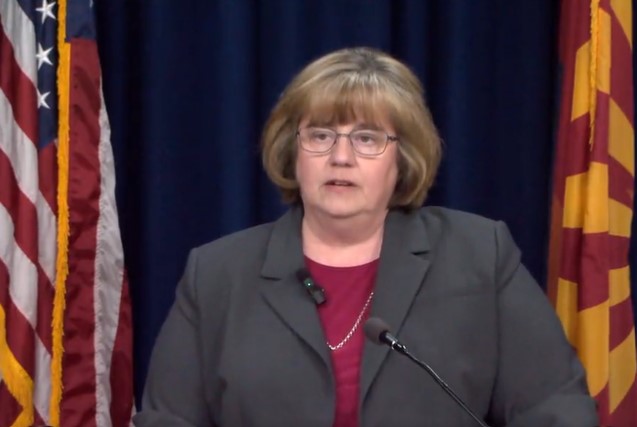
Last week, Maricopa County Attorney Rachel Mitchell announced that charges were being filed against an individual who allegedly robbed a jewelry store in Old Town Scottsdale.
The crime occurred in the late morning of September 1 at Marina Jewelers. People outside the store were alerted to the fact that a man running out of the store had purportedly stolen jewelry from the store, and acted to detain him until police arrived to make the arrest.
Mitchell revealed that the Maricopa County Attorney’s Office would be charging this individual with Class 2 Theft – in addition to other charges – because of the amount he tried to take from the store. The primary charge, she informed reporters, came with a mandatory prison sentence.
In her opening statement to the press, Mitchell explained that organized retail theft prosecutions have been a priority for her office – not only because of the impact on the businesses experiencing the direct heists – but because of the impact to the community, which includes empty buildings, and loss of jobs, services, or goods. She pointed out that the consequences of these crimes often affect poorer parts of town before trickling to more affluent neighborhoods, making it more difficult for consumers to acquire the goods and services they need for their everyday lives.
The County Attorney highlighted how other states and jurisdictions handle organized retail thefts – especially where prosecutors have set a threshold of $1,000 to activate charges. She emphasized to any potential or current criminals who may be watching: “in Arizona that has not been done.” Her office is willing to prosecute some cases, when appropriate, as felonies.
During her opening remarks, Mitchell twice stated that “this is not the state you want to be in to mimic the behavior you see on the news in other parts of the country, such as Los Angeles.” She referred to Los Angeles as a “hellscape,” in part, due to its lax standards for holding criminals accountable for their organized retail theft offenses.
Later in her press conference, Mitchell returned to this issue of organized retail theft due to a reporter’s question. Mitchell shared that when she took office, she “felt like our specialized retail theft prosecutors were limited to too high of a dollar amount before they could get involved,” noting that some of these lawbreakers commit smaller offenses at place after place. She informed her audience that upon taking office, one of her initial acts was to lower the value threshold to allow her prosecutors to get involved in the cases earlier, and the second was to create a task force within the Maricopa County Attorney’s Office and link their efforts with those of the Arizona Retailers Association.
Mitchell promised that her office is continuing to look at ways to reduce the instances of organized retail theft in the county and to make sure that her jurisdiction does not become like Los Angeles.
In July 2022, the Maricopa County Attorney’s Office formed an organized retail theft taskforce, featuring “a group of specialized prosecutors and detectives who will work with local law enforcement and the Arizona Retailer’s Association to address criminal acts involving organized retail theft.” Mitchell at that time said, “Retail stores are being devasted by groups who recklessly and intentionally take what they want and leave destruction in their wake. Many are organized gangs who have found new funding sources with stolen merchandise and the impact of this affects everyone of us.”
Daniel Stefanski is a reporter for AZ Free News. You can send him news tips using this link.