by Terri Jo Neff | Oct 21, 2022 | Economy, News
By Terri Jo Neff |
Six U.S.-based global banking firms which participate in Environmental, Social, and Governance (ESG) practices that seek to restrict investment in companies engaged in fossil fuel-related activities are under investigation by 19 states, it was announced this week.
Arizona Attorney General Mark Brnovich and 18 other state attorneys general served civil investigative demands against Bank of America, Citigroup, Goldman Sachs, JP Morgan Chase, Morgan Stanley, and Wells Fargo related to each company’s involvement with the United Nations’ Net-Zero Banking Alliance (NZBA). The demands act as legally enforceable subpoenas.
NZBA-member banks have promised to set emissions reduction targets in their lending and investment portfolios to reach net zero by 2050. It is one example of ESG practices which have come under scrutiny for prioritizing policy initiatives ahead of sound investment strategies.
In the case of the NZBA initiative, it could lead to some farmers, oil leasing companies, suppliers, and other businesses connected with fossil-fuel production being unable to get loans or find investors from the six banking firms and their affiliates, according to Brnovich’s office.
“American banks should never put political agendas ahead of the secure retirement of their clients,” Brnovich said in announcing Arizona’s involvement in the investigation. “These financial institutions are entrusted with protecting a different type of green.”
Arizona, Kentucky, Missouri, and Texas are the leadership states on the NZBA investigation. Some of the 10 interrogatories included in the civil investigative demands served on the six banking firms seek information on:
- All divisions, groups, offices, or business segments whose responsibilities relate or used to relate to membership in the Net-Zero Banking Alliance or to ESG Integration Practices, and identify all executives, directors, officers, managers, supervisors, or other leaders of each division, group, office, or business segment;
- Each Global Climate Initiative with which the firm is affiliated and an explanation of the reasons for choosing to join such Global Climate Initiatives;
- Who made the decision to join each Initiative, including any involvement or input from the Board of Directors, investors, or Covered Companies;
- All involvement in each Global Climate Initiative, including dates as well as “any promises, pledges, or other commitments” made by each company;
- A detailed description of the company’s involvement with the Net-Zero Banking Alliance, including identities of all individuals who have represented the company within the NZBA.
In August, Brnovich joined Arizona in a 21-state coalition in commenting on a U.S. Securities and Exchange Commission (SEC) proposed rule that would add requirements for investment funds which consider ESG factors in their investment decisions. The proposed SEC rule was seen by the states as an attempt to transform the agency from a “federal regulator of securities into a regulator of social ills.”
The same month, Arizona was one of 19 states which sent a letter that put investment firm BlackRock on notice that its actions on a variety of governance objectives may violate multiple state laws by using “the hard-earned money of our states’ citizens to circumvent the best possible return on investment.”
BlackRock, which oversees some pension funds in those states, has been engaging in a “quixotic climate agenda” that appeared to be sacrificing pensioners’ retirements instead of focusing solely on financial return.
“Fiduciary duty is not lip service. BlackRock has an obligation to act in the sole financial interest of its clients,” the Aug. 4 letter stated. “Given our responsibilities to the citizens of our states, we must seek clarification on BlackRock’s actions that appear to have been motivated by interests other than maximizing financial return.”
And in November 2021, Brnovich announced a review of Climate Action 100+ and its investment company members which manage trillions of dollars in assets. This was prompted by concerns that the firms will put their ESG goals ahead of well-established fiduciary duties.
This could include inappropriate pressure and anticompetitive conduct against the members’ own clients and customers who do not comply with the ESG practices of Climate Action 100+, according to the attorney general’s office.
by Terri Jo Neff | Sep 19, 2022 | Economy, News
By Terri Jo Neff |
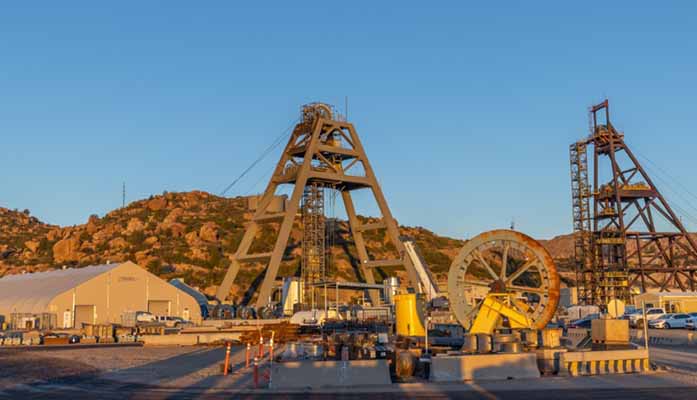
A 26-page report detailing multiple concerns with last year’s environmental review of Resolution Copper’s plans to mine in and around the Tonto National Forest means the company won’t be securing its required permits anytime soon.
Water was the subject of concern in the report prepared for the Bureau of Land Management (BLM) by two hydrogeologists and a hydrologist who reviewed the Final Environmental Impact Statement (FEIS) issued in January 2021 as part of Resolution Copper’s permitting efforts under the National Environmental Policy Act.
Resolution Copper began nearly 20 years ago to develop a plan for underground mining roughly 60 miles east of Phoenix, near the town of Superior. It forecasts up to 3,700 direct and indirect jobs over the life of the project, with a payroll of $270 million at full production.
Supporters point to the benefits of improving U.S. domestic copper supply, which significantly lags behind Chile, Peru, and China. Resolution Copper could potentially produce as much as 40 billion pounds of copper over 40 years, with the ability to provide nearly 25 percent of America’s copper demand, the company says.
Most of the land around the mining site is government owned, although some private landowners in the area have wells which could be impacted by the mining, according to the 2021 FEIS report. Those potential private well impacts were not sufficiently addressed in the FEIS, according to the three BLM reviewers.
The water impact issue also raises the question of whether the concerns of private landowners and state water officials are trumped by the federal General Mining Law of 1872, which has long been viewed in Arizona as overriding any local and state interests.
Copper was first discovered in the greater Superior area in 1863 with the first known mine production starting in 1887. But by 1995 copper production ended in the area.
It was also in the mid-1990s that the Resolution Copper deposit was discovered. It would take several years before formal exploration and studies were undertaken.
Then in 2014 Resolution Copper began the process to obtain the necessary permits. That same year it obtained Congressional approval for a land swap which would give the company 2,422 acres of federally owned land in the Tonto National Forest within its project site in exchange for more than 5,300 acres of land Resolution Copper owned across Arizona.
But it would take until January 2021 for the land swap to receive regulatory approval. Then it took until June of this year for the company to prevail in a legal challenge when the U.S. Court of Appeals for the Ninth Circuit rejected arguments on behalf of various Native American tribal members that the land swap would allow Resolution Copper to interfere with being able to worship at various sacred sites.
The Court also rebuffed legal claims that an 1852 treaty prohibited the mining activity, thus clearing the way for the land swap.
Resolution Copper says it has modified its project boundaries over the years after consultation with federal regulators and 11 Native American Tribes, including the San Carlos Apache. As a result, the company announced it “will forego portions of copper-bearing ore to minimize subsidence impacts” to important areas within the 4,600-acre Oak Flat.
The maximum expected impact area will be less than 1,800 acres at the end of the life of the mine, according to the company.
Resolution Copper will also “forego private ownership and mineral title” to the Apache Leap area at Oak Flat by permanently protecting it as a Special Management Area managed by the U.S. Forest Service. And the company has announced there will be “no physical impact” to another sacred site at Devil’s Canyon.
In the meantime, the U.S. Forest Service approved the company’s plan of operations and an initial environmental assessment in 2016. The agency then published a Draft Environmental Impact Statement in 2019 following dozens of public meetings and consultations, and countless hours spent by both company and government employees trying to satisfy myriad requirements.
Additional review and comments were taken into consideration for the Final Environmental Impact Statement released in January 2021. The FEIS identified alternatives to some of Resolution Copper’s plans and identifies suggested mitigation measures—required and voluntary—to “minimize, reduce, or offset impacts” from the proposed project.
It is that FEIS which has been subject since then to further public and federal reviews, including the one recently conducted by the water experts for BLM.
No deadline has been announced for releasing a new FEIS that would incorporate updated information based on the reviews.
by Corinne Murdock | Sep 18, 2022 | Economy, News
By Corinne Murdock |
Arizona has the highest inflation rate in the country — making this state the number one victim of President Joe Biden’s inflation crisis.
The Phoenix-Mesa-Scottsdale area suffers from 13 percent inflation, according to the latest Federal Bureau of Labor Statistics data released Tuesday. Nationwide inflation rate sits just over 8 percent.
According to recent polling, the inflation and border crises are of equal importance to Arizona voters.
Arizona Free Enterprise Club (AZFEC) President Scot Mussi told AZ Free News that the Biden administration has only worsened the economic woes of Arizonans. Mussi warned that consumers would continue to cut back on major purchases, and business owners would freeze expansions and hiring. He also pointed out that any reductions in inflation weren’t due to the Biden administration’s actions, but instead consumers cutting back.
“It’s pretty clear that the decision makers in Washington want to make this situation worse,” said Mussi. “The recession will continue to linger on until policy makers get serious about runaway spending.”
While Arizonans and the rest of America were taking in the federal government’s latest inflation report on Tuesday, President Joe Biden was celebrating the controversial Inflation Reduction Act (IRA).
Biden didn’t address how the latest inflation data reflected historic highs. Rather, the president asserted that the effects of inflation were improving, and that the state of the economy should come as good news for Americans.
Arizona’s Democratic state legislators also celebrated the IRA.
However, not all within Biden’s party agreed that the IRA and other recent actions by the president are wins. In an interview this week, Senator Mark Kelly (D-AZ) refused to affirm that Biden is doing a good job as president. Congressman Andy Biggs (R-AZ-05) assessed that Kelly treaded carefully due to Biden’s unpopularity among voters.
Mick McGuire, former Arizona National Guard general and failed senate candidate, told “The Conservative Circus” on Tuesday that Kelly was just as guilty as Biden for failing Arizonans with worsening inflation.
Mussi asserted that the IRA wasn’t anything to celebrate, calling it the “Inflation Destruction Act.” He explained that the IRA wouldn’t reduce inflation. Mussi noted that the government hasn’t even distributed all of the stimulus funds from the American Rescue Plan.
“We haven’t even finished rolling out the Biden COVID recovery act: the $1.9 trillion spending palooza. There’s no discipline right now, and there’s really no end in sight,” said Mussi. “Right now, we’ve hit what would be the definition of a recession. Even if you wanted to use the Biden administration’s viewpoint, at best you could say we’re in a bad state of stagflation. There’s absolutely no growth.”
Corinne Murdock is a reporter for AZ Free News. Follow her latest on Twitter, or email tips to corinne@azfreenews.com.
by Corinne Murdock | Sep 15, 2022 | Economy, News
By Corinne Murdock |
Come January, Flagstaff will increase its minimum wage from $15.50 to $16.80 an hour, and from $13 to 14.80 an hour for tipped employees.
Flagstaff Mayor Paul Deasy shared the news on Tuesday.
The city factors minimum wage based on cost of living in addition to inflation. In 2016, Flagstaff voters approved Proposition 414, a measure raising the minimum wage to $15 an hour last year and ensuring annual adjustments for inflation and cost of living every year thereafter. The city’s minimum wage must be at least $2 above the state’s minimum wage.
Prop 414 also ensures that hourly tipped minimum wage will be the same as hourly minimum wage by 2026.
It’s anticipated that the state will increase minimum wage to $13.85 an hour, just over a $1 increase from the current $12.80 minimum wage.
Despite criticism that the minimum wage would exacerbate unemployment, Deasy shared in March that unemployment rates have halved since 2016.
Those unemployment rates may reflect the hiring and growth of big box and chain stores, in turn masking the suffering of small businesses.
Several small businesses were vocal about experiencing the brunt of Flagstaff’s minimum wage increases. About a month before the pandemic occurred, small business owners reported that they’d resorted to reducing their number of employees and their hours of operation.
The Flagstaff City Council has also considered a minimum wage increase for its city employees. They haven’t voted on an increase yet.
Deasy has petitioned the council to increase city employees’ minimum wage, initially asking for $17 an hour but settling for slightly less, $16.60 an hour.
Corinne Murdock is a reporter for AZ Free News. Follow her latest on Twitter, or email tips to corinne@azfreenews.com.
by Terri Jo Neff | Sep 5, 2022 | Economy, News
By Terri Jo Neff |
Financial eyes are focused on data recently released by the U.S. Bankruptcy Court for the District of Arizona showing August had the highest number of new filings this year, while also being the first month of 2022 to have more new filings than the same month in 2021.
Bankruptcy filings are considered a lagging indicators of financial stress and economic health, and the number of new filings goes up and down from month to month. However, billions of dollars from various federal stimulus programs have ebbed in 2022, meaning no more Paycheck Protection Program, no CARES stimulus checks to individuals, and the end of the federal foreclosure moratorium.
Some Arizona families and businesses may no longer have a lifeboat, according to commercial debt collection company ABC/Aemga.
“Companies that have struggled throughout the pandemic, but were kept afloat by stimulus money and generous lenders, may face trouble during the rest of 2022 and into 2023 once those funds run out, as the Fed continues to tighten its ultra-loose monetary policy by reducing asset holdings and raising the Fed Funds Rate target, and credit conditions start to tighten,” the company warns.
Sectors such as retail, construction, health care, and certain manufacturers adversely affected by higher raw material and labor costs remain particularly vulnerable, while travel, hospitality, commercial real estate, consumer goods, entertainment, midstream oil and gas, and power and other energy infrastructure also face pressure and uncertainty, according to ABC/Amega.
For the first eight months this year, there were 5,879 new filings statewide, down from 6,765 for the same period in 2021. Slightly more than 12 percent of this year’s new cases were filed pro se, or without legal representation.
If the August pace continues for the rest of 2022 the total filings for the year in Arizona will come close to last year’s total of 9,353. By comparison, there were 12,903 filings in Arizona in 2020 and 16,237 in 2019.
The majority of new cases filed in the state as of Aug. 31 this year were under Chapter 7 (4,803) followed distantly by Chapter 13 (1,029) and Chapter 11 (46). There has also been a lone Chapter 12 filing.
While households and businesses in Maricopa, Pima, and Pinal counties lead in filings of as Aug. 31 at 3,887, 896, 439 respectively, Yavapai and Mohave counties have similar totals at 151 and 146 respectively.
The three border counties of Cochise, Santa Cruz, and Yuma have 80, 42, and 106, respectively. Meanwhile, Apache (4), Coconino (29), Gila (28), Graham (17), Greenlee (3), LaPaz (7), and Navajo (44) represent less than 2.3 percent of all filings in the state as of Aug. 31.
by Terri Jo Neff | Sep 1, 2022 | Economy, News
By Terri Jo Neff |
A Sierra Vista-based company which started with just one government contract in 2017 has been named to Inc. Magazine’s 5000 fastest growing private companies in America, ranking in the top five in Arizona and number 158 nationwide with more than 3,200 percent growth the last three years.
Nemean Solutions provides a variety of services to the U.S. military, as well as state and federal agencies in support of America’s Defense, Intelligence, and Aerospace sectors. It ranks #5 of the 154 honorees based in Arizona, with those companies accounting for $18.5 billion in total revenue and more than 12,000 jobs, according to the magazine.
The company’s three-year growth also ranked #4 of the 120 businesses nationwide in the Government Services industry to make the 5,000 list in 2022. They far outpaced their Arizona competitors MO Studio (ranked 2,088) and Vector Solutions (ranked 4,743).
Nemean Solutions was founded by Craig Mount and Simon Ortiz in Mount’s kitchen in Sierra Vista with plans to offer intelligence contracting at the U.S. Army’s Fort Huachuca. Today it employs nearly 80 full-timers and dozens of part-timers as a certified SBA 8a Native Hawaiian-Owned and veteran-operated company.
Mount, a former Sierra Vista city councilmember, told AZ Free News he and Ortiz started the company with $5,000. It then took six months for the two former U.S. Army members to get all the clearances necessary to work at secured military installations before receiving about $80,000 in contracts.
Two year later, Nemean Solutions had its SBA 8a certification which allows the company to receive sole source service contracts of up to $100 million per award. Today, Mount serves as president and Ortiz as CEO of the company which could end the year with more than $8 million in revenue.
“We want to thank our partners at Ho’okahua Hawaiian Foundation, our fantastic mentors at Trideum Corporation, our amazing banking team at Bank of America -Chris Patty, Christa Williams and Edward Spenceley- for putting the fuel into the machine, the ever patient Kelly McBride and her outstanding team at Global Dynamic Consulting, Inc. keeping the wheels on, and all our amazing industry teaming partners,” Mount said.
But most of all, he acknowledged “the Pride of Nemean” as he calls the company’s “incredible employees and their families who dedicate their professional time, energy, talent and experience to deliver Unbreakable Values and Superior Solutions to our nation’s military in fourteen states.”
Ortiz also gave credit to two Sierra Vista business development experts for their support over the years with Nemean Solutions’ growth.
“Mark Schmidt and his team at the Cochise College Small Business Development Center have been amazing in championing for Sierra Vista’s small business community and for us at Nemean,” Ortiz told AZ Free News. “Also, we would be remiss in not giving credit to Mignonne Hollis of the Arizona Regional Economic Development Foundation for helping us establish our headquarters in Sierra Vista.”
Nemean Solutions is a key Cybersecurity services provider for U.S. Army 7th Signal Command (Theater), U.S. Army NETCOM, U.S. Army CSLA, and the U.S. Air Force, offering Risk Management Framework support services and Cyber Electromagnetic Activities Subject Matter Support and Emerging Threat for U.S. Army and U.S. Air Force commands.
It also employs expert Administrative and Project Management Professionals to support critical missions for the U.S. Army including the Intelligence Center or Excellence, U.S. Army Mission Command Center of Excellence, and Army Research Office.
Other Nemean Solutions employees are experts in Military Support, Military Intelligence and Intelligence Operations Support, providing critical mission support for the U.S. Army Intelligence Center of Excellence, U.S. Army Maneuver Center of Excellence, U.S. Army Fires Center of Excellence, U.S. Army Aviation Center of Excellence, and U.S. Naval Special Warfare Command.
And the company currently provides vital Information Technology Services for U.S. Army CECOM, U.S. Army NETCOM, and the U.S. Navy through a leadership team which has over a decade of Department of Defense Joint Live, Virtual, and Constructive Modeling & Simulation and Experimentation Support.
In addition to the recent recognition by INC. Magazine, Nemean Solutions was the recipient of the 2022 SBA Arizona Small Business Development Center’s Success Award, the 2021 and 2020 HIRE VETS Platinum Medallion awards from the U.S. Department of Labor, and the 2021 SBA SBDC Arizona Veteran-Owned Congressional Business Economic Impact Success Story.