A court rejected Republican State Rep. Rachel Keshel’s (R-LD17) attempt to stop an anonymous X user behind a months-long online campaign challenging her Legislative District 17 residency.
Keshel and her husband, Seth Keshel, claimed in a complaint that the anonymous online researcher operating under the name “William Coffin” (@CoffinItUp), is a Scottsdale horse trainer named Geoff Coffin. Coffin has denied being behind the account.
On Monday, the Pima County Superior Court dismissed last month’s injunction against harassment targeting the anonymous user. The court determined that the Keshels failed to prove that Coffin and Coffin were one and the same.
The anonymous “Coffin” profile dates back to 2020; the profile picture features William Sloane Coffin Sr., a New York businessman whom the anonymous user identified as an ancestor in an Arizona Agenda interview last month.
The Keshels alleged the connection between the two Coffins by comparing photos and an online map posted by the influencer to the location of Geoff’s home.
The anonymous user behind the X account told the Tucson Agenda that he lives in the Phoenix metro area.
The pseudonymous X account gained a following online through his commentary and analysis of public records on right-wing figures. Much of the anonymous account’s posts in its early years of existence focused on criticizing President Donald Trump.
One of the account’s earliest posts to gain some traction contained a tip claiming top right-wing influencer Dominick McGee — known as “Dom Lucre” online — was under investigation by the Tennessee Department of Commerce and Insurance for operating an unlicensed credit repair business called Credit Cadabra.
🔥BREAKING EXCLUSIVE: Yesterday I told you that a whistleblower had come forward with information regarding photographic evidence of Dominick "Lucre" McGee's presence inside the Capitol Building on January 6th, 2021. Merry Christmas! Well, that is not the only case currently… pic.twitter.com/jO4lrD66pi
Over the last year, the account gained traction for his posts on perennial Texas candidate Valentina Gomez.
In recent months, the account has focused on Rep. Keshel’s residency—specifically, alleging that Keshel does not reside within LD17 but instead in the Vail residence in LD19 where her husband owns property.
The individual behind William Coffin also briefly maintained a Substack called “Corruption Duck.”
In the interview last month with the Arizona Agenda, the X user said that prior to focusing his research on Republicans and influential right-wingers, he focused on mortgage fraud.
“[I] started looking at mortgage fraud, and found that I could basically throw a dart in my neighborhood and hit (someone committing) mortgage fraud,” said the user. “It’s basically people buying houses with principal residence mortgages and renting them out the next day as investment properties.”
The Corruption Duck Substack, active from January to December 2023, was created initially with an intent for the author, “Will,” to focus on corruption and fraud in the nonprofit realm.
For the first few months of its existence, however, the Substack focused on investigating and reporting mortgage fraud in the Valley to authorities.
In mid-May 2023, the Substack pivoted to publishing exposes about Republicans and right-wingers, first posting about Dom Lucre and then another Arizona native and holistic medicine influencer Razi Berry (@BerryRazi on X).
AZ Free News is your #1 source for Arizona news and politics. You can send us news tips using this link.
Arizona State University is encouraging freshmen to take courses on LGBTQ+ identity and witchcraft, which some are criticizing as “woke” content that undermines rather than contributes to academia.
ASU offers these courses through Discovery Seminars offered exclusively to freshmen students. Each seminar comes with one course credit.
INBOX: Arizona State University (@ASU) is hosting multiple woke seminars on topics like LGBTQ media and how witches are oppressed in society.
The LGBTQ+ identity course, “LGBTQ+ Cinema and TV in Pop Culture,” is taught by Gabriel Acevedo, assistant professor of English and Puerto Rican native. While teaching at a Catholic school in Puerto Rico, Acevedo introduced LGBTQ+ poetry to his students.
The ASU course focuses on mobilizing progressive ideas of gender, sexuality, and LGBTQ+ identities through pop culture, namely visual media like TV and movies.
Concepts of gender and sexuality are presented as fluid and subject to change with time. The course also explores how intersectionality impacts LGBTQ+ ideology by discussing identities, race, abilities, and class.
“[This course will] determine the extent to which LGBTQ+ experiences and conversations can unlock unprecedented, crucial, and essential cultural movements for young adults and teens,” stated the course description.
Acevedo’s most recent publication featured on the National Council of Teachers of English for the English Journal, “Mediating Empathy: Teaching LGBTQIA+ Young Adult Literature with Literary and Critical Care,” stressed the importance of not just including LGBTQ+ content in courses but teaching affirmation of LGBTQ+ identities to students.
Acevedo’s approach proposed treating LGBTQ+ content with the same reverence as works more traditionally classified as classic literature.
“Without intentional pedagogical focus, teachers risk unintentionally reinforcing the very marginalization they aim to challenge. Therefore, LGBTQIA+ texts should be regarded as cultural artifacts that require careful interpretation, balancing celebration of queer humanity with strategies for harm reduction,” said Acevedo. “These experiences strengthen my belief that every young person — whether queer, questioning, or cisgender heterosexual — benefits from literature that affirms gender and sexuality diversity and fosters critical empathy. Similarly, teachers, whether queer-identifying or allies, need practical, research-based strategies to responsibly include such texts in their classrooms.”
The witchcraft course, “Witches in the Age of #WitchTok,” is taught by Susan Nguyen, a poet and the Virginia G. Piper Center for Creative Writing editor-in-chief of ASU’s international literary journal, Hayden’s Ferry Review.
“#WitchTok” refers to the viral online subculture with millions of posts and billions of views dedicated to witchcraft. Creators who engage in this online subculture practice witchcraft and many use their platforms to educate others practicing, to include spells, potions, and divination.
Users attest to communicating with deities such as Hekate, or creatures like fairies and forest nymphs.
Some users attest that witchcraft and Christianity, which commands against the practice of witchcraft, may be practiced simultaneously.
Top creators include Frankie Ann (@chaoticwitchaunt, over 1.6 million followers across multiple social media channels).
In her course, Nguyen reframes witches as more than fictional side characters and as real and “powerful” figures of controversy and esteem that are making a “comeback.”
Nguyen also promotes and encourages gossip “as a tool of power and protection, especially for women and marginalized communities.”
AZ Free News is your #1 source for Arizona news and politics. You can send us news tips using this link.
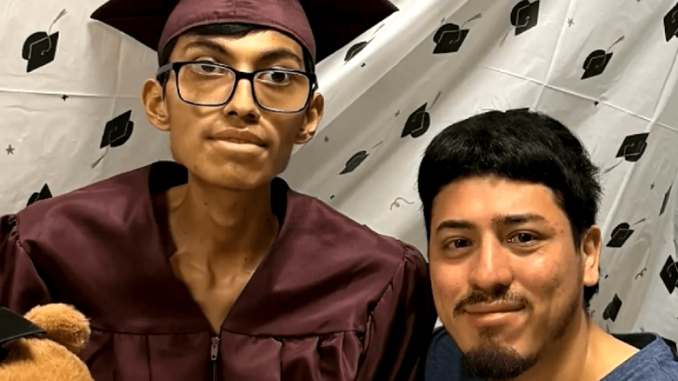
A viral story across the media accused the Trump administration of keeping parents from their adult son dying of terminal cancer.
The Department of Homeland Security (DHS) responded that was the furthest thing from the truth.
Although their son had been living and already returned to Mexico, his parents decided to reenter the country illegally.
DHS says the parents, Isidor Gonzales Aviles and Normal Anabel (also identified as Norma Anabel Ramirez Amaya), were not in Immigration and Customs Enforcement (ICE) custody and that their family misrepresented critical facts in their case to the media.
Per DHS, Aviles and Anabel had been deported years prior to this event and were illegal aliens. Neither individual had standing to enter the country regardless of the reason.
Aviles entered the country illegally in 2000; from that point to his removal in 2011, Aviles was arrested and charged multiple times with sexual abuse, retail theft, battery, trespassing, and disorderly conduct.
Anabel entered the country illegally in 2005. She was also deported back to Mexico in 2011. However, Anabel entered the country illegally again in 2024, where she was apprehended by Customs and Border Protection (CBP) and redeported within several days.
Their son Kevin Gonzalez — who is 18 and is identified as a U.S. citizen — was born during that time period while his parents were hiding out in the country illegally in Chicago, Illinois. That would mean Gonzalez was born to illegal immigrant parents, what some call an “anchor baby” in the heated debate over birthplace citizenship that has made its way to the Supreme Court.
Although Gonzalez was born in Chicago, he lived in Mexico with his parents leading up to December 2025. That’s around when Gonzalez received his cancer diagnosis and left his parents to seek out medical treatment in the U.S.
Gonzalez was diagnosed with metastatic Stage 4 colon cancer in January and was initially under the care of his brother, Jovany Ramirez, in Chicago. Aviles and Anabel reported petitioning for humanitarian parole into the country to be with Gonzalez, but their petitions were denied.
During this time, Gonzalez traveled back to Mexico to be with his family. He entered the care of his grandmother, Virginia Amaya.
DHS later responded to media reports on the claim of humanitarian parole; according to DHS, Aviles and Anabel applied for B1/B2 visas, which were denied, not humanitarian parole.
Although Gonzalez returned to Mexico, Aviles and Anabel then reentered the country illegally in April and were detained by CBP in Douglas, not ICE. The parents were taken to the Florence Correctional Center for processing.
On Thursday, a federal immigration judge authorized the expedited release of Aviles and Anabel.
Congressional Democrats who qualify illegal aliens as constitutents and have prioritized fighting against immigration enforcement efforts came to the family’s defense.
Rep. Adelita Grijalva (D-AZ-07) called the story “heartbreaking.”
“I’m asking ICE to accommodate this request so Kevin can see his parents one last time,” said Grijalva. “This isn’t about politics — it’s about human decency.”
This is absolutely heartbreaking.
I'm asking ICE to accommodate this request so Kevin can see his parents one last time.
The labor market is on a continued decline in Arizona, per the latest federal data reporting for March.
Arizona’s reported numbers marked one of the worst months of decline in the labor market nationwide, according to an analysis published this week by the Common Sense Institute (CSI) in its review of Bureau of Labor Statistics (BLS) data for March.
CSI stated in a press release that the BLS data indicated Arizona’s labor market had exhibited an increased divergence from national trends this year: slowing employment growth, rising unemployment, and weaker wage growth. Overall, CSI said these behaviors indicated the state would be enduring a tougher economic environment.
Arizona recorded its first monthly job loss of this year, losing around 2,600 nonfarm jobs. This caused the state to be placed 12th in terms of worst employment performance nationwide. The state also lost 300 manufacturing jobs, bringing the year-over-year total to 1,300 jobs lost, and 1,600 trade, transportation, and utilities jobs, bringing the year-over-year total to 6,200 jobs lost.
Arizona and 15 other states experienced month-over-month job losses. March marked the seventh consecutive month of year-over-year job losses for Arizona.
“[T]he confluence of a falling labor force participation rate and rising unemployment rate further point to a souring labor market in the state – a trend we highlighted in the previous Jobs and Labor Force Update,” stated the CSI report.
The nation gained 178,000 jobs in March, overcoming the loss of 133,000 jobs in February.
Arizona had a middling ranking year-over-year for job growth nationally (36th) and a lower ranking year-over-year for hourly wage increases (44th). The jobs ranking improved slightly from earlier this year (43rd).
Arizona has been losing jobs year-over-year since last August, warned CSI, while the growth of jobs has slowed steadily since 2022.
In the latter dataset, Arizona hourly wages increased nearly two percent year-over-year. Real wages rose up by more than half a percent year-over-year, compared to the national average of 1.3 percent.
The state’s employment rate rose to 4.7 percent.
The trend in Arizona aligns with the overall decline experienced across the nation. Job openings fell in March, though a recent hiring surge surpassing several years of pacing indicates this decline may stabilize or even turn around.
Acting BLS Commissioner William Wiatrowski, a longtime component of the agency, has defended the labor market reports amid months of criticisms from President Donald Trump. It was the president’s dissatisfaction with BLS reports, in part, that prompted the removal of Wiatrowski’s predecessor last summer.
Earlier this year, Wiatrowski denied accusations that poorer reports were manipulated or influenced to benefit Democrats.
“I can tell you there is no outside interference in the data,” said Wiatrowski. “If anyone was cooking the books, I would be one of the first persons shouting.”
Trump has nominated another longtime BLS economist and twice member of the president’s Council of Economic Advisors, Brett Matsumoto, to take over as the permanent commissioner.
“For many years, the Bureau of Labor Statistics, under WEAK and STUPID people, has been FAILING American Businesses, Policymakers, and Families by releasing VERY inaccurate numbers,” said Trump in a Truth Social post in January. “I am confident that Brett has the expertise to QUICKLY fix the long history of issues at the BLS on behalf of the American People. Brett Matsumoto is a Brilliant, Reputable, and Trusted Economist who will restore GREATNESS to the Bureau of Labor Statistics.”
AZ Free News is your #1 source for Arizona news and politics. You can send us news tips using this link.
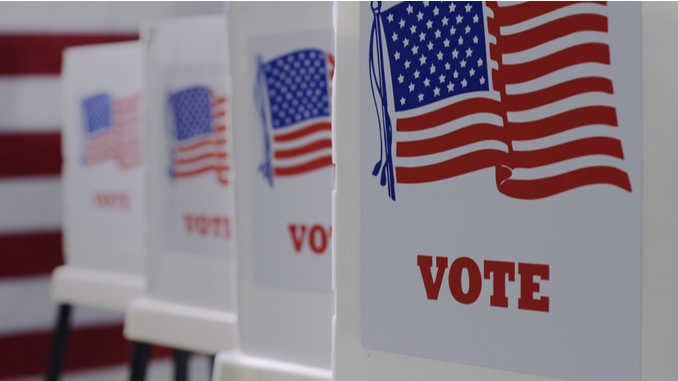
Arizona’s top Democrats from Congress on down are coordinating to pass a ballot measure that would enshrine relaxed voter ID laws in the Arizona Constitution.
A coalition of top Democrats joined on a livestream earlier this week for a launch of the Protect the Vote Arizona Act political action committee: Reps. Greg Stanton (D-AZ-04), Yassamin Ansari (D-AZ-03), and Adelita Grijalva (D-AZ-07); Secretary of State Adrian Fontes; Attorney General Kris Mayes; and the minority leaders for the Arizona House and Senate, Rep. Oscar De Los Santos (D-LD-11) and Sen. Priya Sundareshan (D-LD-18).
The Democrats styled the ballot measure in their public comments as focused primarily on keeping mail-in voting as an option in Arizona. However, most of the ballot measure focuses on undoing the strictness of voter ID laws and ensuring that stricter voting requirements may not come to pass.
The Protect the Vote Arizona Act would require the acceptance of any IDs with the photograph, name, and address of an individual — not just limited to any government-issued form of identification.
The act also prohibits limiting allowable forms of identification to photo IDs, and requires acceptance of IDs so long as election workers can’t determine “on its face” that the identification provided had expired.
The act would also require the acceptance of “any two forms of identification that bear the name and address of the elector.” The non-exhaustive examples of valid voter ID included utility bills or bank or credit union statements dated within ninety days of the election, or any mailing labeled “official election material.”
Even if an individual doesn’t provide valid identification, the law would require that individual be allowed to cast a provisional ballot regardless. According to the ballot measure, that provisional ballot wouldn’t count unless the elector provides any of the myriad forms of ID to their county elections officer within a certain time frame.
Beyond identification laws, the act would prohibit any policies or laws that would “burden” voting, not just those that restrict or curtail voting. One of those measures would concern mail-in ballots. The act proposes to enshrine mail-in ballots within the Arizona Constitution.
Help us protect early voting and mail-in voting in Arizona! Join me for a ‘Protect the Vote’ livestream this evening to learn more about this key Arizona ballot initiative. We must count and protect every single vote 🗳️📩 pic.twitter.com/uqkqmfYOue
Ansari said in the livestream that Democrats need to gather 500,000 signatures by July 2 to get their constitutional measure on the ballot this November. The Protect the Vote Arizona website said a lower number will be needed: about 384,000 signatures.
Ansari estimated that they’ve already collected about 50,000 signatures in recent weeks.
During conversations on the ballot measure, Grijalva agreed with a claim that the SAVE Act and similar efforts to require voter ID were rooted in racist efforts to prevent non-whites from voting.
“We have to give people hope that there is a way out of this,” said Grijalva. “We know that our message is resonating with people.”
Other top Democrats on the livestream included Democratic Reps. Alexandria Ocasio-Cortez (NY), Greg Casar (TX), Jasmine Crockett (TX), Maxwell Frost (FL), and Robert Garcia (CA).
The political action committee behind the ballot measure, Protect the Vote Arizona, claimed to have had no funding or expenditures since its launch in January through the end of March.
Key members behind the ballot measure are Maritza Miranda Saenz, a lobbyist with Lumen Strategies, and Dacey Montoya, Gov. Katie Hobbs’ treasurer and a leading dark money handler for Arizona Democrats (see: “The Money Wheel”).
AZ Free News is your #1 source for Arizona news and politics. You can send us news tips using this link.