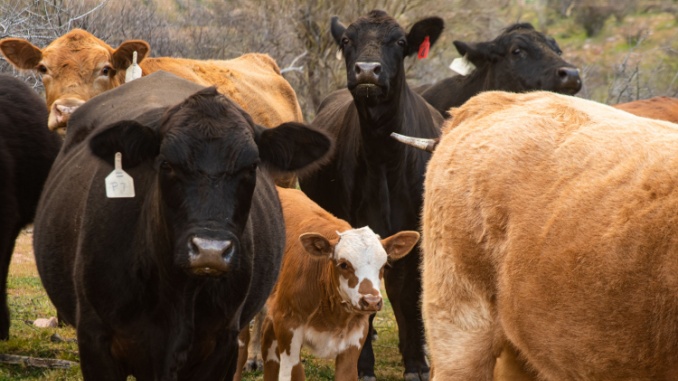
Ranchers in Arizona and across the nation secured a step toward a potentially major grazing rights victory from the federal government following the intervention of a coalition of Arizona’s Republican congressmen.
Republican Reps. Andy Biggs (AZ-05), Juan Ciscomani (AZ-06), Eli Crane (AZ-02), and Paul Gosar (AZ-09) successfully petitioned the Department of the Interior (DOI) to issue a newly proposed grazing rule that purports to give ranchers greater flexibility and security for their work.
Biggs offered his support for this proposed rule, announced by the DOI on Monday. Biggs promised to Arizonans in a press release that the rule would prioritize American ranchers and food security.
“Under the previous administration, cattle ranchers were forced to reduce their herd counts because of federal mandates and orders cutting public grazing land use. This administration knows how critical it is to protect our great ranchers and allow these families to provide abundant food to the American people.”
DOI Secretary Doug Burgum issued a similar commitment to ranchers about the impact of the rule.
“For too long, ranchers and land managers have been forced to work under outdated rules that do not match today’s challenges,” said Burgum. “President Trump has made it clear that we must cut red tape, support the people who feed our nation and ensure our public lands remain healthy for future generations. These updates will help us do exactly that.”
The proposed rule promises to streamline grazing administration and expand rangeland health standards. As part of this approach, the Bureau of Land Management was directed to update definitions, simplify processes, and clarify regulatory language.
Last December, Biggs sent a letter requesting actionable support on expanding and rebuilding American cattle to Burgum, Department of Agriculture (USDA) Secretary Brooke Rollins, Forest Service Chief Tim Schultz, and Fish and Wildlife Service Director Brian Nesvik.
Ciscomani, Crane, and Gosar signed onto Biggs’ letter, which asked the agency heads to resist influencing from “extreme environmental causes.” Certain environmental advocates — most in progressive circles — believe cattle grazing to be environmentally devastating.
“Ranchers are not the problem. They are the solution,” said Biggs. “Yet outdated regulations and false claims continue to punish them, while predators such as the Mexican wolf devastate herds under the shield of a misapplied endangered species designation.”
Biggs claimed that he’d received reports of cattle ranchers forced to reduce herd counts due to government mandates and orders impacting the use of public grazing lands, and asked the agencies to review their processes, rules, and regulations for adverse impacts on American ranchers.
“At a time when rebuilding the domestic cattle herd is vital to our food security and rural livelihoods, these mandates are unacceptable,” wrote Biggs.
U.S. cattle operations have been on the decline for nearly a decade despite increased demand — the lowest in over 70 years. USDA reporting from last year reflected that cattle operations dropped by 17% while demand grew by 10%.
Biggs echoed the sentiments of blame regularly expressed by the average American rancher: increasing pressures from bureaucratic red tape magnifying other issues like the rising costs of supplies, namely feed, and environmental pressures, namely drought.
The DOI will continue to gather public input for the proposed rule affecting grazing management on public lands until July 13. The BLM is scheduled to host a virtual information session about the proposed rule on June 11 from 5 to 7 p.m. MT.
AZ Free News is your #1 source for Arizona news and politics. You can send us news tips using this link.
Attorney General Kris Mayes sustained a fatal blow in her case against the 2020 alternate electors for President Donald Trump.
Mayes doesn’t plan on giving up, though.
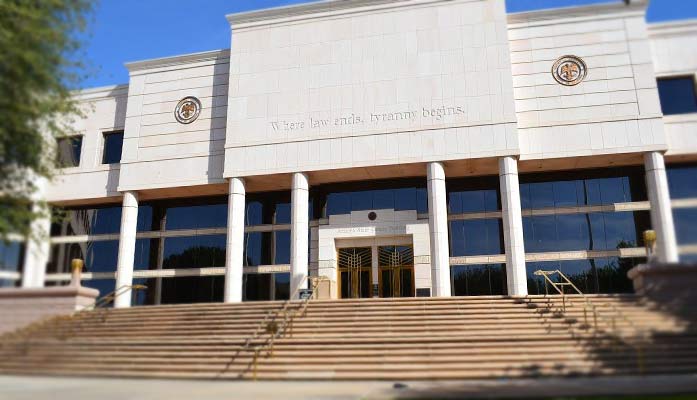
The Arizona Supreme Court denied Mayes’ appeal of lower court rulings in State v. Ward this week. This means that Mayes must start over to continue prosecution of the alternate electors.
Mayes’ spokesman Richie Taylor confirmed the attorney general plans to return to the grand jury to seek another indictment; he would not provide further comment.
Republican Rep. Abe Hamadeh (AZ-08) said Mayes’ persistence to prosecute despite the rejection of multiple courts proved her to be “completely unhinged” and in need of sanctioning.
“She’s wasting Arizona taxpayers’ money on her obsessive, Ahab-like pursuit of patriotic Arizonans who served as alternate electors after the stolen 2020 election,” said Hamadeh. “Her first sham indictment was already laughed out of every court in the state.”
She’s wasting Arizona taxpayers’ money on her obsessive, Ahab-like pursuit of patriotic Arizonans who served as alternate electors after the stolen 2020 election.
Her first sham indictment was already laughed out of every court in…
— Office of Congressman Abe Hamadeh (@RepAbeHamadeh) June 4, 2026
Senate President Warren Petersen (R-LD14) — who is running to unseat Mayes this November — said Mayes was the poster child of a “rogue” attorney general.
“This is what a rogue AG looks like,” said Petersen. “Loses at every level and still not tired of losing.”
This is what a rogue AG looks like. Loses at every level and still not tired of losing. https://t.co/UKhjcfDPZx
Mayes has sustained a series of losses in her attempt to prosecute the Trump electors, each court ruling increasingly diminishing the life of her case until it reached the point where it lies now — effectively on life support as it awaits another grand jury indictment that may not come.
Last September, the Arizona Court of Appeals rejected Mayes’ appeal of a ruling issued last May by the Maricopa County Superior Court. The latter court remanded Mayes’ case back to a grand jury, ruling that she violated the due process of the alternate electors by failing to give the grand jury a document critical to the indictment, the Electoral Count Act (ECA) of 1887.
The ECA is a federal law outlining the legal process for casting and counting electoral votes in presidential elections. It was modified recently in 2022 under the Biden administration through the Electoral Count Reform Act of 2022 (ECRA).
The ERCA, in part, limited the vice president’s involvement in electoral certification to a ministerial role, raised the congressional threshold for elector objections to one-fifth of Congress, and made state governors the authority for submitting the certificate of electors.
Key to the defense of the electors was the argument that they acted in good faith in accordance with the ECA.
Mayes has also been accused of receiving payment to prosecute the alternate electors, according to a whistleblower complaint filed last November.
That complaint alleged that States United Democracy Center (SUDC) paid around $200,000 to have prosecutorial influence over the alternate electors case. It was SUDC who advised Mayes’ office in a summer 2023 letter to prosecute Trump’s top supporters from the contentious 2020 election and its aftermath. Mayes’ office has denied the impact of the SUDC letter on their decision to prosecute the alternate electors.
Hamadeh asked the Department of Justice to investigate this alleged “pay-to-play” scheme.
That DOJ investigation is ongoing.
In April, a court of appeals judge ruled in another case that Mayes illegally withheld communications between her office and SUDC.
Trump has pardoned these alternate electors and supporters of the federal charges against them, but state charges like Mayes’ remain.
AZ Free News is your #1 source for Arizona news and politics. You can send us news tips using this link.
A Democratic candidate for Congress in Arizona advocated for decriminalizing prostitution in a since-deleted clip.
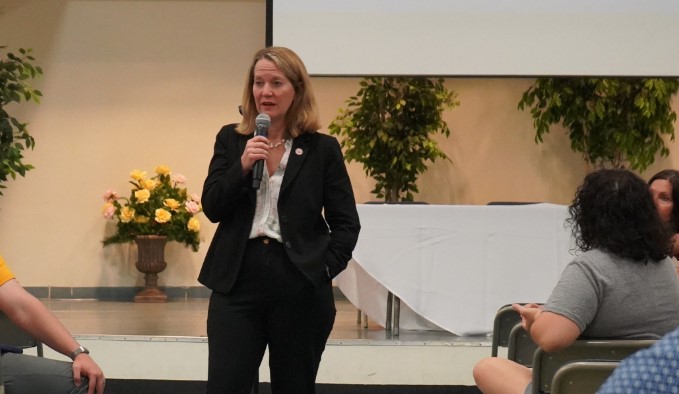
JoAnna Mendoza, candidate for the 6th congressional district, said in an uncovered 2020 interview that prostitution needed to be decriminalized, especially for marginalized communities like transgender women of color.
That was the year Mendoza made an unsuccessful bid for the 11th legislative district in the Arizona State Senate. Mendoza lost against Republican State Sen. Vince Leach, now representing the 17th legislative district.
Mendoza said in a now-deleted video interview with the executive director of Equality Arizona at the time, Michael Soto, that social services and healthcare needed to replace arrests. Mendoza reframed prostitution as a means of income, not a crime.
“[We need to be] eliminating the discriminatory practices and laws so that every individual has the opportunity to be able to provide for themselves. We need to stop criminalizing people for their situations,” said Mendoza.
The National Republican Congressional Committee first released the found footage.
⚠️Arizona Democrat Joanna @Mendoza4AZ said “YES” to legalizing prostitution to benefit “trans women of color.”
Mendoza in 2020 interview with far-left group: “Yes…we need to stop criminalizing people for their situations.”
Mendoza also supported the decriminalization of marijuana, and the reduction of funding to police during her 2020 run. The latter issue Mendoza addressed in a Clean Elections Commission town hall event.
Mendoza said police funding should be reallocated to social service programs, such as those that would provide economic stability, environmental safety, healthcare, housing, and public education.
“I support the reallocation of funding to programs that would allow people to live their best lives,” said Mendoza.
Mendoza’s current campaign denied that her support for reallocating police funding was equivalent to defunding the police.
Last week, Mendoza reportedly held a closed-door campaign event with an organization that has advocated for the defunding of police, Reproductive Freedom For All, who has endorsed Mendoza.
Mendoza’s current platform doesn’t mention decriminalizing prostitution or marijuana, nor does it mention defunding the police. Mendoza’s platform provides a general focus on costs, jobs, healthcare, policing, climate, government accountability, veterans, and foreign relations.
Mendoza did provide some specifics on policy in her platform. On immigration, Mendoza advocates for legal pathways to citizenship for those who enter the country illegally while limiting deportations to violent criminals.
Mendoza also supports increased government subsidization in renewable energy and healthcare.
The political action committee founded by Gallego’s former best friend and former Democratic California Rep. Eric Swalwell, has also provided campaign support to Mendoza.
So far, Mendoza has raised over $5.3 million for her congressional run per Federal Election Commission records.
Beyond the political action committee founded by Swalwell, Mendoza has a slate of other top progressive organization endorsements, including EMILY’s List, Democratic Congressional Campaign Committee, Equality PAC, Jewish Dems, and VoteVets.
Part of Mendoza’s popularity with the LGBTQ+ advocacy groups stems from her personal identity as a bisexual woman.
Mendoza formerly worked for former Democratic Rep. Tom O’Halleran. Mendoza served in the Marines from 1999 to 2013.
Mendoza has also worked for the Arizona Center for Economic Progress and VetsForward.
AZ Free News is your #1 source for Arizona news and politics. You can send us news tips using this link.
Arizona’s public utilities governing body is exploring its options for legal action against Attorney General Kris Mayes.
The Arizona Corporation Commission (ACC) accused Mayes of illegally impeding its ratemaking authority for political gain. Mayes is running for reelection. Although she has no primary candidates, she will either have to face off against one of two Republicans: Arizona Senate President Warren Petersen (R-LD14) or Air Force reservist prosecutor Rodney Glassman.
As part of a commission press release sent out on Monday, ACC Chairman Nick Myers issued a statement saying the ACC had to “force” Mayes to fulfill her attorney general duties toward the commission.
“She was unlawfully pocket vetoing our commission ratemaking authority by delaying the process pertaining to the repeal of the natural gas subsidies,” said Myers.
Myers also accused Mayes of “play[ing] politics,” naming Mayes’ disapproval of the ACC’s appeal of the Renewable Energy Standard and Tariff (REST) rules. The ACC submitted that appeal and one other for the Gas Utility Energy Efficiency Standard (Gas EE) rules to Mayes’ office for review.
“These costly mandates forced Arizona ratepayers to pay almost $4 billion more than they should have over the last 20 years,” said Myers. “The commission will continue to protect the ratepayers and will not allow the Attorney General to arbitrarily increase rates against the decision of the commission.”
In 2006, the ACC gave utility companies a new mandate through the establishment of the REST rules: generate 15 percent of their energy from renewable resources by 2025, and submit annual implementation plans describing compliance. Mayes was on the commission at the time.
The ACC unanimously voted to repeal the REST rules in March, citing in part a $2.3 billion financial burden for compliance passed on to customers through surcharges.
The ACC said in its most recent press release that Mayes had gone beyond her statutory authority — which they described as ministerial — since she had conducted a substantive review of ACC’s ratemaking rules authority. ACC contends their ratemaking rules authority is constitutionally exclusive and leaves no room for interpretation by the attorney general.
In her denial of the ACC appeal, Mayes claimed in a letter to the commission that it had violated its own rulemaking procedures. The commission denied this assessment and accused Mayes of vetoing rulemaking based on policy disagreement.
Mayes approved those impacted rules which mandated renewable energies while she was on the ACC.
The ACC called these “unnecessary subsidies,” and claimed Mayes’ denial of the rule appeal was a cover for her alleged ulterior motive: preventing the ACC from undoing her work to push renewables.
“As a commissioner, Kris Mayes voted for these expensive subsidies that have cost ratepayers billions of dollars,” said Commissioner Kevin Thompson. “It is an abuse of her position as Attorney General to use the ministerial rule approval process to substantively veto our lawfully enacted ratemaking rule repeal. Every day that goes by, she is responsible for increasing costs on ratepayers.”
This is the latest development in an ongoing power struggle between Mayes and the ACC.
Back in 2024, Mayes sued the ACC over its decision to reverse a Power Plant and Transmission Line Siting Committee order regarding environmental oversight for a UniSource Energy power plant project. A superior court judge ruled against the ACC last October.
And in April, Mayes hit the ACC with three rehearing requests for three different alleged issues.
Mayes spokesman Richie Taylor told the Arizona Capitol Times that Mayes had to take on ACC responsibilities because the ACC was giving “sweetheart deals” to data centers while raising utility rates on senior citizens.
“Chairman Myers should focus on fulfilling the constitutional obligations of the Commission on behalf of Arizonans so the Attorney General doesn’t have to step in and do it for them,” said Taylor.
AZ Free News is your #1 source for Arizona news and politics. You can send us news tips using this link.
A staple of Arizona’s most conservative coalition of lawmakers is running to rejoin the state legislature.
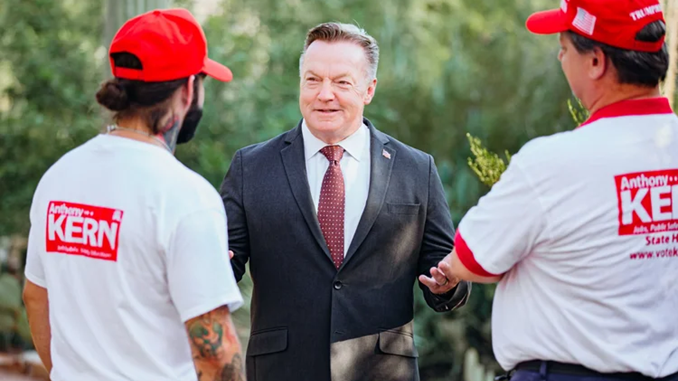
Anthony Kern is seeking to once again represent the 27th legislative district, held by incumbent Republican State Sen. Kevin Payne. Kern and Payne are the only two Republicans in the race; three Democrats have filed statements of interest.
Kern last represented that district in the Arizona Senate from 2023 to 2025. Kern departed from the state legislature in order to make his unsuccessful run for the 8th Congressional District in 2024. Prior to the state senate, Kern represented the 20th legislative district in the Arizona House of Representatives from 2015 to 2021.
While in the legislature, Kern built a reputation as one of its more outspoken conservative members. This was reflected by his membership with the Arizona Freedom Caucus, and A-ratings for conservative lawmaking from the Conservative Political Action Committee, NumbersUSA, American Conservative Union, National Rifle Association, and Keep Arizona Free.
Kern held a number of committee leadership positions, including chairmanships of the Senate Judiciary and Elections Committee and the House Rules Committee, and a vice chairmanship of the Senate Public Safety Committee.
President Donald Trump and Turning Point USA have been among a number of Republican powerhouses to take notice of Kern. Trump commended Kern as “an incredible fighter for election integrity,” and pardoned him from the 2020 Trump electors case put together by the Biden Department of Justice. Turning Point USA’s affiliate, Turning Point Action, has endorsed Kern.
Although the federal charges against Kern and other electors were dropped, Democrat Attorney General Kris Mayes has pursued her own case. A court of appeals ruled last month in a loosely related case that Mayes illegally withheld communications in which she conspired with States United Democracy Center to prosecute Trump’s allies.
Prior to joining the legislature over a decade ago, Kern worked in municipal code enforcement and other public safety roles in the West Valley.
It appears that this background — combined with his repeated public commitments to limiting administrative rulemaking and expanding legislative oversight of regulations — has influenced a take from Kern that puts him at odds with other Republican lawmakers, though not with fellow conservatives.
Kern’s platform includes an opposition to automatic license plate readers (APLRs), such as the Flock Safety cameras. Unlike Kern, Payne as chairman of the Senate Public Safety Committee sponsored a bill in support of APLRs earlier this year, SB 1111.
Other aspects of Kern’s platform include healthcare reform, proposing health providers must offer one single price for products and services, and health insurance premiums and medical expenses must be tax-free; and private property protections, proposing a removal of certain alleged loopholes to squatter prevention laws.
Kern has described himself as pro-life, an election integrity advocate, an opponent to illegal migration, and a supporter of parental rights and school choice.
He has lived in LD27 for nearly 40 years and attends Fresh Start Church in Peoria.
The Arizona Clean Elections Commission is scheduled to host the LD27 primary debate on June 22.
AZ Free News is your #1 source for Arizona news and politics. You can send us news tips using this link.