by Staff Reporter | Jan 10, 2026 | News
By Staff Reporter |
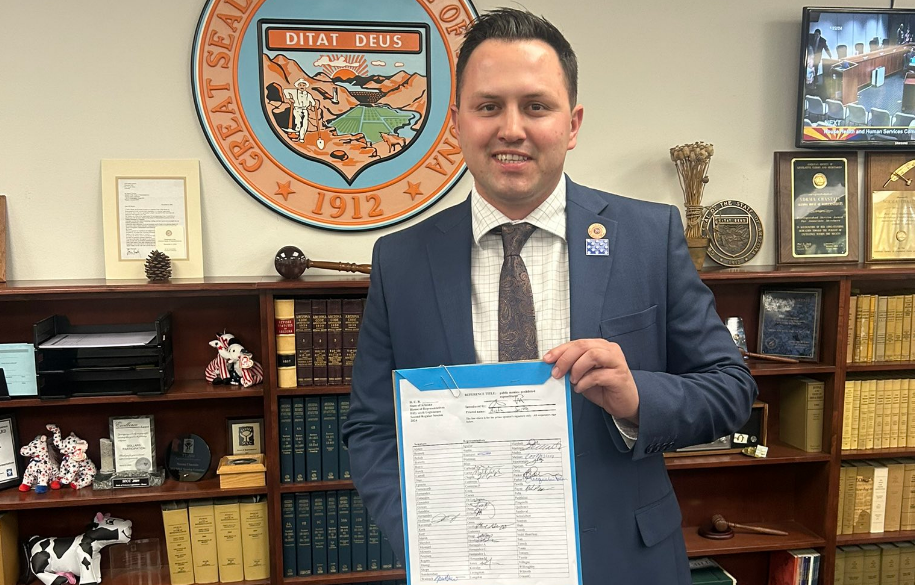
As punishment for forging nomination petition signatures, former lawmaker Austin Smith received probation and a five-year ban on running for office.
Smith received his sentence on Tuesday, which also included a $5,000 fine with a 10 percent surcharge and two years of supervised probation.
The ex-lawmaker entered a plea deal admitting guilt in November to attempted fraudulent schemes, an undesignated offense, and practices and illegal signing of election petitions, a misdemeanor. Smith admitted to forging over 100 signatures.
Smith was a state representative for the 29th district from 2023 to 2025. He was also formerly senior director of Turning Point Action and former chairman of Arizona Young Republicans Federation. Smith stepped down from Turning Point Action and suspended his reelection bid in 2024 after the signature forging allegations against him emerged.
It was one of Smith’s constituents, a Democratic voter named James Ashurst, who filed the complaint in the Maricopa County Superior Court in 2024 against the former lawmaker alleging signature forging. Ashurst’s complaint claimed that over a dozen petition sheets bore the same handwriting from purportedly different voters.
The complaint also included declarations from individuals listed on Smith’s petition sheets swearing they never signed the ex-lawmaker’s petition.
Initially, Smith denied wrongdoing in lengthy public statements posted to since-deleted or privatized social media accounts. Smith characterized the allegations against him as “coordinated” inventions of “two Democratic activists” involved in the political groups within his district.
“It seemed ludicrous because Republicans trying to get on the ballot don’t seek Democrat signatures and would have no reason to forge Democrat signatures, since they don’t count,” said Smith at the time.
The complaint didn’t move forward after Smith dropped out of the race. Tuesday’s outcome came out of prosecution from Democrat Attorney General Kris Mayes.
During Tuesday’s sentencing, Smith’s attorney, Kurt Altman, made an unsuccessful petition for Smith’s probation term to be reduced to one year. Altman said Smith was “mortified” by his decision to forge signatures.
“He’s embarrassed by the lapse in judgment and can be assured by this court he’s not gonna be back here, he’s not gonna have any issues with probation and he’s not gonna run for office again,” said Altman.
Altman also described Smith’s finances as incapable of handling a surcharge in addition to the fine, noting that the ex-lawmaker recently launched an agriculture business and had a child.
Tuesday’s sentencing reflected the outcome of a plea deal which dropped most of the charges against him, over a dozen including several felonies. Smith was indicted last summer.
Attorney General Mayes added in a press release announcing Smith’s sentencing that Smith admitted to attempting to deceive the secretary of state’s office.
“If you try to illegally manipulate Arizona’s elections or mislead Arizona voters, you will be held accountable under the law,” said Mayes. “There are real consequences for cheating the system.”
AZ Free News is your #1 source for Arizona news and politics. You can send us news tips using this link.
by Staff Reporter | Jan 9, 2026 | News
By Staff Reporter |
Senator Ruben Gallego is speaking out against the overthrow of Venezuela’s socialist president.
Gallego compared U.S. interventionism in Venezuela with the U.S. waging war in the Middle East, where Gallego deployed in the military.
“I lived through the consequences of an illegal war sold to the American people with lies,” said Gallego. “The American people did not ask for this, Congress did not authorize this, and our service members should not be sent into harm’s way for another unnecessary conflict.”
Gallego promised he would be introducing a bill to deny Trump the ability to intervene in foreign nations without congressional permission.
The senator also said in media interviews that it wasn’t up to the U.S. to determine who maintains power in Venezuela or other countries. Gallego predicted that Venezuelans would implement a more “leftist” government that’s more opposed to the U.S.
“This administration has zero clue what they’re doing. They’re basically following a really dumb man into a very dumb war potentially, and that creates very dumb outcomes,” said Gallego. “We’ve moved on from being the world cop to the world bully.”
Over the weekend the U.S. conducted a strike on Venezuela’s capital. Troops arrested Venezuela’s president, Nicolás Maduro, and his wife.
Maduro faces federal drug trafficking charges in New York: narco-terrorism conspiracy, cocaine importation conspiracy, possession of machine guns and destructive devices, and conspiracy to possess machine guns and destructive devices against the U.S. Maduro pleaded not guilty on Monday.
Contrary to what Gallego claimed, President Donald Trump hasn’t declared war in Venezuela. He confirmed as much in media interviews. Trump said he’s now in charge of Venezuela.
Despite corrections to his narrative, Gallego has continued to push the claim to the media that the U.S. declared war on Venezuela.
“When people are shooting and shooting back, that is war. That’s exactly what occurred here,” said Gallego. “They’re just trying to get people climatized to the idea of us going to war.”
Gallego said that while he believed it was “great” that Maduro was unseated, he doesn’t believe the U.S. had the right to interfere. The senator claimed that the Trump administration misled him in briefings by denying that the U.S. was conducting a regime change or declaring war on Venezuela.
“All this is one more excuse for us to either occupy Venezuela, take their oil, and more importantly you’re violating the Constitution of the United States,” said Gallego.
Gallego also did an interview in Spanish criticizing the Trump administration for providing Venezuela with a pathway to freedom.
Trump advised that Maduro’s successor, Delcy Rodriguez, will serve as interim president so long as she complies with his directives on running Venezuela.
“[I]f she doesn’t do what’s right, she is going to pay a very big price, probably bigger than Maduro,” the president said in an interview with The Atlantic on Sunday. “You know, rebuilding there and regime change, anything you want to call it, is better than what you have right now. Can’t get any worse.”
AZ Free News is your #1 source for Arizona news and politics. You can send us news tips using this link.
by Staff Reporter | Jan 8, 2026 | News
By Staff Reporter |
The Department of Justice (DOJ) sued Arizona for refusing to turn over voter registration records.
Arizona joins 22 other states and the District of Columbia facing legal action from the DOJ for withholding access to the voter rolls.
A press release issued on Tuesday from the DOJ also named Connecticut as the latest to be sued.
“Accurate voter rolls are the foundation of election integrity, and any state that fails to meet this basic obligation of transparency can expect to see us in court,” said Attorney General Pam Bondi.
The requested records would include each voter’s full name, date of birth, residential address, and either their state driver’s license number, last four digits of their Social Security number, or HAVA unique identifier.
The DOJ’s lawsuit asserts the agency maintains legal authority under the Civil Rights Act (CRA) to access any election records it desires.
“If the custodian to whom the written demand is made refuses to comply, the CRA requires ‘a special statutory proceeding in which the courts play a limited, albeit vital, role’ in assisting the Attorney General’s investigative powers,” stated the lawsuit.
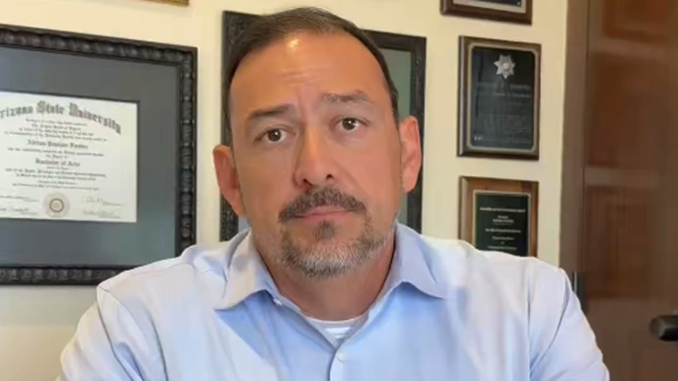
The DOJ requested the records from Secretary of State Adrian Fontes last July, and again in August. Both times Fontes responded with refusals, claiming that state and federal privacy laws prevent him from turning over the requested records.
Fontes rejected another follow-up request by the DOJ last month. The secretary of state claimed that voter rights to privacy trumped the federal government’s chief authority over elections.
“Arizona voters also have important privacy rights that cannot be infringed because they choose to exercise their constitutionally protected voting rights,” said Fontes.
Fontes said in a statement to Democracy Docket that he would rather be imprisoned than cooperate with the Trump administration.
“They’re going to have to put me in jail if they want this information,” said Fontes.
In a video statement on X, Fontes again declared compliance would break state and federal law.
“Pound sand,” said Fontes.
Arizona Attorney General Kris Mayes backed Fontes’ take on privacy laws negating the authority of election oversight laws.
“Both state and federal law prohibit the unrestricted release of Arizona’s complete voter registration database to the DOJ,” said Mayes.
Fontes also published a blog post on Tuesday commemorating the fifth year to pass since the January 6 invasion of the Capitol. The secretary of state claimed that the government remains under active threat, and compared the political climate to the Civil War era.
“Today’s challenges — polarization, misinformation from the top down, foreign interference — are real and daunting. But they pale in comparison to the existential crisis of 1864, when the nation itself was at risk of dissolution. If democracy could survive that, it can survive now — provided we do our part,” said Fontes. “Confidence in our electoral system is not naïve; it is necessary. Election officials across the country are working tirelessly to secure voting infrastructure, expand access, and ensure transparency. These efforts deserve not only our trust but our active participation. Cynicism is easy. Engagement is harder — but it is the only way forward.”
AZ Free News is your #1 source for Arizona news and politics. You can send us news tips using this link.
by Staff Reporter | Jan 7, 2026 | News
By Staff Reporter |
The Department of War will be punishing Senator Mark Kelly for making seditious statements.
The department took administrative action against Kelly in the form of retirement grade determination proceedings, which included a reduction in Kelly’s retired pay.
An accompanying formal letter of censure from Secretary of War Pete Hegseth dismissed Kelly’s claims that he was merely reminding service members of their duty to not carry out orders that break the law.
“This pattern demonstrates that you [Kelly] were not providing abstract legal education about the duty to refuse patently illegal orders,” said Hegseth. “You were specifically counseling servicemembers to refuse particular operations that you have characterized as illegal.”
Kelly and five other members of Congress, all fellow Democrats, published a joint video statement telling servicemembers to refuse orders issued by President Donald Trump. The group didn’t elaborate on which orders they thought to be illegal or unconstitutional.
“We want to speak directly to members of the military and the intelligence community who take risks each day to keep Americans safe. We know you are under enormous stress and pressure right now. Americans trust their military. But that trust is at risk,” stated Kelly and his coalition. “This administration is pitting our uniformed military and intelligence community professionals against American citizens. Like us, you all swore an oath to protect and defend this Constitution. Right now, the threats to our Constitution aren’t just coming from abroad but from right here at home. Our laws are clear: you can refuse illegal orders. You must refuse illegal orders.”
In a public statement announcing the proceedings against Kelly, Hegseth said Kelly’s speech was “reckless and seditious,” and qualified for “military justice.”
Hegseth warned Kelly that his position as an elected official doesn’t put him beyond the reach of penalization.
“Captain Kelly’s status as a sitting United States Senator does not exempt him from accountability, and further violations could result in further action,” said Hegseth.
In a lengthy response statement, Kelly vowed to fight the punishment.
“Pete Hegseth wants to send the message to every single retired servicemember that if they say something he or Donald Trump doesn’t like, they will come after them the same way. It’s outrageous and it is wrong. There is nothing more un-American than that,” said Kelly. “I will fight this with everything I’ve got — not for myself, but to send a message back that Pete Hegseth and Donald Trump don’t get to decide what Americans in this country get to say about their government.”
Congressman Abe Hamadeh said Kelly’s remarks were a form of blackmail — not just advice.
“By suggesting there ‘could’ be severe consequences for carrying out undefined ‘unlawful’ orders, the ‘Seditious Six’ are emotionally blackmailing our active-duty personnel,” said Hamadeh. “The reason Democrats refuse to name what they consider to be illegal orders by President Trump is that they want our military and intelligence community to question every order they receive from this administration. They want to make our active-duty personnel hesitate to execute the agenda voted for by the American people, paralyzing these men and women with the threat of future punishment.”
AZ Free News is your #1 source for Arizona news and politics. You can send us news tips using this link.
by Staff Reporter | Jan 7, 2026 | News
By Staff Reporter |
Arizona will require all employers to have a “heat illness prevention plan.”
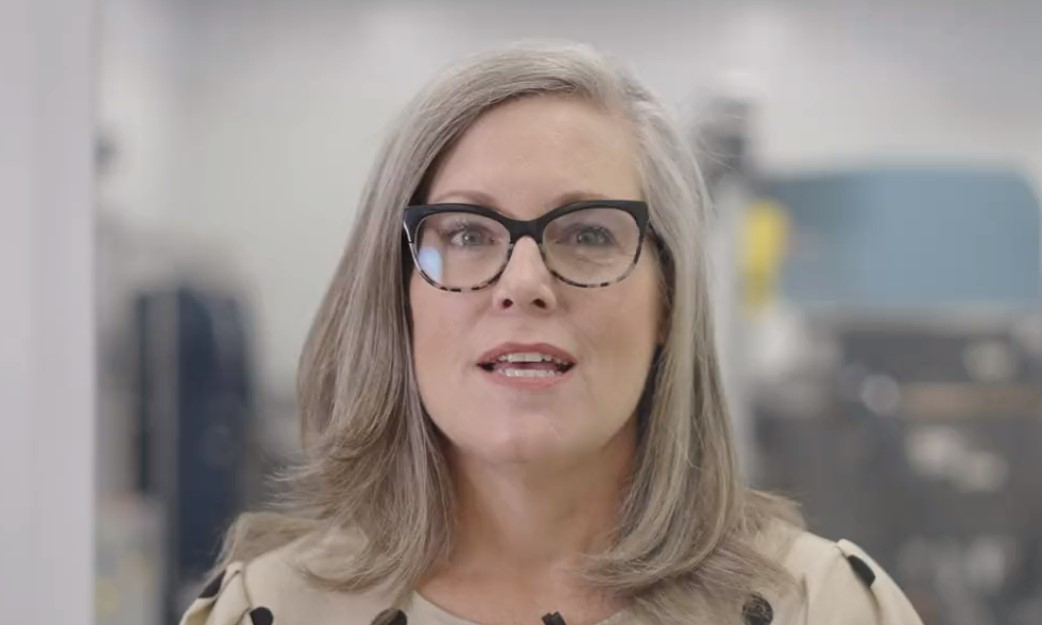
Last week, the 24-member Workplace Heat Safety Task Force issued its final recommendations containing the plan at the behest of Governor Katie Hobbs. These recommendations were the culmination of four meetings that took place over the summer and fall.
The proposed plan would require employers to adhere to additional regulations for provisions of water, shade, rest breaks, acclimatization, and trainings.
Employers would be required to provide ready access to free, potable drinking water under 60 degrees and signage encouraging employees to hydrate. Employers would need to ensure that water sources not plumbed or continuously supplied amount to one quart per employee per hour for the entire shift.
Employers would also be required to provide shade that is open to the air on at least three sides, or mechanically ventilated, and large enough for employees taking their breaks “to sit in a natural posture.” For breaks, employers must allow employees to take “preventative cool-down rest” whenever they “feel” they need it, as frequently and as long as they feel is necessary.
Additionally, employers must have an acclimatization plan that they develop that factors acclimated and unacclimated workers, the effects of clothing and personal protective equipment on adding to the heat burden of workers, risk factors that put workers at a higher risk of heat-related illness, and re-acclimatizing workers as necessary. Alternatively, employers may adopt an acclimatization plan that aligns with the acclimatization plan developed by the Centers for Disease Control and Prevention and the National Institute for Occupational Safety and Health.
Employers must provide annual training to employees that covers employer responsibilities and employee rights, signs and risks of heat illness, and the importance and means of heat illness prevention.
The plan did include some exemptions: workplaces with incidental heat exposures where employees aren’t required to perform work activities in heat for over 15 minutes in any 60-minute period, emergency operations directly involved in the protection of life or property, and buildings and structures with cooling systems that keep the heat index below 80 degrees Fahrenheit.
Hobbs said the reforms are “commonsense” and would allow the economy to advance further.
Much of these proposed requirements align with the water, rest, shade, and written heat mitigation plan recommendations issued by inspectors operating under the Industrial Commission of Arizona’s (ICA) Heat Stress State Emphasis Program, launched back in July 2023.
That program led the governor to issue an executive order establishing the task force in May.
The Arizona Division of Occupational Safety and Health (ADOSH) Advisory Committee will review these recommendations in a public meeting on Feb. 4. Then, the ADOSH Advisory Committee will submit their version of the recommendations to the Industrial Committee for final consideration at a later date sometime this spring.
Once the recommendations are finalized, ADOSH will disseminate the requirements through their communication channels and online at some point prior to this upcoming summer.
ADOSH will also continue to publish annual data on heat-related claims, complaints, and citations to evaluate recommendation impacts.
AZ Free News is your #1 source for Arizona news and politics. You can send us news tips using this link.