by Matthew Holloway | Dec 7, 2025 | News
By Matthew Holloway |
The Arizona Corporation Commission (ACC) voted 4-1 on Wednesday to approve a legally binding 10-year Energy Supply Agreement (ESA) between Tucson Electric Power (TEP) and Humphrey’s Peak Power LLC to power a planned data center campus proposed for Pima County.
The Commission underscored that its review of the agreement was limited solely to ensuring statutory compliance and safeguarding ratepayers’ interests. Regulators noted they do not hold jurisdiction over the nature or approval of the associated data center project itself, only the energy contract enabling its power supply.
As reported by the Arizona Capitol Times, the ACC meeting on December 3rd was contentious, with almost two dozen members of the public calling on the Commissioners to vote against the agreement in over three hours of discussion. Commissioner Rachel Walden was the only dissenting vote.
“I’m still wary about whether or not there is a data center at the end of this,” Walden said, according to the Times.
TEP, a regulated public utility, is legally obligated to serve all eligible customers within its designated service territory without discrimination and may not refuse service to applicants who meet interconnection and regulatory requirements, the ACC explained in a press release. Commissioners reiterated that ESA terms must provide protections not only for the contracting parties but also for the broader TEP ratepayer base.
During the meeting, TEP executives said that the data center customer will ultimately decrease other customers’ rates, arguing the facility will make a larger revenue contribution than the actual cost of serving it, according to the Times.
Erik Bakken, senior vice president and chief administrative officer at TEP, explained, “We believe that we’ve got the gold standard special contract for a data center with existing resources and existing capacity that’s available.”
In a press release, TEP said its usage-based rates are set by dividing the total revenue the utility is allowed to collect by projected energy sales. Bringing in a large new user like a data center increases overall sales, the company argued, which allows per-kilowatt-hour charges for other customers to move lower than they otherwise would be.
In comments to 13 News, Pima County Supervisor Matt Heinz told the outlet that Amazon Web Services (AWS) will no longer be the end user for the data center referred to as “Project Blue,” citing multiple sources. He stated that there are now as many as seven or eight different potential end users. The outlet reported Tuesday that Facebook’s parent company, Meta, could potentially be the new suitor for Beale Infrastructure’s project based on comments from Heinz and Tucson City Councilman Paul Cunningham.
Arizona Capitol Times reported that this shift was owed to the project switching from water-cooling to air-cooling. Beale Infrastructure, the project developer, reportedly told commissioners that it is confident an end user will be found in time for the data center’s projected completion in 2027.
The data centers’ proposed 290-acre campus in Pima County, per Beale’s ESA application obtained by AZ Luminaria, has sparked a massive public debate in southern Arizona, including questions about grid load growth, long-term power procurement, water use before Beale’s conversion to air-cooling, and whether infrastructure planning is keeping pace with rapid expansion in energy-intensive industries.
Matthew Holloway is a senior reporter for AZ Free News. Follow him on X for his latest stories, or email tips to Matthew@azfreenews.com.
by Matthew Holloway | Dec 7, 2025 | News
By Matthew Holloway |
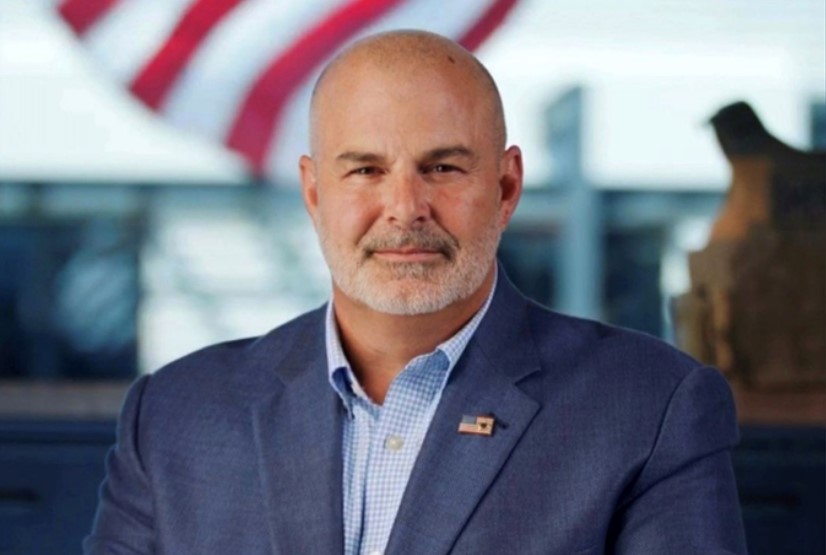
Peoria Mayor Jason Beck posted on X on Wednesday that he will not seek reelection in 2026. Beck noted that he and his wife, Jane, will instead guide the company they founded, Tyr Tactical, through its upcoming merger.
Elected in 2022, Beck called his role as mayor “the best job I ever had,” in the Wednesday press release, saying that he approached the role “with a desire to serve the community I have lived in, worked in, and raised a family in.”
He added, “I never intended to run for office or had a long-term goal to be a politician. When I saw that Peoria wasn’t achieving its full potential, I felt called to run and make changes. I’ve since learned after being elected, that Peoria’s potential is limitless, and it’s been an honor to help unlock it.”
Both Beck and the Peoria City Council began their term with three stated goals: economic development, public safety, and water security, and the Mayor pointed to examples of each. He referred to “unlocking thousands of acres for sustainable future growth” through a major land agreement with the State Land Department, the groundbreaking of an Amkor Technology facility, and kick-starting of the revitalization of Peoria’s Historic Downtown district.
He noted that under his tenure, the city’s Real Time Crime Center and the West Valley’s first advanced aviation unit were launched by the Peoria Police Department, along with an expansion of the city’s School Resource Officer program.
In the area of water security, Beck touted new investments in Peoria’s water infrastructure, “positioning Peoria for long-term stability as we navigate the challenges of the Colorado River and the anticipated regional growth.”
Thanking his city staff and fellow councilmembers, Beck said, “The next thirteen months will be a sprint,” adding, “There is still important work to be done to ensure we leave Peoria stronger than we found it.”
“My future focus needs to be on my family and our businesses, all of which have supported me throughout this journey,” Beck said. But he emphasized he would not be stepping away from public life entirely: “My commitment to our community is far from over. I will continue to stay involved, support strong candidates, and work to improve the place we all call home,” he said in his announcement.
“For someone who never envisioned a path in public service, I can’t imagine my life without it. As a business owner, husband, father, and citizen, public service doesn’t stop here. This is where it begins.”
As reported by AZCentral in November, the merger Beck referred to involves Cadre Holdings. This Florida-based, publicly traded firm also manufactures protective products for first responders and federal agencies. The anticipated merger would reportedly see Cadre purchase the Peoria-based company for $175 million.
After serving in the U.S. Marine Corps, Beck founded TYR Tactical, a body armor and tactical equipment firm with his wife Jane in 2010. It has since grown into one of Peoria’s largest private employers with an annual revenue of almost $94 million according to 12News.
Matthew Holloway is a senior reporter for AZ Free News. Follow him on X for his latest stories, or email tips to Matthew@azfreenews.com.
by Matthew Holloway | Dec 6, 2025 | News
By Matthew Holloway |
Starting February 2026, air travelers arriving at TSA checkpoints without acceptable ID, such as a REAL ID or a passport, will face a $45 fee and be required to complete additional online identity verification, the agency confirmed Monday.
As reported by Fox News, a proposed rule published in the Federal Register had called for a lower fee amount of just $18. However, Senior TSA Officials told the outlet that upon careful review, the agency determined that higher-than-anticipated technology and operating costs necessitated the higher final fee.
The TSA announced the move on Monday in a press release, reiterating that the REAL ID law was signed and took effect over 20 years ago, and is now being fully implemented and enforced at the direction of President Donald Trump and Homeland Security Secretary Kristi Noem, as of May 7, 2025.
Senior Official Performing the Duties of Deputy Administrator for TSA, Adam Stahl, explained, “Identity verification is essential to traveler safety, because it keeps terrorists, criminals, and illegal aliens out of the skies and other domestic transportation systems such as rail.”
According to the TSA, over 94 percent of U.S. passengers already use REAL IDs or another acceptable form of identification. However, passengers who do not provide an acceptable ID can expect increased wait times at Security Checkpoints. The agency listed over a dozen forms of acceptable identification in its release. A complete list of acceptable forms of ID can be found here.
Stahl noted, “The vast majority of travelers present acceptable identification like REAL IDs and passports, but we must ensure everyone who flies is who they say they are. Beginning February 1, travelers who do not present an acceptable form of ID at our security checkpoints and still want to fly can pay a $45 fee and undergo the TSA Confirm.ID process. This fee ensures the cost to cover verification of an insufficient ID will come from the traveler, not the taxpayer. The security of the traveling public is our top priority, so we urge all travelers to get a REAL ID or other acceptable form of ID as soon as possible to avoid delays and potentially miss flights.”
The TSA has called upon travelers who do not possess a REAL ID to pay the fee in advance online before arriving at an airport. However, for those who do not, information on how to pay the fee and complete the TSA Confirm.ID process will be available at locations at or near TSA Checkpoints. The agency stressed that passengers completing the process at the airport should expect delays.
Matthew Holloway is a senior reporter for AZ Free News. Follow him on X for his latest stories, or email tips to Matthew@azfreenews.com.
by Matthew Holloway | Dec 5, 2025 | News
By Matthew Holloway |
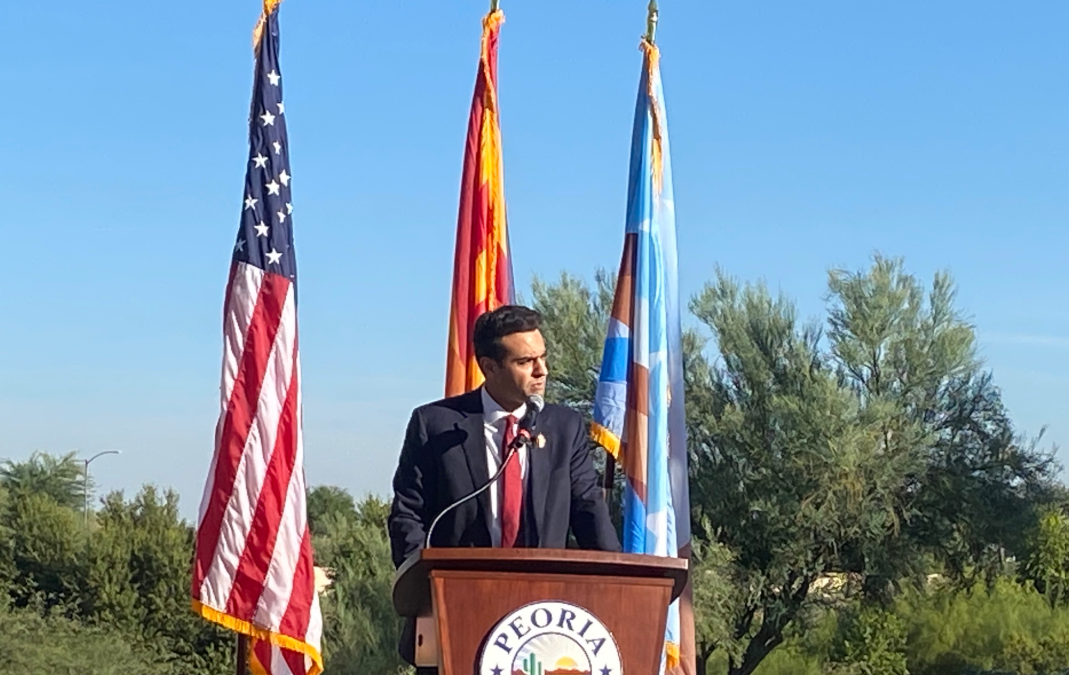
The murder and attempted murder of West Virginia National Guard Soldiers Sarah Beckstrom, 20, and Andrew Wolfe, 24, by Afghan national Rahmanullah Lakanwal, 29, in November is being investigated as a possible act of international terrorism. The attack on the soldiers seems to align with warnings the Biden administration was given in 2021 by then-prosecutor with the Maricopa County Attorney’s Office, Congressman Abe Hamadeh.
The latest reports from Washington, D.C., indicate that Beckstrom and Wolfe were shot in what law enforcement officials are calling a “targeted” attack near the Farragut West Metro station near the White House. U.S. Attorney for the District of Columbia Jeanine Pirro told a press conference that both Guard members had been sworn in to assist with the ongoing crime suppression efforts in the nation’s Capitol for less than 24 hours, according to Fox News. She described a “brazen and targeted attack,” and said the Guard members were “ambushed.”
“A lone gunman opened fire without provocation, ambush style,” Pirro told reporters. “Armed with a .357 Smith and Wesson revolver, one Guardsman is struck, goes down, and then the shooter leans over and strikes the Guardsmen again. Another Guardsman is struck several times.” Nearby Guard members rushed the assailant; one opened fire, and they quickly subdued the attacker.
Pirro told reporters, “This is what happens in this country when people are allowed in, who are not properly vetted.”
President Donald Trump informed the nation last Thursday evening that U.S. Army Specialist Sarah Beckstrom of Summersville, one of the West Virginia National Guard members ambushed in Washington, D.C., had passed away from her injuries, in post to X.
According to Reuters, the suspect first entered the U.S. in September 2021, as part of the Biden administration’s Afghan resettlement program: Operation Allies Welcome, the very program Hamadeh wrote about in a 2021 op-ed for the Arizona Republic. The suspect had worked with the CIA in Afghanistan as far back as at least 2011 and was granted asylum in April of this year. “In terms of vetting, nothing came up,” an unnamed senior U.S. official told Fox News. “He was clean on all checks.”
Hamadeh’s op-ed offered a troubling, almost prescient warning to the Biden administration after the disastrous U.S. withdrawal from Afghanistan. He cautioned that a string of incidents that year created “concern whether the Biden administration is doing enough to vet refugees arriving on American soil.” He noted, “We need to do more rigorous checks.”
The reports that Lakanwal passed “all checks” would seem to support Hamadeh and Pirro’s conclusion.
“By not properly vetting refugees, we do a disservice to the Afghans who served with us. No vetting is foolproof, and bad actors may still go undetected. However, a proper vetting process can greatly reduce the risk,” Hamadeh wrote. He added, “The State Department has identified Phoenix as a top destination for refugees. Arizonans are generous, and a vast majority of Arizonans agree that the United States should accept Afghan refugees who assisted us in the U.S.-led NATO mission.”
Hamadeh went on to describe newly implemented security vetting that included: “biometrics, biographical and social media data collection,” stating, “This process is rigorous and can take weeks and months to complete, and is similar to the process that Afghan refugees should be undergoing right now.”
He warned that the Biden administration instead insisted upon releasing the Afghan refugees “to their permanent states after only four weeks on U.S. military installations.” He commented, “Americans should be skeptical that tens of thousands of refugees here on humanitarian parole status could be thoroughly vetted in that short amount of time.”
Hamadeh concluded: “Arizona leaders should also demand answers from the federal government and require that the vetting process is shared between federal and state officials in order to ensure the safety of Arizonans.”
As of this report, West Virginia National Guard Member Wolfe remains hospitalized in serious condition. The suspect was also hospitalized due to his injuries and remains there under heavy guard.
Matthew Holloway is a senior reporter for AZ Free News. Follow him on X for his latest stories, or email tips to Matthew@azfreenews.com.
by Matthew Holloway | Dec 4, 2025 | News
By Matthew Holloway |
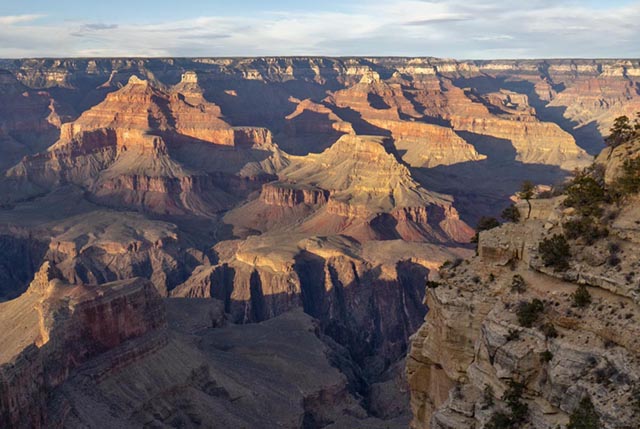
Beginning Dec. 6, 2025, all in-park hotels on the South Rim of Grand Canyon National Park, including El Tovar, Bright Angel Lodge, and Trailer Village, will shutter indefinitely to overnight guests. The closure decision was prompted by a series of significant breaks in the 12.5-mile Transcanyon Waterline supplying the park’s water, the National Park Service revealed Tuesday.
As of mid-November, water is no longer being pumped to the South Rim, the National Park Service said, forcing park officials to suspend overnight stays and dial back visitor amenities. The NPS reported that overnight stays at accommodations outside of the park in nearby Tusayan are unaffected.
According to NPS, “The waterline has exceeded its expected lifespan and experiences frequent failures, which require expensive and continuous maintenance work to repair leaks. The National Park Service started construction in 2023 on a multi-year, $208 million rehabilitation of the Transcanyon Waterline and upgrades to the associated water delivery system. This crucial investment in infrastructure will ensure the park is able to meet water supply needs for five million annual visitors and approximately 2,500 year-round residents. The project is expected to be completed in 2027.”
The Park Service is asking year-round residents to help conserve water by taking steps to reduce usage, such as limiting showers to 5 minutes or less, turning off faucets while shaving or brushing teeth, flushing toilets only when necessary, washing laundry only with full loads, and reporting leaks to the appropriate authorities.
In a Tuesday press release, the agency said that “Dry Camping,” requiring campers to transport their own water, will continue to be permitted, with water spigot access available at the Mather Campground check-in kiosk; however, spigots inside the campground have been shut down. Faucets in park bathrooms will also remain operational.
Grand Canyon National Park Public Affairs Officer and Communications Lead, Joëlle Baird, suggested that the closure could be resolved relatively quickly, saying, “If all planned work proceeds without additional issues, we anticipate being able to restore water service and begin reopening overnight lodging as early as next week.”
The outlet reported that welding repairs to the 1960s-vintage pipeline were progressing on Wednesday despite a fresh snowfall, and the current repair schedule calls for flushing and recharging the system over the next several days.
In the aftermath of the devastating Dragon Bravo fire, hotel closures are an additional blow to parkgoers. In addition, a complete prohibition on all fires remains in place for the South Rim and inner canyon areas, such as “outdoor wood burning and charcoal fires, including campfires, warming fires, and charcoal barbeques.”
Matthew Holloway is a senior reporter for AZ Free News. Follow him on X for his latest stories, or email tips to Matthew@azfreenews.com.