by Staff Reporter | Mar 13, 2025 | Education, News
By Staff Reporter |
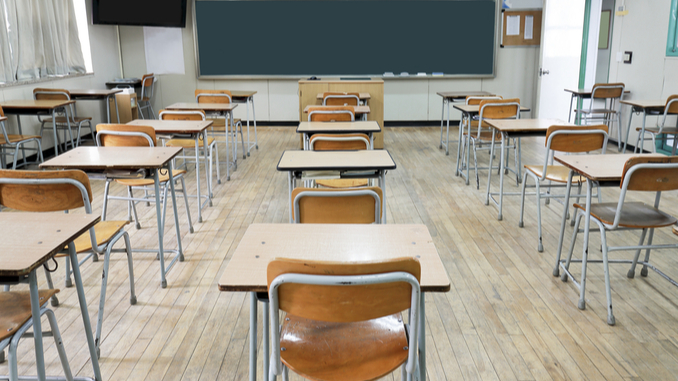
A new dashboard tracks the school closures taking place throughout Arizona.
The dashboard comes from the Common Sense Institute (CSI), a nonpartisan organization which primarily produces research on Arizona’s economy.
Since January, those schools which have closed or consolidated operated in the Maricopa, Navajo, and Yavapai counties within the following school districts: Cave Creek, Phoenix Elementary, Mesa Unified, Isaac, Edkey Inc. – Sequoia Village, and American Heritage Academy. Schools closed or consolidated included Lone Mountain Elementary School, Desert Sun Academy, Dunbar School, Heard School, George Washington Academy, and American Heritage Academy Camp Verde.
Data for the dashboard came from the Auditor General and Arizona Department of Education.
CSI also published a line graph chart detailing spending, inflation, enrollment and student proficiencies in math and reading from 2010 to 2024. This data came from the Arizona State Library, Arizona Department of Education, and Joint Legislative Budget Committee.
CSI director of policy and research, Glenn Farley, said the dashboard data indicates a pattern of declining public school enrollment rather than indefinite growth. Per this dashboard, school enrollment peaked over a decade ago.
“Arizona’s public school system was built on the assumption that enrollment would continue to grow indefinitely, but the reality has changed,” said Farley. “With district enrollment peaking over a decade ago and alternative schooling options gaining traction, closures are a natural consequence of a system adjusting to new realities.”
CSI’s dashboard reflects a severe disparity between public school spending, enrollment, and student proficiencies in math and reading. While spending increased by 80 percent since 2010, math and reading proficiencies dropped by 13 and nine percent, respectively, and enrollment dropped by one percent.
Spending far outpaced inflation, growing at over twice the rate: while spending increased by 80 percent, though inflation increased by only 36 percent.
CSI also found that the school-aged population departed from the total population trend around 2020 due to demographic changes. Combined enrollment in public kindergarten programs declined 13 percent since the 2010-11 school year, while total public school enrollment grew three percent.
The state’s school choice program, the Empowerment Scholarship Account program, grew to over 87,200 students as of Monday.
CSI clarified that demographic decline wasn’t the sole reason for changes in the school-aged population. CSI reported that charter school enrollment nearly doubled from 2020 to 2022, 55 percent of surveyed private schools experienced enrollment growth in the 2021 to 2022 school year, and homeschooling grew from two to 11 percent of the population during the pandemic (though that number dropped to around six percent in recent years).
An accompanying CSI report declared the disparities in funding, enrollment, and outcomes were signs of disconnect with the current state of enrollment and capacity.
“Charter, private, and home schools have continued growing, but Arizona’s district public school enrollment peaked over a decade ago,” read the CSI report. “A massive injection of new funding and resources over the past few years has led to significant new spending and expansion by these schools, though, which are now having to deal with the consequences of this disconnect between enrollment and capacity.”
AZ Free News is your #1 source for Arizona news and politics. You can send us news tips using this link.
by Daniel Stefanski | Feb 26, 2025 | Education, News
By Daniel Stefanski |
One chamber of the Arizona Legislature just passed legislation to protect kids’ meals at schools.
On Monday, the Arizona House of Representatives passed HB 2164, that, if enacted, would “ban ultra-processed foods containing harmful additives from being served in public school meals.” The proposal was sponsored by State Representative Leo Biasiucci.
The bill passed out of the full House chamber with a 59-0 vote (one member not voting).
In a statement accompanying the announcement of the bill’s progress, Biasiucci said, “Our kids deserve better than artificial dyes and cheap fillers in their meals. Parents should know that when their children eat at school, they are getting real, nutritious food – not the kind of processed junk that’s banned in other countries. This is common sense, and I’m proud that my colleagues came together to pass this important bill.”
Biasiucci added, “This is a public health issued. We now have overwhelming evidence that these chemicals can contribute to everything from hyperactivity to increased cancer risk – yet they remain in school meals. We hope to end that today.”
According to the press release from the Arizona House of Representatives, the bill would “prohibit the sale or serving of school foods that contain potassium bromate, titanium dioxide, brominated vegetable oil, propylparaben, and synthetic food dyes like Red 40 and Yellow 5 – several of which are already restricted or banned in Europe due to harmful effects on children’s health.”
Earlier this month, the legislation was approved by the Arizona House Committee on Education with a 10-0 vote (one member was absent, and one voted ‘present’).
On the Arizona Legislature’s Request to Speak system, representatives from the Arizona Association of County School Superintendents, Arizona Public Interest Research Group, indicated their groups’ support for the bill; while representatives from Save Our Schools Arizona and Consumer Brands Association, signed in to oppose the proposal. Representatives from the Arizona Food Bank Network, Arizona School Administrators, Arizona Education Association, and Arizona School Boards Association, noted their organizations’ neutrality on the bills.
HB 2164 will now head to the Arizona Senate for consideration.
Daniel Stefanski is a reporter for AZ Free News. You can send him news tips using this link.
by Daniel Stefanski | Feb 24, 2025 | Education, News
By Daniel Stefanski |
The Arizona Legislature is taking a stand against antisemitism.
Last, the Arizona House Education Committee approved HB 2867, the Antisemitism in Education Act, which would “prohibit Arizona’s public schools and state agencies from promoting antisemitic conduct or rhetoric and establish strict penalties for violations.” HB 2867 was sponsored by State Representative Michael Way.
The legislation was approved with a bipartisan vote of 8-4. One Democrat joined seven Republicans to support the bill.
According to information shared by the Arizona House Republicans, the proposal would “enforce clear prohibitions on using taxpayer dollars to fund antisemitic curricula or activities, ensure accountability for individuals and institutions that violate these protections, and empower students, parents, and educators to report violations.” The bill additionally “aligns with the internationally recognized IHRA Working Definition of Antisemitism, which the U.S. State Department has adopted as the standard for identifying and addressing antisemitic conduct.”
In a statement that accompanied the announcement of the bill’s progress, Representative Way said, “Our schools should be places of learning, not breeding grounds for hatred and discrimination. Arizona has zero tolerance for antisemitism, and this bill ensures that our classrooms are free from the toxic ideology that fuels division and hostility. No teacher, administrator, or student should be forced to endorse or participate in any form of antisemitic conduct. This legislation sends a clear message – there will be consequences for those who violate these fundamental principles.”
Way added, “House Republicans are leading with action, not lip service. We’re committed to protecting students and teachers from the kind of coercion and discrimination that have no place in Arizona’s classrooms. We will uphold American values – freedom, fairness, and safety. I’m proud to see this bill advance and look forward to its passage in the full House.”
On the Arizona Legislature’s Request to Speak system, representatives from the Arizona Education Association, American Civil Liberties Union of Arizona, Save Our Schools Arizona, Arizona National Organization for Women (NOW), and CHISPA ARIZONA – A Program of League of Conservation Voters, signed in to oppose the bill.
HB 2867 will now be considered by the full Arizona House of Representatives in the near future.
Daniel Stefanski is a reporter for AZ Free News. You can send him news tips using this link.
by Matthew Holloway | Jan 29, 2025 | Education, News
By Matthew Holloway |
In a recent report, the Common Sense Institute of Arizona (CSI) addressed the gradual slowing of enrollment in Arizona’s Empowerment Scholarship Account (ESA) program and traditional public school classrooms. The report shows that despite narratives for one or the other, the decline in both can be explained quite directly as a matter of demographics and parental choice.
In a press release issued Monday, CSI explained, “Headlines about declining enrollment and the subsequent financial struggles this creates in Arizona’s public schools have caught the state’s attention. However, CSI’s data shows this shift was inevitable, driven by dramatic demographic changes and a shift in enrollment preferences during the pandemic.”
Among CSI’s findings, it found that the school-age population of Arizona peaked in 2021 and is projected to decrease by 40,000 by 2028, heavily impacting an educational system which was structurally predicated on the assumption of a continually growing population.
CSI added, “The 2012 kindergarten cohort—the state’s largest ever—is now preparing to graduate. Future K-12 enrollment is not expected to grow in the foreseeable future.”
CSI observed further that during the COVID-19 lockdowns, Arizona’s public schools lost 50,000 enrolled students from 2020-2021. Only 18,000 of those students re-enrolled in charter schools with the remaining approximate 32,000 otherwise unaccounted for. It is likely that this number presents a combination of expanded home schooling, relocation out of Arizona, and even enrollment in private schools. Indeed, the report indicates that private school enrollment spiked by 33% over that period with homeschooling experiencing a surge from 2% of the total student population to 11%, and settling back to 6% as of today.
Glenn Farley, CSI Arizona’s Director of Policy and Research summarized, “Arizona’s classrooms are entering a new era. The numbers have been clear for years: the system built for growth has reached its peak. Moving forward, policymakers must adapt to a smaller, more diverse student population and rethink how we allocate resources.”
The CSI report noted the effect on budgetary considerations has been extreme. “Declining public school enrollments since 2020 reduced public K-12 funding formula costs by an estimated $450 million/year, and growing, compared to pre-pandemic trends. Since last year, the universal ESA program has returned these ‘missing kids’ to the public K-12 rolls – reinvesting prior ‘savings’ into education.”
The ESA, a subject of controversy in the state legislature, has reached a “steady state” according to CSI, with the recent period of rapid growth unlikely to be repeated and future increases owing almost exclusively to parental and student choice.
CSI concluded, “Demographic changes likely mean fewer school-aged children and lower overall enrollment across Arizona’s publicly funded K-12 options over the next ten years. And ultimately it is this demographic change, and pandemic-era changes in parental behavior that are changing K-12 in Arizona – and not-so-much universal ESA itself.”
As previously reported by AZ Free News, Governor Katie Hobbs’ repeated attacks on ESAs have centered primarily on the narrative of the program alternately being “rife with waste, fraud and abuse,” being costly to the state budget, and calling for a repeal of the popular program.
Matthew Holloway is a senior reporter for AZ Free News. Follow him on X for his latest stories, or email tips to Matthew@azfreenews.com.
by AZ Free Enterprise Club | Jan 17, 2025 | Opinion
By the Arizona Free Enterprise Club |
With the new year here and the 2025 legislative session officially underway, Democrats are already proving they can’t learn a lesson. Led by Governor Katie Hobbs, one of their primary targets is once again…you guessed it…Arizona’s Empowerment Scholarship Account (ESA) program. Stop us if you’ve heard this before.
You would think that Democrats would find a different target after getting trounced in an election where teachers’ unions and other anti-school choice groups made it a referendum on school choice. But no. After 2 ½ years and multiple failures trying to overturn school choice, they’d rather double down on their same tired and out-of-touch policies.
This time, Hobbs and the Dems say they want to roll back ESAs because of all the supposed “fraud” in the program. Never mind the fact that the rate of waste, fraud, and abuse in the ESA program is extremely low. Never mind the fact that ESAs have proven to be far more financially accountable than other government programs. Democrats don’t care about facts. Instead, they want to regulate this popular program while Arizona’s Democrat Attorney General Kris Mayes asks for more funding to investigate ESA fraud.
But here’s a message for Hobbs, Mayes, and the rest of the Democrats:
If you care so much about fraud, why not investigate Arizona’s public school districts?
They could start with Isaac Elementary School District (IESD)…
>>> CONTINUE READING >>>